Hand Planes
What Is a Block Plane?
The plane most people buy first, the one job it is genuinely better at than anything else, and the three jobs it will disappoint you at.
We earn a commission when you buy through our Amazon links, at no extra cost to you. It never decides a ranking, and where the best tool in a class is one we earn nothing on, we say so and link it anyway. How this works.
The short answer
Quick picks
| # | Tool | Best for | Per decade | Score | Price |
|---|---|---|---|---|---|
| 01 | 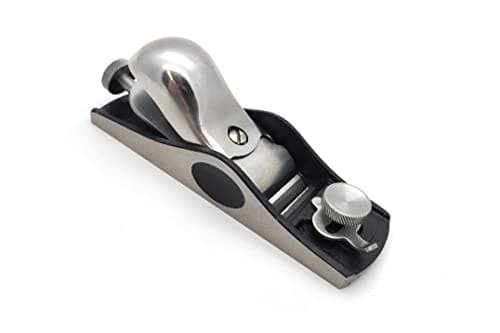 Taytools #9-1/2 Low Angle Block Plane Adjustable mouth, stainless knuckle cap and adjustment screws, and a bed low enough to handle end grain properly. The stainless hardware is the detail that matters in a tool that lives in a pocket. | Best block plane overall | $41.84tier C | 8.0/10 | $83.67Amazon |
| 02 | 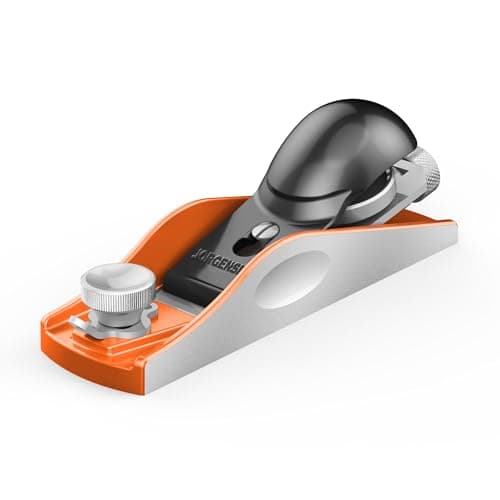 Jorgensen No. 60-1/2 Low Angle Block Plane A ductile-iron 60-1/2 with an adjustable mouth and a 3 mm O1 iron, at a fraction of what that combination costs anywhere else on this page. The mouth adjustment is the feature this list is ranked on, and this is the cheapest honest way to get it. | The adjustable mouth at the lowest price it exists for | $14.02tier C | 7.7/10 | $28.03Amazon |
| 03 | 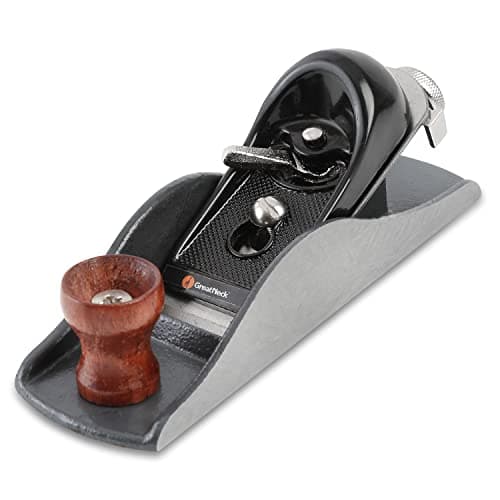 GreatNeck G2 Adjustable Block Plane, 7 in A plain machined cast-iron block plane at hardware-store money, and the only plane on this page whose maker publishes a limited lifetime warranty. Read the exclusions before that sells you: blades are not covered, and the blade is the part you will wear out. | The cheapest block plane with a warranty behind it | $8.21tier A | 6.5/10 | $24.64Amazon |
| 04 | 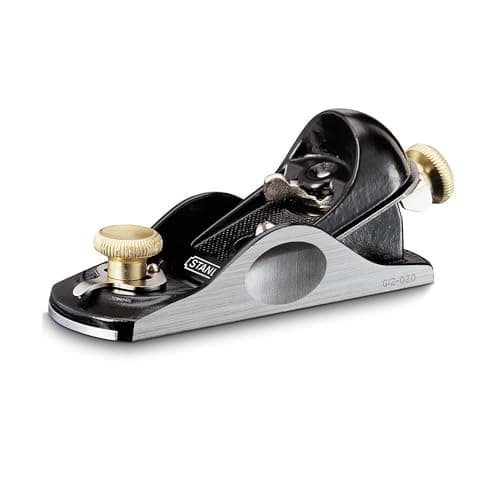 Stanley No. 9 Block Plane (1-12-020) Compact, unfussy, and covered by the same warranty as the rest of the range. Not a joinery tool, and does not pretend to be. | A pocket plane that survives a job site | $18.09tier A | 6.7/10 | $54.27Amazon |
#ad· Live prices from the Amazon Product API, as of November 22, 2026. Where we have no verified live price we show none, and the cost-per-decade figure is suppressed with it — we would rather leave a gap than print a number that has rotted.
A block plane is a small hand plane with its iron set bevel-up on a low bed, no frog behind it and no tote on top of it, sized to be driven with one hand. It is the plane for end grain, chamfers, eased edges and fitting work — the cuts you make while holding the work rather than clamping it. Everything else about it follows from those three decisions: bevel-up, bedded low, one hand.
It is also the plane most people buy first, usually for the wrong reason. A block plane will not flatten a board, will not joint an edge and will not smooth a panel, because none of those jobs are limited by the cutting edge — they are limited by sole length and mass, and a block plane deliberately has neither. The best hand planes for beginners is the honest version of that argument. This page is what the tool actually is.
The three things that make it a block plane
1. The iron sits bevel-up. On a bench plane the iron lies bevel-down on a frog with a cap iron clamped over it. A block plane has no frog and no cap iron: the iron lies flat on the machined bed with the bevel facing the sky, held by a lever or knuckle cap. That is why a block plane has so few parts, and why the only way to change how it cuts is to change the angle you hone on the bevel. Bevel up vs bevel down is the full mechanism.
2. The bed is low. A bench plane beds its iron at 45 degrees. A block plane beds it at 20 degrees or less, and the low-angle versions lower it again to about 12. The iron is doing the same work from a much shallower angle, which is what suits it to end grain.
3. It is a one-handed tool.No tote, no front knob you grip with a second hand — the body is shaped to sit in a palm with a thumb and finger either side of the iron. That is a design constraint, not a shortcut: it means you can plane a part you are holding, up on a ladder, or at the edge of an assembled carcase, which is most of the work a block plane gets.
The name has a usual explanation — trimming the end grain of butchers' blocks — and nobody can prove it. It makes no difference to buying one, and we would rather say that than repeat it as fact.
The parts, and which ones your plane may not have
- Body and sole. One casting. The sole is the reference surface, and how flat it is out of the box is the one thing a maker can get wrong that you cannot fix in five minutes. How to flatten a plane sole is the fix when it is wrong.
- Iron. Bevel-up, typically 1-3/8 in wide on the common patterns. Jorgensen publishes its 60-1/2 iron as O1 steel, 3 mm thick and 35 mm wide; most makers in this price band publish nothing at all about the steel.
- Lever cap or knuckle cap. Clamps the iron down. A knuckle cap folds over and makes a smoother surface for your palm; a plain lever cap is simpler and some people prefer it. This is a preference, not a quality signal.
- Depth adjuster. A screw or wheel that advances and retracts the iron. Cheap planes have one; very cheap and very old ones sometimes do not, and then the depth of cut is set by tapping the iron and tightening the cap.
- Lateral adjustment. Squares the edge to the sole so the shaving is even across its width. Several planes in this category have none, and you square the iron by feel when you tighten the cap.
- Adjustable mouth. A sliding plate in front of the iron, moved by a lever or a knob, that narrows the gap the shaving passes through. This is the feature worth paying for, and it is the feature cheap block planes leave out.
Of the four planes above, two have an adjustable mouth and two do not. GreatNeck publishes no mouth adjustment for the G2, and Stanley lists the No. 9 with a fixed mouth. That is not a detail: a wide fixed mouth is why a cheap block plane tears the corner off end grain no matter how sharp you get it.
Bed angle: the one number that decides how it cuts
Because the iron is bevel-up, the angle the wood actually sees is the bed angle plus the bevel you honed. Fine Woodworking puts it plainly: the effective angle of the plane is the sum of the bed and bevel angles. So:
- Low angle.Bedded at 12 to 12-1/2 degrees. With the usual 25 degree bevel that is a 37 degree cutting angle — a genuinely low slice, which is what end grain wants.
- Standard angle. Bedded at 20 degrees. With the same 25 degree bevel that is 45 degrees, which Fine Woodworking notes is essentially the same as a bench plane.
The same source gives the practical split: the low-angle plane is the better choice for trimming end grain and cross grain, and generally works better on softwoods, while the standard version is suitable for hardwoods. In figured hardwood the higher effective angle is the one that tears out less, which is the same argument as a smoothing plane with a tight mouth and for the same reason.
Here is the honest complication. Most makers at this price do not publish a bed angle.Jorgensen publishes none for its 60-1/2 — only the pattern number. GreatNeck publishes no figure at all, only the words “low angle blade”. If the bed angle matters to your work, the only reliable move is to buy from a maker who states it, and that usually means spending more. You can also change the effective angle yourself: honing a steeper bevel raises it, which is a legitimate way to turn a low-angle block plane into a higher-angle one for difficult grain. Sharpening angles explained has the arithmetic.
Block plane numbers, in the patterns actually sold
Block planes inherited the Stanley catalog numbers along with everything else, and the numbers are looser here than on bench planes:
- No. 60-1/2— the low-angle pattern, around 6-1/4 in long with a 1-3/8 in iron and, on the better ones, an adjustable mouth. If somebody tells you to buy “a block plane” with no further detail, this is the one they mean.
- No. 9-1/2— historically the standard-angle pattern in the same size. Treat the number with suspicion now: Taytools sells a plane it calls a #9-1/2 low angle, so the pattern number no longer reliably tells you the bed. Read the maker's own description, not the number.
- No. 9— Stanley's compact pocket block, fixed mouth, standard bed. A supplement to a real block plane rather than a substitute for one.
- No. 65— the low-angle knuckle-cap pattern, longer and heavier than a 60-1/2. Sold now mostly by premium makers.
- No. 102 and No. 110— the simple patterns you will meet constantly secondhand, usually for very little money. What any given one has and does not have varies by vintage, so check the individual plane rather than trusting the number; buying used hand tools is the checklist, and the Stanley plane type study dates what you are holding.
For the bench plane numbering that this system is a corner of, see plane numbers explained.
What a block plane is genuinely the best tool for
- End grain. The job it exists for. A low bed, a sharp iron and a tight mouth will leave end grain shining in a way no sandpaper manages. The best hand planes for end grain ranks for exactly this.
- Chamfers and eased edges. By volume this is probably what most block planes do most of the time: knocking the arris off a board so it does not feel like a blade.
- Fitting. A drawer that binds, a door that catches, a lid that is proud by a shaving. One-handed, in place, no clamping. Planes for doors is the specialist case.
- Trimming things proud of a surface. Plugs, dowels, through tenons, edge banding on sheet goods.
- Small parts. Anything too short to be safe on a machine and too small for a bench plane to register on.
What it is not for, and what to use instead
- Flattening a board.A 6 in sole rides the hollows instead of bridging them. Use a jack or a fore plane — planes for rough lumber.
- Jointing an edge. Same problem, worse: the sole must be longer than the error. The best jointer planes.
- Smoothing a wide surface. A 1-3/8 in iron means dozens of overlapping passes and a tracked surface. That is a smoothing plane's job.
- Working into a corner or along a shoulder.A block plane's iron does not reach the edge of its body. You want a shoulder plane.
The one-line version of the comparison people search for most: block plane vs bench plane — a bench plane makes a surface, a block plane adjusts one.
What actually decides it
Buying guide
The features worth paying for, in order
- An adjustable mouth. First by a distance. It is the difference between end grain that shears and end grain that crumbles at the far corner, and it is the one feature you cannot add later without filing the casting.
- A thick iron.Mass behind the edge is what stops chatter in a plane too light to have any of its own. Jorgensen's published 3 mm iron is heavy for the category; a stock iron on a hardware-store block plane is often half that.
- A sole that was machined, not pressed. You can lap a casting flat. You cannot do much with a stamped one.
- Rust-resistant fittings. Unglamorous and it matters: this plane lives in an apron pocket against a sweaty palm, which is the worst corrosion environment any tool in the shop sees. Stainless screws and caps are a real advantage here.
Note what is noton that list: a warranty. GreatNeck publishes a limited lifetime warranty and does not ask for a receipt, which is the best cover in this group — and it excludes blades, which is the part that wears. Stanley's lifetime terms exclude blades too. A block plane has no consumable part at all if you are willing to sharpen it, so the warranty is mostly insurance against a cracked casting. Warranties and repairability is the general argument.
Setting one up, the first evening you own it
- Hone the iron. Every plane here arrives ground, not sharp, and the factory bevel is a starting point. How to sharpen a block plane blade is the specific procedure for a bevel-up iron.
- Check the back. The flat face of a bevel-up iron is half the cutting edge. A few minutes on a coarse stone now saves an hour of confusion later.
- Close the mouth. If the plane has an adjustable mouth, bring it in until the gap is barely wider than the shaving you want. Open it again for coarse work.
- Set the iron finer than feels useful. Advance it until it takes a shaving across the full width and no further. A block plane set coarse is a tool that fights you.
- Test on end grain, not long grain. It is the cut that shows up every fault in the setup.
If it will not cut after all that, the fault is almost always one of four things, and hand plane troubleshooting works through them in order.
Planing end grain without blowing out the far corner
- Skew the plane. Turning the body 20 or 30 degrees to the direction of travel lowers the effective angle further and makes the cut noticeably easier.
- Work in from both ends. Plane halfway from one side, then come in from the other. The corner you would have blown out is now in the middle of the cut.
- Or back it up. Clamp a scrap tight against the exit corner and plane straight through into the sacrifice.
- Take less. End grain punishes a thick shaving more than any other cut.
- Wipe the sole.A smear of wax on the sole makes a real difference in end grain, where friction is highest — cleaning and waxing hand tools covers what to use.
What it costs to keep, over decades
Nothing on a block plane is consumable. The iron is the only part that wears, it wears by being sharpened, and it takes years of hard use to sharpen one away. That makes the arithmetic in cost per decade unusually kind: the purchase is close to the whole lifetime cost, and the main risk to the tool is dropping it on concrete, which is why a ductile-iron body is worth more than it sounds.
The one spare worth owning is a second iron, so that a dulled edge does not stop the work — and a thicker replacement iron is the cheapest real upgrade a budget block plane can get. The best replacement plane irons covers fitment, which matters more than steel here: a 3 mm iron will not seat in a tight fixed mouth without filing it first.
One last job worth knowing about, because it is where a block plane earns its keep in a kitchen-cabinet shop rather than a furniture one: planing MDF and plywood— what the glue and resin do to the edge, and why you want a spare iron before you start.
Questions
Frequently asked
What is a block plane used for?
End grain, chamfers, easing edges, trimming plugs, dowels and edge banding proud of a surface, and fitting work — a sticking drawer, a catching door, a lid a shaving too tall. It is a one-handed tool for adjusting a surface that already exists, not for making one. Flattening, jointing and smoothing are bench plane jobs.
Is a block plane bevel up or bevel down?
Bevel up, always. The iron lies flat on the bed with the bevel facing away from the wood, held by a lever or knuckle cap, with no frog and no cap iron. That is why the angle the wood sees is the bed angle plus the bevel you honed, and why honing a steeper bevel raises the cutting angle of the whole plane.
Should I buy a low angle or a standard block plane?
Low angle if you can only have one. Fine Woodworking gives the low-angle plane — bedded at 12 to 12-1/2 degrees — as the better choice for end grain and cross grain, and the better performer in softwoods; the standard 20 degree bed, which comes to about 45 degrees with a 25 degree bevel, is suited to hardwoods. If most of your work is figured hardwood, the higher angle tears out less.
What size block plane should I buy?
The 60-1/2 pattern, roughly 6-1/4 in long with a 1-3/8 in iron. It is the size the category is built around, it fits a hand and an apron pocket, and every maker offers one. The pocket patterns like Stanley's No. 9 are supplements, and the long knuckle-cap patterns are specialists.
Does a block plane need an adjustable mouth?
If end grain matters to you, yes — it is the single feature that separates planes that shear end grain from planes that crumble it, and it cannot be added later without filing the casting. Two of the four planes on this page have one and two do not, and the price difference between those two groups is the smallest part of the decision.
Can a block plane be my only hand plane?
Only if your work is fitting and finishing parts that are already flat. The moment you need to flatten a board, joint an edge or smooth a panel, the short sole and narrow iron are working against you, and no amount of sharpening fixes a tool that is the wrong length. A No. 5 jack plus a block plane is the two-plane kit that actually covers a shop.
Receipts
Sources
- Fine Woodworking — Chris Gochnour, "Standard vs. Low-Angle Block Planes", 13 July 2022 (low-angle block planes "have the blade bedded at 12 degrees to 12 1/2 degrees"; "A standard angle block plane has a 20 degree bed angle and a 25 degree bevel angle"; "The effective angle of the plane is the sum of the bed and bevel angles", giving the standard plane 45 degrees, "essentially the same as that of a bench plane"; "The low-angle block plane is a better choice for trimming end grain and cross grain"; "the low-angle design generally works better on softwoods, and the standard version is suitable for hardwoods"). Retrieved 2026-11-02.
- Pony Jorgensen — No. 60-1/2 Low Angle Adjustable Mouth Block Plane, model 70710 (ductile iron body, stress relieved so 'the machined casting will stay flat over time'; O1 steel blade 35 mm / 1.38 in wide by 3 mm / 1/8 in thick). Retrieved 2026-08-28.
- Pony Jorgensen — Replacement Blade for the No. 60-1/2 Low Angle Adjustable Mouth Block Plane, part #70711 (O1 steel, Rockwell 60-64, 3 mm / 1-8 in thick, 35 mm / 1.38 in wide, 112 mm / 4.41 in long, ground at 25 degrees; published fitment is the #70710 plane). Retrieved 2026-08-28.
- GreatNeck Tools — Warranty Policy (limited lifetime warranty; 'we'll either repair it or replace it with a tool of equal or greater value'; no receipt required, ownership is enough; does not cover bits, blades, files, batteries or calibration). Retrieved 2026-08-28.
- Stanley Tools — Warranty Information (limited lifetime on hand tools; excludes consumables including 'any blade'). Retrieved 2026-07-24.
- Taylor Toolworks — Refund Policy ("you may return them within 90 days of delivery" with items "in their original, new, unopened packaging"; "We currently do not offer exchanges."; a fee may be deducted from the refund for products returned without their original package; original shipping charges non-refundable. No product warranty is stated). Retrieved 2026-10-02.
- Amazon listing for Taytools #9-1/2 Low Angle Block Plane — specifications and price basis, retrieved via the Amazon Product API on 2026-07-24 and refreshed on the daily price check.
- Amazon listing for Jorgensen No. 60-1/2 Low Angle Block Plane — specifications and price basis, retrieved via the Amazon Product API on 2026-07-24 and refreshed on the daily price check.
- Amazon listing for GreatNeck G2 Adjustable Block Plane, 7 in — specifications and price basis, retrieved via the Amazon Product API on 2026-07-24 and refreshed on the daily price check.
- Amazon listing for Stanley No. 9 Block Plane, 1-12-020 — specifications and price basis, retrieved via the Amazon Product API on 2026-07-24 and refreshed on the daily price check.
We have not handled these tools. Nobody here has tested one, owned one, or taken one apart. Specifications come from the manufacturer or the retailer listing; warranty terms come from the maker's own warranty page; the cost-per-decade arithmetic is ours and reproducible. Where we could not verify a figure we say so on the page rather than quietly leaving it out. Read the full method.
Keep reading
Related
- The best block planesThe same field ranked, with the adjustable mouth as the criterion.
- Block plane vs bench planeWhich of the two you actually need first, and why most people buy the wrong one.
- Plane numbers explainedThe rest of the inherited catalog numbering, from the No. 1 to the No. 8.
- How to sharpen a block plane bladeA bevel-up iron is sharpened differently, and the back matters more.
- Planing MDF and plywoodWhere a block plane meets sheet goods, and what that does to the edge.
- The best hand planes for end grainThe job a block plane exists for, ranked across every plane that can do it.
Back to Hand Planes · how we pick · editorial policy