Sharpening
How to Sharpen a Block Plane Blade
Bevel-up means the bevel you grind is the cutting angle, and a short iron will not sit in half the guides sold for the job. Both facts change how this is done.
We earn a commission when you buy through our Amazon links, at no extra cost to you. It never decides a ranking, and where the best tool in a class is one we earn nothing on, we say so and link it anyway. How this works.
The short answer
Quick picks
| # | Tool | Best for | Per decade | Score | Price |
|---|---|---|---|---|---|
| 01 | 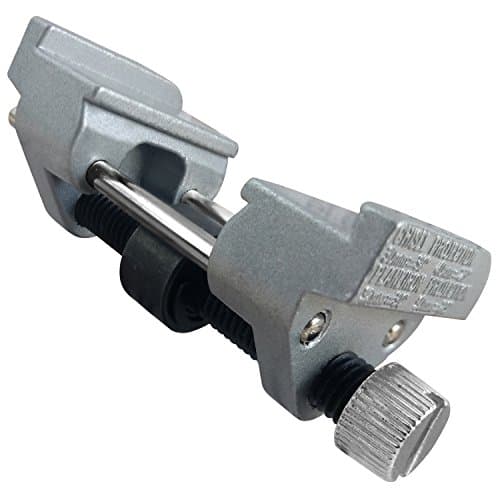 Atlin Honing Guide, Eclipse Pattern An Eclipse-pattern side clamp for under twenty dollars. It sets the same geometry the expensive guides do, less conveniently, and that is the whole difference. | The guide that makes the case against expensive guides | $16.99tier D | 7.8/10 | $16.99Amazon |
| 02 | 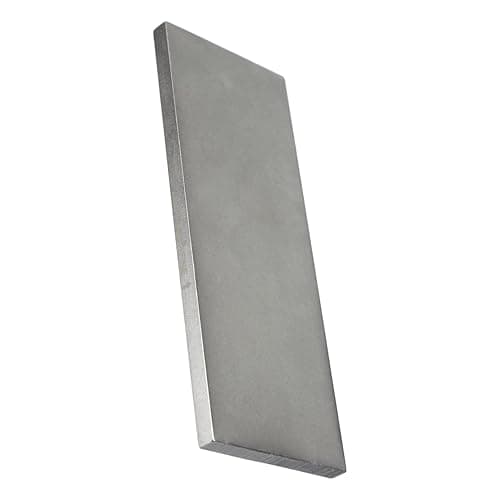 DMT D8F Dia-Sharp Bench Stone, Fine Diamond bonded to a steel plate: it cannot dish, it never needs flattening, and it works dry. For someone who wants sharpening to be a task rather than a hobby, this is the answer. | The stone that never needs maintaining | $32.65tier C | 8.5/10 | $65.29Amazon |
| 03 | 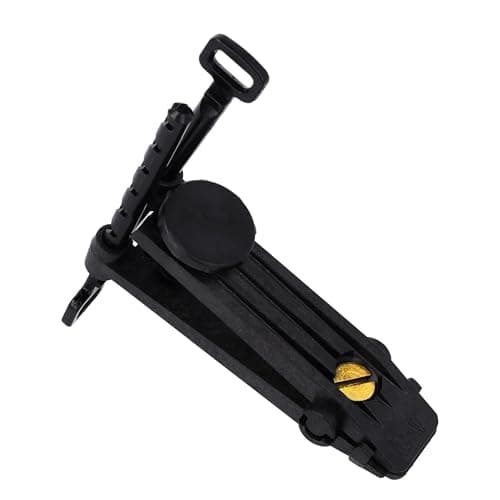 DMT Aligner Blade Guide A clamp-and-angle guide for blades a rolling honing guide cannot hold. Narrow, specific, and the right answer when nothing else fits. | Holding an angle on things a bench guide will not grip | $7.47tier C | 8.2/10 | $14.95Amazon |
#ad· Live prices from the Amazon Product API, as of October 16, 2026. Where we have no verified live price we show none, and the cost-per-decade figure is suppressed with it — we would rather leave a gap than print a number that has rotted.
Grind a low-angle block plane iron at 25 degrees for general work, and remember that the bevel is the cutting angle: a 12 degree bed plus a 25 degree bevel cuts at 37 degrees. If you want a guide that will actually hold a short block plane iron, an Eclipse-pattern side clamp is the one to buy — the Atlin is the cheapest honest version — and a diamond plate is the stone we would pick for the job, because a block plane iron is small enough that you will not want to soak a waterstone for it.
Sharpening a block plane iron is not the same job as sharpening a bench plane iron, and two differences account for all of it. The first is geometry: a block plane is bevel-up, so the bevel angle you grind adds to the bed angle to produce the cutting angle. Change the bevel on a bevel-down bench plane and you change how long the edge lasts; change the bevel on a block plane and you change how the plane cuts. The second is size. A block plane iron is short, often under three inches, and many honing guides will not grip it with enough projection to reach the stone — which is why “which guide holds a block plane blade” is a real question and not a beginner's worry.
The angle, and the arithmetic behind it
Start from what the plane publishes. Both Stanley and Taytools publish a 12 degree bed on their No. 62 bevel-up jacks; most low-angle block planes use the same 12 degrees, and the standard-angle pattern uses 20. GreatNeck and Jorgensen, as their cards below note, publish no bed angle at all for their block planes. Where the figure is unpublished, 12 degrees is the reasonable assumption for anything sold as “low angle” and 20 for anything that is not — but you should know you are assuming.
Then add the bevel you grind:
- 25 degrees on a 12 degree bed — a 37 degree cut. The default, and the right answer for end grain and general work. This is the combination that makes a low-angle block plane the tool it is.
- 30 degrees on a 12 degree bed — a 42 degree cut. More durable edge, slightly more effort, a good choice if you work hardwood and keep chipping the edge.
- 38 degrees or more on a 12 degree bed — a 50 degree-plus cut. A high-angle bevel for figured hardwood, where a steep cut reduces tearout. This is the whole reason to own several irons for one bevel-up plane.
- 25 degrees on a 20 degree bed — a 45 degree cut. A standard-angle block plane with a standard bevel is a bench plane in a small body. Worth knowing before you buy one to plane end grain.
Do not grind below 25 degrees. On a bevel-up plane the bevel is the only thing supporting the edge, so a 20 degree bevel in hardwood is a chipped edge waiting to happen. Our sharpening angles page lists the numbers for every tool here, and bevel up vs bevel down covers the system-level trade.
The short-iron problem, and what to do about it
Every side-clamping honing guide publishes a capacity, and the number that matters for a block plane is the minimum blade width and, in practice, the length the jaws need to grip. The Atlin publishes a plane blade capacity of 1-3/8 to 3-1/8 in, which covers the common 1-3/8 in block plane irons — and a 1-5/8 in cutter like the GreatNeck's sits inside it too. Narrower irons can rock in the jaws if you are careless, which the guide's own cons admit.
Three workable approaches, in the order we would try them.
An Eclipse-pattern guide, with a projection block. The clamp holds the iron by its sides; you set how far the iron projects beyond the jaws, and that projection is what determines the angle. Make a small wooden block with a line scribed on it for each angle you use, butt the iron against it, tighten, and the setting is repeatable in seconds. How to use a honing guide covers the method, and the honing guide roundup ranks the class.
Freehand, with the bevel registered on the stone. A block plane iron is actually one of the easier things to hone freehand, because the bevel is wide relative to the iron and sits flat on the stone with an obvious feel. The risk is rounding it, which on a bevel-up plane changes the cutting angle rather than merely dulling the tool. Freehand vs honing guide is the honest comparison.
A clamp-type angle guide, for the irons nothing else holds. The DMT Aligner is a clamp with angle settings, made for blades a rolling guide cannot grip. Its own cons are clear that it is not a substitute for a rolling guide on chisels and plane irons — the angle settings are coarse steps rather than continuous — and that is exactly the point: it is the answer when nothing else fits, not the first choice.
Which stone, for a small iron
A block plane iron is a small piece of steel and the job is usually a touch-up rather than a regrind, which tilts the choice toward whatever is ready to use in ten seconds.
| Tool | Published | Maintenance | Who it is for |
|---|---|---|---|
| Atlin honing guide | Plane blades 1-3/8 to 3-1/8 in; chisels 1/8 to 1-7/8 in | None | Anyone who wants a repeatable angle cheaply |
| DMT D8F Dia-Sharp | 8 in continuous surface, fine 600 mesh, made in Marlborough MA | None — never needs flattening | Sharpening as a task, not a hobby |
| DMT Aligner blade guide | Clamp with angle settings | None | Awkward blades a rolling guide cannot hold |
The case for the diamond plate here is specifically about friction: it works dry, it cannot dish, and it is ready the moment you pick it up, which is what you want for a tool you touch up mid-job. What it will not give you is a mirror polish — a diamond plate gets you sharp, not shiny. Diamond stones vs oilstones and waterstones vs diamond stones compare the options, and the scary sharp method is the sandpaper-on-glass alternative if you own nothing at all.
The sequence
Pull the iron, note which way up it goes back — bevel up, towards the lever cap — and work through it.
- Flatten the back, once in the tool's life. The first inch of the back behind the edge, flat and polished. After that it is two light passes per sharpening to lift the burr, or use the ruler trick and never flatten it again.
- Set the angle and hone the bevel. Coarse only if the edge is damaged; fine for a normal touch-up. Work until a burr runs the full width.
- Add a micro-bevel if you want the time back. One or two degrees steeper, a few strokes. On a short iron this is the difference between a two-minute job and a ten-minute one — microbevels explained covers it.
- Remove the burr, reassemble, reset the mouth. On an adjustable-mouth plane the toe plate must be reset after the iron goes back — the mouth gap is what makes these planes good on end grain, and it is easy to leave it wide open. See the end-grain roundup for why that gap matters so much, and how to set up a hand plane for the rest of the reassembly.
One last thing specific to block planes: because they live in pockets and aprons, their irons get nicked on things other than wood. A nick is not a sharpening failure, it is damage, and it wants a coarse stone or a plate to grind past rather than more strokes on a fine one. That is the main argument for owning something coarse as well as something fine, which is what the sharpening starter kit assembles at the lowest sensible cost.
Questions
Frequently asked
What angle should I sharpen a block plane blade at?
25 degrees for general work and end grain, 30 if you keep chipping the edge in hardwood, and 38 or more if you are setting the plane up for figured wood. Remember to add the bed: 25 degrees on a 12 degree low-angle bed is a 37 degree cut, and the same bevel on a 20 degree standard bed is a 45 degree cut.
Why is a block plane blade bevel up?
Because the pattern is designed around a low bed, and with the bevel facing up the bed and the bevel together make the cutting angle. That is what lets a small plane cut end grain at 37 degrees, which a bevel-down bench plane cannot do without a different frog. The cost is that the bevel alone supports the edge.
Will a honing guide hold a block plane iron?
An Eclipse-pattern side clamp usually will — the Atlin publishes a plane blade capacity of 1-3/8 to 3-1/8 in, which covers common block plane irons. Very narrow irons can rock in the jaws, and some guides need more blade length than a short iron has. Check the published capacity before you buy, and consider a clamp-type angle guide for anything that will not sit.
Do I need a micro-bevel on a block plane iron?
You do not need one, and it is the cheapest time saving available: honing a narrow strip at the edge takes a fraction of the strokes that re-honing the whole bevel does. On a bevel-up plane keep it small, one or two degrees, because the micro-bevel is also adding to your cutting angle.
How often should a block plane blade be sharpened?
When it stops cutting end grain cleanly, which is the first symptom and arrives long before the plane feels blunt. For a plane in regular use that is a touch-up every session or two — a dozen strokes, not a full sharpening. A dull block plane does not tear end grain; it skates and crushes it.
Can I use a bench grinder on a block plane iron?
For a nicked or badly damaged edge, carefully, with light passes and frequent cooling — a short iron gets hot fast because there is little steel to carry the heat away, and an overheated edge is permanently soft. For routine sharpening a grinder is the wrong tool entirely; a coarse plate removes damage without the risk.
Receipts
Sources
- DMT Diamond Sharpeners — Warranty page. Retrieved 2026-07-24.
- DMT Diamond Sharpeners — Bench Stones (manufactured in the USA, Marlborough MA). Retrieved 2026-07-24.
- Stanley — Sweetheart No. 62 Low Angle Jack Plane 1-12-137 ('manufactured from extra-thick, 4.75mm A2 steel, providing excellent edge retention'; replacement plane iron listed separately as 0-12-142). Retrieved 2026-08-26.
- Taylor Tools — Taytools #62 Premium Low Angle Jack Plane, SKU 468280 ("stress-relieved ductile cast iron"; 14 in long, 2-1/2 in wide, 4.6 lb; "3/16" thick" by 2 in wide "tool steel iron" "hardened and tempered to 60-65 HRc" ground at 25 degrees; 12 degree bed; sole "precision lapped to within 0.003" over the entire length"; adjustable mouth; "solid brass rear adjustment knob"; 90-day return on unused items; no warranty stated. NOTE: the Amazon listing title for the same SKU states "Blade Hardness 55-60 HRC", which disagrees with the maker's page). Retrieved 2026-09-16.
- GreatNeck Tools — Warranty Policy (limited lifetime warranty; 'we'll either repair it or replace it with a tool of equal or greater value'; no receipt required, ownership is enough; does not cover bits, blades, files, batteries or calibration). Retrieved 2026-08-28.
- Amazon listing for Atlin Honing Guide, Eclipse Pattern — specifications and price basis, retrieved via the Amazon Product API on 2026-07-24 and refreshed on the daily price check.
- Amazon listing for DMT D8F Dia-Sharp Bench Stone, Fine — specifications and price basis, retrieved via the Amazon Product API on 2026-07-24 and refreshed on the daily price check.
- Amazon listing for DMT Aligner Blade Guide — specifications and price basis, retrieved via the Amazon Product API on 2026-07-24 and refreshed on the daily price check.
We have not handled these tools. Nobody here has tested one, owned one, or taken one apart. Specifications come from the manufacturer or the retailer listing; warranty terms come from the maker's own warranty page; the cost-per-decade arithmetic is ours and reproducible. Where we could not verify a figure we say so on the page rather than quietly leaving it out. Read the full method.
Keep reading
Related
- Sharpening angles explainedEvery bevel angle on this site, including the bevel-up arithmetic.
- The best honing guidesWhich guides publish a capacity that fits a short iron.
- The best block planesThe planes these irons live in, ranked.
- The best hand planes for end grainWhy the mouth setting matters as much as the edge.
- Diamond stones vs oilstonesChoosing the stone for a touch-up tool.
- How to camber a plane ironThe one thing you should not do to a block plane iron.
Back to Sharpening · how we pick · editorial policy