We earn a commission when you buy through our Amazon links, at no extra cost to you. It never decides a ranking, and where the best tool in a class is one we earn nothing on, we say so and link it anyway. How this works.
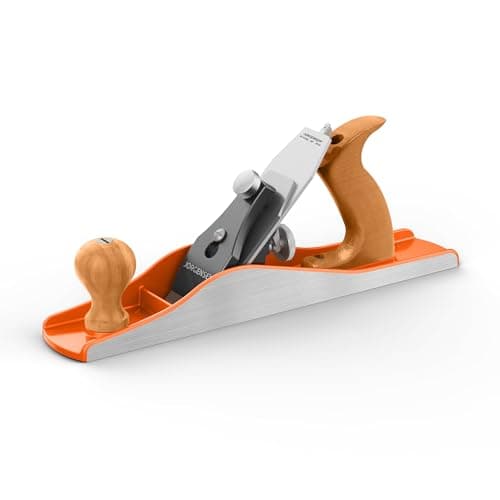
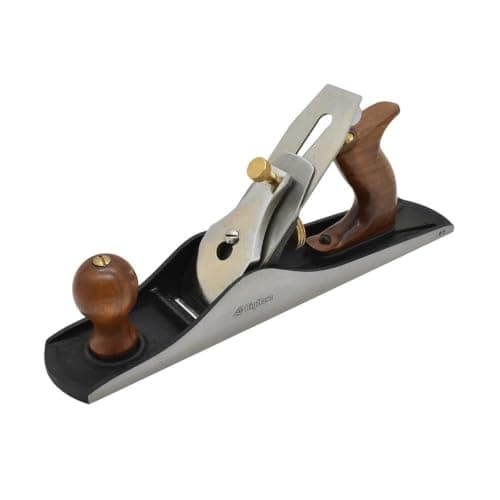
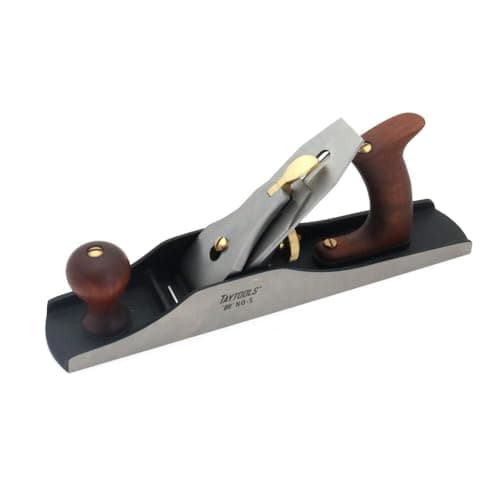
The same Bedrock-pattern frog and lapped ductile body as our best first plane, stretched to a 14 in jack, with a cryogenically treated O1 iron the maker actually publishes a thickness and hardness for. Nothing else on this page combines that frog, that iron and this price.
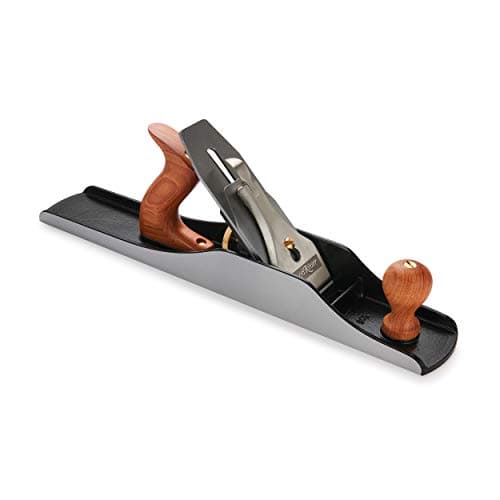
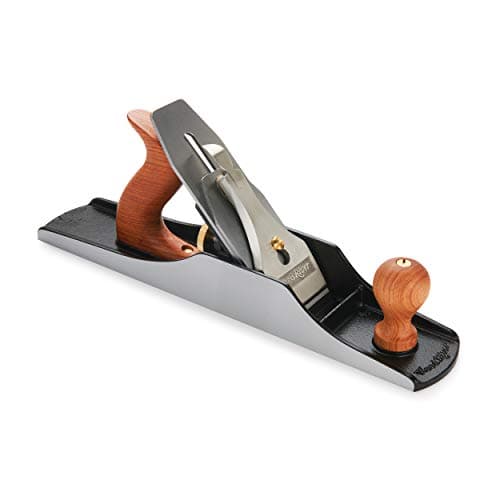
The same stress-relieved ductile castings and fully machined Bedrock-based frog as the WoodRiver #7, in the 18 in fore-plane length at 7-3/4 lb. For a home shop that joints medium edges and flattens panels, it is the one long plane that does both jobs without the weight of a No. 7.
The fore plane for a shop that will never buy a full jointer
A ductile-iron No. 5 whose maker publishes the three things almost nobody at this price does: a sole tolerance (0.003 in), a numbered replacement iron in 3 mm O1, and a lifetime warranty that needs no receipt. The paperwork is better than the plane's reputation.
The best-documented jack plane under the premium tier
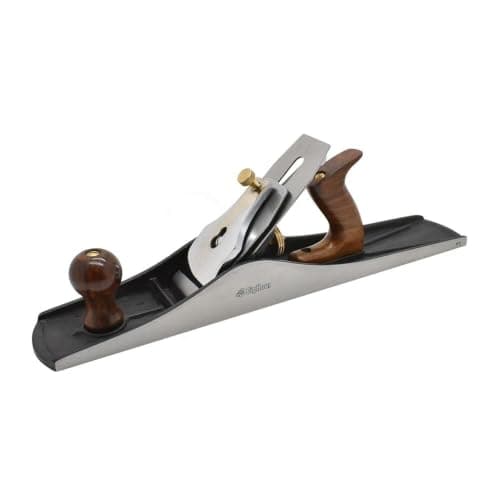
The 18 in sibling of the Big Horn No. 7: cast iron, a 1/8 in iron on a stated 45 degree bed, an adjustable frog and rosewood handles. The maker's page names two different steels for the same iron, which is why it sits last on a page it might otherwise have placed higher.
The budget fore plane with a 1/8 in iron and a stated bed angle
Woodcraft's house premium line in the wide 5-1/2 size: a 2-3/8 in iron, stress-relieved ductile castings, a fully machined Bedrock-based frog, and just over seven pounds of mass. It is the plane on this page for someone who flattens wide hardwood and never wants it to chatter.
A gray cast iron No. 5 whose maker publishes a sole tolerance, a blade hardness and a bed angle — the same three numbers Rockler publishes — at hardware-store money. It is the budget pick because the paperwork exists, not because the casting is special.
The cheapest No. 5 with a published flatness tolerance
#ad· Live prices from the Amazon Product API, as of October 16, 2026. Where we have no verified live price we show none, and the cost-per-decade figure is suppressed with it — we would rather leave a gap than print a number that has rotted.
Buy the Taytools No. 5 Bedrock-style jack. Fourteen inches of sole and a published 0.120 in cryo-treated O1 iron is the right combination for rough stock, and a jack is the one length that will both hog material off and finish the job if you only own one plane. If you flatten wide boards and panels, the WoodRiver No. 6 at 17-3/4 inches and nearly eight pounds is the better tool and the better buy. If money is the constraint, the Big Horn No. 6 is the cheapest fore plane here that publishes an iron thickness.
Rough lumber is a different problem from the one most plane pages are about. A board off the sawmill is not flat, not straight, not of even thickness, and the surface is full of grit from the yard and the blade marks from the mill. Nothing about that is a sharpness problem. It is a geometry problem, and the tool that solves geometry problems is a long, heavy plane with a thick iron and a wide open mouth.
The technique is a separate matter and it is covered in full on flattening rough lumber by hand. This page is about which plane to put in your hand while you do it.
Why length is the specification that matters
A plane cuts where its sole touches. On a board with a hollow in the middle, a short plane drops into the hollow and cuts the bottom of it, deepening the defect; a long plane bridges the hollow and cuts only the high spots either side of it, which is exactly what you want. That is the whole of why the traditional sequence runs from short and aggressive to long and fine, and it is also why buying a smoother first and trying to flatten rough stock with it is the most common way to conclude that hand planes do not work.
No. 5 jack, 14 in. The compromise length, and the right first plane. Long enough to take out most of a cup, short enough to be steerable and to work across the grain on a narrow board. With a heavily cambered iron it stands in for a scrub; with a straight iron it finishes. What is a jack plane has the pattern.
No. 5-1/2 jack, 15 in and wide. A wider iron removes more per stroke and the extra mass carries through a hard patch. It also weighs what it weighs, which on a long afternoon is a real cost.
No. 6 fore plane, 18 in. The under-appreciated size and, for anyone who dimensions boards wider than about eight inches, probably the best single plane on this page. Long enough to flatten properly, two pounds lighter than a No. 7, and short enough to use across the grain.
No. 7 jointer, 22 in. The right tool for a finished edge or a true face on a long board, and the wrong tool for the first pass on a twisted one — too heavy, too long, too fine. The best jointer planes is where that work belongs, and jack plane vs jointer plane settles the overlap.
The scrub plane question, answered honestly
The classic first tool on rough stock is a scrub plane: short, narrow, a deeply cambered iron and a mouth wide enough to pass a shaving the thickness of a pencil lead. Worked diagonally across the grain, it removes material faster than any other hand tool. What is a scrub plane covers how it works.
We have not ranked one on this page, and the reason is a supply reason rather than an editorial one: there is no scrub plane in our product registry with a verified live listing we can stand behind, and we do not add a product to fill a slot. So here is the substitute that most people use anyway, and it is genuinely good advice: put a heavy camber — something like a 3 in radius across the edge — on a second iron for whichever jack you buy, and keep it as your roughing iron. How to camber a plane iron has the amounts, and the best replacement plane irons is where a second iron comes from. A cambered jack is slower than a true scrub and one-tool-cheaper, and for the two or three boards a hobbyist flattens in a month that is the right trade.
What the makers publish
Plane
Length
Iron as published
Weight
Taytools No. 5 Bedrock-style
14 in, 2-1/2 in wide
O1, cryo, 0.120 in, 54–58 HRc
Not published
WoodRiver No. 6 V3
17-3/4 in, 2-7/8 in wide
High carbon, 2-3/8 in, 25 deg
7-3/4 lb
Jorgensen No. 5
14 in, 2 in cutter
O1, 3 mm, 25 deg, part #70731
Not published
Big Horn 19329 No. 6
18 in
1/8 in, 2-23/64 in, 45 deg
Not published
WoodRiver No. 5-1/2
14-15/16 in, 2-7/8 in wide
High carbon, 2-3/8 in
Just over 7 lb
Big Horn 19328 No. 5
14 in, 2-1/2 in wide
1/8 in, 55–60 HRC, 2 in
Not published
Two things in that table are worth noticing. WoodRiver is the only maker here that publishes a weight, which on a page about mass is the specification you would most like to have. And Jorgensen is the only one that publishes a part number for the iron, which on a plane you intend to run two irons in is worth more than it sounds.
What else the work needs
A plane is not the only thing between you and a flat board, and two of the others are cheaper than any pick here.
Winding sticks and a straightedge. You cannot flatten what you cannot measure. Two matched sticks laid across the ends of a board show twist immediately, and a straightedge shows cup and bow. Any pair of straight sticks works; a reliable reference edge is worth buying, and the best woodworking squares covers what makes one trustworthy.
Something to hold the board. Rough stock does not sit flat on a bench, and a board that rocks cannot be planed. Thin shims and a pair of planing stops matter more than any upgrade to the plane itself.
A willingness to ruin the edge. Sawmill grit and the odd embedded nail will take the edge off any iron in a stroke. Brush the board off first, and accept that the roughing iron will need honing more often than the smoothing one — how to sharpen a plane iron is the routine, and it is why we would not put a premium iron in a roughing plane.
Every pick, in full
The write-ups
01Best jack plane overall
Size
No. 5 jack, 14 in sole, 2-1/2 in wide
Iron
O1, cryo treated, 0.120 in, 54-58 HRc, 2 in
Frog
Bedrock-style, full-contact, mouth adjusts with iron in place
Body
Ductile cast iron, sole and sides lapped
Warranty
None published; 90-day return on unused items
Taytools #5 Bedrock-Style Jack Plane
Taytools
8.2/10
The same Bedrock-pattern frog and lapped ductile body as our best first plane, stretched to a 14 in jack, with a cryogenically treated O1 iron the maker actually publishes a thickness and hardness for. Nothing else on this page combines that frog, that iron and this price.
Cost per decade
$70.00
Horizon · tier C
20 years — No lifetime warranty; parts purchasable and resharpenable
No lifetime warranty published at the date checked. The iron is a standard Bailey-pattern size, so aftermarket replacements from third-party makers are purchasable, and the body is a casting with no consumable part.
Rebuy risk
Medium
parts listed, resharpenable
Sole & body
8.5
Iron & edge
8.0
Adjustment
8.5
Out of box
8.0
Parts & repair
7.0
Value
9.0
What it gets right
+Bedrock frog with full-surface contact to the body, adjustable without pulling the iron — the feature the premium makers charge for
+Maker publishes the iron spec: 0.120 in O1, cryogenically treated, 54-58 HRc
+Sole and sides stated as lapped flat over the full length, so it can shoot as well as flatten
+Roughly half the money of the Woodcraft and Rockler jacks below it
What it costs you
−No warranty published and no flatness tolerance figure, unlike the Rockler and Big Horn planes
−54-58 HRc is softer than the A2 and O1 irons on the premium planes; expect to hone sooner
−Taytools states its own basic replacement irons do NOT fit its Bedrock planes, so a spare iron is not a catalog item
−Listed with a real but modest stock count at the time of check
Skip this if…
…you want a documented lifetime warranty. The Jorgensen one row down has one; this plane is here on the strength of its frog and iron, not its paperwork.
We earn nothing on this one
The best No. 5 you can buy in North America is a Lie-Nielsen, and it is not sold on Amazon, so we earn nothing on it. Ductile iron, a 0.125 in cryo-treated A2 iron at Rockwell 60-62, and — verbatim from the product page — materials and workmanship guaranteed for the life of the tool, with parts and repairs on request. Every figure there is quoted from the No. 5 product page at Lie-Nielsen Toolworks.
02The fore plane for a shop that will never buy a full jointer
Size
No. 6 fore plane, 17-3/4 x 2-7/8 in, 7-3/4 lb
Iron
High carbon steel, 2-3/8 in wide, 25 deg bevel
Frog
Fully machined, adjustable, Bedrock-based
Body
Stress-relieved ductile iron; sole and sides machined flat and square
Warranty
None published; 30-day defect replacement per the retailer listing
WoodRiver #6 Bench Plane, V3
WoodRiver
7.8/10
The same stress-relieved ductile castings and fully machined Bedrock-based frog as the WoodRiver #7, in the 18 in fore-plane length at 7-3/4 lb. For a home shop that joints medium edges and flattens panels, it is the one long plane that does both jobs without the weight of a No. 7.
Cost per decade
$120.00
Horizon · tier C
20 years — No lifetime warranty; parts purchasable and resharpenable
No lifetime warranty published at the date checked. The iron is a standard Bailey-pattern size, so aftermarket replacements from third-party makers are purchasable, and the body is a casting with no consumable part.
Rebuy risk
Medium
parts listed, resharpenable
Sole & body
8.5
Iron & edge
7.5
Adjustment
8.5
Out of box
8.0
Parts & repair
7.5
Value
6.5
What it gets right
+The premium-pattern castings and frog of the #7 in a length most home shops can use every week
+Shares the same numbered V3 replacement blade (item 153919) as the #7, so the wear part is a catalog item
+Stress-relieved ductile iron, per the retailer's own spec sheet
+Nearly two pounds lighter than the #7, which matters over an afternoon of flattening
What it costs you
−Woodcraft does not publish the iron's thickness, hardness or the bed angle for this size either
−Flatness is described in words, not a number
−Priced above the Taytools #7, which is longer and publishes more
−Woodcraft's own site listed it below the Amazon price at the time of check
Skip this if…
…you regularly joint edges longer than about four feet. An 18 in sole starts to follow a long edge rather than straighten it; buy the No. 7 for that work.
03The best-documented jack plane under the premium tier
Size
No. 5 jack, 14 in, 2 in cutter
Iron
O1, 3 mm (1/8 in), 25 deg, part #70731
Sole
Ground flat and square to 0.003 in, per maker
Body
Ductile iron, beech handles, stainless hardware
Warranty
Limited lifetime, no receipt required
Jorgensen No. 5 Jack Plane
Jorgensen
8.0/10
A ductile-iron No. 5 whose maker publishes the three things almost nobody at this price does: a sole tolerance (0.003 in), a numbered replacement iron in 3 mm O1, and a lifetime warranty that needs no receipt. The paperwork is better than the plane's reputation.
Cost per decade
Suppressed — no live price
Horizon · tier A
30 years — Lifetime warranty, cited
Pony Jorgensen publishes a limited lifetime warranty against deficiencies in material and workmanship on its products, with no time limit on when the tool was bought and no receipt required; it excludes improper use, abuse, alteration and improper repair. The No. 5 product page lists the O1 iron as a numbered replacement part (#70731), so the wear part is purchasable from the maker rather than only from third parties.
Rebuy risk
Low
lifetime warranty, parts listed, resharpenable
Sole & body
7.5
Iron & edge
8.0
Adjustment
7.0
Out of box
7.5
Parts & repair
9.0
Value
9.0
What it gets right
+Pony Jorgensen's limited lifetime warranty applies with no receipt and no time limit — the strongest published cover on this page
+The O1 iron is a numbered part on the maker's own site, so the wear part is purchasable from the source
+Published sole tolerance of 0.003 in, which only the Rockler and Big Horn planes match here
+Thick 3 mm iron at a price closer to the budget planes than the premium ones
What it costs you
−Amazon's listing returned a live price but no availability string at the time of check; the maker's own site lists it as a current product
−The maker's No. 4 in the same line has a reputation for adjuster backlash; the No. 5 page publishes nothing about the adjuster
−Bed angle and weight are not published
−A Bailey-type frog, not a Bedrock: the frog must come off to adjust the mouth
Skip this if…
…the frog matters more to you than the warranty. The Taytools above it beds the iron better; this plane's argument is what is written down.
04The budget fore plane with a 1/8 in iron and a stated bed angle
Size
No. 6 fore plane, 18 in; weight not published
Iron
1/8 in, 2-23/64 in wide, 45 deg; steel listed as O1 in the spec table and EN42Cr in the feature list
Frog
Adjustable; solid brass depth knob and lateral adjuster
Body
Cast iron (not stated as ductile), rosewood knob and handle
Warranty
Not published
Big Horn 19329 No. 6 Fore Plane
Big Horn
6.5/10
The 18 in sibling of the Big Horn No. 7: cast iron, a 1/8 in iron on a stated 45 degree bed, an adjustable frog and rosewood handles. The maker's page names two different steels for the same iron, which is why it sits last on a page it might otherwise have placed higher.
Cost per decade
$44.99
Horizon · tier C
20 years — No lifetime warranty; parts purchasable and resharpenable
No lifetime warranty published at the date checked. The iron is a standard Bailey-pattern size, so aftermarket replacements from third-party makers are purchasable, and the body is a casting with no consumable part.
Rebuy risk
Medium
parts listed, resharpenable
Sole & body
6.5
Iron & edge
6.0
Adjustment
7.0
Out of box
6.5
Parts & repair
5.5
Value
7.5
What it gets right
+A 1/8 in iron on a stated 45 degree bed, with an adjustable frog, at a hardware-store price
+Rosewood handles rather than plastic
+Precision-ground sole and sides, per the maker
+The cheapest 18 in plane on the page after the Groz
What it costs you
−The maker's own page lists the iron as O1 steel in its specification table and EN42Cr in its feature list; one of them is wrong and we could not tell which
−No sole tolerance, hardness, weight or warranty published; the Groz above it publishes two of those for less money
−Body stated as cast iron, not ductile
−The 2-23/64 in iron is a hair under the standard 2-3/8 in, so check fit before ordering an aftermarket iron
Skip this if…
…the Groz is in stock. It is cheaper and publishes a tolerance and a hardness; this plane's argument is the thicker stated iron and the wood on the handles.
Woodcraft's house premium line in the wide 5-1/2 size: a 2-3/8 in iron, stress-relieved ductile castings, a fully machined Bedrock-based frog, and just over seven pounds of mass. It is the plane on this page for someone who flattens wide hardwood and never wants it to chatter.
Cost per decade
$161.49
Horizon · tier C
20 years — No lifetime warranty; parts purchasable and resharpenable
No lifetime warranty published at the date checked. The iron is a standard Bailey-pattern size, so aftermarket replacements from third-party makers are purchasable, and the body is a casting with no consumable part.
Rebuy risk
Medium
parts listed, resharpenable
Sole & body
9.0
Iron & edge
8.0
Adjustment
8.5
Out of box
8.0
Parts & repair
7.0
Value
6.0
What it gets right
+The heaviest and widest plane on the page, which is exactly what a jack used for flattening wants
+Stress-relieved ductile castings and a fully machined frog, per the retailer's own spec sheet
+Woodcraft lists a V3 replacement blade that fits the 4-1/2, 5-1/2, 6 and 7
+In stock at a large retailer rather than on a small maker's waiting list
What it costs you
−Woodcraft does not publish the iron's thickness, hardness or the bed angle for this size
−Priced against the premium makers without a published warranty
−Too wide and heavy for a general-purpose first jack; a standard No. 5 is the better all-rounder
−Woodcraft's own listing was priced below the Amazon one at the time of check
Skip this if…
…this would be your only bench plane. A 5-1/2 is a specialist flattening plane; buy a No. 5 first and this second.
06The cheapest No. 5 with a published flatness tolerance
Size
No. 5 jack, 14 in sole, 2-1/2 in wide
Iron
Hardened carbon steel, 1/8 in, 55-60 HRC, 2 in
Sole flatness
0.002-0.004 in, per maker
Body
Cast iron (not stated as ductile), 45 deg adjustable frog
Warranty
Not published
Big Horn 19328 Jack Plane, No. 5
Big Horn
6.7/10
A gray cast iron No. 5 whose maker publishes a sole tolerance, a blade hardness and a bed angle — the same three numbers Rockler publishes — at hardware-store money. It is the budget pick because the paperwork exists, not because the casting is special.
Cost per decade
$42.72
Horizon · tier C
20 years — No lifetime warranty; parts purchasable and resharpenable
No lifetime warranty published at the date checked. The iron is a standard Bailey-pattern size, so aftermarket replacements from third-party makers are purchasable, and the body is a casting with no consumable part.
Rebuy risk
Medium
parts listed, resharpenable
Sole & body
6.5
Iron & edge
6.0
Adjustment
7.0
Out of box
6.5
Parts & repair
6.0
Value
8.0
What it gets right
+Maker publishes a sole flatness tolerance, 0.002 to 0.004 in, which no other plane at this price on the site does
+Adjustable frog and a stated 45 degree bed, so it sets up like a Bailey
+Standard 2 in iron, so an aftermarket upgrade is a straightforward later purchase
+Sapele handles rather than plastic
What it costs you
−Body is stated as cast iron, not ductile — the only plane on this page without a ductile body, and the one to be careful with if dropped
−No warranty, weight or replacement iron published
−Softest published iron on the page alongside the Rockler, at 55-60 HRC
−Little maker history to check the published numbers against
Skip this if…
…you can stretch to the Jorgensen. The extra money buys a ductile body, a numbered O1 iron and a lifetime warranty; this plane's whole case is that it is cheap and measured.
Best overall, and best if you own one plane: the Taytools No. 5. The thickest published iron here in the most useful length, with a Bedrock-style frog whose mouth adjusts with the iron in place — which matters when you are switching between a roughing cut and a finishing one. Buy a second iron and camber it heavily.
Best for wide boards and panels: the WoodRiver No. 6 V3. Eighteen inches, nearly eight pounds, a 2-3/8 in iron and a stress-relieved ductile iron body machined flat and square. It is the plane we would pick to flatten a tabletop by hand, and Woodcraft sells the replacement iron.
Best documented at a sane price: the Jorgensen No. 5. A published 0.003 in sole tolerance, an O1 iron with a part number, and a limited lifetime warranty that does not ask for a receipt. It is the pick if you want a working plane with somebody standing behind it.
Cheapest fore plane that publishes anything: the Big Horn 19329 No. 6. Eighteen inches and a 1/8 in iron for a fraction of the WoodRiver. The listing contradicts itself on the steel, no warranty is published, and both of those are the price of admission here.
If you want mass and width over length: the WoodRiver No. 5-1/2. A 2-7/8 in body and over seven pounds in a jack length — more material removed per stroke than any No. 5 here, at the cost of your shoulder after an hour.
Cheapest jack with a published tolerance: the Big Horn 19328 No. 5. A 0.002–0.004 in flatness figure and a 1/8 in iron at 55–60 HRC, which is a genuinely unusual thing to find at this price. Nothing is published about the warranty, so treat it as a tool you own outright.
The sequence, if you are doing this for the first time
Pick the best face and work it first. Sight along the board, find the face that needs the least removed, and flatten that one before you touch the other.
Read the twist with winding sticks. Two high corners diagonally opposite is twist, and twist comes out first, diagonally, before anything else.
Work across the grain with a cambered iron. Across or at 45 degrees, not along. Material comes off several times faster and tearout does not matter yet.
Switch to a straight iron and work along the grain. Now you are taking out the scallops the cambered iron left, and the length of the sole is doing the work.
Mark the thickness and bring the second face down to it. A marking gauge from the flattened face around all four edges, then plane to the line.
Only then edge-joint, and only then smooth. A jointer for the edges, a smoother last — the best smoothing planes is the end of the sequence, and how to use a hand plane covers the stroke itself.
Cost per decade on a plane that eats edges
A roughing plane leads a harder life than any other bench plane you own. It meets grit, paint, embedded dirt and the occasional nail, and its iron gets honed more often and ground back further than a smoother's ever will. That changes the buying calculus in one specific way: the iron, not the casting, is the consumable, and a plane whose iron is a catalog item is worth a premium here that it would not be worth on a shelf queen.
Three of the six planes on this page have a replacement iron available from the maker or its retailer. Over twenty years of regular dimensioning that is the column that decides the total, exactly as cost per decade works it out. It is also the argument for not buying your most expensive plane for this job: a premium iron in a roughing plane is money spent on steel you are deliberately going to abuse.
Questions
Frequently asked
What hand plane is best for flattening rough boards?+
A No. 5 jack if you own one plane, and a No. 6 fore plane if the boards are wide. The logic is sole length: a long sole bridges the hollows instead of following them down, and a No. 6 at eighteen inches is the point where that stops being a problem without the weight of a No. 7. Camber the iron heavily for the first passes.
Do I need a scrub plane for rough lumber?+
No. A scrub plane removes material faster than anything else and it is a luxury rather than a requirement. A second iron for your jack, ground with a heavy camber, does the same job perhaps a third slower for the cost of an iron rather than the cost of a plane. If you dimension rough stock every week, buy the scrub; if you do it a few times a year, camber an iron.
Should I plane rough lumber across the grain?+
For the first stage, yes — across the grain or at about 45 degrees to it. A cambered iron worked across removes material several times faster than the same iron worked along, and tearout does not matter because the surface is going to be planed again. Switch to working along the grain once the face is close to flat.
Is a No. 5 or No. 6 better for rough stock?+
A No. 5 is more versatile and a No. 6 is better at the specific job. Fourteen inches steers more easily, works across narrow boards and doubles as a smoother at a pinch; eighteen inches flattens more accurately and tires you less than a No. 7. If this is your second bench plane, buy the No. 6. If it is your first, buy the No. 5.
How flat does a plane sole need to be for rough work?+
Less flat than for smoothing. Roughing is about removing material, not about a finished surface, so a sole that would frustrate a smoother is perfectly serviceable here. What matters is that the toe, the area behind the mouth and the heel are in the same plane, and how to flatten a plane sole is an hour of work if they are not.
We have not handled these tools. Nobody here has tested one, owned one, or taken one apart. Specifications come from the manufacturer or the retailer listing; warranty terms come from the maker's own warranty page; the cost-per-decade arithmetic is ours and reproducible. Where we could not verify a figure we say so on the page rather than quietly leaving it out. Read the full method.