A door that binds is a shaving-thick problem, and a hand plane is the only tool that removes a shaving. Six planes ranked for the two cuts the job actually needs.
We earn a commission when you buy through our Amazon links, at no extra cost to you. It never decides a ranking, and where the best tool in a class is one we earn nothing on, we say so and link it anyway. How this works.
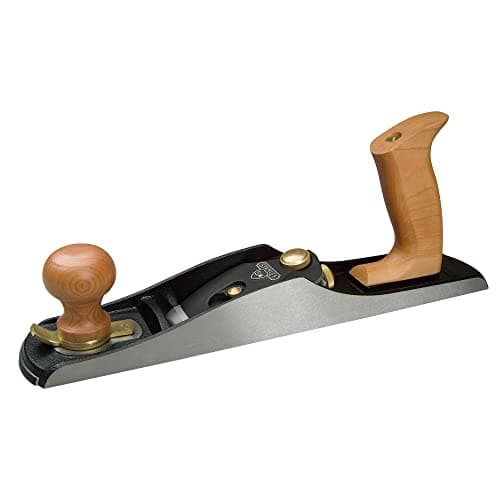
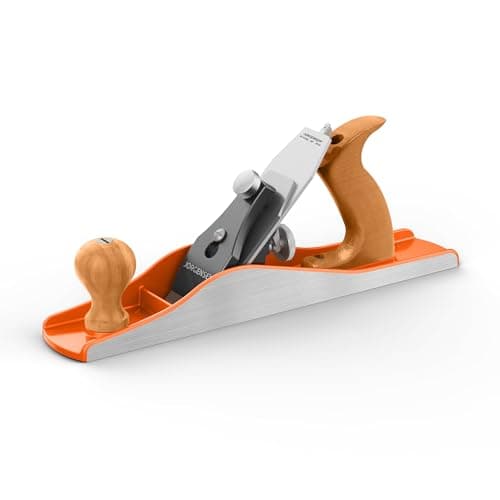
A ductile-iron No. 5 whose maker publishes the three things almost nobody at this price does: a sole tolerance (0.003 in), a numbered replacement iron in 3 mm O1, and a lifetime warranty that needs no receipt. The paperwork is better than the plane's reputation.
The best-documented jack plane under the premium tier
Adjustable mouth, stainless knuckle cap and adjustment screws, and a bed low enough to handle end grain properly. The stainless hardware is the detail that matters in a tool that lives in a pocket.
Bevel-up at a 12 degree bed, which means the bevel you grind sets the cutting angle. Grind three irons at three angles and one plane covers end grain, general work and figured hardwood.
A gray cast iron No. 5 whose maker publishes a sole tolerance, a blade hardness and a bed angle — the same three numbers Rockler publishes — at hardware-store money. It is the budget pick because the paperwork exists, not because the casting is special.
The cheapest No. 5 with a published flatness tolerance
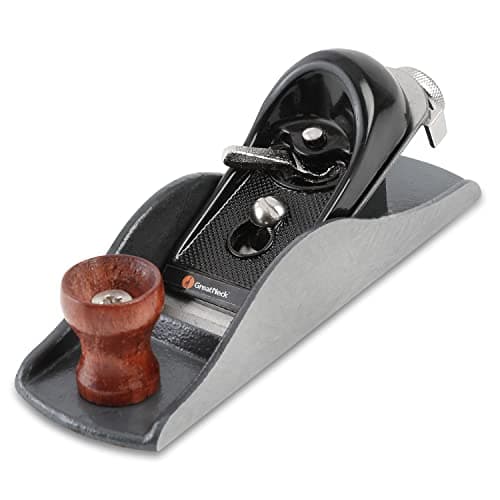
A plain machined cast-iron block plane at hardware-store money, and the only plane on this page whose maker publishes a limited lifetime warranty. Read the exclusions before that sells you: blades are not covered, and the blade is the part you will wear out.
The cheapest block plane with a warranty behind it
#ad· Live prices from the Amazon Product API, as of October 15, 2026. Where we have no verified live price we show none, and the cost-per-decade figure is suppressed with it — we would rather leave a gap than print a number that has rotted.
For a door that sticks, buy a No. 5 jack plane — the Jorgensen No. 5 is the pick — and a low-angle block plane for the ends. The jack is 14 inches long, which is the shortest sole that will take a straight shaving off a 30-inch stretch of door edge without following the hollow you are trying to remove, and the Jorgensen is the one in that class whose maker publishes a sole tolerance, a numbered replacement iron and a lifetime warranty that needs no receipt. If you are only ever easing a door bottom or a swollen top rail, skip the jack and buy the Taytools #9-1/2 block plane by itself.
This page exists because the usual advice for a binding door is a belt sander or an electric planer, and both are the wrong tool for a reason that has nothing to do with tradition. A door that rubs is almost always rubbing by less than a millimeter, over a stretch of maybe eight inches. A power planer removes two millimeters per pass whether you wanted it to or not, cannot be stopped precisely, and leaves a scalloped edge that shows under paint. A belt sander rounds the arris and heats the finish. A hand plane removes a measured shaving, stops when you lift it, and leaves a surface you can paint without further work. It is also quiet, cordless and does not fill a hallway with dust — hand plane vs power tools makes the general version of that argument.
The job is two different cuts
Almost every door complaint is one of four things, and they split into two cuts.
The long edge: the hinge stile or the lock stile is too wide. This is a face-grain cut along a 78 to 80 inch edge, and the only thing that matters is the length of the plane's sole. A sole shorter than the hollow you are removing rides down into it and takes material from the low spot as happily as the high one; a longer sole bridges and cuts only the high spots. A No. 5 at 14 inches is the practical minimum. A No. 62 at 14 inches does the same thing with a lower cutting angle. A 7 inch block plane cannot do it at all, and that is the most common mistake made on this job.
The top and bottom: the door is too tall, or it fouls a new floor. This is end grain, with a painted or veneered face on both sides that you must not blow out. Here the block plane is correct and the jack is clumsy: you want a low bed angle, a mouth you can close, one hand on the tool and the other steadying the door. Work in from both faces toward the middle so the exit fibers are always supported, which is the same rule as on any other end-grain cut.
The hinge mortises are shallow, or the door binds on the hinge side. That is a chisel job, not a plane job — how to use a chisel covers paring a mortise to depth, and it is usually a faster fix than planing anything.
The door is out of square in the frame. Check before you cut: a door that binds at the top of the lock stile and has a widening gap at the bottom is a sagging hinge, not a wide door. Tightening a hinge screw into fresh wood fixes it for free, and planing it makes the problem permanent.
How these are ranked
We have not hung a door with any of these. We opened each maker's and retailer's own listing, wrote down what they publish, cited it below, and ranked on that — the method is on the methodology page. For this job four published things decided it: sole length, whether the mouth adjusts, whether a replacement iron has a part number, and what the warranty actually covers.
Plane
Length
Published iron
Warranty as published
Jorgensen No. 5
14 in, 2 in cutter
O1, 3 mm, 25 deg, part #70731
Limited lifetime, no receipt required
Taytools #9-1/2 block
Block, adjustable mouth
Not published
Not published; 90-day return on unused items
Stanley No. 62
14 in, bevel up at 12 deg
A2, thick section
Limited lifetime; blades excluded
Big Horn 19328 No. 5
14 in, 2-1/2 in wide
1/8 in carbon, 55-60 HRC
Not published
Stanley No. 9 block
Block, fixed mouth
Not published
Limited lifetime; blades excluded
GreatNeck G2
7 in block, fixed mouth
1-5/8 in cutter
Limited lifetime; blades excluded
Two things stand out in that table. The first is that three of the four warranties on this page exclude blades, and on a plane the blade is the part that wears — so the cover is on the casting, which was never going to fail. The second is that the Jorgensen is the only plane here with a published sole tolerance (0.003 in) and a numbered spare iron, which is why a mid-price plane wins a page where two Stanleys are competing.
What is not on this page
Electric planers. Not because they do not work, but because they do not work at this scale. A power planer is the right tool for taking 3 mm off the bottom of six doors on a site. It is the wrong tool for taking 0.3 mm off one.
No. 6 and No. 7 planes. Longer is straighter, and if you already own a jointer plane use it. We did not rank one here because nobody buys a 22 inch, 9.6 lb plane to fix a door, and a No. 5 is enough sole for an 80 inch edge taken in sections.
Vintage Stanley and Record jacks. For this specific job a tuned secondhand jack is arguably the best value in the whole category — the casting is the part that lasts and the iron is replaceable. Record vs Stanley planes covers which vintage lines are worth buying, and buying used hand tools covers what to check before you pay.
Every pick, in full
The write-ups
01The best-documented jack plane under the premium tier
Size
No. 5 jack, 14 in, 2 in cutter
Iron
O1, 3 mm (1/8 in), 25 deg, part #70731
Sole
Ground flat and square to 0.003 in, per maker
Body
Ductile iron, beech handles, stainless hardware
Warranty
Limited lifetime, no receipt required
Jorgensen No. 5 Jack Plane
Jorgensen
8.0/10
A ductile-iron No. 5 whose maker publishes the three things almost nobody at this price does: a sole tolerance (0.003 in), a numbered replacement iron in 3 mm O1, and a lifetime warranty that needs no receipt. The paperwork is better than the plane's reputation.
Cost per decade
Suppressed — no live price
Horizon · tier A
30 years — Lifetime warranty, cited
Pony Jorgensen publishes a limited lifetime warranty against deficiencies in material and workmanship on its products, with no time limit on when the tool was bought and no receipt required; it excludes improper use, abuse, alteration and improper repair. The No. 5 product page lists the O1 iron as a numbered replacement part (#70731), so the wear part is purchasable from the maker rather than only from third parties.
Rebuy risk
Low
lifetime warranty, parts listed, resharpenable
Sole & body
7.5
Iron & edge
8.0
Adjustment
7.0
Out of box
7.5
Parts & repair
9.0
Value
9.0
What it gets right
+Pony Jorgensen's limited lifetime warranty applies with no receipt and no time limit — the strongest published cover on this page
+The O1 iron is a numbered part on the maker's own site, so the wear part is purchasable from the source
+Published sole tolerance of 0.003 in, which only the Rockler and Big Horn planes match here
+Thick 3 mm iron at a price closer to the budget planes than the premium ones
What it costs you
−Amazon's listing returned a live price but no availability string at the time of check; the maker's own site lists it as a current product
−The maker's No. 4 in the same line has a reputation for adjuster backlash; the No. 5 page publishes nothing about the adjuster
−Bed angle and weight are not published
−A Bailey-type frog, not a Bedrock: the frog must come off to adjust the mouth
Skip this if…
…the frog matters more to you than the warranty. The Taytools above it beds the iron better; this plane's argument is what is written down.
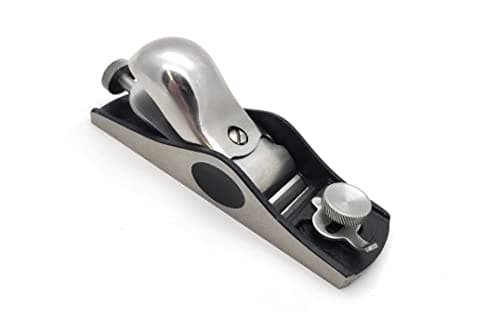
Adjustable mouth, stainless knuckle cap and adjustment screws, and a bed low enough to handle end grain properly. The stainless hardware is the detail that matters in a tool that lives in a pocket.
Cost per decade
$46.49
Horizon · tier C
20 years — No lifetime warranty; parts purchasable and resharpenable
No lifetime warranty published at the date checked. The iron is a standard Bailey-pattern size, so aftermarket replacements from third-party makers are purchasable, and the body is a casting with no consumable part.
Rebuy risk
Medium
parts listed, resharpenable
Sole & body
8.5
Iron & edge
7.5
Adjustment
8.5
Out of box
8.0
Parts & repair
7.0
Value
8.5
What it gets right
+Adjustable mouth is the single feature that separates a real block plane from a toy
+Stainless fittings resist the sweat and pocket grit that pit a block plane first
+Machining quality well above the price band
What it costs you
−No published warranty terms
−Iron wants honing before first use like everything else here
−Knuckle cap is a preference; some people want a plain lever cap
Skip this if…
…your hands are large. A block plane is a one-handed tool and this is a compact one.
We earn nothing on this one
The Veritas low-angle block plane is the better tool and we earn nothing on it — it sells direct only. Worth knowing before you buy: Lee Valley publishes a three-month satisfaction guarantee rather than a defect warranty, which is not the lifetime cover the tool's reputation implies. That guarantee wording is published by Lee Valley / Veritas.
Bevel-up at a 12 degree bed, which means the bevel you grind sets the cutting angle. Grind three irons at three angles and one plane covers end grain, general work and figured hardwood.
Cost per decade
Suppressed — no live price
Horizon · tier A
30 years — Lifetime warranty, cited
Stanley publishes a limited lifetime warranty on hand tools against material and workmanship defects. Note it excludes consumables including 'any blade' — the casting is covered, the iron is not. Bailey-pattern irons are a standard size and replacements are widely sold.
Rebuy risk
Low
lifetime warranty, parts listed, resharpenable
Sole & body
8.5
Iron & edge
8.5
Adjustment
8.0
Out of box
8.0
Parts & repair
9.0
Value
7.0
What it gets right
+One body, three effective cutting angles, if you buy spare irons
+Low bed angle plus adjustable mouth is the best end-grain setup at this price
+Simple architecture: no frog to fettle, fewer things to get wrong
What it costs you
−Spare irons are the whole point and they are an extra purchase
−Bevel-up geometry means a chipped edge changes your cutting angle, not just your sharpness
−Heavier and longer than a smoother if that is the only job
Skip this if…
…you have already committed to a bevel-down set. Mixing the two systems means two sharpening setups for no benefit.
04The cheapest No. 5 with a published flatness tolerance
Size
No. 5 jack, 14 in sole, 2-1/2 in wide
Iron
Hardened carbon steel, 1/8 in, 55-60 HRC, 2 in
Sole flatness
0.002-0.004 in, per maker
Body
Cast iron (not stated as ductile), 45 deg adjustable frog
Warranty
Not published
Big Horn 19328 Jack Plane, No. 5
Big Horn
6.7/10
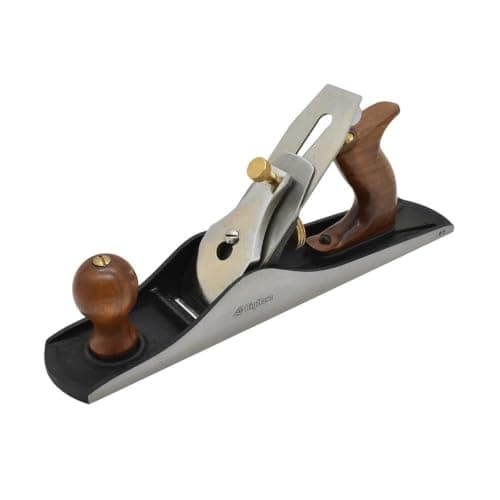
A gray cast iron No. 5 whose maker publishes a sole tolerance, a blade hardness and a bed angle — the same three numbers Rockler publishes — at hardware-store money. It is the budget pick because the paperwork exists, not because the casting is special.
Cost per decade
$42.72
Horizon · tier C
20 years — No lifetime warranty; parts purchasable and resharpenable
No lifetime warranty published at the date checked. The iron is a standard Bailey-pattern size, so aftermarket replacements from third-party makers are purchasable, and the body is a casting with no consumable part.
Rebuy risk
Medium
parts listed, resharpenable
Sole & body
6.5
Iron & edge
6.0
Adjustment
7.0
Out of box
6.5
Parts & repair
6.0
Value
8.0
What it gets right
+Maker publishes a sole flatness tolerance, 0.002 to 0.004 in, which no other plane at this price on the site does
+Adjustable frog and a stated 45 degree bed, so it sets up like a Bailey
+Standard 2 in iron, so an aftermarket upgrade is a straightforward later purchase
+Sapele handles rather than plastic
What it costs you
−Body is stated as cast iron, not ductile — the only plane on this page without a ductile body, and the one to be careful with if dropped
−No warranty, weight or replacement iron published
−Softest published iron on the page alongside the Rockler, at 55-60 HRC
−Little maker history to check the published numbers against
Skip this if…
…you can stretch to the Jorgensen. The extra money buys a ductile body, a numbered O1 iron and a lifetime warranty; this plane's whole case is that it is cheap and measured.
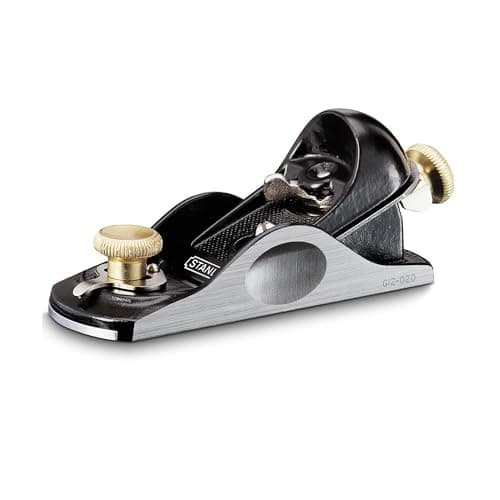
Compact, unfussy, and covered by the same warranty as the rest of the range. Not a joinery tool, and does not pretend to be.
Cost per decade
$19.44
Horizon · tier A
30 years — Lifetime warranty, cited
Stanley publishes a limited lifetime warranty on hand tools against material and workmanship defects. Note it excludes consumables including 'any blade' — the casting is covered, the iron is not. Bailey-pattern irons are a standard size and replacements are widely sold.
Rebuy risk
Low
lifetime warranty, parts listed, resharpenable
Sole & body
6.0
Iron & edge
5.5
Adjustment
5.5
Out of box
6.5
Parts & repair
9.0
Value
7.5
What it gets right
+Small enough to actually live in a pocket or apron
+Under the published limited lifetime warranty on the casting
+Nothing on it to break or lose
What it costs you
−Fixed mouth and standard bed angle
−Too small for anything but light easing work
−Iron quality is entry-level
Skip this if…
…this is going to be your only plane. It is a supplement, not a foundation.
06The cheapest block plane with a warranty behind it
Length
7 in
Cutter
1-5/8 in, hardened and tempered
Adjustment
Depth of cut
Warranty
Limited lifetime, blades excluded
GreatNeck G2 Adjustable Block Plane, 7 in
GreatNeck
6.5/10
A plain machined cast-iron block plane at hardware-store money, and the only plane on this page whose maker publishes a limited lifetime warranty. Read the exclusions before that sells you: blades are not covered, and the blade is the part you will wear out.
Cost per decade
$9.66
Horizon · tier A
30 years — Lifetime warranty, cited
GreatNeck publishes a limited lifetime warranty: a broken tool is repaired or replaced, and ownership rather than a receipt is enough to claim. It does not cover bits, blades, files, batteries or calibration — so on a plane the casting is covered and the iron is not. Block plane irons are a standard size and replacements are widely sold.
Rebuy risk
Low
lifetime warranty, parts listed, resharpenable
Sole & body
5.5
Iron & edge
5.0
Adjustment
5.5
Out of box
5.5
Parts & repair
8.5
Value
9.0
What it gets right
+GreatNeck publishes a limited lifetime warranty and does not ask for a receipt — ownership is enough to claim
+Costs less than a replacement iron for most of the planes above it
+Cast body is machined and polished rather than pressed, at a price where that is unusual
What it costs you
−No mouth adjustment is published, so tearout on difficult end grain is whatever the casting gives you
−The warranty excludes blades, which on a plane is the part that actually wears
−GreatNeck publishes no bed angle figure at all, only the words 'low angle blade'
Skip this if…
…end grain and fine fitting are the jobs. Spend the extra on a plane with an adjustable mouth; that feature is the whole argument of this page.
One plane, one sticking door, you want it done properly: the Jorgensen No. 5. Fourteen inches of sole, a published flatness tolerance, and a spare iron with a part number. It will also be the plane you use for everything else you ever plane, which is the argument for buying the jack rather than the block.
Only the bottom or the top of the door: the Taytools #9-1/2. End grain wants a low bed and a closeable mouth; this is the cheapest plane here with both, and it fits in one hand rather than needing two.
You want one tool for both cuts: the Stanley No. 62. Fourteen inches of sole and a 12 degree bevel-up bed, so it handles the long edge like a jack and the end grain like a block plane. It is the most expensive route and the only single-tool one.
Cheapest 14 inch sole from a maker that publishes numbers: the Big Horn 19328. Gray cast iron rather than ductile, so be careful with it near a concrete floor, but the sole tolerance and the iron hardness are both published, which is more than most planes at twice the money manage.
It lives in a toolbox and gets used twice a year: the Stanley No. 9 or the GreatNeck G2. Fixed mouths, entry-level irons, and a warranty that excludes the blade. For easing a swollen edge once a season that is a reasonable thing to buy; for joinery it is not, and the beginner roundup is the better starting point if you expect the habit to stick.
Doing the job without ruining the door
Find out where it actually rubs. Close the door slowly and watch, or run a sheet of paper down the gap and mark where it jams. Then mark the high spot in pencil on the door edge. Almost every door that “needs planing all the way down” needs about six inches planed.
Plane the hinge stile, not the lock stile, if you have the choice. Taking material off the lock side changes the latch reach and you may end up moving the strike plate. The hinge side hides under the hinge leaf.
Go along the grain on stiles, and in from both faces on rails. The top and bottom of a door are end grain on the stiles even though the rail between them is long grain. That transition is exactly where the blowout happens; take the last few shavings inward from each face.
Back the arris off a hair. A door edge planed perfectly square tends to catch paint and bind; one light pass at 45 degrees on each corner gives the paint somewhere to go and makes the fit feel better than it measures.
Seal what you cut. A freshly planed bottom rail is bare end grain pointed at a wet floor, and that is how a door that fitted in June binds again in September. Prime or oil it the same day.
Cost per decade, and the part that wears
A plane body does not wear out; the iron does. That is why the per-decade figures on this page track the spare-iron question rather than the price. Jorgensen publishes a numbered O1 replacement, so its horizon is as long as the company keeps the part number alive. Stanley publishes a limited lifetime warranty on the No. 62 and excludes the blade from it, which is at least honest about where the risk sits. Big Horn publishes no replacement iron at all. For the block planes an iron is a flat rectangle of steel that several makers grind in standard widths, so a fixed-mouth block plane with an unlisted iron is less of a dead end than the same situation on a bench plane — the replacement iron roundup is where to check fitment before assuming it.
The other half of the arithmetic is sharpening, and it is not optional on this job. A dull plane on a painted door edge will chatter, lift the finish and leave you worse off than before you started. One combination waterstone and a guide is enough — the sharpening starter kit is the cheapest version of that, how to set up a hand plane covers getting a new plane cutting before you put it near the door, and how to use a hand plane covers the stance and the stroke if you have never pushed one.
Questions
Frequently asked
What size hand plane do I need for a door?+
A No. 5 jack at 14 inches for the long edges, and a low-angle block plane for the top and bottom. If you are buying one tool only, buy the jack: a block plane cannot straighten a long edge, but a jack can be made to work on the ends if you are careful. A No. 62 low-angle jack does both jobs properly and costs the most.
Can I plane the bottom of a door without taking it off?+
For a shaving or two, yes — a low-angle block plane will reach a door bottom with the door wedged open. For anything more than that, take it off the hinges and clamp it on edge. You cannot control a cut you cannot see, and the bottom rail is end grain at both ends where blowout shows immediately.
Hand plane or electric planer for a sticking door?+
Hand plane, for a single door. The amount of material that needs to come off is usually under a millimeter, which is one or two hand shavings and less than one pass of a power planer. An electric planer earns its place when you are hanging a batch of doors and removing several millimeters from each.
Should I plane the hinge side or the latch side?+
The hinge side, where the hinge leaf covers the work and the latch geometry is unaffected. Planing the latch stile moves the door away from the strike plate, and past about 2 mm you will be resetting the plate as well. The exception is when the binding is clearly on the latch side and the gap on the hinge side is already tight.
Why is my door suddenly binding when it fitted fine last year?+
Usually seasonal movement or a loose hinge rather than a door that grew. Check the hinge screws first — a single screw that has lost its grip in the jamb will drop the top corner of the door across the opening and bind it at the latch. Replacing that screw with a longer one that reaches the stud behind the jamb costs nothing and undoes the problem. Only reach for the plane once the hinges are solid.
Will planing a painted door ruin the plane iron?+
It will dull it faster than bare wood, and old paint can hide grit, screws and filler that will chip an edge outright. Scrape or sand the paint off the strip you intend to plane first, check for fasteners, and accept that you will be honing afterward. That is also a good argument for doing the job with a cheap iron rather than a prized one.
We have not handled these tools. Nobody here has tested one, owned one, or taken one apart. Specifications come from the manufacturer or the retailer listing; warranty terms come from the maker's own warranty page; the cost-per-decade arithmetic is ours and reproducible. Where we could not verify a figure we say so on the page rather than quietly leaving it out. Read the full method.