Buy It For Life
Cost Per Decade
Is paying four times once cheaper than rebuying? It is an answerable question and almost nobody answers it. Here is our working.
We earn a commission when you buy through our Amazon links, at no extra cost to you. It never decides a ranking, and where the best tool in a class is one we earn nothing on, we say so and link it anyway. How this works.
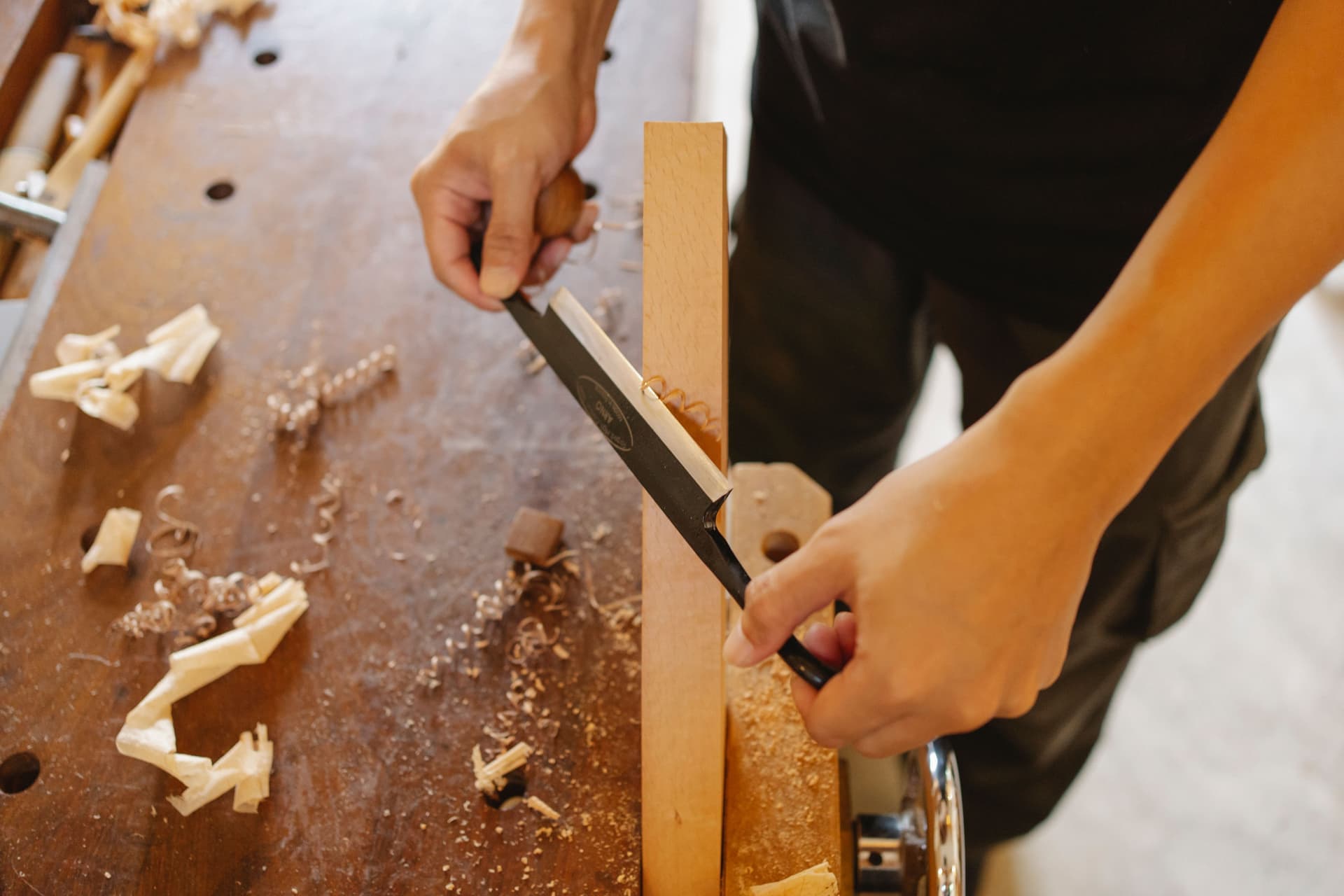
The buy-it-for-life buyer's actual question is narrow and answerable: is paying four times as much once cheaper than rebuying?
Across the competitor pages we fetched while researching this site, not one publishes cost-of-ownership arithmetic, a warranty comparison, or an assessment of whether spare parts can actually be bought. Those are the three inputs to that decision, and all three are public documents. So this page is the answer, with the working shown.
The formula
Cost per decade = live price / comparison horizon in decades
That is it. The interesting part is not the division; it is where the horizon comes from and what it does and does not mean.
The horizon is a comparison basis, not a prediction
This is the part to understand properly, because it is what stops the number being a guess dressed up as arithmetic.
We are not predicting how long your tool will last. Nobody can do that, and a site that claimed to would be inventing the most important input. The horizon is a normalization constant assigned from cited evidence, so that every tool on a page is divided by the same basis when the evidence is the same, and by different bases when the evidence differs.
What that buys you is a like-for-like comparison. A tool with a published lifetime warranty and a tool with nothing published are not the same proposition, and the horizon is how that difference becomes visible in a number instead of staying in prose nobody reads.
The tiers
| Tier | Evidence required, cited | Horizon |
|---|---|---|
| A | Manufacturer lifetime warranty, cited to the warranty page | 30 years |
| B | A finite stated warranty, or a documented ongoing service commitment | The stated term, or the documented basis |
| C | No lifetime warranty, but the wear part is renewable and the tool is resharpenable | 20 years |
| D | No warranty and no parts availability found | 10 years, flagged high rebuy risk |
One definition we apply differently, and publish
“Renewable wear part” means one of two things: either replacement parts are genuinely purchasable (a plane iron, a saw blade), or the tool has no separately consumable part at all.
That second clause matters. A chisel is monolithic: the edge is the tool and sharpening renews it. Scored the usual way — “are spare parts listed?” — a chisel would rate as high rebuy risk for having no spares to sell, which is precisely backwards. It has none because nothing about it wears out separately.
We publish that definition rather than applying it quietly, because a rating system whose rules are hidden is not a rating system, it is an opinion with a number attached.
Worked example
Take two bench planes. Plane A is $220 and its maker publishes a limited lifetime warranty on the casting: tier A, 30-year horizon, so $220 / 3 decades = about $73 per decade. Plane B is $28 with no warranty and no parts listing found: tier D, 10-year horizon, so $28 / 1 decade = $28 per decade.
The cheap plane wins on this metric, and that is not a bug.It is the number telling you the truth: if the cheap plane really does last ten years, it is cheaper per year than the expensive one. The reason to buy the expensive one is not cost per decade. It is that it works better today, needs less setup, and carries a rebuy risk of Low against the cheap plane's High — which is the same evidence saying the ten-year figure is a floor value with nothing behind it.
A metric that always agreed with the expensive option would be a marketing device. This one does not, and that is how you can tell it is measuring something.
Rebuy risk: the number's companion
Cost per decade tells you what a tool costs per unit time if it lasts its horizon. Rebuy risk tells you how confident the evidence is in that horizon.
- Low — lifetime warranty, and renewable wear part, and resharpenable.
- Medium— two of the three.
- High— one or none.
Read them together. A low cost per decade with a High rebuy risk is a cheap tool with nothing documented behind it. A higher cost per decade with a Low rebuy risk is a tool the evidence actually supports.
What this cannot tell you
Four things, stated plainly because a metric without limits is a sales tool.
Whether the tool is any good. Cost per decade knows nothing about how a plane cuts. A well-made tool and a badly made one at the same price and tier post identical numbers.
How long your specific tool will last.That depends on how you use it, store it and maintain it, far more than on the maker. Storage in particular does more for the fifty-year outcome than purchase price does — see rust removal and prevention.
The value of using a good tool. Thirty years of pleasant work with a plane that fits your hand is not in the arithmetic, and it is not nothing.
Anything, when there is no live price. If our price data is stale the figure is suppressed rather than estimated, because computing it from a remembered number would make it fiction.
Why we can be confident in the inputs
Every input is a document you can open. The price comes from the Amazon Product API, date-stamped, and vanishes after 48 hours. The warranty term comes from the maker's own warranty page, cited with the date checked. The parts availability comes from the maker's parts listing.
A reader can re-derive every number on this site. That reproducibility is the whole trust argument, and it is a stronger one than a “why trust us” panel — because you do not have to.
The warranty research that feeds the tiers is on warranties and repairability, and the full method is on the methodology page.
Questions
Frequently asked
What is cost per decade?
The live price of a tool divided by a comparison horizon set from cited evidence — a published warranty term and whether replacement parts exist. It answers whether paying more once is cheaper than rebuying.
Is the horizon a prediction of how long the tool lasts?
No. It is a normalization constant assigned from documented evidence, so every tool on a page is compared on the same basis. Predicting a specific tool's life would be inventing the most important input.
Why does a cheap tool sometimes have a lower cost per decade?
Because if it genuinely lasts its horizon, it is cheaper per year. That is the number being honest. The rebuy-risk rating next to it is what tells you how much confidence the evidence supports.
What is rebuy risk?
A Low, Medium or High rating from three cited facts: a lifetime warranty, a renewable wear part, and whether the tool is resharpenable. All three is Low, two is Medium, one or none is High.
Why do some products show no cost per decade?
Because there is no live price. The figure is computed from the price, so when the price data is stale or missing the figure is suppressed rather than estimated from a remembered number.
Receipts
Sources
- Stanley Tools — Warranty Information (limited lifetime on hand tools; excludes consumables including 'any blade'). Retrieved 2026-07-24.
- L.S. Starrett — 'What is the guarantee on a Starrett tool?' ('Starrett will warranty the tool against defects in materials and workmanship for one year from date of purchase'; void if abused or misused). Retrieved 2026-09-10.
- L.S. Starrett — General Information / Our Services ('No manufacturer's precision tools are guaranteed to work for life, regardless of the use or abuse they receive'; 'We at The L S Starrett Company regularly service and repair our precision measuring tools that have been passed from generation to generation'). Retrieved 2026-09-10.
- Lee Valley Tools — Guarantee & Returns (three-month satisfaction guarantee; not a defect warranty). Retrieved 2026-07-24.
- Lie-Nielsen Toolworks — Replacement Parts catalog. Retrieved 2026-07-24.
- DMT Diamond Sharpeners — Warranty page. Retrieved 2026-07-24.
- SUIZAN Japan — Replacement Blade collection (replacement blades sold directly for ryoba, dozuki and kataba). Retrieved 2026-07-24.
We have not handled these tools. Nobody here has tested one, owned one, or taken one apart. Specifications come from the manufacturer or the retailer listing; warranty terms come from the maker's own warranty page; the cost-per-decade arithmetic is ours and reproducible. Where we could not verify a figure we say so on the page rather than quietly leaving it out. Read the full method.
Keep reading
Related
- Warranties and repairabilityThe research that sets every tier on this site.
- Our methodologyThe full six-step method this sits inside.
- The buy-it-for-life starter kitThe arithmetic applied to a real set of tools.
- Tools that last a lifetimeWhere the whole framing breaks down, and why.
- Hand tools vs power toolsNot a fight anyone needs to win. A shop with a fifty-year horizon usually has both, and knows which is which.
- The best gifts for woodworkersSeven tools a hand-tool woodworker will still be using in thirty years, from a stocking-filler to an heirloom.
Back to Buy It For Life · how we pick · editorial policy