The 22-inch plane that makes an edge genuinely straight, ranked on what each maker publishes: iron steel and thickness, sole tolerance, frog design, mass, and whether anyone will stand behind the casting.
We earn a commission when you buy through our Amazon links, at no extra cost to you. It never decides a ranking, and where the best tool in a class is one we earn nothing on, we say so and link it anyway. How this works.
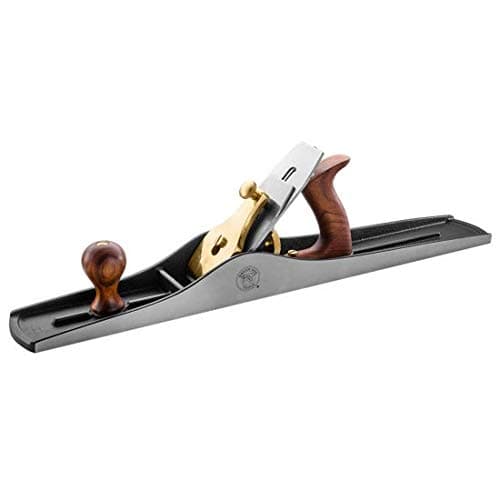
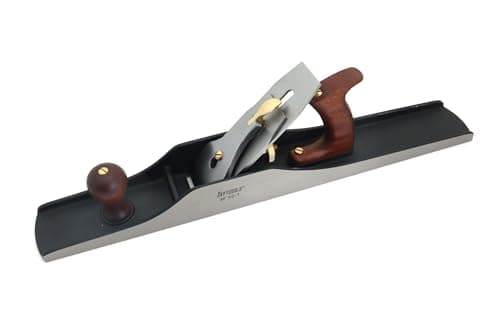
The full 22 in jointer from the same Bedrock-frog line as our best jack: a ductile body and frog, sole and sides lapped over the whole length, 9.6 lb of mass, and a cryogenically treated O1 iron the maker publishes a thickness and a hardness for. Nothing else on this page combines that frog, that iron and this price.
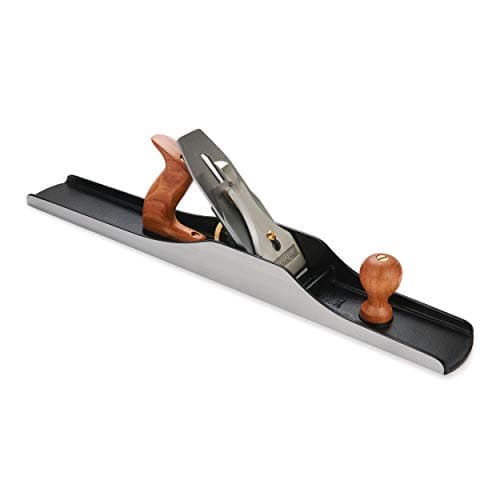
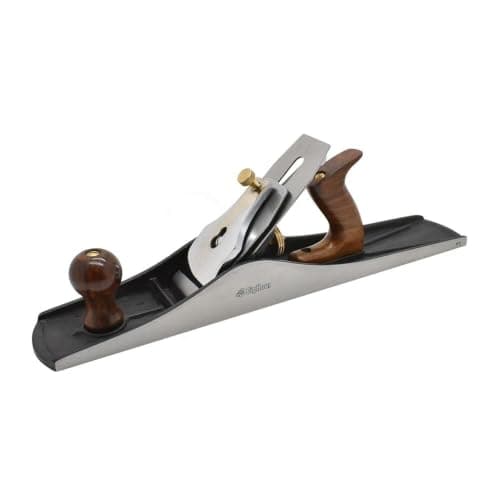
Woodcraft's house premium line at full jointer length: stress-relieved ductile castings, a fully machined Bedrock-based frog, 9-1/2 lb, and a replacement blade that is a numbered catalog item. It is the plane on this page for someone who wants the premium-pattern jointer from a large retailer and does not need the maker to print a hardness figure.
The heavyweight jointer with a replacement iron in the catalog
Rockler's inspected plane at jointer length: a ductile body, a solid brass cap iron, a 45 degree adjustable frog, a published sole tolerance of 0.002 to 0.004 in, and a Certificate of Inspection recording that individual plane's sole flatness and blade hardness. Rockler's own page now marks it as clearance, all sales final, which changes the calculation.
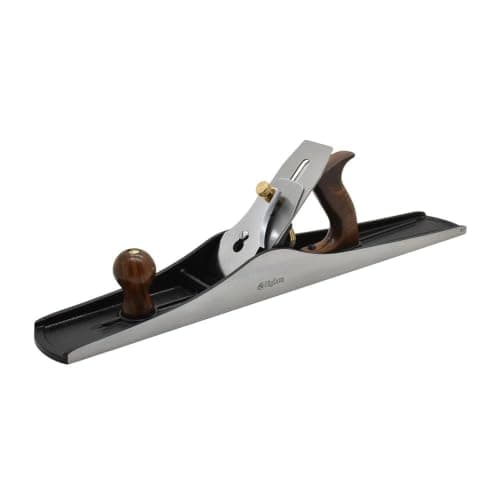
A full 22 in cast iron jointer at about half the money of the next plane up, from a maker that names its iron steel, its thickness and its bed angle but, unlike on its own No. 5, publishes no sole tolerance. It is the cheap way to find out whether you use a jointer enough to buy a better one.
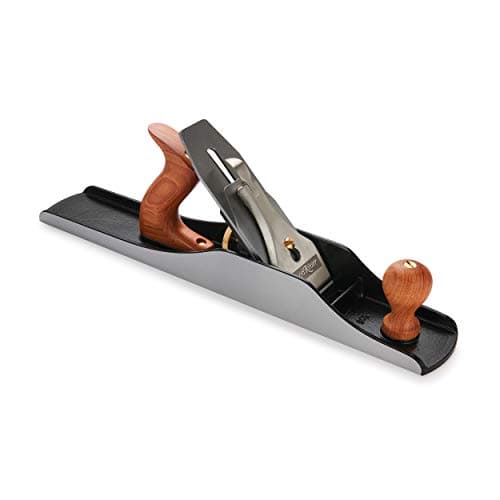
The same stress-relieved ductile castings and fully machined Bedrock-based frog as the WoodRiver #7, in the 18 in fore-plane length at 7-3/4 lb. For a home shop that joints medium edges and flattens panels, it is the one long plane that does both jobs without the weight of a No. 7.
The fore plane for a shop that will never buy a full jointer
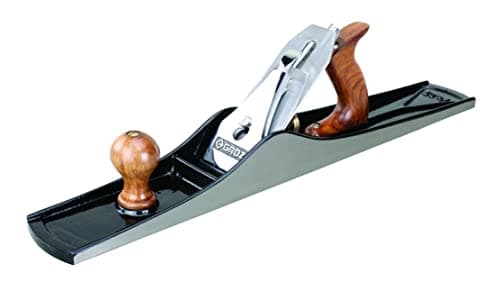
An 18 in gray-iron fore plane from an Indian maker that publishes what most of the field will not: a sole flatness tolerance of 0.003 in and a blade hardness figure. It is the cheapest long plane we could find whose maker put a number on the sole, and that is the whole reason it is here.
The cheapest plane on the page with a published sole tolerance
The 18 in sibling of the Big Horn No. 7: cast iron, a 1/8 in iron on a stated 45 degree bed, an adjustable frog and rosewood handles. The maker's page names two different steels for the same iron, which is why it sits last on a page it might otherwise have placed higher.
The budget fore plane with a 1/8 in iron and a stated bed angle
#ad· Live prices from the Amazon Product API, as of Sep 24, 2026. Where we have no verified live price we show none, and the cost-per-decade figure is suppressed with it — we would rather leave a gap than print a number that has rotted.
The jointer is the plane most benches add last and the one nothing else can substitute for. A No. 7 is 22 inches long, and that length is its whole argument: run it down the edge of a board and the sole spans the low spots, rides the high ones and shears them down until the edge is straight from end to end, which a shorter plane cannot do because it follows the curve that is already there. That is the difference between a glue line you can see and one you cannot. What is a jointer plane explains the mechanism; this page is the shopping.
There are two lengths of plane on the list, and you should decide between them before you read the rankings. Four are true No. 7 jointers at about 22 inches. Three are No. 6 fore planes at about 18 inches: long enough to joint most edges a home shop glues up, short enough to double as a heavy flattener, and lighter to push all afternoon. If you already own a jack and want the plane that makes long edges straight, buy a No. 7. If you want one long plane that flattens panels and joints medium edges and will never buy a third bench plane, the No. 6 is the honest compromise. Jack plane vs jointer plane covers where the jack stops, and plane numbers explained puts every length in one table.
How we ranked them
We have not handled any of these planes. What we did is what the whole site does: open every maker's and retailer's own product page, tabulate what each one is willing to write down, and rank on that. The sources are linked at the bottom and quoted in the write-ups. Five things decided the order, and on a jointer the fifth matters more than it does on any other bench plane.
The iron, as published.One plane on this page publishes a named steel grade, a thickness and a hardness: the Taytools, at 0.120 in of cryogenically treated O1 at 54-58 HRc. One publishes a named grade and a thickness with no hardness. One publishes a thickness and a hardness with the steel described only as “carbon”. One publishes a hardness and the words “spring steel” and no thickness. Two publish a width and the words “high carbon” and nothing else. And one publishes two different steel grades for the same iron on the same page, which we treat as publishing none. We ranked a named grade over an unnamed one, a stated thickness over silence, and a contradiction below both.
The sole, as published. Two of the seven makers print a flatness tolerance: 0.002 to 0.004 in from Rockler, which also ships a certificate with the measured figure for that individual plane, and 0.003 in from Groz. Taytools says lapped across the entire length, Woodcraft says machined within tightly held tolerances, Big Horn says precision-ground, and none of the three attaches a number. On a 9 in smoother that silence is tolerable. On a 22 in sole, whose only job is to be straight, it is the one figure we most wanted and least often got.
The frog. Three planes here carry a Bedrock-pattern frog: fully machined, in full contact with the body, and adjustable without removing the iron. That is the Taytools and the two WoodRivers. The other four are Bailey-type adjustable frogs, which work but need the frog off to move the mouth. On a jointer, where you set the mouth once and leave it, the difference matters less than it does on a smoother, and we weighted it accordingly.
Mass and length. A jointer stays in the cut over a long edge because it is heavy, and the four makers who publish a weight run from 9.6 lb for the Taytools and 9-1/2 lb for the WoodRiver #7 down to 8.37 lb for the Rockler and 7-3/4 lb for the WoodRiver #6. The two Big Horns and the Groz publish no weight at all. Every No. 7 here is 22 inches give or take an eighth; every No. 6 is 18 inches give or take a quarter.
Who stands behind the casting.The usual finding on this site, and here the bleakest version of it: not one of the seven ranked planes carries a published lifetime warranty. Taytools offers a 90-day return on unused tools. Woodcraft's #6 listing offers replacement of a defective item within 30 days. Rockler's page for the No. 7 is marked clearance, all sales final. Big Horn and Groz publish nothing we could find. The reference plane at the top of the page, the Lie-Nielsen No. 7, states on its own product page that materials and workmanship are guaranteed for the life of the tool, and it is the only jointer we looked at that does.
What is not on this page, and why
The Stanley Bailey No. 7is the obvious omission, and this time it was in stock. The listing on Amazon is the European-catalog SKU 1-12-007, and Stanley's own product page for it describes a gray iron base, chrome carbon steel cutter and polypropylene handle and knob, then states under Warranty, verbatim: “No Limited Warranty” and “this specific product is not eligible for any warranty.” At a price above the Rockler's, that is not a plane we can rank on a buy-it-for-life site. A vintage Stanley No. 7 is a different tool entirely, and the right answer for many people; see below.
The Clifton No. 7, made in Sheffield, is a genuine premium jointer and was listed with three units left at well over five hundred dollars when we checked. We do not feature a listing that thin. If it restocks it belongs near the top of this page. For the same reason we passed over Taytools' older Bailey-pattern #7 (four left), the Groz No. 7 (temporarily out of stock), and a No. 8 at nearly nine hundred dollars with no maker's name in the listing at all. There are no No. 8s here because we could not find one in stock from a maker who signs their work.
Lie-Nielsen and Veritasmake the best jointers sold in North America and neither is sold through Amazon, so neither can be a ranked pick and we earn nothing if you buy one. The Lie-Nielsen No. 7 is linked from the top pick's card as a plain reference, with what its page publishes. And no wooden jointers, which are a different enough tool that wooden vs metal planes covers them on their own terms.
The order, briefly
The Taytools Bedrock No. 7 is first because it is the only plane here that combines a Bedrock frog, a lapped body, the highest published mass and a fully published iron, and it does it at about half the money of the WoodRiver that competes with it on the frog. The WoodRiver #7 is second on castings, frog, mass and a replacement blade in the catalog, marked down for publishing nothing about its iron beyond the width and for being the most expensive plane on the page. The Rockler is third for its certificate and its tolerance, and no higher because Rockler is clearing the line out. The Big Horn No. 7 is fourth as the cheap full-length jointer. The WoodRiver #6 is fifth as the premium fore plane, the Groz sixth as the cheapest plane with a number on its sole, and the Big Horn No. 6 seventh because its maker cannot decide what its iron is made of.
Every pick, in full
The write-ups
01Best jointer plane overall
Size
No. 7 jointer, 22-1/8 in sole, 2-7/8 in wide, 9.6 lb
Iron
O1, cryo treated, 0.120 in, 54-58 HRc, 2-3/8 in
Frog
Bedrock-style, full-contact, mouth adjusts with iron in place
Body
Ductile cast iron body and frog, sole and sides lapped
Warranty
None published; 90-day return on unused items
Taytools #7 Bedrock-Style Jointer Plane
Taytools
8.3/10
The full 22 in jointer from the same Bedrock-frog line as our best jack: a ductile body and frog, sole and sides lapped over the whole length, 9.6 lb of mass, and a cryogenically treated O1 iron the maker publishes a thickness and a hardness for. Nothing else on this page combines that frog, that iron and this price.
Cost per decade
$100.00
Horizon · tier C
20 years — No lifetime warranty; parts purchasable and resharpenable
No lifetime warranty published at the date checked. The iron is a standard Bailey-pattern size, so aftermarket replacements from third-party makers are purchasable, and the body is a casting with no consumable part.
Rebuy risk
Medium
parts listed, resharpenable
Sole & body
9.0
Iron & edge
8.0
Adjustment
8.5
Out of box
8.0
Parts & repair
7.0
Value
9.0
What it gets right
+Bedrock frog with fully machined, full-surface contact to the body, adjustable without pulling the iron — the feature the premium makers charge for
+Maker publishes the iron spec in full: 0.120 in O1, cryogenically treated, 54-58 HRc, 2-3/8 in wide
+Sole and sides stated as lapped flat across the entire length, which on a 22 in plane is the whole job
+Heaviest plane on the page at a stated 9.6 lb, and roughly half the money of the two planes that compete with it on the frog
What it costs you
−No warranty published and no flatness tolerance figure, unlike the Rockler and Groz planes below it
−54-58 HRc is softer than the A2 irons on the premium planes; expect to hone sooner
−Taytools states its own basic replacement irons do NOT fit its Bedrock planes, so a spare iron is not a catalog item
−9.6 lb is a lot of plane to lift on and off the bench, which is the price of the mass that steadies the cut
Skip this if…
…you want a tolerance figure or a warranty in writing. The Rockler two rows down publishes both a tolerance and a certificate; this plane is here on the strength of its frog, its iron and its length, not its paperwork.
We earn nothing on this one
The best No. 7 you can buy in North America is a Lie-Nielsen, and it is not sold on Amazon, so we earn nothing on it. Stress-relieved ductile iron, 22 in long, a 2-3/8 x 0.140 in cryo-treated A2 iron at Rockwell 60-62, 8-1/4 lb, and — verbatim from the product page — materials and workmanship guaranteed for the life of the tool, with parts and repairs on request. Buy direct from Lie-Nielsen Toolworks.
02The heavyweight jointer with a replacement iron in the catalog
Size
No. 7 jointer, 22 x 2-7/8 in, 9-1/2 lb
Iron
High carbon steel, 2-3/8 in wide, 25 deg bevel
Frog
Fully machined, adjustable, Bedrock-based
Body
Stress-relieved ductile iron; sole and sides machined flat and square
Warranty
None published
WoodRiver #7 Jointer Plane, V3
WoodRiver
7.8/10
Woodcraft's house premium line at full jointer length: stress-relieved ductile castings, a fully machined Bedrock-based frog, 9-1/2 lb, and a replacement blade that is a numbered catalog item. It is the plane on this page for someone who wants the premium-pattern jointer from a large retailer and does not need the maker to print a hardness figure.
Cost per decade
$211.49
Horizon · tier C
20 years — No lifetime warranty; parts purchasable and resharpenable
No lifetime warranty published at the date checked. The iron is a standard Bailey-pattern size, so aftermarket replacements from third-party makers are purchasable, and the body is a casting with no consumable part.
Rebuy risk
Medium
parts listed, resharpenable
Sole & body
9.0
Iron & edge
7.5
Adjustment
8.5
Out of box
8.0
Parts & repair
7.5
Value
6.0
What it gets right
+Stress-relieved ductile castings and a fully machined Bedrock-based frog, per the retailer's own spec sheet
+Woodcraft lists a V3 replacement blade (item 153919) that fits the 4-1/2, 5-1/2, 6 and 7, so the wear part is a catalog item
+9-1/2 lb of mass, which on a jointer is what keeps the plane in the cut over a long edge
+In stock at a large retailer with a physical store network rather than on a small maker's waiting list
What it costs you
−Woodcraft does not publish the iron's thickness, hardness or the bed angle; the Taytools above it publishes all three
−Flatness is described as machined within tightly held tolerances, with no number attached
−The most expensive plane on this page, priced against the premium makers without a published warranty
−Woodcraft's own site listed it below the Amazon price at the time of check
Skip this if…
…the Taytools is in stock. It has the same frog pattern, a fully published iron and a lapped body for about half the money; this plane's case is the retailer, the catalog blade and the mass.
03The jointer that ships with its own measurements
Size
No. 7 jointer, 21-7/8 in sole, 3 in wide, 8.37 lb
Iron
Hardened carbon steel, about 1/8 in, 55-60 HRC, 2-3/8 in, 25 deg
Sole flatness
0.002-0.004 in, per Rockler; certificate included
Frog
Adjustable, 45 deg; solid brass cap iron and fittings
Warranty
None published; Rockler lists it as clearance, all sales final
Bench Dog No. 7 Jointer Plane
Rockler
7.5/10
Rockler's inspected plane at jointer length: a ductile body, a solid brass cap iron, a 45 degree adjustable frog, a published sole tolerance of 0.002 to 0.004 in, and a Certificate of Inspection recording that individual plane's sole flatness and blade hardness. Rockler's own page now marks it as clearance, all sales final, which changes the calculation.
Cost per decade
$175.00
Horizon · tier C
20 years — No lifetime warranty; parts purchasable and resharpenable
No lifetime warranty published at the date checked. The iron is a standard Bailey-pattern size, so aftermarket replacements from third-party makers are purchasable, and the body is a casting with no consumable part.
Rebuy risk
Medium
parts listed, resharpenable
Sole & body
8.5
Iron & edge
7.0
Adjustment
7.5
Out of box
8.5
Parts & repair
6.5
Value
7.0
What it gets right
+Ships with a Certificate of Inspection giving the measured sole flatness and blade hardness for that plane
+Rockler publishes the sole tolerance, 0.002 to 0.004 in, which only the Groz matches on this page
+Solid brass cap iron and threaded fittings rather than plated steel
+Rockler lists a spare blade for the No. 4-1/2, 5-1/2 and 7, so the wear part is a catalog item
What it costs you
−Rockler's own product page is marked CLEARANCE and ALL SALES FINAL - WHILE SUPPLIES LAST, so the line is being run out and the retailer's usual return guarantee does not apply
−Rockler's own site listed it well below the Amazon price at the time of check
−A Bailey-type 45 degree frog, not a Bedrock: the frog must come off to adjust the mouth
−Carbon steel at 55-60 HRC, and the page lists the body as ductile cast iron in one place and cast iron in the spec table
Skip this if…
…you want a plane whose maker will still be selling parts in ten years. The certificate is the best paperwork on the page and the clearance notice is the worst; buy it for the measurements, not for the future.
EN42Cr hardened steel, 1/8 in, 2-23/64 in wide, bevel down
Bed
45 deg, adjustable frog; solid brass depth knob
Body
Cast iron (not stated as ductile); precision-ground sole and sides
Warranty
Not published
Big Horn 19330 No. 7 Jointer Plane
Big Horn
6.8/10
A full 22 in cast iron jointer at about half the money of the next plane up, from a maker that names its iron steel, its thickness and its bed angle but, unlike on its own No. 5, publishes no sole tolerance. It is the cheap way to find out whether you use a jointer enough to buy a better one.
Cost per decade
$50.38
Horizon · tier C
20 years — No lifetime warranty; parts purchasable and resharpenable
No lifetime warranty published at the date checked. The iron is a standard Bailey-pattern size, so aftermarket replacements from third-party makers are purchasable, and the body is a casting with no consumable part.
Rebuy risk
Medium
parts listed, resharpenable
Sole & body
6.5
Iron & edge
6.5
Adjustment
7.0
Out of box
6.5
Parts & repair
6.0
Value
8.5
What it gets right
+The full 22 in jointer length at the lowest price of any No. 7 on this page
+Maker names the iron steel (EN42Cr), a 1/8 in thickness and a 45 degree bed, which the WoodRiver above it does not
+Adjustable frog and a solid brass depth-adjustment knob, so it sets up like a Bailey
+Sapele or rosewood handles rather than plastic, depending on which line of the maker's page you read
What it costs you
−No sole flatness tolerance published, although the same maker prints 0.002 to 0.004 in for its No. 5 jack
−No hardness figure, no weight and no warranty published
−Body stated as cast iron, not ductile: the plane to be careful with if it goes off the bench
−The maker's page names the handle wood as sapele in the features and rosewood in the specifications, and the iron is listed at 2-23/64 in, a hair under the standard 2-3/8 in, so check fit before ordering an aftermarket iron
Skip this if…
…you can stretch to the Taytools. Twice the money buys a ductile body, a Bedrock frog, a lapped sole and a fully published iron; this plane's whole case is that it is long and cheap.
05The fore plane for a shop that will never buy a full jointer
Size
No. 6 fore plane, 17-3/4 x 2-7/8 in, 7-3/4 lb
Iron
High carbon steel, 2-3/8 in wide, 25 deg bevel
Frog
Fully machined, adjustable, Bedrock-based
Body
Stress-relieved ductile iron; sole and sides machined flat and square
Warranty
None published; 30-day defect replacement per the retailer listing
WoodRiver #6 Bench Plane, V3
WoodRiver
7.8/10
The same stress-relieved ductile castings and fully machined Bedrock-based frog as the WoodRiver #7, in the 18 in fore-plane length at 7-3/4 lb. For a home shop that joints medium edges and flattens panels, it is the one long plane that does both jobs without the weight of a No. 7.
Cost per decade
$161.49
Horizon · tier C
20 years — No lifetime warranty; parts purchasable and resharpenable
No lifetime warranty published at the date checked. The iron is a standard Bailey-pattern size, so aftermarket replacements from third-party makers are purchasable, and the body is a casting with no consumable part.
Rebuy risk
Medium
parts listed, resharpenable
Sole & body
8.5
Iron & edge
7.5
Adjustment
8.5
Out of box
8.0
Parts & repair
7.5
Value
6.5
What it gets right
+The premium-pattern castings and frog of the #7 in a length most home shops can use every week
+Shares the same numbered V3 replacement blade (item 153919) as the #7, so the wear part is a catalog item
+Stress-relieved ductile iron, per the retailer's own spec sheet
+Nearly two pounds lighter than the #7, which matters over an afternoon of flattening
What it costs you
−Woodcraft does not publish the iron's thickness, hardness or the bed angle for this size either
−Flatness is described in words, not a number
−Priced above the Taytools #7, which is longer and publishes more
−Woodcraft's own site listed it below the Amazon price at the time of check
Skip this if…
…you regularly joint edges longer than about four feet. An 18 in sole starts to follow a long edge rather than straighten it; buy the No. 7 for that work.
06The cheapest plane on the page with a published sole tolerance
Size
No. 6 fore plane, 18 in (458 mm), 2-3/8 in (60 mm) cutter
Iron
Spring steel, 55 +/- 5 HRC per maker; thickness not published
Sole flatness
0.003 in (0.075 mm), per maker
Body
Gray cast iron, fully adjustable frog, hardwood handle and knob
Warranty
Not published
Groz No. 6 Fore Plane (39703)
Groz
6.8/10
An 18 in gray-iron fore plane from an Indian maker that publishes what most of the field will not: a sole flatness tolerance of 0.003 in and a blade hardness figure. It is the cheapest long plane we could find whose maker put a number on the sole, and that is the whole reason it is here.
Cost per decade
$29.98
Horizon · tier C
20 years — No lifetime warranty; parts purchasable and resharpenable
No lifetime warranty published at the date checked. The iron is a standard Bailey-pattern size, so aftermarket replacements from third-party makers are purchasable, and the body is a casting with no consumable part.
Rebuy risk
Medium
parts listed, resharpenable
Sole & body
6.5
Iron & edge
6.0
Adjustment
7.0
Out of box
6.5
Parts & repair
5.5
Value
9.0
What it gets right
+Maker publishes a sole flatness tolerance, 0.003 in, which on this page only the Rockler matches
+Publishes a blade hardness, which the two Big Horn planes and both WoodRivers do not
+Fully adjustable frog and a standard 2-3/8 in cutter width, so an aftermarket iron is a straightforward later purchase
+Costs about what a good sharpening stone does
What it costs you
−Gray cast iron, not ductile: the material the vintage planes were made of, and the one that cracks if dropped
−55 plus or minus 5 HRC is a wide band; the low end of it is soft
−Iron thickness, weight and warranty are not published
−Listed with a modest stock count at the time of check
Skip this if…
…you want the plane to arrive finished. A published tolerance is a promise about the sole, not about the edge, the mouth or the fit of the frog, and at this price expect an evening of setup.
07The budget fore plane with a 1/8 in iron and a stated bed angle
Size
No. 6 fore plane, 18 in; weight not published
Iron
1/8 in, 2-23/64 in wide, 45 deg; steel listed as O1 in the spec table and EN42Cr in the feature list
Frog
Adjustable; solid brass depth knob and lateral adjuster
Body
Cast iron (not stated as ductile), rosewood knob and handle
Warranty
Not published
Big Horn 19329 No. 6 Fore Plane
Big Horn
6.5/10
The 18 in sibling of the Big Horn No. 7: cast iron, a 1/8 in iron on a stated 45 degree bed, an adjustable frog and rosewood handles. The maker's page names two different steels for the same iron, which is why it sits last on a page it might otherwise have placed higher.
Cost per decade
$47.46
Horizon · tier C
20 years — No lifetime warranty; parts purchasable and resharpenable
No lifetime warranty published at the date checked. The iron is a standard Bailey-pattern size, so aftermarket replacements from third-party makers are purchasable, and the body is a casting with no consumable part.
Rebuy risk
Medium
parts listed, resharpenable
Sole & body
6.5
Iron & edge
6.0
Adjustment
7.0
Out of box
6.5
Parts & repair
5.5
Value
7.5
What it gets right
+A 1/8 in iron on a stated 45 degree bed, with an adjustable frog, at a hardware-store price
+Rosewood handles rather than plastic
+Precision-ground sole and sides, per the maker
+The cheapest 18 in plane on the page after the Groz
What it costs you
−The maker's own page lists the iron as O1 steel in its specification table and EN42Cr in its feature list; one of them is wrong and we could not tell which
−No sole tolerance, hardness, weight or warranty published; the Groz above it publishes two of those for less money
−Body stated as cast iron, not ductile
−The 2-23/64 in iron is a hair under the standard 2-3/8 in, so check fit before ordering an aftermarket iron
Skip this if…
…the Groz is in stock. It is cheaper and publishes a tolerance and a hardness; this plane's argument is the thicker stated iron and the wood on the handles.
A No. 7 is the answer for almost everyone who has decided they need a jointer: 22 inches, a 2-3/8 in iron, and eight to ten pounds, which is long enough to joint any edge a home shop realistically glues up and heavy enough to carry the cut without being punishing. A No. 6 fore plane is 18 inches with the same iron and a pound or two less; it joints most edges, flattens panels faster than a jack, and is the right single long plane for a shop that will not own both. A No. 8 is 24 inches and heavier again, for marginally straighter results on very long stock; it is a want rather than a need, and there was not one in stock from a named maker when we checked. The honest rule from the jointer guide stands: buy the jointer the day a long glue line disappoints you, not before.
Reading the iron spec
Three numbers matter and makers publish them in descending order of willingness. Thickness first: a 1/8 in or 3 mm iron chatters less than the thin irons on vintage planes, and everything on this page that states a figure is at or near that. Hardness second: 55-60 HRC is the common figure and it is fine; 60-62 is what the premium A2 irons run; and a wide band like the Groz's 55 plus or minus 5 tells you the maker is not promising much. Steel last: O1 sharpens easily and holds a keen edge, A2 holds an edge longer and is fussier to sharpen, and “high carbon steel” with no grade tells you nothing at all. A2 vs O1 steel has the full argument. One more thing specific to this size: the standard iron width for a No. 6 and No. 7 is 2-3/8 in, which is what the Taytools, WoodRiver, Rockler and Groz irons are. Big Horn lists its irons at 2-23/64 in, a sixty-fourth under, so check the fit before ordering an aftermarket blade for either Big Horn.
What a sole tolerance buys you on a 22-inch plane
A published flatness figure is a promise about how much work the plane needs before it cuts properly, and the longer the sole, the more the promise is worth. A jointer whose sole is hollow along its length will plane a convex edge no matter how sharp the iron is, and flattening 22 inches of cast iron yourself is a long evening with sandpaper on a reference surface that has to be flatter than the plane, which how to flatten a plane sole walks through. Two makers on this page publish a figure; the Taytools and both WoodRivers, three of the four priciest planes here, do not. That is not evidence their soles are worse, only that you are trusting rather than reading. Rockler's certificate is the strongest version of the promise on the page, and the clearance notice next to it is why we could not rank the promise higher.
Setting a jointer up
A jointer wants a straight edge on the iron, not the heavy camber a jack takes, with at most the corners eased so the plane does not leave tracks when flattening a panel. Set the cap iron close, set the mouth fairly fine and leave it, and take full-length passes, letting the long sole find its own reference. Keep the plane square to the face of the board; some people hook their fingers under the sole as a fence. The long sole does the flattening and your reading of the edge with a straightedge and a square does the straightening. The plane arrives needing all of this, and how to set up a hand plane is the page to open the day it does.
The warranty question, honestly
None of the seven planes here has a lifetime warranty in writing, which is a worse result than the jack plane roundupreturned, where two of seven did. The cost-per-decade figure on each card is set from that evidence and prints the tier it came from, so every plane on this page is compared on a 20-year horizon and the number on the page follows. The only lifetime guarantee we found on a jointer is Lie-Nielsen's, and the only Stanley we found says in writing that it has none. The whole maker-by-maker table is on warranties and repairability, and the arithmetic is on cost per decade.
The vintage alternative
The jointer is the plane where the secondhand market is kindest. Long planes are expensive new and heavy to ship, so a vintage Stanley or Record No. 7 in usable shape often costs a fraction of a new premium one, and a casting from the right production window is frequently a better one. Budget an evening to true the sole and the price of a good iron, and read vintage vs new planes and how to restore a hand plane before you spend anything. For a plane you will use less often than your jack and your smoother, a sound old one is usually the sensible buy.
If the budget is tight
Buy the Groz or the Big Horn No. 7 and spend the difference on a stone and, eventually, an iron. A cheap long plane with a flat sole and a good edge joints an edge as straight as an expensive one; what you give up is the frog, the mass and the paperwork. How to sharpen a plane iron is where to start, and the replacement irons roundup ranks the 2-3/8 in blades that fit a No. 6 and No. 7 once the casting has earned one.
Questions
Frequently asked
What is the best jointer plane?+
On what the makers publish, the Taytools #7 Bedrock-style jointer: a Bedrock frog, a lapped ductile body, a stated 9.6 lb, and a cryogenically treated O1 iron with a published thickness and hardness, at about half the price of the WoodRiver #7 that competes with it on the frog. The Lie-Nielsen No. 7 is better than both, guarantees materials and workmanship for the life of the tool, and is not sold on Amazon.
Do I need a No. 7, or is a No. 6 fore plane enough?+
A No. 6 at 18 inches joints most edges a home shop glues up and flattens panels faster than a jack, so if you will only ever own one long plane, it is the honest compromise. You reach its limit on edges longer than about four feet, where an 18 in sole starts to follow the curve rather than remove it. Buy the No. 7 the day a long glue line disappoints you.
Is a hand jointer plane worth it if I own a power jointer?+
For boards wider than your machine's tables, for panels after glue-up, and for the final pass that takes out machine ripple before a glue line, yes. A power jointer trues an edge; a hand jointer trues an edge, flattens a tabletop and leaves a surface that does not need sanding. Hand plane vs power tools covers where each earns its place.
Which jointer plane has the best warranty?+
None of the seven ranked planes publishes a lifetime warranty. Taytools offers a 90-day return on unused tools, Woodcraft a 30-day defect replacement on the #6 listing, and Rockler has marked its No. 7 clearance, all sales final. Lie-Nielsen's No. 7 page states that materials and workmanship are guaranteed for the life of the tool, and it is not sold on Amazon.
Why is the Stanley No. 7 not on this list?+
It was in stock, and we left it off on purpose. The Amazon listing is Stanley's European-catalog 1-12-007, and Stanley's own product page describes a gray iron base and polypropylene handles and states under Warranty that the product is not eligible for any warranty. At a price above the Rockler's, that is not a plane we can rank on this site. A vintage Stanley No. 7 is a different proposition and often the best buy of all.
Should I buy a vintage No. 7 instead?+
If you are willing to spend an evening truing the sole and the price of a good iron, usually yes. The jointer is the plane you will use least often, long planes are cheap secondhand because they are expensive to ship, and a pre-war Stanley or Record casting is frequently better than a new budget one. The restore hub covers how to buy one and what to do when it arrives.
We have not handled these tools. Nobody here has tested one, owned one, or taken one apart. Specifications come from the manufacturer or the retailer listing; warranty terms come from the maker's own warranty page; the cost-per-decade arithmetic is ours and reproducible. Where we could not verify a figure we say so on the page rather than quietly leaving it out. Read the full method.