Hand Planes
Planing MDF And Plywood
Sheet goods are not wood with the grain taken out. They are an abrasive sandwich, and a hand plane can still be the right tool for exactly two jobs on them.
We earn a commission when you buy through our Amazon links, at no extra cost to you. It never decides a ranking, and where the best tool in a class is one we earn nothing on, we say so and link it anyway. How this works.
The short answer
Quick picks
| # | Tool | Best for | Per decade | Score | Price |
|---|---|---|---|---|---|
| 01 | 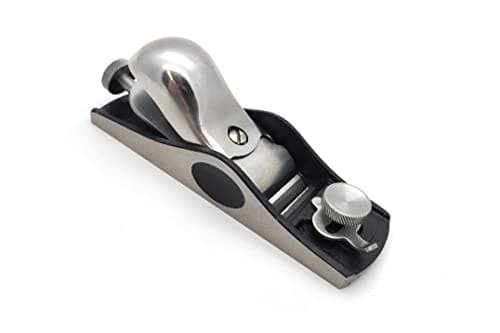 Taytools #9-1/2 Low Angle Block Plane Adjustable mouth, stainless knuckle cap and adjustment screws, and a bed low enough to handle end grain properly. The stainless hardware is the detail that matters in a tool that lives in a pocket. | Best block plane overall | $41.84tier C | 8.0/10 | $83.67Amazon |
| 02 | 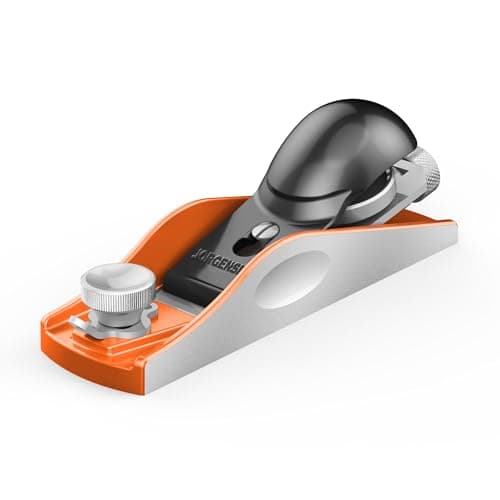 Jorgensen No. 60-1/2 Low Angle Block Plane A ductile-iron 60-1/2 with an adjustable mouth and a 3 mm O1 iron, at a fraction of what that combination costs anywhere else on this page. The mouth adjustment is the feature this list is ranked on, and this is the cheapest honest way to get it. | The adjustable mouth at the lowest price it exists for | $14.02tier C | 7.7/10 | $28.03Amazon |
| 03 | 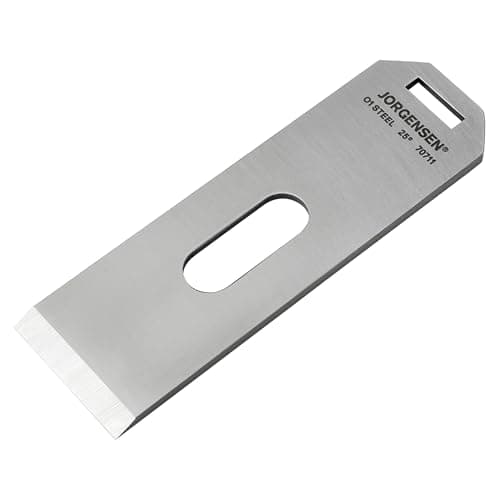 Jorgensen Replacement Block Plane Blade, O1, No. 60-1/2 The same published specification as the bench blade above, in block plane width: O1 at Rockwell 60-64, 3 mm thick, 35 mm wide, ground at 25 degrees. A stock block plane iron is usually the thinnest, softest part of a cheap block plane, which makes this the highest-leverage few dollars in the category. | The only block plane iron here whose maker publishes a hardness | $6.49tier C | 8.2/10 | $12.98Amazon |
| 04 | 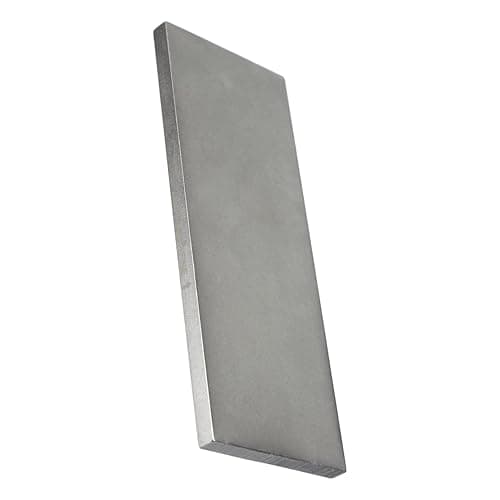 DMT D8F Dia-Sharp Bench Stone, Fine Diamond bonded to a steel plate: it cannot dish, it never needs flattening, and it works dry. For someone who wants sharpening to be a task rather than a hobby, this is the answer. | The stone that never needs maintaining | $26.17tier C | 8.5/10 | $52.34Amazon |
#ad· Live prices from the Amazon Product API, as of November 22, 2026. Where we have no verified live price we show none, and the cost-per-decade figure is suppressed with it — we would rather leave a gap than print a number that has rotted.
You can plane the edge of MDF and plywood, and it often beats sanding. You should not plane the face of veneered plywood at all. And whichever you do, the iron will dull faster than it does in hardwood — so the first purchase for this work is not a better plane, it is a second iron and a stone that needs no preparation.
That is the whole answer. The rest of this page is why, and how to get a clean edge out of a material that has no grain to read.
Why sheet goods behave differently under a plane
Plywood has grain in two directions at once. That is what plywood is: thin plies laid with their grain at right angles to the plies either side of them. Plane the edge of a panel and your iron is alternately slicing long grain, then end grain, then long grain again, every few thousandths of an inch of depth. There is no “with the grain” direction to find, because half the material does not have one that points your way.
MDF has no grain at all.Columbia Forest Products describes it as manufactured through a process similar to particleboard but using much smaller, more uniform wood fibers, creating a dense and smooth panel structure. In practice that means the edge does not tear out the way wood does — it crumbles. The fibers are short and bonded rather than continuous, so a thick shaving does not lift, it breaks away, and the arris along the top of the cut goes with it.
Both are held together with adhesive, and adhesive is hard on edges. This is the part people underestimate. The glue lines in plywood and the resin binding MDF are abrasive in a way wood fiber is not, which is why the same iron that will plane a day of oak needs honing after a fraction of that in sheet goods. It is also why the industrial answer to machining these panels is carbide tooling rather than steel. You are using steel, so the answer available to you is to hone more often and to accept that.
And the faces are not the same material as the core.A plywood panel's face is a decorative veneer, and a plane set to take a visible shaving can cut through one. An MDF panel's faces are a denser skin than its middle, so planing a face leaves you working into softer material that finishes differently from the surface around it. Neither is a surface to put a plane on.
MDF: the edge is the job
A sawn MDF edge is fuzzy and slightly out of square, and the two usual fixes are sanding (slow, dusty, and it rounds the arris) or a router pass (fast, loud, needs a jig). A block plane sits between them and is genuinely good at it, with four conditions:
- A tight mouth. Not optional here. The mouth is what supports the fiber ahead of the edge so it shears instead of breaking out. This is the single feature that separates planes which work on MDF from planes which make a mess of it, and it is the reason both planes on this page are adjustable-mouth models. What is a block plane explains the mechanism.
- A very fine set. Finer than you would use on wood. You are shaving the fuzz off a cut edge, not removing stock.
- A low cutting angle, skewed.Fine Woodworking gives the low-angle block plane — bedded at 12 to 12-1/2 degrees — as the better choice for end grain and cross grain, and an MDF edge behaves more like end grain than anything else. Skewing the plane 20 or 30 degrees to the direction of travel lowers that angle further.
- A chamfer instead of a sharp corner. MDF will not hold a crisp arris under any kind of handling, so break both corners deliberately with the same plane. It looks better and it stops the edge shedding.
Two cautions that are not about the plane. First, the dust: MDF dust is fine, it carries the binder with it, and it belongs behind a mask and outside rather than in your lungs. Planing produces shavings rather than dust, which is one of the honest advantages of doing this by hand — but the fuzz off a cut edge is still dust. Second, screws and fixings: an MDF edge is often full of them, and a plane iron that meets a screw head is a resharpen at best.
Plywood: edges yes, faces no, banding definitely
The face.Leave it alone. The veneer on a decorative panel is thin — thin enough that one shaving in the wrong place is a repair, not a mark — and no published figure we could find tells you how much you have to play with on a given panel, which is itself the argument for not finding out the hard way. If the face needs flattening, you bought the wrong panel.
The edge. Workable, and the technique matters more than the tool. Plane in from one end to the middle, then come in from the other end, because the exit corner is where a cross-banded edge breaks out. Keep the shaving fine and expect the plane to feel different every few passes as the iron moves between plies.
Voids. In cheaper plywood the inner plies have gaps in them. When your iron drops into one you will feel it and the edge will stop improving. That is a filler-and-sand problem, not a planing one.
Edge banding.This is where a block plane is unambiguously the right tool. Iron-on or glued banding is applied slightly proud and has to be brought down flush without cutting into the face veneer beside it. A block plane, held skewed with the sole flat on the banding and the iron set to a whisker, does that cleanly in two or three passes. Take the bulk off first with a flush-cut saw — the best hand saws for plywood ranks the saws for sheet goods, including the flush-cut saw for exactly this, and what is a flush cut saw is the tool itself.
Melamine and laminate faces. Not a planing material. The surface is a hard, brittle coating that chips rather than shears, and a plane iron is the wrong hardness to be anywhere near it. Score it and saw it.
Which iron to put in the plane, and which to keep out
Use your second-best iron. This is the one piece of advice on this page that will save you the most annoyance: sheet goods dull an edge quickly, so the iron you want in the plane is the one you do not mind taking back to the stone, not the premium blade you spent an evening polishing.
On steel choice, the trade runs the opposite way to normal here. A2 holds an edge longer but takes longer to bring back; plain carbon and O1 dull sooner and come back in a couple of minutes. A2 vs O1 steel is the full comparison, and for work that dulls the edge every few feet the fast-sharpening steel is arguably the better tool. Jorgensen publishes its block plane iron as O1 at Rockwell 60-64, 3 mm thick and 35 mm wide, which is both the right steel for this and a heavier iron than most block planes ship with.
One fitment warning from that spec: a 3 mm iron will not seat in a plane with a tight fixed mouth unless you file the mouth open first. Jorgensen publishes fitment for its own No. 60-1/2 only. The best replacement plane irons covers which irons fit what.
When a plane is the wrong tool for the job
- A kitchen's worth of panels. If you are edging twenty sheets, this is router and sander work. A hand plane is the right tool for a handful of edges, a repair, or a fit you have to make in place.
- Anything that has to be dead square to a face.A block plane has no fence. Use a shooting board or a router with a bearing-guided cutter — planes for shooting boards is the hand-tool version.
- Trimming a veneered face flush to something. A cabinet scraper or a sanding block, not an iron.
- Chopping or paring MDF with a chisel.It works, the material is kind to chisels in a way it is not to plane irons — and the same abrasion rule applies. How to use a chisel covers the cut.
What actually decides it
Buying guide
What to actually buy, in order
- A block plane with an adjustable mouth. The Taytools #9-1/2 or the Jorgensen 60-1/2. Both have the sliding mouth plate, which is the feature this work depends on; the Jorgensen is the cheapest honest route to it and the Taytools is the better-finished tool with stainless fittings. If your plane has a fixed mouth, it is not the plane for this.
- A spare iron. The highest-leverage few dollars in this whole exercise. Two irons means you hone at the end of the session instead of in the middle of it.
- A stone that needs no preparation.If you are honing three times in an afternoon, a waterstone that needs soaking and flattening becomes the reason you stop honing. A diamond plate works dry, cannot dish and never needs flattening — which is a worse finish than a fine waterstone and a much better fit for this job. The best sharpening stones is the wider field, and waterstones vs diamond stones is the trade in detail.
What is noton that list: a premium plane. Nothing about sheet goods rewards a better casting. It rewards a tight mouth, a fine set and a sharp edge, and you can have all three for the price of one premium block plane's iron.
The setup, step by step
- Hone the iron properly first. A dull iron in MDF does not cut badly, it crushes. See how to sharpen a block plane blade.
- Close the mouth down. As tight as it will go and still pass a shaving.
- Set the iron to a whisker. Advance until it just takes a full-width shaving, then back off slightly.
- Skew the body. Twenty to thirty degrees off the direction of travel.
- Work in from both ends. Never plane off the far corner of a cross-banded edge; stop short and come back the other way.
- Wax the sole. MDF dust packs under a sole and friction climbs fast. Cleaning and waxing hand tools is what to use and how often.
- Stop when it stops improving. A plane that has gone dull in MDF will polish the fuzz rather than remove it. That is the signal to hone, not to push harder.
What this costs you over a decade
Nothing on a block plane is consumable, so the honest cost of this work is not money, it is the steel you remove at the stone. Even at a hard pace that is years of edges: a plane iron is sharpened away over decades, not seasons, and both irons here are plain renewable steel rather than anything with a coating to lose. Cost per decadeis the arithmetic the rest of the site runs on, and sheet goods are the one case where it barely moves — the tool does not wear out faster, you simply sharpen it more often.
The thing that genuinely does wear is the diamond plate, which loses its initial aggression in its first weeks and then settles for years. DMT publishes a warranty page behind it, and the plate is made in Marlborough, Massachusetts. Warranties and repairability is how we weigh that against a stone that costs a third as much.
And if the panel work is really saw work rather than plane work, it is worth being told so: the best hand saws for plywood ranks seven saws for exactly these materials, including the only one on the site sold for laminate.
Questions
Frequently asked
Can you plane MDF?
Edges, yes — and a block plane with a tight mouth and a very fine set does it better than sanding, without rounding the arris. Faces, no: the skin of an MDF panel is denser than its core, so planing it leaves you working into softer material that finishes differently. Expect the edge to crumble rather than tear if your mouth is open or your shaving is thick, and break both corners deliberately when you are done.
Will MDF ruin a plane iron?
It will dull it much faster than hardwood does, which is not the same as ruining it. The resin that binds the fibers is abrasive, and an iron that would plane all day in oak wants honing after a fraction of that here. Nothing is destroyed: it is a renewable edge, and the fix is a spare iron plus a stone you will actually use. What can ruin an iron is a screw or staple buried in the edge, which MDF often has.
Can you plane the edge of plywood?
Yes, with the technique doing most of the work. Because the plies are glued at right angles to each other, your iron alternates between long grain and end grain the whole way down the edge, so use a low-angle plane, skew it, keep the shaving fine, and plane in from each end towards the middle rather than off the far corner. In cheap plywood you will also find voids in the inner plies, which no plane can fix.
Can you plane the face of veneered plywood?
No. The decorative face is a thin veneer, and one shaving in the wrong place goes through it. No manufacturer we could find publishes how much thickness you have to play with on a given panel, which is the strongest argument for not testing it. Flatten or clean a face with a cabinet scraper or a sanding block instead, and if it needs real flattening, the panel was the wrong choice.
What plane should I use for trimming edge banding?
A block plane, skewed, with the sole flat on the banding and the iron set to a whisker — this is one of the jobs a block plane is unambiguously the best tool for. Saw the bulk off first with a flush-cut saw so the plane is only taking the last fraction, and work away from the face veneer rather than into it.
Is a low angle or standard block plane better for sheet goods?
Low angle. Fine Woodworking gives the low-angle plane, bedded at 12 to 12-1/2 degrees, as the better choice for trimming end grain and cross grain, and the edge of a plywood or MDF panel is closer to end grain than to anything else. The adjustable mouth matters more than the bed angle either way: a tight mouth is what supports the fiber so it shears instead of breaking out.
Receipts
Sources
- Columbia Forest Products — MDF (medium density fiberboard) product page (MDF is "manufactured through a process similar to particleboard, but uses much smaller, more uniform wood fibers", creating "a dense and smooth panel structure"; "Designed for intricate cuts, routed profiles, edge details, and precision joinery"; "A 3/4\" MDF panel typically weighs around 100 lbs"; a no-added-formaldehyde option is offered "when required", and the standard binder is not named on the page). Retrieved 2026-11-02.
- Fine Woodworking — Chris Gochnour, "Standard vs. Low-Angle Block Planes", 13 July 2022 (low-angle block planes "have the blade bedded at 12 degrees to 12 1/2 degrees"; "A standard angle block plane has a 20 degree bed angle and a 25 degree bevel angle"; "The effective angle of the plane is the sum of the bed and bevel angles", giving the standard plane 45 degrees, "essentially the same as that of a bench plane"; "The low-angle block plane is a better choice for trimming end grain and cross grain"; "the low-angle design generally works better on softwoods, and the standard version is suitable for hardwoods"). Retrieved 2026-11-02.
- Pony Jorgensen — Replacement Blade for the No. 60-1/2 Low Angle Adjustable Mouth Block Plane, part #70711 (O1 steel, Rockwell 60-64, 3 mm / 1-8 in thick, 35 mm / 1.38 in wide, 112 mm / 4.41 in long, ground at 25 degrees; published fitment is the #70710 plane). Retrieved 2026-08-28.
- Pony Jorgensen — No. 60-1/2 Low Angle Adjustable Mouth Block Plane, model 70710 (ductile iron body, stress relieved so 'the machined casting will stay flat over time'; O1 steel blade 35 mm / 1.38 in wide by 3 mm / 1/8 in thick). Retrieved 2026-08-28.
- DMT Diamond Sharpeners — Warranty page. Retrieved 2026-07-24.
- DMT Diamond Sharpeners — Bench Stones (manufactured in the USA, Marlborough MA). Retrieved 2026-07-24.
- Taylor Toolworks — Refund Policy ("you may return them within 90 days of delivery" with items "in their original, new, unopened packaging"; "We currently do not offer exchanges."; a fee may be deducted from the refund for products returned without their original package; original shipping charges non-refundable. No product warranty is stated). Retrieved 2026-10-02.
- Amazon listing for Taytools #9-1/2 Low Angle Block Plane — specifications and price basis, retrieved via the Amazon Product API on 2026-07-24 and refreshed on the daily price check.
- Amazon listing for Jorgensen No. 60-1/2 Low Angle Block Plane — specifications and price basis, retrieved via the Amazon Product API on 2026-07-24 and refreshed on the daily price check.
- Amazon listing for Jorgensen Replacement Block Plane Blade, O1, No. 60-1/2 — specifications and price basis, retrieved via the Amazon Product API on 2026-07-24 and refreshed on the daily price check.
- Amazon listing for DMT D8F Dia-Sharp Bench Stone, Fine — specifications and price basis, retrieved via the Amazon Product API on 2026-07-24 and refreshed on the daily price check.
We have not handled these tools. Nobody here has tested one, owned one, or taken one apart. Specifications come from the manufacturer or the retailer listing; warranty terms come from the maker's own warranty page; the cost-per-decade arithmetic is ours and reproducible. Where we could not verify a figure we say so on the page rather than quietly leaving it out. Read the full method.
Keep reading
Related
- What is a block planeThe tool this page keeps recommending, defined: bevel-up, low bed, one hand.
- The best hand saws for plywoodThe saw side of the same materials, ranked on TPI and tooth set.
- The best block planesSix block planes ranked, with the adjustable mouth as the deciding criterion.
- The best replacement plane ironsSpare irons and what actually fits what, which matters more than the steel.
- A2 vs O1 steelWhy the fast-sharpening steel is arguably the right one for abrasive work.
- Waterstones vs diamond stonesWhy a plate that needs no preparation wins when you hone three times an afternoon.
Back to Hand Planes · how we pick · editorial policy