Skip to content
PLANE & PATINA
Menu

Hand Planes

Block Plane vs Bench Plane

The difference is sole length, and sole length decides what the tool is physically capable of. Everything else follows from it.

By Stephen V.Last reviewed How we pick
#ad

We earn a commission when you buy through our Amazon links, at no extra cost to you. It never decides a ranking, and where the best tool in a class is one we earn nothing on, we say so and link it anyway. How this works.

The short answer

Quick picks

#ToolBest forPer decadeScorePrice
01
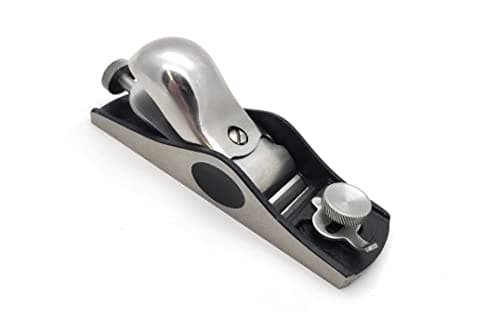
Taytools Taytools #9-1/2 Low Angle Block Plane
Taytools #9-1/2 Low Angle Block Plane

Adjustable mouth, stainless knuckle cap and adjustment screws, and a bed low enough to handle end grain properly. The stainless hardware is the detail that matters in a tool that lives in a pocket.

Best block plane overall$46.49tier C$92.99Amazon
02
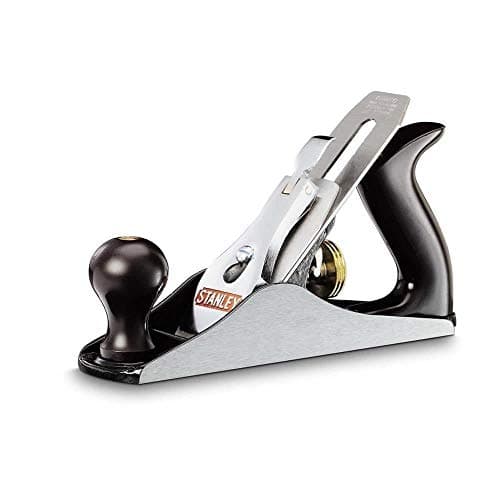
Stanley Stanley Bailey No. 4 Smoothing Plane
Stanley Bailey No. 4 Smoothing Plane

The current production Bailey is the same architecture as the plane your grandfather owned, at a price that leaves room in the budget for a stone. It needs more fettling than the Sweetheart and rewards it.

The pattern everything else copies, at half the Sweetheart price$35.58tier A$106.75Amazon

#ad· Live prices from the Amazon Product API, as of Jul 24, 2026. Where we have no verified live price we show none, and the cost-per-decade figure is suppressed with it — we would rather leave a gap than print a number that has rotted.

People treat this as a question of size or price. It is neither. It is a question of what a short sole can physically do, and the answer is: it cannot flatten anything.

Why sole length is the whole argument

A plane sole is a straightedge that the cutting iron pokes through. When you push it along a board, the sole bridges the hollows and the iron takes material off the high spots between them. That is the entire mechanism by which a plane makes a surface flat: it can only cut what stands proud of the reference the sole establishes.

A long sole bridges long hollows. A No. 7 jointer at 22 inches will ignore a dip that is 18 inches across and remove the two humps either side of it, which is how you get a genuinely straight edge on a long board. A block plane at 6 inches will simply follow that dip, take a shaving out of the bottom of it, and leave the board exactly as unflat as it found it. It is not that the block plane does the job badly. It is that it is not doing that job at all.

This is also why the plane numbers exist and why they run in the order they do. Longer sole, flatter result, less convenient tool. See plane numbers explained.

What a block plane is genuinely better at

Three things, and they are not consolation prizes.

End grain. Block planes are bevel-up with a low bed angle, which presents the edge at a much shallower attack than a 45-degree bench plane. Shallow attack slices end grain; steep attack tears it. This is a real geometric advantage and a bench plane cannot match it without a different bed.

One-handed work. Trimming a proud plug, easing an edge on an assembled carcass, fitting a drawer that is already in the opening. You cannot get two hands and a 14-inch plane into most of those situations.

Being carried. A block plane lives in an apron pocket and gets used twenty times a day. A bench plane lives on a bench and gets used when you decide to use it. Availability is a genuine feature.

Which to buy first

If you dimension your own stock from rough lumber: bench plane, and specifically a jack. There is no substitute for length and you will not get far without it.

If you buy surfaced lumber and assemble things: block plane. Almost everything you need a plane for is fitting and easing work, and the block plane does all of it at a fraction of the price.

If you are not sure: block plane. It is cheaper, it is more immediately useful, it teaches you the same sharpening and setting skills, and if you find yourself wanting to flatten a board you will know exactly why and what to buy.

The case for both

Two planes covers the overwhelming majority of hand work: a jack for surfacing and a low- angle block plane for everything else. That is under $150 together at the prices on the bench plane roundup and the block plane roundup, and it is the pair we would buy. A smoother and a jointer are refinements you add when the work asks for them.

Every pick, in full

The write-ups

01Best block plane overall
Taytools Taytools #9-1/2 Low Angle Block Plane
Pattern
#9-1/2 low angle
Mouth
Adjustable
Hardware
Stainless knuckle cap and screws
Warranty
Not published

Taytools #9-1/2 Low Angle Block Plane

Taytools

Adjustable mouth, stainless knuckle cap and adjustment screws, and a bed low enough to handle end grain properly. The stainless hardware is the detail that matters in a tool that lives in a pocket.

Cost per decade

$46.49

Horizon · tier C

20 years — No lifetime warranty; parts purchasable and resharpenable

No lifetime warranty published at the date checked. The iron is a standard Bailey-pattern size, so aftermarket replacements from third-party makers are purchasable, and the body is a casting with no consumable part.

Rebuy risk

Medium

parts listed, resharpenable

Sole & body
8.5
Iron & edge
7.5
Adjustment
8.5
Out of box
8.0
Parts & repair
7.0
Value
8.5

What it gets right

  • Adjustable mouth is the single feature that separates a real block plane from a toy
  • Stainless fittings resist the sweat and pocket grit that pit a block plane first
  • Machining quality well above the price band

What it costs you

  • No published warranty terms
  • Iron wants honing before first use like everything else here
  • Knuckle cap is a preference; some people want a plain lever cap

Skip this if…

your hands are large. A block plane is a one-handed tool and this is a compact one.

We earn nothing on this one

The Veritas low-angle block plane is the better tool and we earn nothing on it — it sells direct only. Worth knowing before you buy: Lee Valley publishes a three-month satisfaction guarantee rather than a defect warranty, which is not the lifetime cover the tool's reputation implies. Buy direct from Lee Valley / Veritas.

$92.99See it on Amazon

Price as of Jul 24, 2026. Prices move; Amazon's is the one that counts.

#ad · we may earn a commission from this link to Taytools #9-1/2 Low Angle Block Plane

02The pattern everything else copies, at half the Sweetheart price
Stanley Stanley Bailey No. 4 Smoothing Plane
Size
No. 4 smoother, 9 in sole
Pattern
Bailey, bevel down
Bed angle
45 deg
Warranty
Limited lifetime, blades excluded

Stanley Bailey No. 4 Smoothing Plane

Stanley

The current production Bailey is the same architecture as the plane your grandfather owned, at a price that leaves room in the budget for a stone. It needs more fettling than the Sweetheart and rewards it.

Cost per decade

$35.58

Horizon · tier A

30 years — Lifetime warranty, cited

Stanley publishes a limited lifetime warranty on hand tools against material and workmanship defects. Note it excludes consumables including 'any blade' — the casting is covered, the iron is not. Bailey-pattern irons are a standard size and replacements are widely sold.

Rebuy risk

Low

lifetime warranty, parts listed, resharpenable

Sole & body
7.0
Iron & edge
6.5
Adjustment
8.0
Out of box
6.0
Parts & repair
9.0
Value
8.5

What it gets right

  • Same warranty position as the Sweetheart at a much lower price
  • Standard Bailey iron size, so a $40 aftermarket iron transforms it
  • Every setup guide, video and parts diagram ever written applies to it

What it costs you

  • Sole flatness out of the box is inconsistent and may need lapping
  • Factory iron is thinner and softer than the Sweetheart's A2
  • Tote and knob finish is functional rather than pleasant

Skip this if…

you want to open the box and take a shaving. This is a plane you set up first; budget an evening.

$106.75See it on Amazon

$175.5339% off

Price as of Jul 24, 2026. Prices move; Amazon's is the one that counts.

#ad · we may earn a commission from this link to Stanley Bailey No. 4 Smoothing Plane

Questions

Frequently asked

Can a block plane flatten a board?

No. A short sole follows the surface rather than bridging its hollows, so it removes material evenly instead of removing the high spots. Flattening requires length.

Should I buy a block plane or a bench plane first?

Block plane if you buy surfaced lumber and mostly fit and assemble. Bench plane — a jack — if you dimension rough stock yourself. If unsure, the block plane is the cheaper and more immediately useful of the two.

Is a block plane bevel up or bevel down?

Bevel up, at a low bed angle. That is why it handles end grain better than a standard bench plane, and why the bevel you grind changes its cutting angle. See bevel up versus bevel down.

What size bench plane replaces a block plane?

None of them, comfortably. A low-angle jack comes closest because it shares the bevel-up geometry, but it is 14 inches long and needs two hands. The jobs a block plane does are defined partly by it being small.

Receipts

Sources

We have not handled these tools. Nobody here has tested one, owned one, or taken one apart. Specifications come from the manufacturer or the retailer listing; warranty terms come from the maker's own warranty page; the cost-per-decade arithmetic is ours and reproducible. Where we could not verify a figure we say so on the page rather than quietly leaving it out. Read the full method.

Keep reading