Skip to content
PLANE & PATINA
Menu

Hand Planes

The Best Hand Planes For Beginners

The right first plane is the one that needs the least work before it takes a shaving, and the budget that leaves room for a stone.

By Stephen V.Last reviewed How we pick
#ad

We earn a commission when you buy through our Amazon links, at no extra cost to you. It never decides a ranking, and where the best tool in a class is one we earn nothing on, we say so and link it anyway. How this works.

The short answer

Quick picks

#ToolBest forPer decadeScorePrice
01
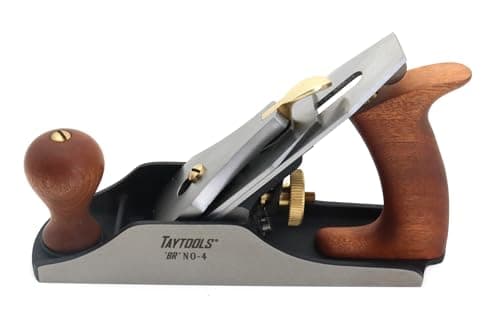
Taytools Taytools #4 Bedrock-Style Smoothing Plane
Taytools #4 Bedrock-Style Smoothing Plane

A Bedrock-pattern frog on a ductile cast body at roughly half the price of the premium options. The frog design is the meaningful part: it beds the iron along its full length, which is what kills chatter.

Best plane per dollar if you sharpen your own$59.99tier C$119.99Amazon
02
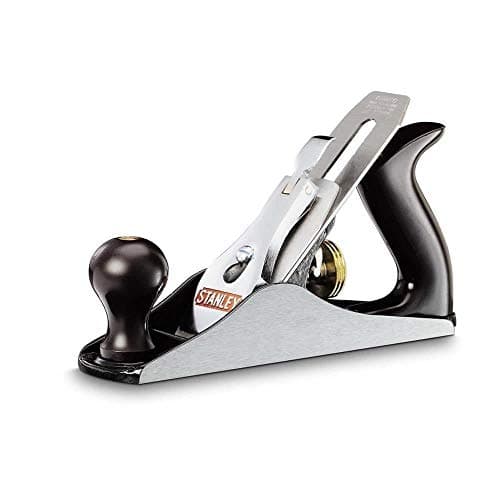
Stanley Stanley Bailey No. 4 Smoothing Plane
Stanley Bailey No. 4 Smoothing Plane

The current production Bailey is the same architecture as the plane your grandfather owned, at a price that leaves room in the budget for a stone. It needs more fettling than the Sweetheart and rewards it.

The pattern everything else copies, at half the Sweetheart price$35.58tier A$106.75Amazon
03
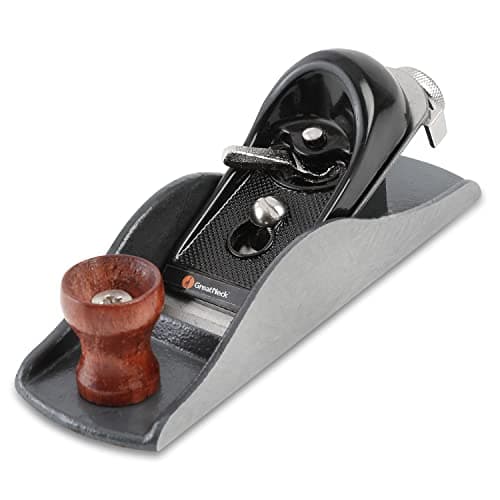
Stanley Stanley 12-220 Adjustable Block Plane
Stanley 12-220 Adjustable Block Plane

The default block plane in North America for decades. Standard-angle rather than low-angle, which makes it less good on end grain and perfectly fine for everything else.

The block plane most tool boxes already have$12.47tier A$37.40Amazon
04
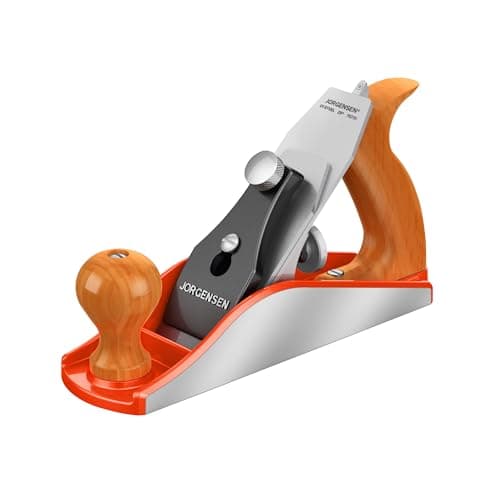
Jorgensen Jorgensen No. 4 Smoothing Plane
Jorgensen No. 4 Smoothing Plane

A competent modern Bailey clone at a price that assumes you will do some setup. The castings are better finished than most in this band, which is where the money went.

The under-$100 plane that needs the least work$39.99tier C$79.98Amazon
05
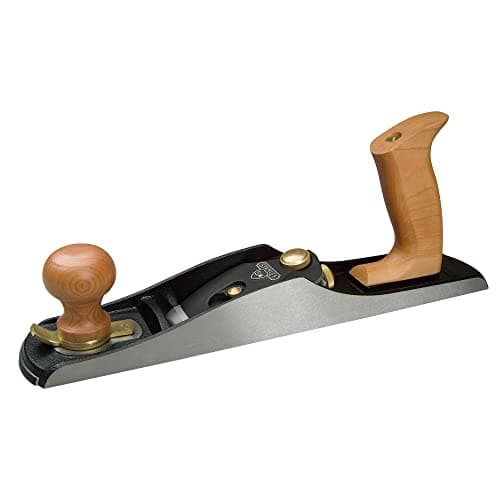
Stanley Stanley No. 62 Sweetheart Low Angle Jack Plane
Stanley No. 62 Sweetheart Low Angle Jack Plane

Bevel-up at a 12 degree bed, which means the bevel you grind sets the cutting angle. Grind three irons at three angles and one plane covers end grain, general work and figured hardwood.

The one plane to own if you only own one$72.00tier A$216.00Amazon
06
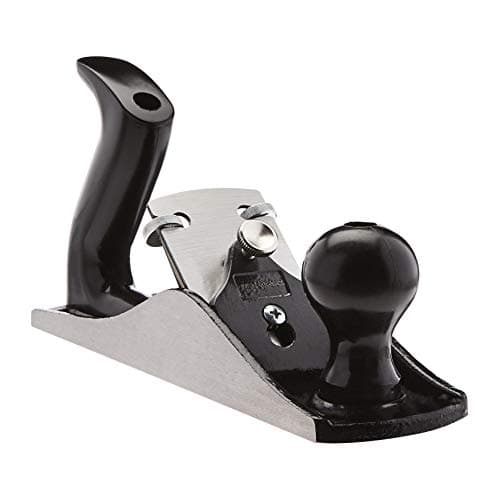
Amazon Basics Amazon Basics No. 4 Adjustable Bench Plane
Amazon Basics No. 4 Adjustable Bench Plane

Genuinely usable after an hour of setup, and genuinely disposable. We include it because pretending the cheap option does not exist helps nobody, not because it belongs in a buy-it-for-life kit.

Finding out whether you like planing, for the price of lunch$28.22tier D$28.22Amazon

#ad· Live prices from the Amazon Product API, as of Jul 24, 2026. Where we have no verified live price we show none, and the cost-per-decade figure is suppressed with it — we would rather leave a gap than print a number that has rotted.

Most people's first hand plane disappoints them, and almost none of the reasons are the plane. They are: the iron was not sharp, the sole was not flat, the mouth was set for a shaving thicker than the work wanted, and nobody said any of those things were the buyer's job. This page is ranked on that basis — not which plane is best, but which plane gets a beginner to a clean shaving with the least work in between.

The budget conversation nobody has

If you have $150 for your first plane, do not spend $150 on a plane. Spend roughly $90 on the plane and $60 on a combination waterstone and a honing guide. A mid-price plane with a properly sharpened iron will comfortably out-plane an expensive one with a factory grind, and the sharpening kit will serve every edge tool you buy for the next thirty years.

This is the single most valuable thing on this page and it is worth being blunt about it: the reason hand planes have a reputation for being finicky is that most first-time buyers spend the whole budget on the plane. Every maker ships a ground shape rather than an edge, because an edge cannot survive shipping and shelf time. They say so in the manual. Almost nobody reads the manual.

Which plane, though

A No. 4 smoother is the easiest plane to learn on: short enough to control, light enough not to tire you, and forgiving about technique. A No. 5 jack does more work but is harder to steer. A block plane is the cheapest useful entry point and teaches you most of the same lessons on smaller work.

The low-angle jack is on this list at position five rather than one for a specific reason: it is the most capable plane here and the least forgiving of a beginner's sharpening. Because it is bevel-up, the bevel angle you grind is part of the cutting angle, so an inconsistent freehand bevel changes how the plane behaves rather than just how sharp it is. Buy it second, once you can put a repeatable edge on things.

What to do in the first hour

Lap the back of the iron flat for the first half inch and hone the bevel. Check the sole on something known flat. Set the frog so the mouth is tight. Back the iron off until it takes nothing, then advance it a fraction of a turn at a time until it takes a shaving. That is the whole procedure, and it is written out properly in how to set up a hand plane.

Every pick, in full

The write-ups

01Best plane per dollar if you sharpen your own
Taytools Taytools #4 Bedrock-Style Smoothing Plane
Size
No. 4, 9-3/8 in sole
Cutter width
2 in
Frog
Bedrock-style flat-top
Body
Ductile cast iron, lapped sides

Taytools #4 Bedrock-Style Smoothing Plane

Taytools

A Bedrock-pattern frog on a ductile cast body at roughly half the price of the premium options. The frog design is the meaningful part: it beds the iron along its full length, which is what kills chatter.

Cost per decade

$59.99

Horizon · tier C

20 years — No lifetime warranty; parts purchasable and resharpenable

No lifetime warranty published at the date checked. The iron is a standard Bailey-pattern size, so aftermarket replacements from third-party makers are purchasable, and the body is a casting with no consumable part.

Rebuy risk

Medium

parts listed, resharpenable

Sole & body
8.5
Iron & edge
7.5
Adjustment
8.5
Out of box
7.5
Parts & repair
7.0
Value
9.0

What it gets right

  • Bedrock frog geometry is the feature people pay a premium for elsewhere
  • Sides lapped square, so it works on a shooting board out of the box
  • Ductile iron body is less brittle than gray cast if it gets dropped

What it costs you

  • No published warranty terms we could find, so it rates tier C not tier A
  • Iron benefits from immediate honing; the factory grind is a shape, not an edge
  • Brand has far less parts history behind it than Stanley

Skip this if…

you want a documented lifetime warranty to point at. The tool is good; the paperwork behind it is not.

$119.99See it on Amazon

Price as of Jul 24, 2026. Prices move; Amazon's is the one that counts.

#ad · we may earn a commission from this link to Taytools #4 Bedrock-Style Smoothing Plane

02The pattern everything else copies, at half the Sweetheart price
Stanley Stanley Bailey No. 4 Smoothing Plane
Size
No. 4 smoother, 9 in sole
Pattern
Bailey, bevel down
Bed angle
45 deg
Warranty
Limited lifetime, blades excluded

Stanley Bailey No. 4 Smoothing Plane

Stanley

The current production Bailey is the same architecture as the plane your grandfather owned, at a price that leaves room in the budget for a stone. It needs more fettling than the Sweetheart and rewards it.

Cost per decade

$35.58

Horizon · tier A

30 years — Lifetime warranty, cited

Stanley publishes a limited lifetime warranty on hand tools against material and workmanship defects. Note it excludes consumables including 'any blade' — the casting is covered, the iron is not. Bailey-pattern irons are a standard size and replacements are widely sold.

Rebuy risk

Low

lifetime warranty, parts listed, resharpenable

Sole & body
7.0
Iron & edge
6.5
Adjustment
8.0
Out of box
6.0
Parts & repair
9.0
Value
8.5

What it gets right

  • Same warranty position as the Sweetheart at a much lower price
  • Standard Bailey iron size, so a $40 aftermarket iron transforms it
  • Every setup guide, video and parts diagram ever written applies to it

What it costs you

  • Sole flatness out of the box is inconsistent and may need lapping
  • Factory iron is thinner and softer than the Sweetheart's A2
  • Tote and knob finish is functional rather than pleasant

Skip this if…

you want to open the box and take a shaving. This is a plane you set up first; budget an evening.

$106.75See it on Amazon

$175.5339% off

Price as of Jul 24, 2026. Prices move; Amazon's is the one that counts.

#ad · we may earn a commission from this link to Stanley Bailey No. 4 Smoothing Plane

03The block plane most tool boxes already have
Stanley Stanley 12-220 Adjustable Block Plane
Length
7 in
Bed
Standard angle (20 deg)
Mouth
Fixed
Warranty
Limited lifetime, blades excluded

Stanley 12-220 Adjustable Block Plane

Stanley

The default block plane in North America for decades. Standard-angle rather than low-angle, which makes it less good on end grain and perfectly fine for everything else.

Cost per decade

$12.47

Horizon · tier A

30 years — Lifetime warranty, cited

Stanley publishes a limited lifetime warranty on hand tools against material and workmanship defects. Note it excludes consumables including 'any blade' — the casting is covered, the iron is not. Bailey-pattern irons are a standard size and replacements are widely sold.

Rebuy risk

Low

lifetime warranty, parts listed, resharpenable

Sole & body
6.5
Iron & edge
5.5
Adjustment
6.0
Out of box
6.5
Parts & repair
9.0
Value
8.5

What it gets right

  • Covered by Stanley's published limited lifetime warranty on the body
  • Cheap, everywhere, and parts knowledge is universal
  • Perfectly adequate for chamfers, easing edges and fitting

What it costs you

  • Fixed mouth, so no help with tearout on difficult end grain
  • Standard bed angle is the wrong choice if end grain is the main job
  • Iron is thin and dulls faster than the premium options

Skip this if…

end grain is why you want a block plane. Buy a low-angle one; the bed angle is the whole point.

$37.40See it on Amazon

Price as of Jul 24, 2026. Prices move; Amazon's is the one that counts.

#ad · we may earn a commission from this link to Stanley 12-220 Adjustable Block Plane

04The under-$100 plane that needs the least work
Jorgensen Jorgensen No. 4 Smoothing Plane
Size
No. 4, 10 in
Pattern
Bailey-type, bevel down
Iron
Carbon steel
Warranty
Not published

Jorgensen No. 4 Smoothing Plane

Jorgensen

A competent modern Bailey clone at a price that assumes you will do some setup. The castings are better finished than most in this band, which is where the money went.

Cost per decade

$39.99

Horizon · tier C

20 years — No lifetime warranty; parts purchasable and resharpenable

No lifetime warranty published at the date checked. The iron is a standard Bailey-pattern size, so aftermarket replacements from third-party makers are purchasable, and the body is a casting with no consumable part.

Rebuy risk

Medium

parts listed, resharpenable

Sole & body
6.5
Iron & edge
5.5
Adjustment
6.5
Out of box
6.5
Parts & repair
6.5
Value
8.5

What it gets right

  • Body finish is a genuine step up from the sub-$50 castings
  • Standard iron size, so an aftermarket upgrade is available later
  • Sensible first plane if the budget has to cover stones too

What it costs you

  • No published warranty or parts listing from the maker
  • Factory iron is the weak point and is the first thing to replace
  • Depth adjuster has more backlash than the Stanley equivalents

Skip this if…

you are buying once and never again. Nothing published supports a lifetime horizon for this one.

$79.98See it on Amazon

Price as of Jul 24, 2026. Prices move; Amazon's is the one that counts.

#ad · we may earn a commission from this link to Jorgensen No. 4 Smoothing Plane

05The one plane to own if you only own one
Stanley Stanley No. 62 Sweetheart Low Angle Jack Plane
Size
No. 62 low angle jack, 14 in
Bed angle
12 deg, bevel up
Iron
A2, thick section
Mouth
Adjustable

Stanley No. 62 Sweetheart Low Angle Jack Plane

Stanley

Bevel-up at a 12 degree bed, which means the bevel you grind sets the cutting angle. Grind three irons at three angles and one plane covers end grain, general work and figured hardwood.

Cost per decade

$72.00

Horizon · tier A

30 years — Lifetime warranty, cited

Stanley publishes a limited lifetime warranty on hand tools against material and workmanship defects. Note it excludes consumables including 'any blade' — the casting is covered, the iron is not. Bailey-pattern irons are a standard size and replacements are widely sold.

Rebuy risk

Low

lifetime warranty, parts listed, resharpenable

Sole & body
8.5
Iron & edge
8.5
Adjustment
8.0
Out of box
8.0
Parts & repair
9.0
Value
7.0

What it gets right

  • One body, three effective cutting angles, if you buy spare irons
  • Low bed angle plus adjustable mouth is the best end-grain setup at this price
  • Simple architecture: no frog to fettle, fewer things to get wrong

What it costs you

  • Spare irons are the whole point and they are an extra purchase
  • Bevel-up geometry means a chipped edge changes your cutting angle, not just your sharpness
  • Heavier and longer than a smoother if that is the only job

Skip this if…

you have already committed to a bevel-down set. Mixing the two systems means two sharpening setups for no benefit.

$216.00See it on Amazon

Price as of Jul 24, 2026. Prices move; Amazon's is the one that counts.

#ad · we may earn a commission from this link to Stanley No. 62 Sweetheart Low Angle Jack Plane

06Finding out whether you like planing, for the price of lunch
Amazon Basics Amazon Basics No. 4 Adjustable Bench Plane
Size
No. 4, 2 in blade
Pattern
Bailey-type
Body
Cast iron
Warranty
Not published for this item

Amazon Basics No. 4 Adjustable Bench Plane

Amazon Basics

Genuinely usable after an hour of setup, and genuinely disposable. We include it because pretending the cheap option does not exist helps nobody, not because it belongs in a buy-it-for-life kit.

Cost per decade

$28.22

Horizon · tier D

10 years — No warranty and no parts availability found

No warranty terms and no replacement-parts listing found for this item or maker at the date checked. The horizon is the floor value, and the rating below is what that absence means.

Rebuy risk

High

resharpenable

Sole & body
4.0
Iron & edge
3.5
Adjustment
5.0
Out of box
3.0
Parts & repair
3.0
Value
8.0

What it gets right

  • Cheapest honest way to learn whether hand planing suits you
  • Standard iron dimensions, so it can be improved with a better blade
  • Nothing about it is dangerous or unusable once tuned

What it costs you

  • Sole flatness is a lottery and lapping it is most of an afternoon
  • Soft iron loses its edge fast, which beginners misread as their own technique
  • No warranty terms and no parts listing found, hence the tier D rating

Skip this if…

you already know you want to work with hand tools. Spend the difference on a vintage Bailey and a stone and skip a step.

$28.22See it on Amazon

Price as of Jul 24, 2026. Prices move; Amazon's is the one that counts.

#ad · we may earn a commission from this link to Amazon Basics No. 4 Adjustable Bench Plane

What actually decides it

Buying guide

The three-purchase starting kit

A No. 4 plane, a 1000/6000 combination waterstone, and an inexpensive honing guide. That is under $150 together and it is a complete, permanent setup: the stone and the guide will still be in service long after you have upgraded the plane. Add a flattening stone as the fourth purchase, because a dished waterstone puts a curved bevel on everything you own.

Why we did not put the cheapest plane first

The Amazon Basics plane is last on this list and it is still on it. It works, after an afternoon. If your question is genuinely “do I even like this?” then twenty-odd dollars is a rational way to find out, and pretending the cheap option does not exist helps nobody. But it has no published warranty and no parts listing, which is why it carries the only tier D rating in this roundup and a high rebuy risk. It is a trial, not a purchase.

Buying used instead

A vintage Stanley Bailey in usable condition often costs less than the budget new planes and is a fundamentally better casting. The catch is that it needs cleaning, possibly lapping, and a decision about whether the iron is worth keeping. If you enjoy that kind of work it is the best value on this whole site. If you do not, it is a way to fail at two hobbies at once. See buying used hand tools.

What success looks like

A full-width shaving you can read through, coming off in one piece, leaving a surface that does not need sanding. If you are getting dust, the iron is dull. If you are getting nothing, the iron is not projecting. If you are getting a shaving from half the width, the iron is not set laterally. Those three diagnoses cover almost every problem a beginner has.

Questions

Frequently asked

What hand plane should I buy first?

A No. 4 smoother, and a sharpening stone at the same time. The No. 4 is the most forgiving size to learn on, and the stone is the difference between a plane that works and a plane that frustrates you.

Why does my new hand plane not cut?

Almost always because the iron is not sharp. Planes ship with a ground shape, not an edge. The second most likely cause is that the iron is not projecting through the mouth. Both are covered in how to set up a hand plane.

How much should I spend on a first hand plane?

Around $80–$120 on the plane, and keep $50–$70 back for a combination waterstone and a guide. Spending the whole budget on the plane is the most common and most expensive mistake in this category.

Do I need a jack plane or a smoothing plane first?

A smoother (No. 4) if you are learning; a jack (No. 5) if you already know you will be dimensioning rough stock. The smoother is easier to control and teaches the same skills.

Is a cheap hand plane a waste of money?

Not if the question you are answering is whether you enjoy hand planing. It is if you already know you do — at that point the money is better spent on a used Bailey and a stone.

Receipts

Sources

We have not handled these tools. Nobody here has tested one, owned one, or taken one apart. Specifications come from the manufacturer or the retailer listing; warranty terms come from the maker's own warranty page; the cost-per-decade arithmetic is ours and reproducible. Where we could not verify a figure we say so on the page rather than quietly leaving it out. Read the full method.

Keep reading