Restore & Vintage
Buying Used Hand Tools
Most of what looks bad on an old tool is cosmetic. Two faults are fatal, and both are easy to check in ten seconds.
We earn a commission when you buy through our Amazon links, at no extra cost to you. It never decides a ranking, and where the best tool in a class is one we earn nothing on, we say so and link it anyway. How this works.
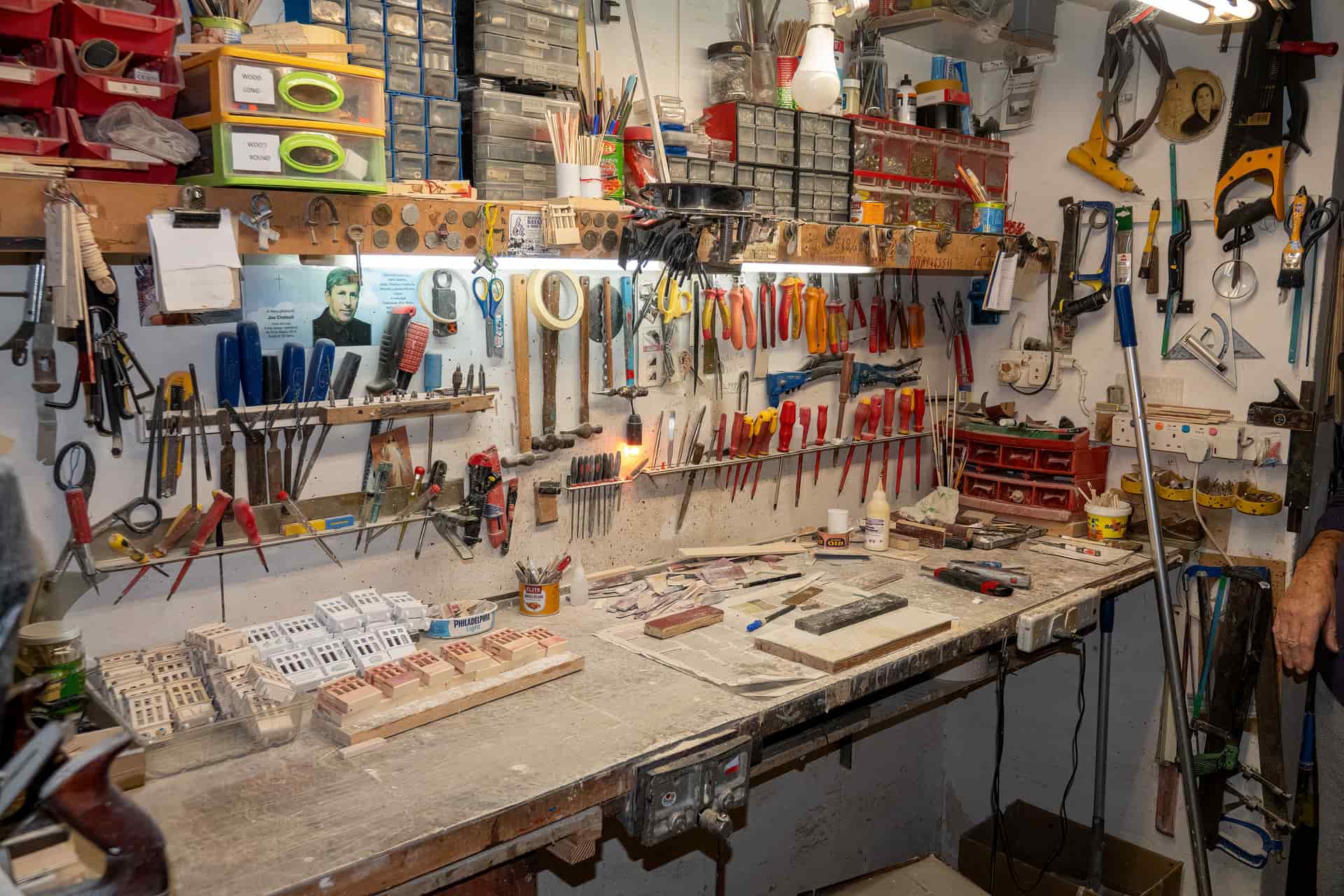
Almost everything that makes a used tool look bad is cosmetic. Rust, filthy hardware, a split handle, a dull and pitted-looking iron — all of it comes back. A very short list of faults makes a tool scrap, and knowing that list turns a table of rusty junk into a table with two or three good tools on it.
The fatal faults: planes
A cracked casting.The one that ends it. Look along the sides, around the mouth, and at the cheeks either side of the frog. Cracks hide under rust and dirt, so run a thumbnail along suspicious lines — a crack catches. A cracked plane is a parts donor.
A broken or chipped mouth. The mouth is the opening the iron projects through, and it takes stress. A chip there means you cannot close the mouth down for fine work, which is most of what a smoothing plane is for.
A badly ground body. Someone in 1974 who took the sole to a belt sander. Sight along the sole; if it is visibly hollow or twisted, walk away. Lapping fixes thousandths, not tenths.
The nearly-fatal fault: the iron
Deep pitting on the back, within the first quarter inch of the edge. This is the one people miss. You cannot sharpen past pitting there, because that quarter inch isthe tool — an edge is where the flat back meets the bevel, and if the back is pocked with craters the edge will be too.
Turn the iron over and look at the back near the edge in good light. Surface rust is fine and wipes off. Craters are not.
It is only nearly-fatal because irons are replaceable, and a vintage plane with a new iron is a genuinely excellent tool. But it turns a $25 plane into a $75 one, so it should change what you pay.
What does not matter
- Rust. Surface rust comes off in an overnight soak. It is the single biggest reason good tools sell cheaply.
- A split tote or knob. Glue and clamps, or turn a new one, or buy one used.
- Missing or wrong screws. Standard sizes, widely available.
- Worn japanning. Cosmetic. It still protects the casting.
- A dull iron. Every iron you will ever buy is dull. That is what stones are for.
- A grubby, seized frog adjuster. Cleans up.
Chisels
Fatal: a cracked or bent blade, and a blade sharpened away so far that little length remains. Sight along the blade for a bend; look at how much steel is left against the socket or bolster.
Fine: a chipped edge (grind it back), a broken handle (replace it), rust, and a badly ground bevel. Old chisels are frequently better steel than new budget ones, and they are the best value on any tool table.
Saws
Fatal: a kinked plate. Sight down the blade from the handle; it should be dead straight. A kink cannot be reliably removed and the saw will never track straight again. Also fatal: rust pitting deep enough to have eaten into the tooth line.
Fine:dull teeth, uneven teeth, a broken or missing handle, and surface rust on the plate. All of that is recoverable if the teeth are filed rather than impulse-hardened — see how to sharpen a hand saw.
A cheap vintage saw is the ideal thing to learn saw sharpening on, which makes the tables of unloved handsaws at every flea market genuinely useful.
Where to buy
In person for your first few. Flea markets, boot sales, estate sales, tool swaps, antique malls. You can check for the fatal faults in ten seconds, and you cannot do that from a photograph.
Online once you know what you are looking at. Prices are higher and selection is enormous. Ask for a photograph of the back of the iron near the edge and a sight-down-the-sole shot; a seller who will not provide them is telling you something.
Dedicated used-tool dealers cost more and have usually already sorted the fatal faults out. For a specific tool you actually need, that premium is often worth it.
What to pay
Prices vary far too much by region and venue for a number here to be honest, and anyone quoting one is guessing. Two principles hold everywhere: common tools in usable condition should be cheap, because there are enormous numbers of them; and a collector price for a user tool is money spent on rarity you are about to modify away.
Which makers and eras to look for is on vintage plane brands worth buying.
Questions
Frequently asked
What should I check when buying a used hand plane?
A cracked casting, a chipped mouth, a badly ground sole, and deep pitting on the back of the iron within the first quarter inch. Those four are the ones that matter. Rust, a split tote and a dull iron are all cosmetic.
Is rust a problem on used tools?
Surface rust is not — it comes off in an overnight soak, and it is the main reason good tools sell cheaply. Pitting is different: rust that has eaten into the back of an iron near the edge is permanent.
How do I check a used saw?
Sight down the plate from the handle; it must be dead straight. A kink cannot be reliably removed and the saw will never track straight. Dull or uneven teeth are fine if they are filed rather than impulse-hardened.
Are old chisels worth buying?
Frequently, yes — old chisels are often better steel than new budget ones. Avoid cracked or bent blades and ones sharpened away to almost nothing. Chipped edges and broken handles are both recoverable.
Should I buy vintage tools online?
Once you know what to look for. For your first purchases, buy in person — the two fatal faults are things you check in ten seconds by hand and cannot see in a listing photograph.
Receipts
Sources
- Stanley Tools — Warranty Information (limited lifetime on hand tools; excludes consumables including 'any blade'). Retrieved 2026-07-24.
- Lie-Nielsen Toolworks — Replacement Blades (A2, cryogenically treated, HRc 60-62). Retrieved 2026-07-24.
- Amazon listing for Evapo-Rust Heavy Duty Rust Remover, 128 oz — specifications and price basis, retrieved via the Amazon Product API on 2026-07-24 and refreshed on the daily price check.
We have not handled these tools. Nobody here has tested one, owned one, or taken one apart. Specifications come from the manufacturer or the retailer listing; warranty terms come from the maker's own warranty page; the cost-per-decade arithmetic is ours and reproducible. Where we could not verify a figure we say so on the page rather than quietly leaving it out. Read the full method.
Keep reading
Related
- Vintage plane brands worth buyingWhich makers and which eras to look for.
- How to restore a hand planeWhat to do once you have bought it.
- Vintage vs new planesWhether this route suits you at all.
- How to sharpen a hand sawWhy a cheap vintage saw is the right thing to learn on.
- How to restore a hand sawA saw is a spring-steel plate and a shaped wooden handle.
Back to Restore & Vintage · how we pick · editorial policy