We earn a commission when you buy through our Amazon links, at no extra cost to you. It never decides a ranking, and where the best tool in a class is one we earn nothing on, we say so and link it anyway. How this works.
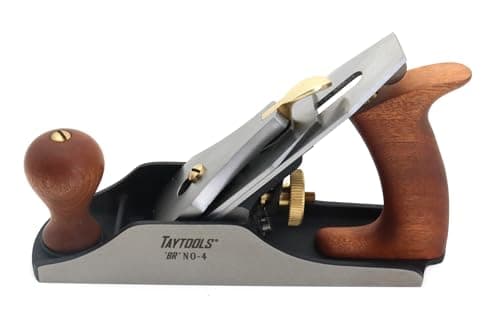
A Bedrock-pattern frog on a ductile cast body at roughly half the price of the premium options. The frog design is the meaningful part: it beds the iron along its full length, which is what kills chatter.
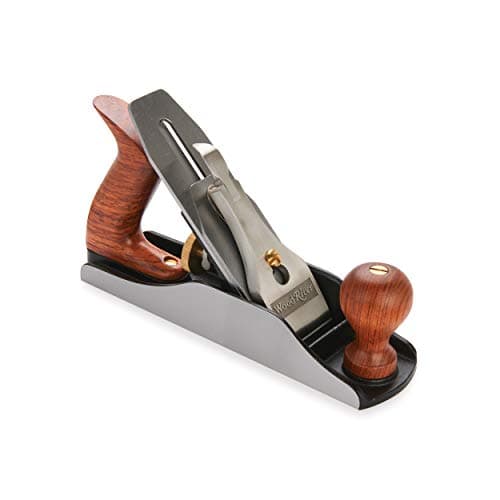
Woodcraft's house premium plane, third revision, and the revision matters — V3 fixed the frog fit and iron thickness complaints that dogged the earlier versions.
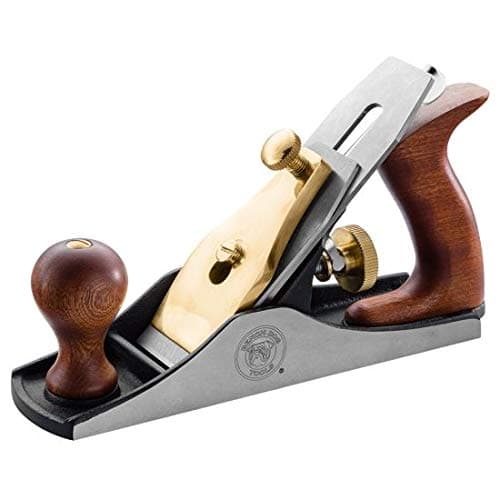
A ductile cast body, a solid brass cap iron and an adjustable frog at the middle of this price range, and the only plane on this page that ships with a Certificate of Inspection recording that individual plane's sole flatness and blade hardness. What it does not ship with is a warranty.
The only plane here that arrives with its own measurements
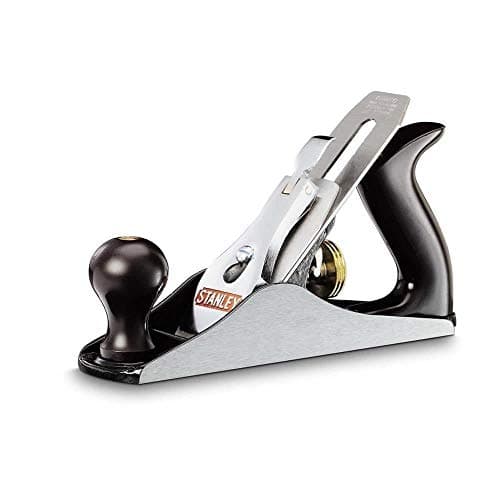
The current production Bailey is the same architecture as the plane your grandfather owned, at a price that leaves room in the budget for a stone. It needs more fettling than the Sweetheart and rewards it.
The pattern everything else copies, at half the Sweetheart price
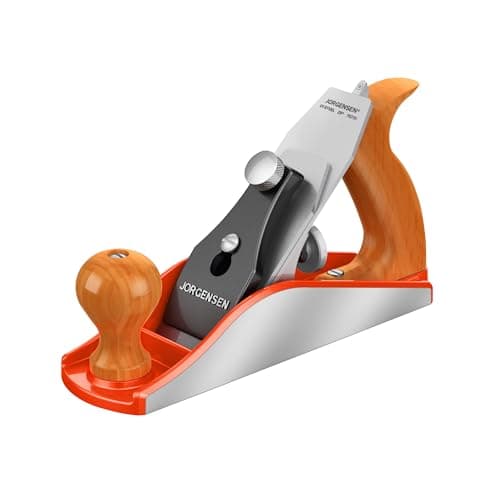
A competent modern Bailey clone at a price that assumes you will do some setup. The castings are better finished than most in this band, which is where the money went.
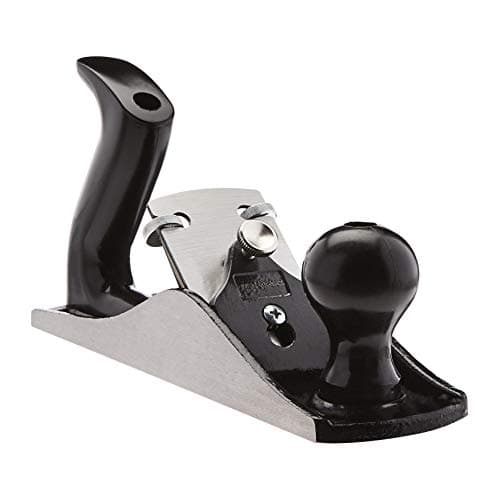
Genuinely usable after an hour of setup, and genuinely disposable. We include it because pretending the cheap option does not exist helps nobody, not because it belongs in a buy-it-for-life kit.
Finding out whether you like planing, for the price of lunch
#ad· Live prices from the Amazon Product API, as of October 16, 2026. Where we have no verified live price we show none, and the cost-per-decade figure is suppressed with it — we would rather leave a gap than print a number that has rotted.
Buy the Taytools No. 4 Bedrock-style smoother. It is the only plane here that publishes both a measured iron thickness and a Bedrock-pattern frog — the two specifications that decide whether a smoother chatters — and it does it at roughly half what the WoodRiver asks. If you want the heaviest, best-finished casting on the page and price is not the constraint, the WoodRiver No. 4 V3 is the pick. If you already own sharpening gear and want a working smoother for the price of a restaurant meal, the Jorgensen No. 4 is the honest answer, and the Amazon Basics No. 4 is the answer to “do I even like this?”
The smoothing plane is the last tool that touches the wood. Everything before it — the scrub, the jack, the jointer — is allowed to leave evidence, because something later removes it. The smoother is not. Whatever it leaves is what you finish over and what you look at for the next forty years, which is why a tool that is merely acceptable at flattening is unacceptable here, and why people who own one good plane usually own a smoother.
It is also the plane where the gap between a cheap one and a dear one is most visible, and — this is the part nobody selling planes mentions — most of that gap can be closed for the price of an iron rather than the price of a plane.
What a smoother is actually doing
A smoother takes a shaving somewhere between one and three thousandths of an inch thick over a sole nine or ten inches long. That is a deliberately short sole: it is meant to follow a surface that is already flat, not to make one. Plane numbers explained covers why the lengths run the way they do, and what is a smoothing plane covers the pattern itself.
At that shaving thickness three things go wrong, and all three are mechanical rather than a matter of skill.
The iron flexes and leaves chatter. A thin iron bedded on an imperfect frog vibrates under load at a few hundred cycles a second, and what it writes on the wood is a regular washboard you can feel with a fingertip and see under a raking light. This is the most common complaint about inexpensive bench planes, and it is not a complaint about the casting. It is a complaint about iron section and frog contact.
The grain tears out ahead of the iron. Where the fibers rise toward the sole, the iron lifts them before it severs them and a chip breaks out below the finished surface. The fix is a chipbreaker set within a few hundredths of an inch of the edge, which depends on having a chipbreaker heavy enough to hold its setting — what is a cap iron is the whole mechanism.
The sole rocks. A smoother only needs to be flat in three places — behind the mouth, at the toe and at the heel — but if it is convex along its length it will refuse to take a shaving at the end of a board. How to flatten a plane sole is an hour with sandpaper and a reference surface, and it is the one defect on this page you can fix for nothing.
What decides it, in order
We have not planed a board with any of these. We opened each maker's and retailer's listing, recorded what is published, cited it at the foot of the page and ranked on that — the method is on the methodology page, and the part where we say we have no shop is not a disclaimer, it is the method.
1. Published iron thickness. The old Stanley standard is about 0.080 in. Anything at 0.120 in or above behaves like a different tool. Taytools publishes 0.120 in cryo-treated O1 at 54–58 HRc; Bench Dog publishes roughly 1/8 in at 55–60 HRC; WoodRiver publishes “thick section” without a number; Stanley, Jorgensen and Amazon Basics publish no thickness at all for their No. 4s. A published number is worth more than an adjective, and the absence of one is itself information.
2. Frog design and contact. A Bailey frog contacts the casting on two narrow machined pads; a Bedrock-pattern frog beds on a wide flat face and can be adjusted fore and aft with the iron in place. That second property is the one you notice, because it means you can close the mouth for a difficult patch without dismantling the plane. Taytools and WoodRiver both publish Bedrock-style frogs.
3. Can you buy the iron again? The iron is the part that wears out, and on a buy-it-for-life page that makes the replacement catalog the deciding durability fact rather than the warranty. Taytools sells plane blades as catalog items, Woodcraft sells WoodRiver replacement irons by size, and Rockler lists a Bench Dog replacement blade. Stanley publishes a limited lifetime warranty that excludes blades by name, which on a plane means it covers the casting. The best replacement plane irons page is the other half of this: a thick aftermarket iron in a cheap plane is the most cost-effective upgrade in hand tools.
4. Mass, and only then. Weight damps vibration, which is real, and it also tires your shoulder over a long session, which is also real. We have not ranked on it, because the honest position is that it is a preference rather than a specification.
What the makers publish
Plane
Iron as published
Frog
Replacement iron?
Taytools No. 4 Bedrock-style
O1, cryo, 0.120 in, 54–58 HRc
Bedrock-style, full contact
Yes — Taytools catalog
WoodRiver No. 4 V3
High carbon, “thick section”; no figure
Bedrock-based, fully machined
Yes — Woodcraft, by size
Bench Dog No. 4
Carbon steel, approx 1/8 in, 55–60 HRC
Adjustable, bedded 45 deg
Yes — Rockler blade listing
Stanley Bailey No. 4
Not published
Bailey, 45 deg
Aftermarket only
Jorgensen No. 4
Carbon steel; thickness not published
Bailey-type
Jorgensen publishes a blade part
Amazon Basics No. 4
Not published
Bailey-type
No
Read that as a ladder of disclosure rather than a ladder of quality. The two planes that publish a measured iron thickness are the two planes near the top, and that is not a coincidence: a maker who machines a frog properly is a maker willing to print a number.
The upgrade that beats buying up
Here is the arithmetic the premium makers would rather you did not do. The gap between the Stanley Bailey and the WoodRiver is more than the cost of a thick aftermarket iron and chipbreaker. Fit those to the Stanley, spend an hour flattening the sole, and the chatter complaint largely disappears — because chatter was never about the casting.
What you do not get is the Bedrock frog, the machined sides that let a plane work on a shooting board, or the finish. Those are real, and for some people they are worth the money. But the honest ranking of “most smoothing per dollar” on this site puts a cheap plane plus a good iron above a mid-priced plane left stock, and vintage vs new planes puts a restored pre-war Stanley above both.
Every pick, in full
The write-ups
01Best plane per dollar if you sharpen your own
Size
No. 4, 9-3/8 in sole
Cutter width
2 in
Frog
Bedrock-style flat-top
Body
Ductile cast iron, lapped sides
Taytools #4 Bedrock-Style Smoothing Plane
Taytools
8.0/10
A Bedrock-pattern frog on a ductile cast body at roughly half the price of the premium options. The frog design is the meaningful part: it beds the iron along its full length, which is what kills chatter.
Cost per decade
$59.99
Horizon · tier C
20 years — No lifetime warranty; parts purchasable and resharpenable
No lifetime warranty published at the date checked. The iron is a standard Bailey-pattern size, so aftermarket replacements from third-party makers are purchasable, and the body is a casting with no consumable part.
Rebuy risk
Medium
parts listed, resharpenable
Sole & body
8.5
Iron & edge
7.5
Adjustment
8.5
Out of box
7.5
Parts & repair
7.0
Value
9.0
What it gets right
+Bedrock frog geometry is the feature people pay a premium for elsewhere
+Sides lapped square, so it works on a shooting board out of the box
+Ductile iron body is less brittle than gray cast if it gets dropped
What it costs you
−No published warranty terms we could find, so it rates tier C not tier A
−Iron benefits from immediate honing; the factory grind is a shape, not an edge
−Brand has far less parts history behind it than Stanley
Skip this if…
…you want a documented lifetime warranty to point at. The tool is good; the paperwork behind it is not.
02Premium feel without the premium-maker lead time
Size
No. 4 smoother
Pattern
Bedrock-style
Iron
Thick section, high carbon
Revision
V3
WoodRiver #4 Bench Plane, V3
WoodRiver
7.9/10
Woodcraft's house premium plane, third revision, and the revision matters — V3 fixed the frog fit and iron thickness complaints that dogged the earlier versions.
Cost per decade
$116.99
Horizon · tier C
20 years — No lifetime warranty; parts purchasable and resharpenable
No lifetime warranty published at the date checked. The iron is a standard Bailey-pattern size, so aftermarket replacements from third-party makers are purchasable, and the body is a casting with no consumable part.
Rebuy risk
Medium
parts listed, resharpenable
Sole & body
9.0
Iron & edge
8.5
Adjustment
8.5
Out of box
8.0
Parts & repair
7.0
Value
6.5
What it gets right
+Heavy, well-machined body that damps vibration on difficult grain
+Thick iron and substantial chipbreaker, minimal chatter
+In stock far more reliably than the small premium makers
What it costs you
−Priced against Lie-Nielsen and Veritas without the parts catalog either has
−Heavier than some people want in a smoother
−No published lifetime warranty terms found
Skip this if…
…the price difference to a Lie-Nielsen is money you have. At that point buy the one with the replacement-parts catalog behind it.
03The only plane here that arrives with its own measurements
Size
No. 4 smoother, 10 in sole
Iron
Carbon steel, approx 1/8 in, 55-60 HRC
Frog
Adjustable, bedded at 45 deg
Warranty
None published; 90-day retailer guarantee
Bench Dog No. 4 Smoothing Plane
Rockler
8.0/10
A ductile cast body, a solid brass cap iron and an adjustable frog at the middle of this price range, and the only plane on this page that ships with a Certificate of Inspection recording that individual plane's sole flatness and blade hardness. What it does not ship with is a warranty.
Cost per decade
$75.00
Horizon · tier C
20 years — No lifetime warranty; parts purchasable and resharpenable
No lifetime warranty published at the date checked. The iron is a standard Bailey-pattern size, so aftermarket replacements from third-party makers are purchasable, and the body is a casting with no consumable part.
Rebuy risk
Medium
parts listed, resharpenable
Sole & body
9.0
Iron & edge
7.0
Adjustment
8.5
Out of box
8.0
Parts & repair
7.5
Value
8.0
What it gets right
+Ships with a Certificate of Inspection giving the measured sole flatness and blade hardness for that plane
+Rockler publishes the sole flatness tolerance as 0.002 to 0.004 in, which almost nobody in this category does
+Adjustable frog closes the mouth for fine shavings without shimming
+Rockler lists a spare blade for it, so the wear part is purchasable
What it costs you
−Rockler publishes a 90-day satisfaction guarantee, not a lifetime warranty on the casting
−Blade is plain carbon steel at 55-60 HRC, softer than the A2 irons at this money
−Sold through one retailer, so availability depends on their stock
Skip this if…
…you are buying on warranty terms. This is the plane with the best published measurements on the page and the weakest published guarantee behind them.
We earn nothing on this one
The best No. 4 you can buy in North America is a Lie-Nielsen, and it is not sold on Amazon, so we earn nothing on it. Their product pages guarantee materials and workmanship for the life of the tool, and they maintain a full replacement-blade and parts catalog behind it, which for a lifetime tool is arguably the better signal of the two. Those terms and that parts catalog are published by Lie-Nielsen Toolworks.
04The pattern everything else copies, at half the Sweetheart price
Size
No. 4 smoother, 9 in sole
Pattern
Bailey, bevel down
Bed angle
45 deg
Warranty
Limited lifetime, blades excluded
Stanley Bailey No. 4 Smoothing Plane
Stanley
7.5/10
The current production Bailey is the same architecture as the plane your grandfather owned, at a price that leaves room in the budget for a stone. It needs more fettling than the Sweetheart and rewards it.
Cost per decade
$31.93
Horizon · tier A
30 years — Lifetime warranty, cited
Stanley publishes a limited lifetime warranty on hand tools against material and workmanship defects. Note it excludes consumables including 'any blade' — the casting is covered, the iron is not. Bailey-pattern irons are a standard size and replacements are widely sold.
Rebuy risk
Low
lifetime warranty, parts listed, resharpenable
Sole & body
7.0
Iron & edge
6.5
Adjustment
8.0
Out of box
6.0
Parts & repair
9.0
Value
8.5
What it gets right
+Same warranty position as the Sweetheart at a much lower price
+Standard Bailey iron size, so a $40 aftermarket iron transforms it
+Every setup guide, video and parts diagram ever written applies to it
What it costs you
−Sole flatness out of the box is inconsistent and may need lapping
−Factory iron is thinner and softer than the Sweetheart's A2
−Tote and knob finish is functional rather than pleasant
Skip this if…
…you want to open the box and take a shaving. This is a plane you set up first; budget an evening.
A competent modern Bailey clone at a price that assumes you will do some setup. The castings are better finished than most in this band, which is where the money went.
Cost per decade
$39.99
Horizon · tier C
20 years — No lifetime warranty; parts purchasable and resharpenable
No lifetime warranty published at the date checked. The iron is a standard Bailey-pattern size, so aftermarket replacements from third-party makers are purchasable, and the body is a casting with no consumable part.
Rebuy risk
Medium
parts listed, resharpenable
Sole & body
6.5
Iron & edge
5.5
Adjustment
6.5
Out of box
6.5
Parts & repair
6.5
Value
8.5
What it gets right
+Body finish is a genuine step up from the sub-$50 castings
+Standard iron size, so an aftermarket upgrade is available later
+Sensible first plane if the budget has to cover stones too
What it costs you
−No published warranty or parts listing from the maker
−Factory iron is the weak point and is the first thing to replace
−Depth adjuster has more backlash than the Stanley equivalents
Skip this if…
…you are buying once and never again. Nothing published supports a lifetime horizon for this one.
06Finding out whether you like planing, for the price of lunch
Size
No. 4, 2 in blade
Pattern
Bailey-type
Body
Cast iron
Warranty
Not published for this item
Amazon Basics No. 4 Adjustable Bench Plane
Amazon Basics
4.4/10
Genuinely usable after an hour of setup, and genuinely disposable. We include it because pretending the cheap option does not exist helps nobody, not because it belongs in a buy-it-for-life kit.
Cost per decade
$26.21
Horizon · tier D
10 years — No warranty and no parts availability found
No warranty terms and no replacement-parts listing found for this item or maker at the date checked. The horizon is the floor value, and the rating below is what that absence means.
Rebuy risk
High
resharpenable
Sole & body
4.0
Iron & edge
3.5
Adjustment
5.0
Out of box
3.0
Parts & repair
3.0
Value
8.0
What it gets right
+Cheapest honest way to learn whether hand planing suits you
+Standard iron dimensions, so it can be improved with a better blade
+Nothing about it is dangerous or unusable once tuned
What it costs you
−Sole flatness is a lottery and lapping it is most of an afternoon
−Soft iron loses its edge fast, which beginners misread as their own technique
−No warranty terms and no parts listing found, hence the tier D rating
Skip this if…
…you already know you want to work with hand tools. Spend the difference on a vintage Bailey and a stone and skip a step.
Best overall: the Taytools No. 4. A published 0.120 in cryo-treated O1 iron and a Bedrock-style frog — the two things that stop chatter — at a price well under the premium tier. Taytools publishes no warranty beyond a 90-day return on unused goods, so you are buying the specification rather than the promise.
If the money is there: the WoodRiver No. 4 V3. The heaviest, best-finished casting here, and the V3 revision is the one that fixed the frog-fit and iron-thickness complaints that dogged earlier versions. Woodcraft sells the replacement iron by size. It does not publish a lifetime warranty, and at this price that is worth knowing before you buy.
If you want the plane to arrive with its own measurements: the Bench Dog No. 4. Rockler publishes the iron hardness band and ships a tolerance statement with the plane, which almost nobody at any price does. The frog is a conventional Bailey, so adjusting the mouth means loosening the iron.
If you want the pattern everything else copies: the Stanley Bailey No. 4. Stanley publishes a limited lifetime warranty that excludes blades, parts turn up everywhere, and this is the casting a century of joiners used. Buy it expecting to flatten the sole and fit a thicker iron, and budget for both.
Cheapest plane here that works out of the box: the Jorgensen No. 4. A ductile-iron body, beech handles and the least fettling of anything in the bottom half of this page. Jorgensen publishes a blade part number, which matters more than the warranty does.
Finding out whether you like planing: the Amazon Basics No. 4. Nothing about it is published and nothing about it can be renewed. It is here because “spend the price of lunch before you spend the price of a plane” is honest advice, and because a sharpened cheap plane teaches you more than a blunt expensive one.
Setting a smoother up, in the order that matters
Sharpen before you judge. No plane on this page arrives sharp enough to smooth. A factory edge is a grinding operation, not a honing one. How to sharpen a plane iron is the whole of the first evening, and the scary sharp method is the cheapest way to get there.
Flatten the sole if it rocks. Check with a straightedge across the toe, the mouth and the heel. If those three touch, do nothing else.
Set the chipbreaker close. Somewhere around a hundredth of an inch from the edge is where tearout stops on figured stock. This single adjustment does more for surface quality than any upgrade you can buy.
Camber the iron slightly. A smoother wants a few thousandths of crown so the corners do not leave tracks — how to camber a plane iron has the amounts.
Then close the mouth. Only after the first four. A tight mouth on a dull iron does nothing at all. How to set up a hand plane runs the whole sequence, and hand plane troubleshooting covers what each symptom actually means.
Cost per decade on the plane you keep longest
A smoother is the bench plane most likely to be the one you still own in thirty years, so the long-run arithmetic matters more here than on a jack. Two of the six on this page have a replacement iron you can buy from the maker or its retailer; one has an aftermarket route; one has nothing. Over three decades the iron is the only consumable, and the difference between a plane whose iron is a catalog item and one whose iron is not is the difference between a tool and a disposable.
That is the same conclusion cost per decadereaches on every edge tool, and it is why the cheap end of this page is honest about what it is. A plane under fifty dollars with no published iron is not a bad buy — it is a short-term buy, and it should be priced in your head as one. See the best hand planes under $100 if that is the band you are shopping in.
Questions
Frequently asked
What is the best smoothing plane for a beginner?+
A No. 4 with a thick iron and a frog that beds properly, which on this page means the Taytools. The beginner mistake is not buying too cheap, it is buying a plane with a thin iron and then concluding from the chatter that hand planing is hard. If the budget is tight, the Jorgensen No. 4 plus an hour of sharpening beats a dearer plane you never sharpen.
Is a No. 4 or a No. 4-1/2 better for smoothing?+
A No. 4 for most people. The 4-1/2 is wider and heavier, which damps vibration and covers more surface per pass, and it also tires you faster and is harder to steer around a figured patch. If you smooth large tabletops the extra width earns its keep; if you smooth drawer fronts and door rails it does not. Nothing on this page is a 4-1/2, because the registry has none with a verified live listing.
Do I need a smoothing plane if I sand?+
No, and we are not going to pretend otherwise. Sanding reaches a comparable surface with less skill. What a smoother gives you is a surface cut rather than abraded, which takes finish differently and leaves no dust, and it gets there in seconds on a small part rather than three grits. Hand plane vs power tools is the honest comparison.
Why does my smoothing plane leave tracks or ridges?+
Almost always a dead-straight iron. The corners of a square-ground edge dig in at the edges of the cut and leave two parallel lines. Put a few thousandths of camber on the iron, or at minimum relieve the corners, and the tracks disappear. If the surface is rippled rather than tracked, that is chatter, and the cause is a thin iron or a frog that is not seated.
What angle should a smoothing plane iron be sharpened at?+
Thirty degrees on a bevel-down bench plane covers nearly everything, with the 45 degree bed giving a 45 degree cutting angle regardless. A steeper microbevel at 33 to 35 degrees helps on figured hardwood at the cost of a heavier push. Sharpening angles explained has the full range, and microbevels explained covers why the second bevel saves time.
We have not handled these tools. Nobody here has tested one, owned one, or taken one apart. Specifications come from the manufacturer or the retailer listing; warranty terms come from the maker's own warranty page; the cost-per-decade arithmetic is ours and reproducible. Where we could not verify a figure we say so on the page rather than quietly leaving it out. Read the full method.