The plane that makes a tenon fit. Ranked on published metallurgy, sides square to the sole, and the question almost nobody in this class answers: can you ever replace the iron?
We earn a commission when you buy through our Amazon links, at no extra cost to you. It never decides a ranking, and where the best tool in a class is one we earn nothing on, we say so and link it anyway. How this works.
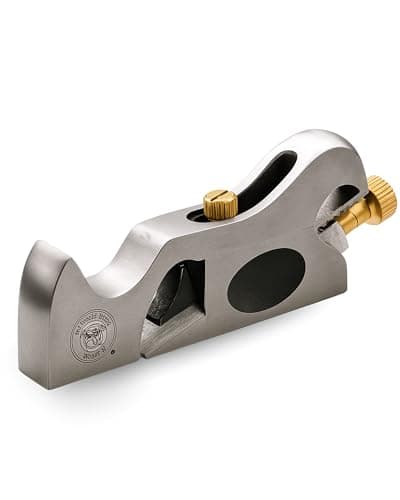
Woodcraft publishes what the body is, what the iron is, how hard it is and both angles — Cr40 ductile steel, Mn65 tool steel at 60-64 Rc, bedded 15 degrees under a 25 degree bevel — and then sells the matching iron on its own. In a class where three of the seven planes we looked at publish neither a steel grade nor a hardness figure, that is the whole case.
The only shoulder plane here with a full published spec sheet and a spare iron
Rockler publishes a sole flatness figure, ships a Certificate of Inspection recording that individual plane's flatness and iron hardness, and sells the matching iron for about fifteen dollars. The iron is softer than the WoodRiver's, the whole upper section lifts off to make a chisel plane, and at 1.1 lb it is the one to reach for on small work.
The plane that arrives with its own measurements and a spare iron on the shelf
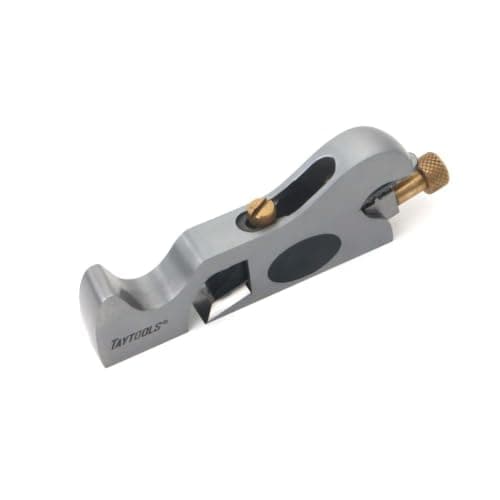
A copy of the Stanley No. 92 that Stanley built from 1902 to 1969, at roughly a third of what the measured planes cost, and Taytools publishes the numbers: a 0.730 in iron, 0.110 in thick, hardened to 55-60 HRc, bedded at 20 degrees in a ductile iron body with the sole and sides ground. They also state in writing that it needs sharpening before use, which is more honest than most listings at any price.
The cheapest shoulder plane that still tells you what it is made of
The same published recipe as the #92 scaled up to the 1 in class: Cr40 ductile body, Mn65 iron at HRC 60-64, bedded 15 degrees, with a spare iron whose steel and hardness Woodcraft prints on its own page. It is the only plane here you would choose for a door rail, and nearly four pounds of it.
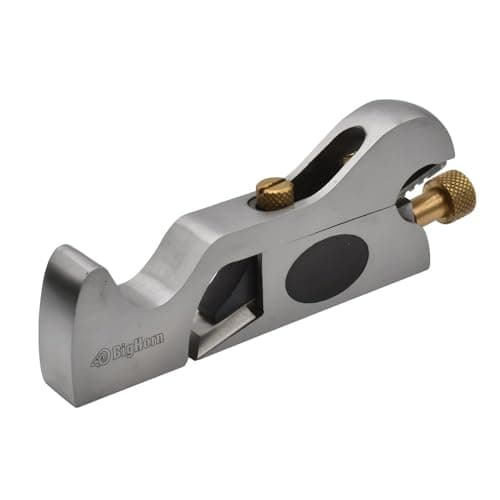
A 3/4 in shoulder plane with an adjustable mouth and a removable upper section for chisel-plane work — the Bench Dog layout, for less money. What you give up is every number: no steel grade, no hardness, no bed angle, no weight and no spare iron published anywhere we looked.
The same architecture as the measured planes, with none of the paperwork
Shoulder plane, bullnose plane and chisel plane in one 6 in body with a 1-3/32 in sole, which puts it in the wide class rather than the 3/4 in one. The iron comes out easily for sharpening and the adjuster is a knurled screw; what the maker will not tell you is what the iron is made of.
A 1 in iron in a ductile casting with two removable nose pieces — long for a shoulder plane, short for a bullnose, none for a chisel plane — and a Certificate of Inspection in the box. It is ranked last because of what an independent bench test published about it, not because of what it costs.
The wide convertible, if you check it with a square on arrival
#ad· Live prices from the Amazon Product API, as of October 16, 2026. Where we have no verified live price we show none, and the cost-per-decade figure is suppressed with it — we would rather leave a gap than print a number that has rotted.
A shoulder plane is the tool that makes a joint fit. Its iron runs the full width of the body — and is deliberately ground a few thousandths of an inch wider than the body — so the plane can cut right into an inside corner and leave no uncut ridge behind. That single piece of geometry is the whole tool. It is why a bench plane, with its iron set in from the sides, physically cannot pare a tenon's shoulder flush, and it is why the first thing you check on a new shoulder plane is not how it feels but whether its sides are square to its sole. If you want the mechanism before the shopping, shoulder plane vs rabbet plane separates the plane that cuts a joint from the plane that tunes one, and how to cut tenons by hand is the job this plane exists to rescue.
This page exists because the hand-planes hub had ranked, buyable pages for bench planes, jack planes, jointers, block planes, Japanese kanna and replacement irons, and nothing at all for the joinery planes. It also exists because researching the class turned up something we did not expect, and that finding ended up deciding the order.
How we ranked them
We have not cut a tenon with any of these planes. What we did is what this whole site does: open every maker's and retailer's own product page, write down only what they are willing to publish, cite it, and rank on that. Every source is listed at the bottom. Five things decided the order.
Does anyone say what the iron is made of? On a shoulder plane the iron does delicate work — a few thousandths off an end-grain shoulder, with the whole width of the edge engaged — so edge-holding matters more than it does on a jack plane that is hogging waste. Four of these seven publish a steel designation and a hardness. Woodcraft names Mn65 tool steel at 60-64 Rc on both WoodRiver planes. Rockler names hardened carbon tool steel at 55-60 HRC on the No. 92, though not on its 3-in-1. Taytools names hardened tool steel, 55-60 HRc, on a plane that costs a third of the WoodRiver. Big Horn and Shop Fox name nothing at all, and both cost more than the Taytools.
Can the iron be replaced? Here is the finding, and it is specific to this class. On a bench plane we can be relaxed about this, because a Bailey-pattern iron is a standard size and half a dozen makers sell one. A shoulder-plane iron is not a standard size: it is cut to that one body and ground a hair wider than that body's sole, so there is no aftermarket and never will be. Sharpening renews the edge for decades, but when the iron is finally gone, the plane is gone with it — unless the maker sells the replacement. Exactly two sellers here do. Woodcraft lists a #92 replacement iron and a #93 spare blade (publishing the spare's steel and hardness, Mn65 at HRC 60-64, which is more than most makers publish about the iron in the plane). Rockler lists a spare iron for the No. 92 at $14.99. For the Taytools, the Big Horn, the Shop Fox and — oddly, since Rockler publishes spares for the rest of the Bench Dog line — the Bench Dog 3-in-1, we found no replacement iron published anywhere.
Is the sole flat and are the sides square to it? On this tool those are not finish, they are function: a shoulder plane referenced off a board's face has to cut square to it, and sides out of square turn a trimming plane into a tapering one. Rockler is the only seller here that publishes a tolerance — sole flatness 0.002 in — and it goes further, shipping a Certificate of Inspection recording the measured flatness and iron hardness of the individual plane in the box. Independent bench checks fill in two more: Fine Woodworking found the WoodRiver medium “dead-flat” with the sides “accurately square to the sole” and the iron 0.006 in wider than the body, and in a separate test of Rockler's then-new planes found the 3-in-1 shoulder plane to be “the outlier,” reporting that “the sides were not square to the sole, the blade was narrower than the body, and the bullnose attachment lacked alignment pins.” Those are the two faults that matter most on this tool, which is why that plane is ranked last.
How low is the bed? A shoulder plane is bevel-up, so the bed angle plus the bevel is the effective cutting angle, and a tenon's shoulder is end grain — exactly where a low angle pays. Both WoodRivers are bedded at 15 degrees under a 25 degree bevel, giving 40 degrees. Both Bench Dogs bed at 19 degrees. The Taytools beds at 20. Big Horn and Shop Fox publish no figure; Shop Fox's listing says “low angle” and leaves it there.
How wide, and is that the width you need? Three-quarters of an inch is the furniture size and the one most people should buy. An inch (or the Shop Fox's 1-3/32 in) crosses a wide tenon cheek in one pass and is what you want for door and frame work, at the cost of real weight: the No. 93 is 3 lb 12.8 oz against the Bench Dog No. 92's 1.1 lb.
The thing nobody in this class publishes
Not one maker here publishes a defect warranty on a shoulder plane. Not one. What the three sellers publish instead is a satisfaction guarantee, and all three happen to be 90 days: Woodcraft promises to “replace the product, give you credit, or refund your money” within 90 days; Rockler the same window; Taylor Toolworks 90 days too, but only on items returned “in their original, new, unopened packaging” — which means opening the box to use the plane closes that door. A returns policy is not a warranty. It tells you what happens in the first three months, and says nothing about year twenty.
That absence is why the cost per decade horizon on every plane here is set by the iron rather than by a promise, and why two planes carry a twenty-year horizon and five carry ten. The full warranty research for the category sits on warranties and repairability, and the pattern it found holds here exactly: in this category the parts listing is the real commitment and the warranty page is usually blank.
What we left off, and why
Three planes were excluded on availability rather than merit, and we would rather say so than quietly drop them. The Big Horn 19565 3-in-1 and the Big Horn 19564 bullnose were both down to a single unit at the check. A Stanley 10 in bullnose rabbet plane showed no availability at all. We also left out the unbranded shoulder- and router-plane castings that fill the first page of search results: with no maker to check, there is no specification to rank and no one to ask for an iron in ten years, which on this site is the same as no tool.
One genuine plane was left out for a different reason: the Woodstock D3750 bull nose plane is good value and is not a shoulder plane — a bullnose trades the long registering nose for the ability to work into a stopped corner, which is a different job. The planes above that convert to a bullnose are noted as doing so.
The two best shoulder planes are not on this page
They are the Lie-Nielsen large 1-073 and the Veritas medium, and we earn nothing on either, because both makers sell direct and neither is on Amazon. We name them anyway, because omitting the best tool in a category for paying no commission is the exact behavior this site was built to avoid. Lie-Nielsen publishes an A2 iron at Rockwell 60-62, cryogenically treated and double tempered, bedded at 18 degrees and ground .005 in wider than the body, in a ductile iron body ground flat and square, with the replacement blade cataloged at $75 — the deepest published spec sheet in the class by a distance. The honest caveat: it was showing as unavailable, backorder only, at the date we checked. Veritas publishes a 15 degree bed and a 25 degree bevel for a 40 degree cutting angle, an adjustable toe, an O1 or PM-V11 iron, and — the detail worth stealing — set screws along the side that hold the lateral setting so it needs no readjustment after resharpening. Both are on Veritas vs Lie-Nielsen in more detail.
If you are buying one plane
Buy the 3/4 in size, and buy it from whichever of the two sellers who publish a replacement iron is cheaper on the day. The WoodRiver #92 has the harder published iron and an independent bench check behind its geometry; the Bench Dog No. 92 is lighter, comes with its own measurements written down, converts to a chisel plane, and has the cheapest published spare iron in the class. Either is a thirty-year tool with a sharpening stone next to it. If the budget is a third of that, the Taytools publishes a fuller spec sheet than two planes that cost more than it does — just know that you are buying one iron, and that Taytools tells you in writing it needs honing before it will cut.
Every pick, in full
The write-ups
01The only shoulder plane here with a full published spec sheet and a spare iron
Blade
3/4 in, Mn65 tool steel, 60-64 Rc, bevel 25 deg
Bedded angle
15 deg
Body
Cr40 stress-relieved ductile steel, 7 x 3/4 x 2-1/2 in
Weight
2 lb 3.4 oz
Spare iron
Published by Woodcraft as its own item
Warranty
None published; 90-day retailer guarantee
WoodRiver #92 Medium Shoulder Plane
WoodRiver
8.4/10
Woodcraft publishes what the body is, what the iron is, how hard it is and both angles — Cr40 ductile steel, Mn65 tool steel at 60-64 Rc, bedded 15 degrees under a 25 degree bevel — and then sells the matching iron on its own. In a class where three of the seven planes we looked at publish neither a steel grade nor a hardness figure, that is the whole case.
Cost per decade
$101.99
Horizon · tier C
20 years — No lifetime warranty; parts purchasable and resharpenable
No defect warranty published for this plane at the date checked — the retailer publishes a 90-day satisfaction guarantee, which is a returns policy, not a warranty. What sets the horizon instead is that the matching iron is a cataloged item you can buy on its own, which on a shoulder plane is not a given: the iron is sized to that one body and ground a few thousandths wider than the sole, so no generic replacement exists. Body is a ductile iron casting with nothing else in it to consume.
Rebuy risk
Medium
parts listed, resharpenable
Sole & body
9.5
Iron & edge
9.0
Adjustment
8.5
Out of box
9.0
Parts & repair
8.0
Value
6.5
What it gets right
+Hardest published iron in the class at 60-64 Rc, against 55-60 on both of the cheaper 3/4 in planes
+Woodcraft lists a #92 replacement iron as a cataloged item, so the one consumable part is purchasable
+An independent bench check of this plane found the sole dead-flat and the sides accurately square to the sole, with the iron 0.006 in wider than the body so it projects about 0.003 in each side
+Adjustable mouth, and that same review describes the mouth adjustments as precise rather than approximate
+Full published spec sheet: body steel, iron steel, hardness, bed angle, bevel, dimensions and weight
What it costs you
−No defect warranty published anywhere — Woodcraft's 90 days is a satisfaction guarantee, which is a returns policy
−Most expensive of the 3/4 in planes here, and Woodcraft's own price has run below the Amazon number, so check both before you buy
−At 2 lb 3.4 oz it is heavy for one-handed work on small parts
−The independent bench check we cite dates from 2013, so it describes the plane as it was then
Skip this if…
…you only ever tidy a shallow rabbet. The Taytools does that for a third of the money; what the extra buys here is published metallurgy and an iron you can replace.
We earn nothing on this one
The best shoulder plane you can buy in North America is the Lie-Nielsen large 1-073 — a ductile iron body, an A2 iron at Rockwell 60-62, cryogenically treated and double tempered, bedded at 18 degrees and ground .005 in wider than the body, with the replacement blade cataloged at $75 — and it is not sold on Amazon, so we earn nothing on it. It was showing as unavailable to backorder at the date checked. Those specs and that stock status are from the product page at Lie-Nielsen Toolworks.
02The plane that arrives with its own measurements and a spare iron on the shelf
Blade
3/4 x 4-3/8 in, approx 1/8 in thick, carbon tool steel, 55-60 HRC
Bed / bevel
Beds against the frog at 19 deg; 25 deg bevel
Sole
3/4 x 5-1/4 in ductile iron, flatness published as 0.002 in
Weight
1.1 lb
Converts
Upper section removes for use as a chisel plane
Warranty
None published; 90-day retailer guarantee
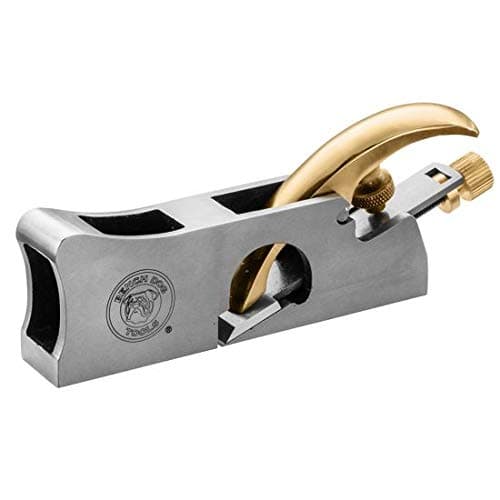
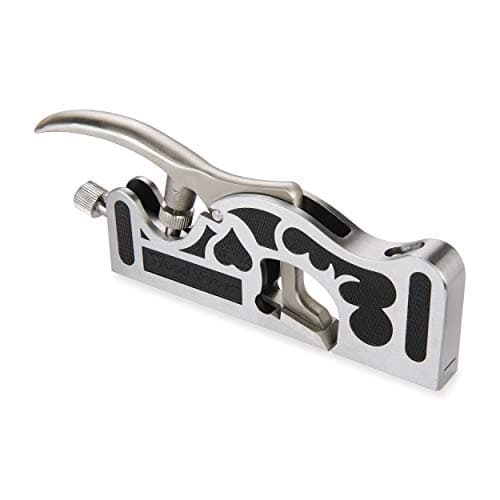
Bench Dog No. 92 Shoulder & Chisel Plane
Rockler
8.3/10
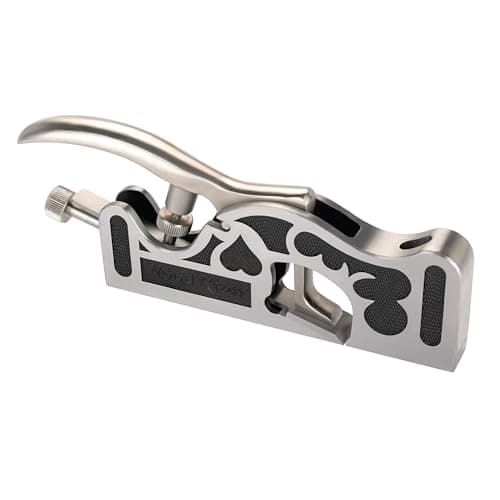
Rockler publishes a sole flatness figure, ships a Certificate of Inspection recording that individual plane's flatness and iron hardness, and sells the matching iron for about fifteen dollars. The iron is softer than the WoodRiver's, the whole upper section lifts off to make a chisel plane, and at 1.1 lb it is the one to reach for on small work.
Cost per decade
$70.00
Horizon · tier C
20 years — No lifetime warranty; parts purchasable and resharpenable
No defect warranty published for this plane at the date checked — the retailer publishes a 90-day satisfaction guarantee, which is a returns policy, not a warranty. What sets the horizon instead is that the matching iron is a cataloged item you can buy on its own, which on a shoulder plane is not a given: the iron is sized to that one body and ground a few thousandths wider than the sole, so no generic replacement exists. Body is a ductile iron casting with nothing else in it to consume.
Rebuy risk
Medium
parts listed, resharpenable
Sole & body
9.0
Iron & edge
7.0
Adjustment
9.0
Out of box
8.5
Parts & repair
8.5
Value
7.5
What it gets right
+Ships with a Certificate of Inspection giving the measured sole flatness and iron hardness for that individual plane, which nothing else in this class does
+Rockler lists a spare iron for it at $14.99 at the date checked — the cheapest published replacement part in the class
+Adjustable mouth, and the entire upper section lifts off to convert it into a chisel plane
+Lightest plane here at 1.1 lb, which matters on one-handed trimming of small parts
+Sapele handle rather than plastic, and the iron is ground wider than the body for ridge-free corners
What it costs you
−Iron is plain carbon steel at 55-60 HRC, measurably softer than the WoodRiver's published 60-64 Rc
−No defect warranty published; Rockler's 90 days is a satisfaction guarantee
−The Amazon price has run above Rockler's own list price for this plane, so compare before you buy here
−A bevel-up carbon iron off the shelf needs honing before it will take a shaving
Skip this if…
…you want the hardest iron in the class and do not care about the inspection slip. That is the WoodRiver, and it costs more.
03The cheapest shoulder plane that still tells you what it is made of
Blade
0.730 in wide, 0.110 in thick, hardened tool steel 55-60 HRc, 25 deg bevel
Bedded angle
20 deg
Body
Ductile cast iron, ground soles and sides, brass fittings
Size
6-1/2 in long, 2-1/4 in tall, 19 oz
Adjuster
Solid brass knurled screw
Warranty
None published; 90-day return on unopened packaging
Taytools No. 92 Cabinet Maker's Shoulder Plane
Taytools
7.3/10
A copy of the Stanley No. 92 that Stanley built from 1902 to 1969, at roughly a third of what the measured planes cost, and Taytools publishes the numbers: a 0.730 in iron, 0.110 in thick, hardened to 55-60 HRc, bedded at 20 degrees in a ductile iron body with the sole and sides ground. They also state in writing that it needs sharpening before use, which is more honest than most listings at any price.
Cost per decade
$55.67
Horizon · tier D
10 years — No warranty and no parts availability found
No warranty terms and no replacement iron listed for this plane or this maker at the date checked. On a shoulder plane that matters more than it would on a bench plane, because the iron is not a standard size — it is ground to this body and a few thousandths wider than the sole, so there is no aftermarket to fall back on. Sharpening renews the edge for many years; when the iron is finally gone, the plane is gone with it. The horizon is the floor value and the rating is what that absence means.
Rebuy risk
High
resharpenable
Sole & body
8.0
Iron & edge
7.0
Adjustment
8.0
Out of box
6.0
Parts & repair
5.0
Value
9.5
What it gets right
+Publishes iron width, thickness, hardness, bevel and bed angle — more than two of the pricier planes on this page do
+Ductile cast iron rather than gray, with both the sole and the sides ground, which is the geometry the tool depends on
+Solid brass knurled depth adjuster instead of a stamped lever
+Taytools states plainly that the iron needs sharpening and honing before use, so nothing is oversold
+The cheapest plane here that arrives in a presentation box rather than a blister pack
What it costs you
−No replacement iron published for it, and a shoulder-plane iron is not a standard size — when it is gone the plane is gone
−No warranty, and the 90-day return requires the original unopened packaging, so opening the box to use the plane ends that path
−20 deg bed is the highest here; the 15 deg planes have the edge on end grain
−No sole flatness tolerance published, unlike the two planes above it
Skip this if…
…you expect it to cut out of the box. Taytools says so themselves, and a shoulder plane with a factory grind on it will tear the shoulder you were trying to save.
Cr40 stress-relieved ductile steel, 1 x 8-1/4 x 3 in
Overall
10-7/16 in long, 3-7/8 in tall
Weight
3 lb 12.8 oz
Warranty
None published; 90-day retailer guarantee
WoodRiver No. 93 Large Shoulder Plane
WoodRiver
8.2/10
The same published recipe as the #92 scaled up to the 1 in class: Cr40 ductile body, Mn65 iron at HRC 60-64, bedded 15 degrees, with a spare iron whose steel and hardness Woodcraft prints on its own page. It is the only plane here you would choose for a door rail, and nearly four pounds of it.
Cost per decade
$156.99
Horizon · tier C
20 years — No lifetime warranty; parts purchasable and resharpenable
No defect warranty published for this plane at the date checked — the retailer publishes a 90-day satisfaction guarantee, which is a returns policy, not a warranty. What sets the horizon instead is that the matching iron is a cataloged item you can buy on its own, which on a shoulder plane is not a given: the iron is sized to that one body and ground a few thousandths wider than the sole, so no generic replacement exists. Body is a ductile iron casting with nothing else in it to consume.
Rebuy risk
Medium
parts listed, resharpenable
Sole & body
9.5
Iron & edge
9.0
Adjustment
8.5
Out of box
9.0
Parts & repair
8.0
Value
5.0
What it gets right
+Spare iron is published with its steel and hardness stated — Mn65 at HRC 60-64 — which is more than most makers publish about the iron in the plane, let alone the replacement
+1 in class, so it reaches across a wide tenon cheek in one pass instead of two
+Same 15 deg bed and ductile body as the #92, scaled up rather than cheapened
+Mass helps it track along a long shoulder without wandering
What it costs you
−Most expensive plane on this page by a wide margin
−3 lb 12.8 oz is a lot of plane to control one-handed on anything small
−Woodcraft's listing for this model does not state the iron width, only the 1 in body
−Overkill for furniture-scale joinery, where 3/4 in covers almost everything
Skip this if…
…your tenons are furniture-sized. The 3/4 in planes do that work better; this is for doors, frames and bench joinery.
05The same architecture as the measured planes, with none of the paperwork
Blade
3/4 in, full width of the sole; steel and hardness not published
Bedded angle
Not published
Sole
Precision-ground and polished flat per the listing; tolerance not published
Converts
Upper section removes for use as a chisel plane
Weight
Not published
Warranty
Not published
Big Horn 19566 Shoulder Plane
Big Horn
6.2/10
A 3/4 in shoulder plane with an adjustable mouth and a removable upper section for chisel-plane work — the Bench Dog layout, for less money. What you give up is every number: no steel grade, no hardness, no bed angle, no weight and no spare iron published anywhere we looked.
Cost per decade
Suppressed — no live price
Horizon · tier D
10 years — No warranty and no parts availability found
No warranty terms and no replacement iron listed for this plane or this maker at the date checked. On a shoulder plane that matters more than it would on a bench plane, because the iron is not a standard size — it is ground to this body and a few thousandths wider than the sole, so there is no aftermarket to fall back on. Sharpening renews the edge for many years; when the iron is finally gone, the plane is gone with it. The horizon is the floor value and the rating is what that absence means.
Rebuy risk
High
resharpenable
Sole & body
7.0
Iron & edge
5.0
Adjustment
8.0
Out of box
6.0
Parts & repair
4.5
Value
6.5
What it gets right
+Adjustable mouth and chisel-plane conversion, the two features that make the Bench Dog worth its money, for less
+Listing states the sole and the back of the iron are precision-ground and polished flat
+Full-width iron, so it cuts into a corner without leaving a ridge
+Widely stocked, so it is easy to buy and easy to send back
What it costs you
−Publishes no steel grade, no hardness, no bed angle, no dimensions and no weight, so there is nothing to rank it on
−No warranty terms found for this plane or this maker
−No replacement iron listed anywhere, and a shoulder-plane iron has no aftermarket
−Costs more than the Taytools, which publishes a complete spec sheet
Skip this if…
…you are buying on documentation. At this money the Taytools publishes everything and the Bench Dog ships a slip measured for your individual plane.
Full width, removable for sharpening; steel and hardness not published
Bed angle
Described as low angle; no figure published
Adjuster
Knurled adjustment screw
Warranty
Not published on the product listing
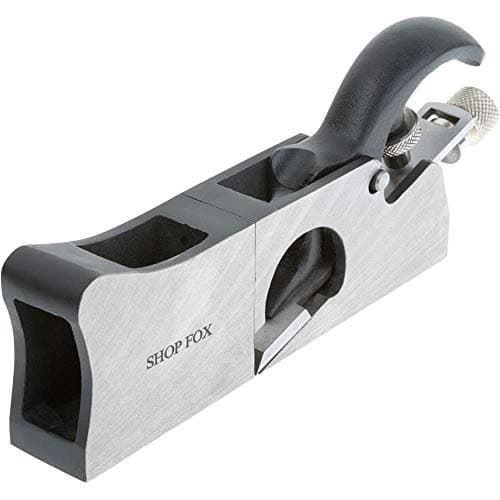
Shop Fox D3752 Precision 3-in-1 Plane
Woodstock
6.4/10
Shoulder plane, bullnose plane and chisel plane in one 6 in body with a 1-3/32 in sole, which puts it in the wide class rather than the 3/4 in one. The iron comes out easily for sharpening and the adjuster is a knurled screw; what the maker will not tell you is what the iron is made of.
Cost per decade
$71.69
Horizon · tier D
10 years — No warranty and no parts availability found
No warranty terms and no replacement iron listed for this plane or this maker at the date checked. On a shoulder plane that matters more than it would on a bench plane, because the iron is not a standard size — it is ground to this body and a few thousandths wider than the sole, so there is no aftermarket to fall back on. Sharpening renews the edge for many years; when the iron is finally gone, the plane is gone with it. The horizon is the floor value and the rating is what that absence means.
Rebuy risk
High
resharpenable
Sole & body
7.0
Iron & edge
5.0
Adjustment
7.5
Out of box
6.0
Parts & repair
4.5
Value
8.5
What it gets right
+Cheapest way to own all three joinery-plane configurations at once
+1-3/32 in sole is the wide class, so it crosses a tenon cheek the 3/4 in planes cannot in one pass
+The full-width iron is stated to come out easily for sharpening, which on a convertible plane is not a given
+Sold under both the Shop Fox and Woodstock badges, so it is usually in stock somewhere
What it costs you
−No iron steel, hardness, bed angle, body material or weight published — low angle is a claim without a number
−No warranty terms on the listing, and no replacement iron published
−Stock showed only fifteen units with more on the way at the date checked
−Two badges on one tool makes it unclear who you contact when something is wrong
Skip this if…
…you want to know what you are buying before you buy it. Three configurations is a real advantage; three configurations of an unspecified iron is a gamble.
07The wide convertible, if you check it with a square on arrival
Blade
1 in wide, 1/8 in thick, installs bevel up
Bed angle
Beds against the frog at 19 deg
Sole
1 x 6-1/8 in, ductile cast iron
Configurations
Long nose, short nose, or none for chisel-plane work
Weight
2.2 lb
Warranty
None published; 90-day retailer guarantee
Bench Dog 3-in-1 Shoulder, Bullnose & Chisel Plane
Rockler
6.0/10
A 1 in iron in a ductile casting with two removable nose pieces — long for a shoulder plane, short for a bullnose, none for a chisel plane — and a Certificate of Inspection in the box. It is ranked last because of what an independent bench test published about it, not because of what it costs.
Cost per decade
$149.99
Horizon · tier D
10 years — No warranty and no parts availability found
No warranty terms and no replacement iron listed for this plane or this maker at the date checked. On a shoulder plane that matters more than it would on a bench plane, because the iron is not a standard size — it is ground to this body and a few thousandths wider than the sole, so there is no aftermarket to fall back on. Sharpening renews the edge for many years; when the iron is finally gone, the plane is gone with it. The horizon is the floor value and the rating is what that absence means.
Rebuy risk
High
resharpenable
Sole & body
6.0
Iron & edge
6.5
Adjustment
7.0
Out of box
5.0
Parts & repair
5.5
Value
6.0
What it gets right
+Ships with a Certificate of Inspection carrying that plane's own sole flatness and iron hardness figures
+1 in iron, so it works on wide tenon cheeks rather than only on furniture-scale joints
+Three configurations from one body, with a storage case included
+Sapele handles and a ductile casting, not a gray one
What it costs you
−Fine Woodworking's test of Rockler's then-new planes called this one the outlier and listed three faults on the sample: the sides were not square to the sole, the blade was narrower than the body, and the bullnose attachment lacked alignment pins — the first two are the exact things a shoulder plane exists to get right
−Rockler publishes spare irons across the Bench Dog line, including for the No. 92, but we found none listed for this model
−The most expensive of the convertible planes here
−No defect warranty published; the 90-day guarantee is a returns policy
Skip this if…
…you will not check it against a square the day it arrives. On a shoulder plane, sides square to the sole is not finish, it is function.
Price as of October 16, 2026. Prices move; Amazon's is the one that counts.
#ad · we may earn a commission from this link to Bench Dog 3-in-1 Shoulder, Bullnose & Chisel Plane
How
What actually decides it
Buying guide
Do you actually need one?
Possibly not, and this is the cheapest advice on the page. If you cut your tenons on a machine with a decent fence, your shoulders arrive straight and a shoulder plane is a luxury. If you cut them by hand, the saw cut is never perfect and a shoulder plane is the difference between a joint that closes and a joint you fill. A wide, very sharp bench chisel will do some of the same work — the chisel roundup covers those — but a chisel is referenced off your hand and a shoulder plane is referenced off the board's face, which is the entire reason the plane exists.
One more distinction worth drawing before you spend anything, because the two tools get confused. A shoulder plane cuts into an inside corner and trims a shoulder square. A router plane cuts a floor to a set depth parallel to the surface it stands on, which is what levels a tenon cheek or a dado. If your tenons are the wrong thickness, you want the router plane; if they will not seat, you want this one.
Width: 3/4 in or 1 in
Width is a reach decision, not a quality one. A 3/4 in plane handles the tenons in chairs, tables, frames and casework, which is most of what a bench does, and it is light enough to hold on edge in one hand. A 1 in plane crosses a wide cheek in a single pass and is the right tool for door rails and heavy frame joinery; it also weighs three to four times as much, which is welcome on a long shoulder and a nuisance on a small one. A shoulder plane wider than the work is never a problem. A shoulder plane narrower than the work leaves a step you then have to chase.
Bed angle, bevel up, and why it matters here
Every plane on this page is bevel-up, which means the bed angle and the bevel add together to make the cutting angle: 15 degrees of bed plus a 25 degree bevel is a 40 degree cut, and 20 plus 25 is 45. Lower is better on end grain, and the shoulder of a tenon is end grain, so the 15 degree planes have a real advantage on exactly the cut you bought the tool for. It also means you can change the plane's behavior by changing the bevel you hone, which is the bevel-up advantage in general — bevel up vs bevel down has the full argument, and sharpening angles explained covers choosing the number.
The two checks to do the day it arrives
First, stand a small engineer's square on the sole against each side. Sides out of square to the sole means every shoulder you trim will be out of square by the same amount, and no amount of sharpening fixes it — that is a return, inside the 90 days you have. Second, look at where the iron sits relative to the body: it should stand very slightly proud of both sides, a few thousandths, not flush and certainly not inside. An iron narrower than its body is the defect that makes a shoulder plane leave a ridge in the corner it was bought to clean, and it is precisely what an independent test found on one plane in this group. A reference square is the tool for both checks; the squares roundup covers which ones are actually square.
Mouth adjustment versus nose pieces
Two mechanisms show up in this group and they are not equivalent. An adjustable mouth — the WoodRivers, the Bench Dog No. 92, the Big Horn — slides the front of the sole to tighten the opening ahead of the iron, which is what lets a plane take a fine shaving in difficult grain without tearing it. Removable nose pieces — the two 3-in-1 planes — change what the plane is: long nose for a shoulder plane, short for a bullnose, none for a chisel plane that works right up to a stopped end. A convertible plane is three tools; an adjustable mouth is one tool that works better. If you are only buying one, the adjustable mouth is the feature that improves the cut you will make a thousand times.
Budget for the stone, not the next plane
No plane on this page cuts properly out of the box, and the cheapest one says so in writing. A bevel-up iron needs its back flattened and a real edge put on the bevel before it will pare end grain, and a shoulder plane with a factory grind will tear the shoulder you were trying to save. That is a sharpening job, not a plane problem: how to sharpen a plane iron covers the sequence and the stones roundup covers what to buy. On a tool this narrow, a honing guide earns its keep, because freehanding a 3/4 in iron square across its width is harder than it sounds — the honing guide roundup ranks those.
What a shoulder plane costs to own
The arithmetic in this class is unusually simple, because the body is a casting with nothing in it to wear out and the iron is the only consumable. If the iron is purchasable, the plane is effectively permanent and the running cost is a replacement iron every few decades — $15 to $21 at the date we checked, on the two planes that publish one. If the iron is not purchasable, you own a tool with an end date you cannot see from here. That is the entire reason the two planes with published spares sit at the top of this page while two that cost more sit below the one that costs the least. The method behind the number is on cost per decade.
Questions
Frequently asked
What is a shoulder plane used for?+
Trimming a joint that is already cut, so it fits. Most often that is a tenon: paring the shoulder flat and square where the saw left it rough, and shaving the cheeks down until the tenon slides into its mortise with friction rather than force. It also cleans up rabbets, dadoes and the stepped edges of a half-lap. The iron spans the full width of the body and stands a few thousandths proud of each side, which is what lets it cut into an inside corner without leaving a ridge — a bench plane cannot do this at all.
What is the best shoulder plane?+
On what the sellers publish, the WoodRiver #92 medium: Cr40 ductile steel body, an Mn65 iron at 60-64 Rc, bedded at 15 degrees under a 25 degree bevel, with full published dimensions and a replacement iron sold as its own item. The Bench Dog No. 92 is the close second and the better buy on two counts — it ships with a Certificate of Inspection carrying that individual plane's sole flatness and iron hardness, and its spare iron was published at $14.99 — but its iron is softer, at 55-60 HRC. The best shoulder plane we found anywhere is the Lie-Nielsen 1-073, which is not sold on Amazon, so we earn nothing on it.
What size shoulder plane should I buy?+
Three-quarters of an inch, if you are buying one. That covers the tenons in furniture, frames and casework and stays light enough to control one-handed on small parts. Go to the 1 in class only if you are cutting door- and frame-scale joinery, where crossing a wide cheek in one pass matters more than the extra two and a half pounds you are holding on edge. Buying wider than the work costs you nothing; buying narrower leaves a step in the cut.
Can you replace the blade in a shoulder plane?+
Only if the maker sells one. This is the sharpest difference between a shoulder plane and a bench plane: a Bailey iron is a standard size with a healthy aftermarket, while a shoulder-plane iron is cut to one body and ground slightly wider than that body's sole, so no third party makes one. Of the seven planes here, Woodcraft publishes replacement irons for the WoodRiver #92 and #93 and Rockler publishes one for the Bench Dog No. 92. For the other four we found none, which means the iron in the box is the whole lifespan of the tool.
Shoulder plane or rabbet plane?+
A rabbet plane cuts the joint; a shoulder plane tunes it. Both have an iron the full width of the body, which is why they get confused, but a rabbet plane usually carries a fence, a depth stop and often a nicker so it can form a rabbet from scratch, while a shoulder plane has none of that and is bedded very low with a fine adjustment, for taking a few thousandths off a surface that already exists. If you cut your joinery with a saw and a chisel, the shoulder plane is the one you are missing. Shoulder plane vs rabbet plane works through it properly.
Why does my shoulder plane leave a ridge in the corner?+
Almost always because the iron is not standing proud of the body on that side. The iron is supposed to project a few thousandths past each side — Lie-Nielsen publishes .005 in, and an independent check measured a WoodRiver iron 0.006 in wider than its body — so the cut reaches fully into the corner. If the iron is flush, set it over slightly with the lateral adjustment; if the iron is genuinely narrower than the casting, that is a manufacturing fault rather than a setting, and an independent test found exactly that on one plane in this group. The other cause is sides that are not square to the sole, which tapers the shoulder instead of ridging it.
Which shoulder plane has the best warranty?+
None of them has one. Not a single maker in this class publishes a defect warranty that we could find. What exists is retailer satisfaction guarantees, all three of them 90 days: Woodcraft, Rockler, and Taylor Toolworks — the last only on unopened packaging, so it does not survive you using the plane. On a tool whose body is a casting with no moving consumable, that matters less than it sounds; what you actually want is a published replacement iron, and only two sellers here have one.
Is a shoulder plane bevel up or bevel down?+
Bevel up, on every plane on this page. That means the bed angle and the honed bevel add together into the cutting angle, so a 15 degree bed with a 25 degree bevel cuts at 40 degrees — low, which is what you want on the end grain of a tenon shoulder. It also means you can raise the effective angle later by honing a steeper microbevel, with no new plane required. Bevel up vs bevel down explains the trade in full.
We have not handled these tools. Nobody here has tested one, owned one, or taken one apart. Specifications come from the manufacturer or the retailer listing; warranty terms come from the maker's own warranty page; the cost-per-decade arithmetic is ours and reproducible. Where we could not verify a figure we say so on the page rather than quietly leaving it out. Read the full method.