Ranked picks
Best Sharpening Stone
The Best Sharpening Stones
Eight stones ranked on cut rate, maintenance and cost per decade. The diamond-versus-waterstone decision settled on what each actually costs you.
Stones, guides, angles, and why your new tool cut badly
Every tool on this site is only as good as its edge, and a new tool almost never arrives with one. This is the part nobody budgets for.
We earn a commission when you buy through our Amazon links, at no extra cost to you. It never decides a ranking, and where the best tool in a class is one we earn nothing on, we say so and link it anyway. How this works.
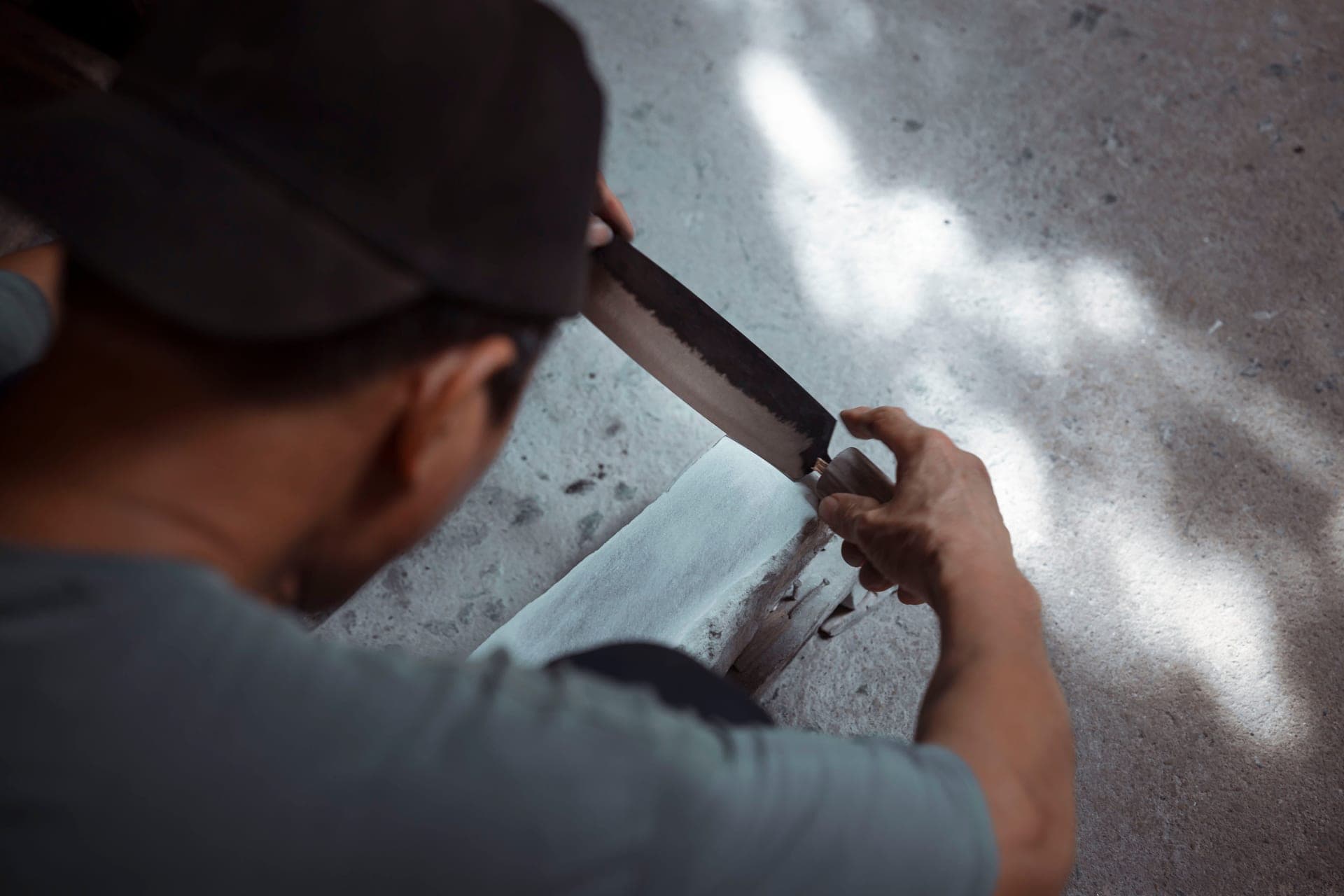
Sharpening is the cross-cutting hub. Every plane, chisel and filed saw on this site depends on it, and the single most common reason a well-reviewed tool disappoints a new owner is that it arrived with a factory grind rather than an edge. Manufacturers are not hiding this. Most of them say so in the manual. It is simply that a sharp edge cannot survive shipping and shelf time, so the maker ships you a shape and leaves the edge to you.
That has a blunt consequence for budgeting: if you are about to spend $120 on a plane and you own no stones, you are actually about to spend around $180, and the $60 is not optional. Buying the more expensive plane instead of the stones is the most expensive mistake in this whole category, because it produces a good tool that cuts badly and an owner who concludes hand tools are overrated.
Waterstones cut fastest and give the finest finish for the money. They also dish as you use them, so they need periodic flattening, and they need water. A 1000/6000 combination stone is the standard first purchase and covers a working edge and a polished one in a single block.
Diamond plates never need flattening because the abrasive is bonded to a steel substrate. They cut fast, work dry or with water, and are the practical answer for people who sharpen occasionally and do not want a maintenance regimen for their maintenance equipment. They are less good at very fine polishing, and the cheap ones lose their bite in the first year. The comparison is on waterstones versus diamond stones.
Oilstones are the traditional option: slow, forgiving, effectively permanent, and still entirely capable of putting a working edge on a chisel. They are the only one of the three where a stone your grandfather bought is likely still in service. Oilstones versus waterstones covers the trade honestly.
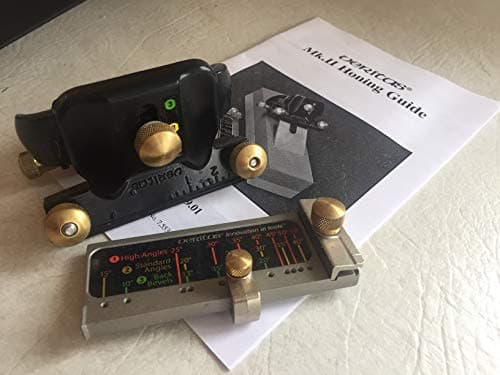
Freehand sharpening is a skill worth having and takes a while to acquire. A honing guide removes the skill requirement entirely and produces a repeatable, geometrically correct bevel from the first attempt. There is a strand of opinion that guides are a crutch. It is not a view we find persuasive: the point of the exercise is a sharp tool, and a jig that delivers one on the first try is a good jig. Best honing guides ranks what is available, and sharpening angles explained covers what to set it to and why the number is not arbitrary.
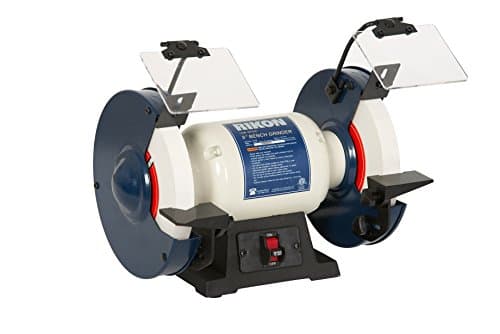
Stones create the edge. They are slow at changing a bevel's shape, and that is a different job: a secondhand chisel that arrives chipped, or a bevel that honing has quietly walked out from 25 degrees to 35, needs metal removed rather than an edge refined. That is what a grinder is for, at half the wheel speed of a hardware-store machine and on a wheel that cuts rather than rubs. The best bench grinders for chisels and plane irons ranks the machines, the wheels and the rest that makes the angle repeatable, and sets out how to grind a bevel without bluing the edge — including the case for not buying one at all.
A complete, genuinely permanent sharpening setup — a coarse plate for repair work, a combination waterstone for the working and polishing edges, a flattening stone, a guide, and a strop — is a one-time purchase that will outlast most of the tools it services. The cost-per-decade figures on the starter kit are among the lowest on this site for exactly that reason, and diamond plates in particular score well because there is no consumable element at all.
If you want the shortest possible route: read how to sharpen a plane iron once, buy a combination waterstone and a guide, and stop researching. The marginal return on a more expensive stone is real but small, and it is dwarfed by the return on actually sharpening regularly.
Ready to refine the craft? See how to use a honing guide, weigh freehand vs a honing guide, learn the ruler trick for plane irons, and compare ceramic vs waterstones.
Start here
Every list below carries a live price and the cost-per-decade arithmetic next to each tool. Where the best tool in a class is one we earn nothing on, it is still in the list.
Best Sharpening Stone
Eight stones ranked on cut rate, maintenance and cost per decade. The diamond-versus-waterstone decision settled on what each actually costs you.
Best Honing Guide
Four guides ranked on repeatability and capacity, from a $17 Eclipse clone to the Veritas Mk.II, with the cost-per-decade math.
Best Starter Kit
Six items that make a complete permanent sharpening setup, with live prices and cost per decade. Including the two purchases people always leave out.
Best Grinder
Five machines, two wheels and one rest, ranked on wheel speed, what the maker publishes and what the warranty actually covers — plus how to grind a chisel without bluing it.
If you're deciding between two
The comparisons that come up over and over, answered with the specification differences that actually change what the tool does.
Head to head
Which cuts faster, which needs flattening, which reaches a finer edge, and which is genuinely a lifetime purchase. The honest trade.
Head to head
Why oilstones cut slower, last far longer and suit some workshops better. The traditional option, given a fair hearing.
Head to head
Cutting speed, flatness, upkeep, lubricant, feel and cost over decades, comparing two permanent low-maintenance sharpening surfaces honestly.
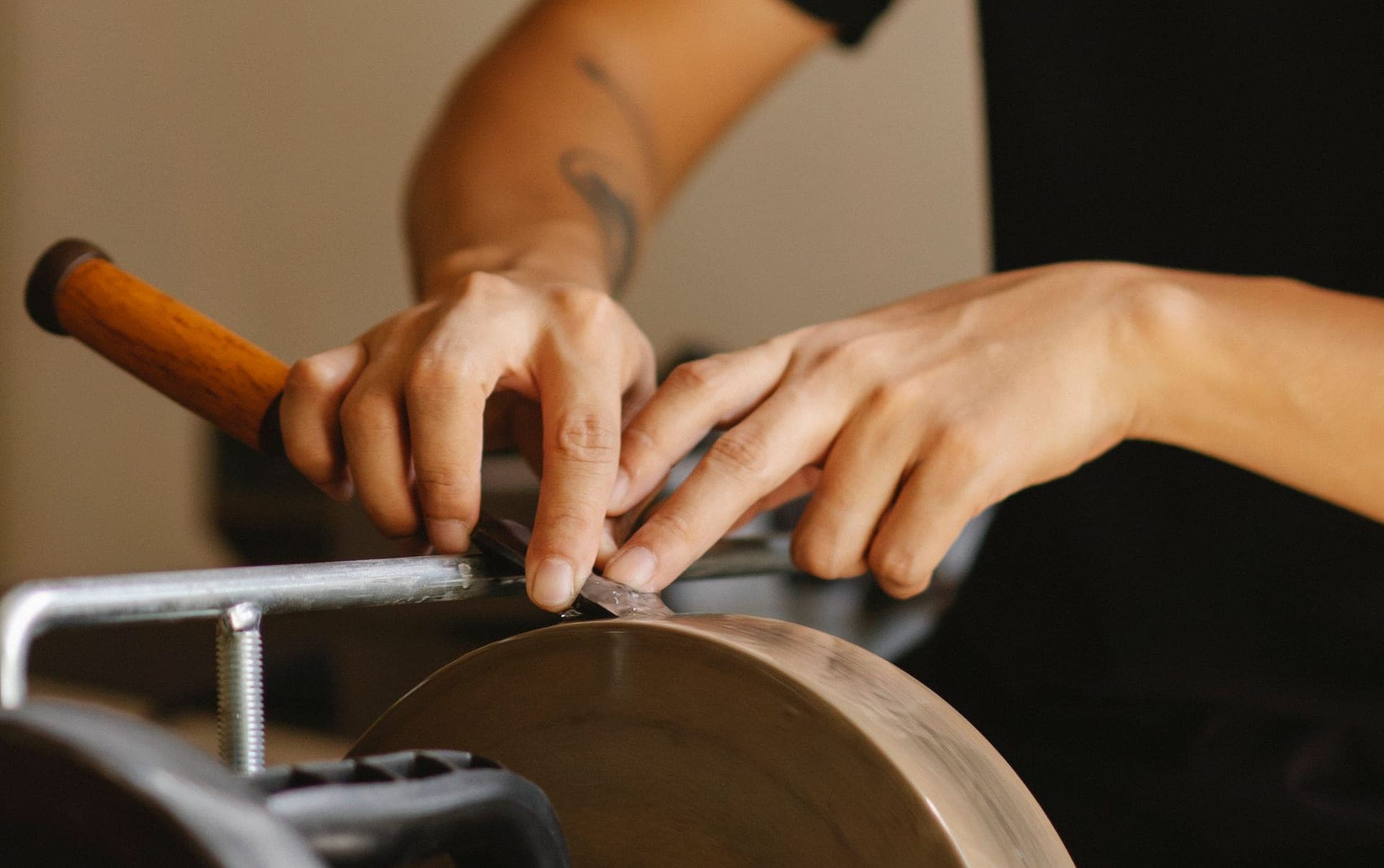
Head to head
A plain comparison of freehand and honing guide sharpening, with the honest trade-offs and when each one is the right call.
Head to head
How waterstones and ceramic stones differ on speed, mess, flattening, and cost over a decade, so you can choose the right bench setup.
The mechanism
Why the tool works the way it does, and what to do with it once you own it. No affiliate links are required to read any of these.
Guide
The full procedure including camber: why a jack iron is curved, why a smoother's is nearly straight, and how to produce each in a guide.
Guide
What bevel angle does to an edge, the numbers to use for each tool, and the one case where the angle changes what the tool does.
Guide
Why the same grit number differs across JIS, CAMI, FEPA and micron systems, what each grit band is for, and how few stones a complete setup really needs.
Guide
Why waterstones dish and ruin edges, the flattening-plate, diamond-lapping and wet-dry-on-glass methods, the pencil-grid check, and how often to true a stone.
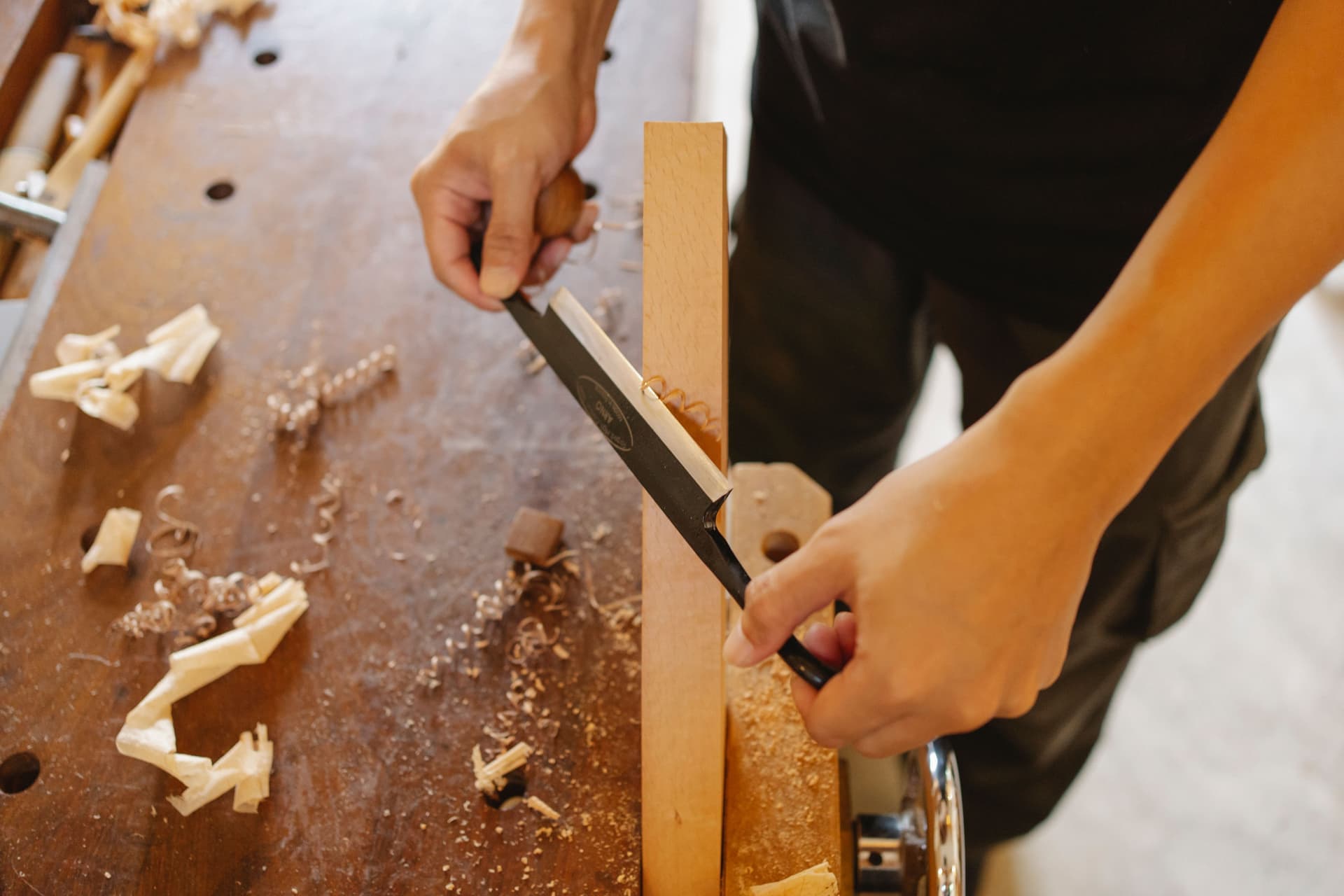
Guide
Sharpening on wet-dry sandpaper stuck to plate glass: the grit progression, adhesive and water, the cheap entry, and the ongoing-consumable trade for buyers.
Guide
What stropping does, leather versus MDF versus bare, honing-compound grades, the trailing stroke, the rounding-over risk, and keeping an edge between sharpenings.
Guide
Primary versus secondary bevel, why a microbevel saves time, back bevels and the ruler trick, angle stacking, and when to reset the primary bevel.
Guide
How a honing guide locks your blade at one repeatable angle, plus the routine for clamping, honing, and adding a microbevel.
Guide
The ruler trick polishes only the strip of a plane iron back that actually cuts, and why you must never use it on a chisel.
Guide
Sharpening laminated Japanese chisels: the 27 to 30 degree bevel, the hollow back you must not flatten away, tapping out a worn edge, and the three stones the job actually needs.
Guide
How much camber each plane wants, from a heavy jack curve to the barely-visible smoother relief, three ways to grind it, and keeping the curve through honing.
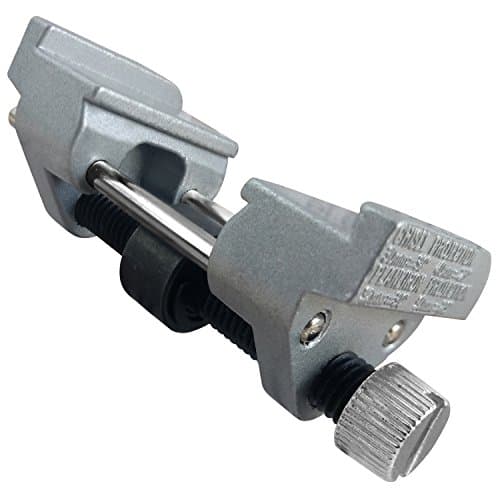
Guide
The bevel angle for a low-angle block plane, why bevel-up changes the arithmetic, the short-iron honing guide problem, and the three tools that solve it.
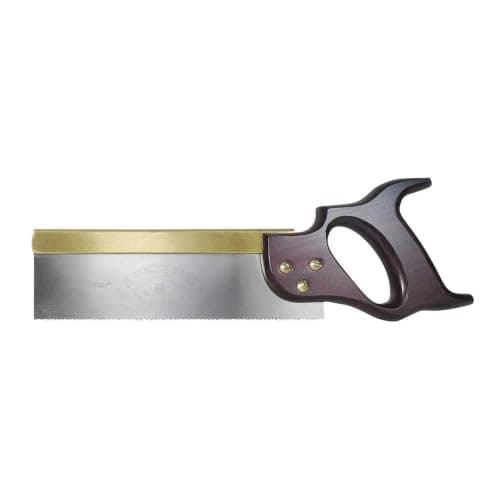
Guide
Why a fine backsaw is a different sharpening job from a panel saw, which file size matches which tooth pitch, how little set a dovetail saw wants, and which saws can be filed at all.
The rest of the workshop