End grain does not fail the way face grain does, so the plane that beats it is chosen on two published numbers almost nobody reads: the bed angle, and whether the mouth moves.
We earn a commission when you buy through our Amazon links, at no extra cost to you. It never decides a ranking, and where the best tool in a class is one we earn nothing on, we say so and link it anyway. How this works.
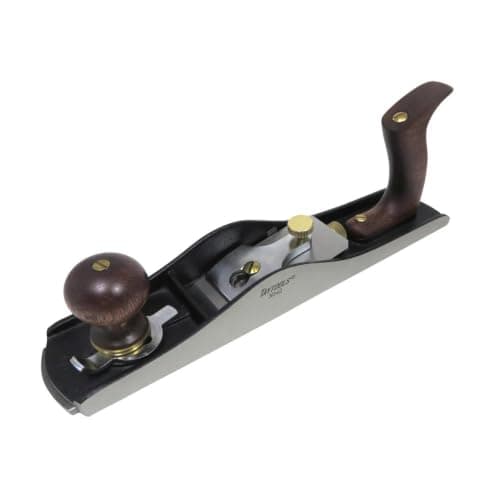
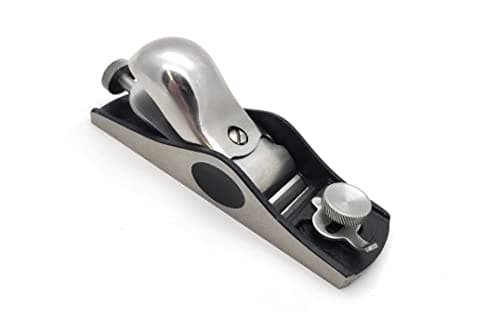
Adjustable mouth, stainless knuckle cap and adjustment screws, and a bed low enough to handle end grain properly. The stainless hardware is the detail that matters in a tool that lives in a pocket.
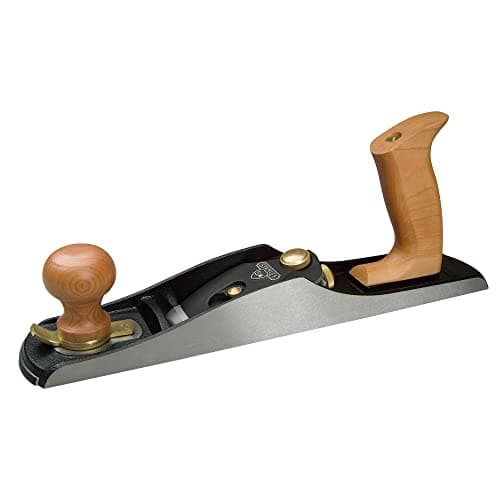
Bevel-up at a 12 degree bed, which means the bevel you grind sets the cutting angle. Grind three irons at three angles and one plane covers end grain, general work and figured hardwood.
A 12 degree bevel-up jack in stress-relieved ductile iron with a 3/16 in iron and an adjustable mouth, at roughly half what the Stanley No. 62 costs. The bevel-up trick — three irons, three cutting angles, one plane — works the same here.
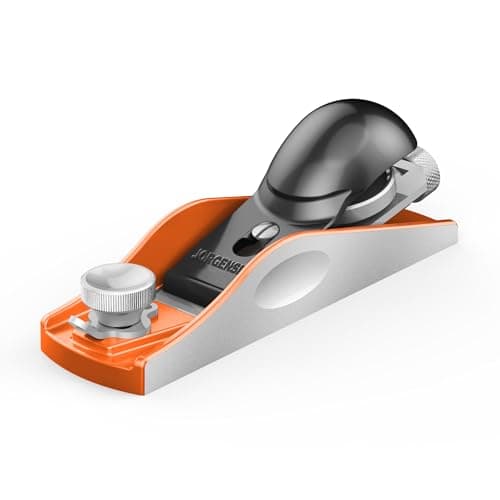
A ductile-iron 60-1/2 with an adjustable mouth and a 3 mm O1 iron, at a fraction of what that combination costs anywhere else on this page. The mouth adjustment is the feature this list is ranked on, and this is the cheapest honest way to get it.
The adjustable mouth at the lowest price it exists for
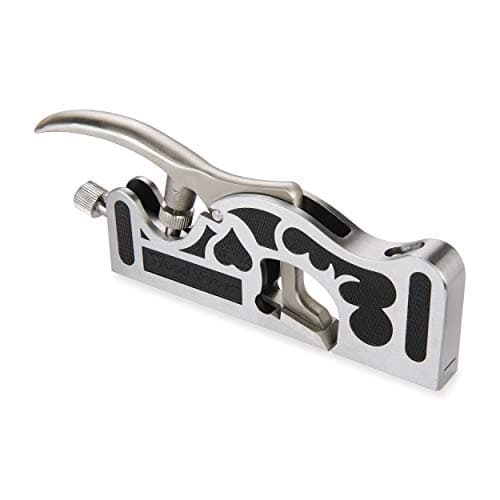
Woodcraft publishes what the body is, what the iron is, how hard it is and both angles — Cr40 ductile steel, Mn65 tool steel at 60-64 Rc, bedded 15 degrees under a 25 degree bevel — and then sells the matching iron on its own. In a class where three of the seven planes we looked at publish neither a steel grade nor a hardness figure, that is the whole case.
The only shoulder plane here with a full published spec sheet and a spare iron
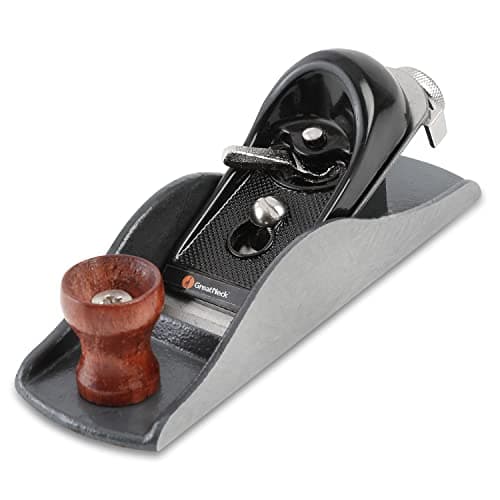
A plain machined cast-iron block plane at hardware-store money, and the only plane on this page whose maker publishes a limited lifetime warranty. Read the exclusions before that sells you: blades are not covered, and the blade is the part you will wear out.
The cheapest block plane with a warranty behind it
#ad· Live prices from the Amazon Product API, as of October 16, 2026. Where we have no verified live price we show none, and the cost-per-decade figure is suppressed with it — we would rather leave a gap than print a number that has rotted.
If you want one plane for end grain, buy a low-angle block plane with an adjustable mouth: the Taytools #9-1/2. It is the cheapest tool here with both of the two features end grain actually responds to, and for trimming a tenon cheek, easing an edge or cleaning the end of a board held in a vise it is all the plane the job needs. If your end-grain work is wide — shooting miters and board ends square on a shooting board — the honest answer is a bevel-up jack instead, and that is the Stanley No. 62, with the Taytools No. 62 as the same geometry for roughly half the money.
What makes end grain its own buying question is that it fails differently from face grain. On a board face the plane is lifting a shaving that wants to split ahead of the edge, and what you fight is tearout along the grain. On an end there is no grain direction to follow and nothing to split: the fibers stand on end like a bundle of straws, and the edge either severs them cleanly or crushes and tears them out at the far side. That changes which features matter. Cap-iron settings and chipbreaker tricks — the whole cap ironconversation — are aimed at the splitting problem and do very little here. What does matter is a low cutting angle to slice rather than crush, a tight mouth to support the fibers right at the cut, and a genuinely sharp edge, because a dull plane on end grain does not tear — it skates, and then it crushes.
How these are ranked
We have not planed end grain with any of these. What we have done is open every maker's and retailer's own listing, record only the figures they publish, cite them at the bottom of the page, and rank on that. The method is on the methodology page. Four published things decided the order.
Bed angle, and whether the maker publishes one at all. A standard bevel-down bench plane beds its iron at 45 degrees, and because the bevel faces down that 45 is the cutting angle. A bevel-up plane beds much lower — 12 degrees on both No. 62s here — and the cutting angle becomes the bed plus whatever bevel you grind, so 12 plus a 25 degree bevel is a 37 degree cut. That is the biggest lever you have on end grain, and it is also the number most block-plane sellers refuse to print. GreatNeck publishes the words “low angle blade” and no figure. Jorgensen publishes the 60-1/2 designation and no figure. Both are almost certainly the usual 12 degree block-plane bed; neither will say so, and we are not going to say it for them.
Does the mouth adjust? This is the feature that separates a plane that works on end grain from one that merely gets sold for it. A sliding toe plate lets you close the gap in front of the iron to a few thousandths, which supports the standing fibers exactly where they are being cut and is the difference between a clean exit and a blown-out corner. Four of the six planes here have it. The two that do not are the two cheapest, and that is not a coincidence — it is the feature the money buys.
Iron thickness, published as a number. End grain loads the edge harder than face grain does, and a thin iron flexes and chatters under that load. The Taytools No. 62 publishes 3/16 in. The Jorgensen block publishes 3 mm O1. The WoodRiver shoulder plane publishes Mn65 at 60-64 Rc under a 25 degree bevel. The two cheapest planes here publish a width and nothing else.
Can you buy a second iron? On a bevel-up plane this is not a spare-parts question, it is the whole system: because the bevel sets the cutting angle, three irons ground at three angles turn one plane into three. Stanley lists a replacement iron for the No. 62. Taytools, by its own statement, does not list one for its No. 62 — which is why the cheaper plane ranks below the dearer one despite doing the same thing on paper.
What each maker actually publishes
Plane
Bed angle
Mouth
Iron
Taytools #9-1/2 block
Not published (“low angle”)
Adjustable
Width not published; stainless cap and screws
Stanley No. 62
12 deg, bevel up
Adjustable
A2, thick section
Taytools No. 62
12 deg, bevel up
Adjustable
3/16 x 2 in, 60-65 HRc per maker
Jorgensen 60-1/2
Not published
Adjustable
O1, 3 mm, 1-3/8 in wide
WoodRiver #92 shoulder
15 deg bed, 25 deg bevel
Fixed (shoulder pattern)
3/4 in Mn65, 60-64 Rc
GreatNeck G2
Not published
Fixed
1-5/8 in, hardened and tempered
Read that table as a map of who is willing to be held to a number. Two planes publish a bed angle. Two publish an iron thickness. One publishes a hardness range and sells the iron separately. And the two cheapest planes on the page publish, between them, one cutter width and the word “low.”
Why a shoulder plane is on an end-grain list
Because the most common end grain most woodworkers plane is not a board end at all — it is a tenon cheek and a tenon shoulder, and a block plane cannot reach into the corner where the two meet. A shoulder plane cuts right to the edge of its own body, which is the entire reason the pattern exists. If your end-grain problem is specifically joinery fitting, the #92 does a job none of the other five can do; the shoulder plane roundup ranks the rest of that class and shoulder plane vs rabbet plane covers why the two are not interchangeable.
What is not on this page
Standard-angle block planes. The 20 degree bed is the common pattern and it is the wrong tool for this job; a 20 degree bed under a 25 degree bevel cuts at 45, which is a bench plane in a small body. If a listing does not say “low angle” somewhere, assume it is the standard bed.
The Veritas and Lie-Nielsen low-angle planes. They are the best tools in this class and they sell direct rather than through Amazon, so we earn nothing on them and say so where they appear as reference links on the cards below.
Japanese planes. A kanna beds its blade high and is the wrong geometry for end grain on purpose — it is built for the finish cut on figured face grain. See the Japanese plane roundup for what that tradition is optimized for.
Every pick, in full
The write-ups
01Best block plane overall
Pattern
#9-1/2 low angle
Mouth
Adjustable
Hardware
Stainless knuckle cap and screws
Warranty
Not published
Taytools #9-1/2 Low Angle Block Plane
Taytools
8.0/10
Adjustable mouth, stainless knuckle cap and adjustment screws, and a bed low enough to handle end grain properly. The stainless hardware is the detail that matters in a tool that lives in a pocket.
Cost per decade
$46.49
Horizon · tier C
20 years — No lifetime warranty; parts purchasable and resharpenable
No lifetime warranty published at the date checked. The iron is a standard Bailey-pattern size, so aftermarket replacements from third-party makers are purchasable, and the body is a casting with no consumable part.
Rebuy risk
Medium
parts listed, resharpenable
Sole & body
8.5
Iron & edge
7.5
Adjustment
8.5
Out of box
8.0
Parts & repair
7.0
Value
8.5
What it gets right
+Adjustable mouth is the single feature that separates a real block plane from a toy
+Stainless fittings resist the sweat and pocket grit that pit a block plane first
+Machining quality well above the price band
What it costs you
−No published warranty terms
−Iron wants honing before first use like everything else here
−Knuckle cap is a preference; some people want a plain lever cap
Skip this if…
…your hands are large. A block plane is a one-handed tool and this is a compact one.
We earn nothing on this one
The Veritas low-angle block plane is the better tool and we earn nothing on it — it sells direct only. Worth knowing before you buy: Lee Valley publishes a three-month satisfaction guarantee rather than a defect warranty, which is not the lifetime cover the tool's reputation implies. That guarantee wording is published by Lee Valley / Veritas.
Bevel-up at a 12 degree bed, which means the bevel you grind sets the cutting angle. Grind three irons at three angles and one plane covers end grain, general work and figured hardwood.
Cost per decade
Suppressed — no live price
Horizon · tier A
30 years — Lifetime warranty, cited
Stanley publishes a limited lifetime warranty on hand tools against material and workmanship defects. Note it excludes consumables including 'any blade' — the casting is covered, the iron is not. Bailey-pattern irons are a standard size and replacements are widely sold.
Rebuy risk
Low
lifetime warranty, parts listed, resharpenable
Sole & body
8.5
Iron & edge
8.5
Adjustment
8.0
Out of box
8.0
Parts & repair
9.0
Value
7.0
What it gets right
+One body, three effective cutting angles, if you buy spare irons
+Low bed angle plus adjustable mouth is the best end-grain setup at this price
+Simple architecture: no frog to fettle, fewer things to get wrong
What it costs you
−Spare irons are the whole point and they are an extra purchase
−Bevel-up geometry means a chipped edge changes your cutting angle, not just your sharpness
−Heavier and longer than a smoother if that is the only job
Skip this if…
…you have already committed to a bevel-down set. Mixing the two systems means two sharpening setups for no benefit.
A 12 degree bevel-up jack in stress-relieved ductile iron with a 3/16 in iron and an adjustable mouth, at roughly half what the Stanley No. 62 costs. The bevel-up trick — three irons, three cutting angles, one plane — works the same here.
Cost per decade
$72.00
Horizon · tier C
20 years — No lifetime warranty; parts purchasable and resharpenable
No lifetime warranty published at the date checked. The iron is a standard Bailey-pattern size, so aftermarket replacements from third-party makers are purchasable, and the body is a casting with no consumable part.
Rebuy risk
Medium
parts listed, resharpenable
Sole & body
8.0
Iron & edge
7.5
Adjustment
7.5
Out of box
7.5
Parts & repair
6.5
Value
8.5
What it gets right
+A 3/16 in iron, thicker than the Stanley's, on a bed the maker lapped to a published 0.003 in
+Adjustable mouth and a low bed, which is the end-grain setup that matters
+Stress-relieved ductile iron body at a price that undercuts every other No. 62 we found
+Lightest plane on the page, which some people prefer in a bevel-up jack
What it costs you
−The Amazon listing title says 55-60 HRC while the maker's own page says 60-65 HRc; one of them is wrong and we could not tell which
−No warranty published, against Stanley's limited lifetime cover on the No. 62
−Spare irons are the whole point of a bevel-up jack and the maker does not list one for this SKU
−Far less history behind the brand than Stanley
Skip this if…
…you plan to run the three-iron system. The Stanley has a listed replacement iron; this one does not, and a bevel-up jack without spare irons is just a long block plane.
04The adjustable mouth at the lowest price it exists for
Pattern
No. 60-1/2 low angle, 6-1/4 in
Mouth
Adjustable
Iron
O1 steel, 3 mm thick, 1-3/8 in wide
Body
Ductile iron, stress relieved
Jorgensen No. 60-1/2 Low Angle Block Plane
Jorgensen
7.7/10
A ductile-iron 60-1/2 with an adjustable mouth and a 3 mm O1 iron, at a fraction of what that combination costs anywhere else on this page. The mouth adjustment is the feature this list is ranked on, and this is the cheapest honest way to get it.
Cost per decade
$21.49
Horizon · tier C
20 years — No lifetime warranty; parts purchasable and resharpenable
No lifetime warranty published at the date checked. The iron is a standard Bailey-pattern size, so aftermarket replacements from third-party makers are purchasable, and the body is a casting with no consumable part.
Rebuy risk
Medium
parts listed, resharpenable
Sole & body
7.5
Iron & edge
7.5
Adjustment
8.0
Out of box
7.0
Parts & repair
7.0
Value
9.0
What it gets right
+Adjustable mouth at a price where nothing else here has one
+Jorgensen publishes the iron as 3 mm O1, which is thicker than most block plane irons and thicker than most makers will state
+Ductile iron rather than grey cast iron, so a drop onto a concrete floor is less likely to crack it
What it costs you
−No warranty terms published by Jorgensen at all
−Jorgensen publishes no bed angle for this model, only the 60-1/2 designation
−Fit and finish is noticeably below the Taytools above it
Skip this if…
…you want a tool that feels expensive in the hand. The money here went into the mouth and the iron, not the finish.
05The only shoulder plane here with a full published spec sheet and a spare iron
Blade
3/4 in, Mn65 tool steel, 60-64 Rc, bevel 25 deg
Bedded angle
15 deg
Body
Cr40 stress-relieved ductile steel, 7 x 3/4 x 2-1/2 in
Weight
2 lb 3.4 oz
Spare iron
Published by Woodcraft as its own item
Warranty
None published; 90-day retailer guarantee
WoodRiver #92 Medium Shoulder Plane
WoodRiver
8.4/10
Woodcraft publishes what the body is, what the iron is, how hard it is and both angles — Cr40 ductile steel, Mn65 tool steel at 60-64 Rc, bedded 15 degrees under a 25 degree bevel — and then sells the matching iron on its own. In a class where three of the seven planes we looked at publish neither a steel grade nor a hardness figure, that is the whole case.
Cost per decade
$101.99
Horizon · tier C
20 years — No lifetime warranty; parts purchasable and resharpenable
No defect warranty published for this plane at the date checked — the retailer publishes a 90-day satisfaction guarantee, which is a returns policy, not a warranty. What sets the horizon instead is that the matching iron is a cataloged item you can buy on its own, which on a shoulder plane is not a given: the iron is sized to that one body and ground a few thousandths wider than the sole, so no generic replacement exists. Body is a ductile iron casting with nothing else in it to consume.
Rebuy risk
Medium
parts listed, resharpenable
Sole & body
9.5
Iron & edge
9.0
Adjustment
8.5
Out of box
9.0
Parts & repair
8.0
Value
6.5
What it gets right
+Hardest published iron in the class at 60-64 Rc, against 55-60 on both of the cheaper 3/4 in planes
+Woodcraft lists a #92 replacement iron as a cataloged item, so the one consumable part is purchasable
+An independent bench check of this plane found the sole dead-flat and the sides accurately square to the sole, with the iron 0.006 in wider than the body so it projects about 0.003 in each side
+Adjustable mouth, and that same review describes the mouth adjustments as precise rather than approximate
+Full published spec sheet: body steel, iron steel, hardness, bed angle, bevel, dimensions and weight
What it costs you
−No defect warranty published anywhere — Woodcraft's 90 days is a satisfaction guarantee, which is a returns policy
−Most expensive of the 3/4 in planes here, and Woodcraft's own price has run below the Amazon number, so check both before you buy
−At 2 lb 3.4 oz it is heavy for one-handed work on small parts
−The independent bench check we cite dates from 2013, so it describes the plane as it was then
Skip this if…
…you only ever tidy a shallow rabbet. The Taytools does that for a third of the money; what the extra buys here is published metallurgy and an iron you can replace.
We earn nothing on this one
The best shoulder plane you can buy in North America is the Lie-Nielsen large 1-073 — a ductile iron body, an A2 iron at Rockwell 60-62, cryogenically treated and double tempered, bedded at 18 degrees and ground .005 in wider than the body, with the replacement blade cataloged at $75 — and it is not sold on Amazon, so we earn nothing on it. It was showing as unavailable to backorder at the date checked. Those specs and that stock status are from the product page at Lie-Nielsen Toolworks.
06The cheapest block plane with a warranty behind it
Length
7 in
Cutter
1-5/8 in, hardened and tempered
Adjustment
Depth of cut
Warranty
Limited lifetime, blades excluded
GreatNeck G2 Adjustable Block Plane, 7 in
GreatNeck
6.5/10
A plain machined cast-iron block plane at hardware-store money, and the only plane on this page whose maker publishes a limited lifetime warranty. Read the exclusions before that sells you: blades are not covered, and the blade is the part you will wear out.
Cost per decade
$9.66
Horizon · tier A
30 years — Lifetime warranty, cited
GreatNeck publishes a limited lifetime warranty: a broken tool is repaired or replaced, and ownership rather than a receipt is enough to claim. It does not cover bits, blades, files, batteries or calibration — so on a plane the casting is covered and the iron is not. Block plane irons are a standard size and replacements are widely sold.
Rebuy risk
Low
lifetime warranty, parts listed, resharpenable
Sole & body
5.5
Iron & edge
5.0
Adjustment
5.5
Out of box
5.5
Parts & repair
8.5
Value
9.0
What it gets right
+GreatNeck publishes a limited lifetime warranty and does not ask for a receipt — ownership is enough to claim
+Costs less than a replacement iron for most of the planes above it
+Cast body is machined and polished rather than pressed, at a price where that is unusual
What it costs you
−No mouth adjustment is published, so tearout on difficult end grain is whatever the casting gives you
−The warranty excludes blades, which on a plane is the part that actually wears
−GreatNeck publishes no bed angle figure at all, only the words 'low angle blade'
Skip this if…
…end grain and fine fitting are the jobs. Spend the extra on a plane with an adjustable mouth; that feature is the whole argument of this page.
One plane, general shop use, end grain is part of the work: the Taytools #9-1/2. Adjustable mouth, stainless hardware, low bed, one-handed. This is the plane that lives in an apron pocket and gets used twenty times a day.
You shoot board ends and miters square: the Stanley No. 62, and buy a second iron with it. A shooting board wants mass, a long registered side and a low cutting angle; a block plane has none of the first two. The three-iron system — 25 degrees for end grain, 35 for general work, 50 for figured hardwood — is why this plane gets called the only plane you need, and bevel up vs bevel down explains the trade you are making.
Same geometry, less money: the Taytools No. 62. The honest caveat is in its cons and it matters here more than on a general list: Taytools does not catalog a spare iron for it, and a bevel-up jack you cannot re-iron is a long block plane.
Cheapest adjustable mouth: the Jorgensen 60-1/2. The mouth is the feature this page ranks on, and this is the least you can pay for it from a maker that publishes an iron spec.
Tenons, shoulders and rabbet corners: the WoodRiver #92, which is also the only plane here whose retailer sells the matching iron as its own catalog item.
You want a warranty more than you want performance: the GreatNeck G2 carries a limited lifetime warranty — and excludes blades, which on a plane is the part that wears. Read that before the word “lifetime” sells you anything, and read warranties and repairability for how often that exclusion turns up.
Setting a plane up for end grain
Four things, in order, and none of them cost money.
Sharpen first, and mean it. End grain is the most honest sharpness test there is: a properly sharp iron leaves a surface that reflects light, and a nearly-sharp one crushes fibers and leaves a dull gray smear. If you only own one stone, that is the gap to close — see the sharpening starter kit.
Close the mouth. Slide the toe plate until the gap in front of the iron is barely wider than the shaving you intend to take. On a fixed-mouth plane you cannot do this, which is the whole reason the fixed-mouth planes are at the bottom of the list.
Take a thinner shaving than feels productive. End grain does not reward depth. Back the iron off until the plane almost refuses to cut, then advance it a hair.
Work in from both ends, or back the exit up. The far corner blows out because nothing supports the last fibers. Plane in from each edge toward the middle, or clamp a sacrificial block tight against the exit side. A shooting board solves this structurally, which is why end-grain accuracy and shooting boards are the same conversation.
Cost per decade on a tool you will not wear out
The per-decade figures here are low in absolute terms, because block planes are cheap and a cast or ductile body has no failure mode short of being dropped on concrete. What decides the real horizon is the iron: whether it is thick enough to resist chatter, hard enough to hold an edge in end grain, and — the question almost nobody asks before buying — purchasable again. On that last test the field splits cleanly. Stanley lists a No. 62 iron. Woodcraft lists the #92 iron. Taytools states its own basic irons do not fit its Bedrock planes and catalogs nothing for the No. 62. GreatNeck explicitly excludes blades from the warranty it advertises. The planes still working in thirty years are the ones whose wear part has a part number, which is the argument this whole site is built on — cost per decade shows the arithmetic.
Questions
Frequently asked
What angle is best for planing end grain?+
Lower than you would use on face grain. A bevel-up plane bedded at 12 degrees with a 25 degree bevel cuts at 37 degrees, which slices standing fibers instead of crushing them; a standard bevel-down bench plane cuts at 45. If you run a bevel-up plane with multiple irons, grind one at 25 degrees and reserve it for end grain. Our sharpening angles page has the full set of numbers.
Can I plane end grain with a normal No. 4 smoothing plane?+
Yes, with a sharp iron and a light cut, and it will be harder work than it needs to be. A 45 degree cutting angle crushes more and slices less, and most No. 4s have a fixed mouth, so you cannot close the gap that supports the fibers. It is the right tool to try before you buy anything; it is not the right tool to buy for the job.
Why does the far edge of the board blow out?+
Because the last fibers at the exit have nothing behind them to push against, so instead of being cut they are levered off. There is no technique that fixes this — only support. Plane in from both edges toward the middle, clamp a scrap block tight against the exit, or use a shooting board where the fence itself backs the cut up.
Block plane or low-angle jack for end grain?+
Block plane for small work, one-handed, in a vise or on a bench hook: tenon cheeks, eased arrises, a quick trim. Low-angle jack for anything wide or anything that has to come out square, which in practice means a shooting board. The jack is heavier, longer and has a machined side to register against a fence; those are the only three reasons to prefer it, and when the job needs them nothing else will do.
Does the adjustable mouth really matter?+
It is the one feature on this page we would not trade away. The mouth gap decides how much unsupported fiber sits in front of the edge, and on end grain that is the difference between a clean cut and a torn one. It is also the clearest price signal in the block plane market: the planes with a sliding toe plate cost more, and every one of them earns it.
Do I need a shooting board?+
If you cut joinery, eventually yes, and it is a shop-made jig rather than a purchase: a base, a fence at 90 degrees and a rebate for the plane to run in. It converts end-grain planing from a freehand skill into a registered one, which is why the planes that suit it are the ones with a flat machined side. It is also the cheapest accuracy you will ever add to a bench.
We have not handled these tools. Nobody here has tested one, owned one, or taken one apart. Specifications come from the manufacturer or the retailer listing; warranty terms come from the maker's own warranty page; the cost-per-decade arithmetic is ours and reproducible. Where we could not verify a figure we say so on the page rather than quietly leaving it out. Read the full method.