We earn a commission when you buy through our Amazon links, at no extra cost to you. It never decides a ranking, and where the best tool in a class is one we earn nothing on, we say so and link it anyway. How this works.
The default first waterstone worldwide. A working edge on one side, a polishing edge on the other, a base to stop it sliding, and a price that removes every excuse not to own one.
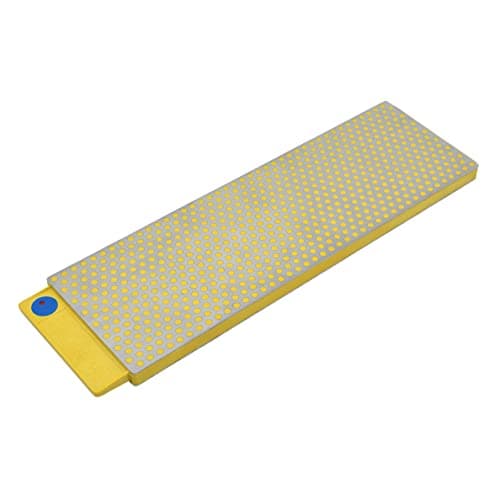
Coarse and fine on opposite faces of one plate. It is the complete diamond sharpening answer in a single object, and it will still be flat in thirty years.
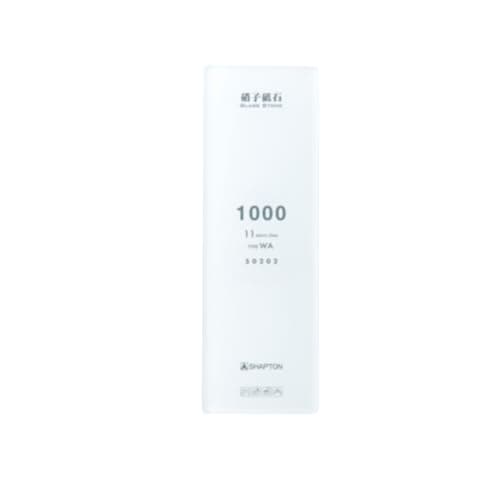
A thin abrasive layer bonded to a glass plate. It stays flat far longer than a conventional waterstone, cuts fast, and needs only a spritz of water rather than a soak.
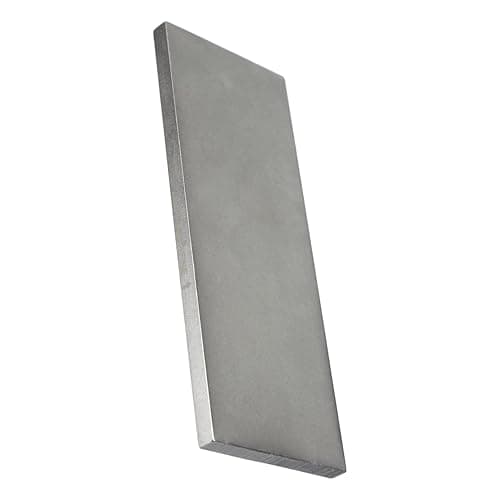
Diamond bonded to a steel plate: it cannot dish, it never needs flattening, and it works dry. For someone who wants sharpening to be a task rather than a hobby, this is the answer.
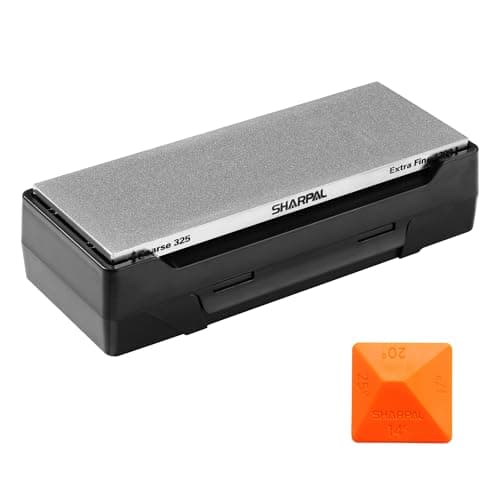
Two grits, a large working surface, and a non-slip base, at a price that makes the maintenance-free argument affordable. It will not last like a DMT and it costs accordingly.
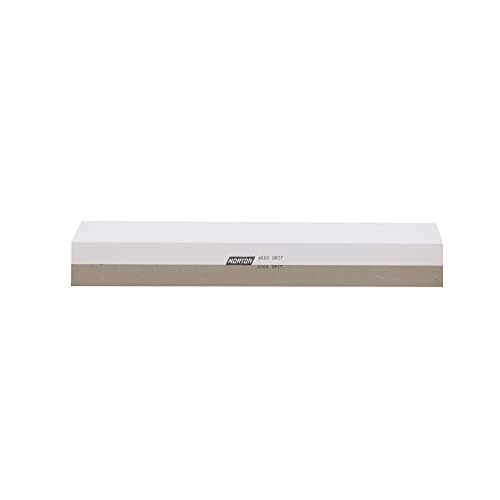
Norton's waterstones are harder than the King equivalents: slower to cut, slower to dish. If flattening is the part you hate, this is the trade to make.
The coarse plate in the range, and the grit Atoma itself puts on stone flattening. The diamond sits in raised clusters with channels between them, so slurry has somewhere to go instead of clogging the plate — which is the entire problem with cheaper flatteners.
#ad· Live prices from the Amazon Product API, as of October 21, 2026. Where we have no verified live price we show none, and the cost-per-decade figure is suppressed with it — we would rather leave a gap than print a number that has rotted.
If you are about to spend $120 on a plane and you own no stones, you are actually about to spend around $180, and the extra is not optional. Every tool on this site arrives with a ground shape rather than an edge, because an edge cannot survive shipping and shelf time. Most manufacturers say so in the manual.
Buying the better plane instead of the stones is the most expensive mistake in this category, because it produces a good tool that cuts badly and an owner who concludes hand tools are overrated.
The one decision that matters
Not brand, not grit. Waterstone or diamond plate. Everything else follows from it.
Waterstones cut faster and finish finer.The binder releases spent abrasive as you work, constantly exposing fresh grit, which is why they cut so quickly. That same mechanism means the stone wears — it dishes, and a dished stone puts a curved bevel on everything you own. So a waterstone comes with a permanent maintenance obligation: you need a flattening stone and you need to use it.
Diamond plates never need flattening. Diamond is bonded to a steel substrate that does not wear, so the surface stays flat forever. They work dry or with water, need no soaking, and have no consumable element at all. They cut slightly slower than a good waterstone, and they cannot reach the polish a fine waterstone gives.
Neither is better. They are answers to different questions, and the honest question is: do you want the best possible edge, or do you want sharpening to be a task rather than a hobby? Full comparison on waterstones versus diamond stones.
What the grit numbers mean
Grit numbers are not standardized across systems, and a Japanese 1000 is not a US 1000. Broadly, though:
200–400— repair. Reprofiling a chipped edge, grinding a new bevel angle, flattening other stones. Not for routine sharpening.
800–1200— the working grit. This is where a sharp edge is actually made. If you own one stone, own this.
4000–8000— polishing. Takes a sharp edge to a keen one and leaves a surface that reflects.
10000+— diminishing returns for woodworking. A strop with compound achieves most of it for eight dollars.
A 1000/6000 combination stone covers the working and polishing grits in one block, which is why it is the standard first purchase and why the King sits at the top of this list.
The purchase nobody mentions
A flattening stone, if you buy waterstones. It is unglamorous, it costs about $40, and skipping it ruins every stone you own within months. A dished stone is worse than no stone, because it silently puts a curve on every bevel you sharpen and you will spend weeks blaming your technique.
The Atoma plate at the bottom of this list is the serious version; the Norton flattening stone on the starter kit page is the cheap one. Either is fine. Neither is optional.
Every pick, in full
The write-ups
01Best first stone, and possibly your only one
No product image available
Grit
1000 / 6000 combination
Type
Soaking waterstone
Base
Plastic holder included
Warranty
Not published
King KW65 1000/6000 Combination Whetstone
King
7.8/10
The default first waterstone worldwide. A working edge on one side, a polishing edge on the other, a base to stop it sliding, and a price that removes every excuse not to own one.
Cost per decade
Suppressed — no live price
Horizon · tier C
20 years — No lifetime warranty; parts purchasable and resharpenable
A waterstone is its own consumable: the binder releases spent abrasive, which is why it cuts fast and why it dishes. Rated on realistic service life for occasional workshop use with periodic flattening, not on a warranty — none is published.
Rebuy risk
Medium
parts listed, resharpenable
Cut rate
8.0
Maintenance
6.0
Finish
8.5
Longevity
7.0
Value
9.5
What it gets right
+Two grits in one block covers the whole normal sharpening cycle
+Cheapest credible entry into real sharpening
+Forgiving of imperfect technique in a way harder stones are not
What it costs you
−Dishes quickly and genuinely needs regular flattening
−Needs soaking before use, which is a real friction point
−The 6000 side wears fastest, which is the side you want to keep
Skip this if…
…you will not buy a flattening stone with it. A dished waterstone puts a curved bevel on everything you own.
Coarse and fine on opposite faces of one plate. It is the complete diamond sharpening answer in a single object, and it will still be flat in thirty years.
Cost per decade
$53.99
Horizon · tier C
20 years — No lifetime warranty; parts purchasable and resharpenable
DMT publishes a warranty page and manufactures its bench stones in Marlborough, Massachusetts. We did not retrieve the specific term, so we do not rate it tier A. Diamond is bonded to a steel substrate: the plate never needs flattening and has no consumable element.
Rebuy risk
Medium
parts listed, resharpenable
Cut rate
9.0
Maintenance
10.0
Finish
7.0
Longevity
9.5
Value
8.0
What it gets right
+Covers repair and honing in one plate
+Interrupted surface clears swarf, so it keeps cutting
+Genuinely a lifetime object with no consumable element
What it costs you
−The interrupted surface can catch a very narrow chisel
−Higher up-front cost than a combination waterstone
−Cannot polish to the level a 6000 waterstone reaches
Skip this if…
…most of your chisels are under 1/4 inch. The interrupted surface is a real nuisance at that width; buy the continuous Dia-Sharp instead.
Price as of October 21, 2026. Prices move; Amazon's is the one that counts.
#ad · we may earn a commission from this link to DMT DuoSharp Double-Sided Diamond Whetstone, Fine/Coarse
03Best sharpening stone if you sharpen often
Grit
1000
Construction
Abrasive bonded to glass plate
Water
Splash and go, no soaking
Warranty
Not published
Shapton GlassStone 1000
Shapton
8.2/10
A thin abrasive layer bonded to a glass plate. It stays flat far longer than a conventional waterstone, cuts fast, and needs only a spritz of water rather than a soak.
Cost per decade
$28.35
Horizon · tier C
20 years — No lifetime warranty; parts purchasable and resharpenable
A waterstone is its own consumable: the binder releases spent abrasive, which is why it cuts fast and why it dishes. Rated on realistic service life for occasional workshop use with periodic flattening, not on a warranty — none is published.
Rebuy risk
Medium
parts listed, resharpenable
Cut rate
9.5
Maintenance
9.0
Finish
8.5
Longevity
7.0
Value
7.0
What it gets right
+Glass substrate means it dishes far less than a conventional stone
+No soaking, so sharpening is a two-minute interruption rather than a ritual
+Cuts noticeably faster than a King at the same nominal grit
What it costs you
−Thin abrasive layer: this stone has a finite and visible life
−Expensive per usable millimeter of abrasive
−Still needs occasional flattening despite the substrate
Skip this if…
…you sharpen twice a year. The value of a fast, always-ready stone is proportional to how often you reach for it.
Diamond bonded to a steel plate: it cannot dish, it never needs flattening, and it works dry. For someone who wants sharpening to be a task rather than a hobby, this is the answer.
Cost per decade
$32.65
Horizon · tier C
20 years — No lifetime warranty; parts purchasable and resharpenable
DMT publishes a warranty page and manufactures its bench stones in Marlborough, Massachusetts. We did not retrieve the specific term, so we do not rate it tier A. Diamond is bonded to a steel substrate: the plate never needs flattening and has no consumable element.
Rebuy risk
Medium
parts listed, resharpenable
Cut rate
8.5
Maintenance
10.0
Finish
7.0
Longevity
9.5
Value
7.5
What it gets right
+Zero maintenance: no soaking, no flattening, no storage precautions
+Continuous surface handles narrow chisels without dropping in
+US manufacture, with a published warranty page
What it costs you
−Cannot reach the polish a fine waterstone gives
−Diamond plates lose their initial aggression in the first weeks of use
−Expensive for one grit
Skip this if…
…you want a mirror polish. A diamond plate gets you sharp, not shiny, and the two are not the same goal.
Sharpal 162N Double-Sided Diamond Sharpening Stone, 8 x 3 in
Sharpal
7.9/10
Two grits, a large working surface, and a non-slip base, at a price that makes the maintenance-free argument affordable. It will not last like a DMT and it costs accordingly.
Cost per decade
$34.99
Horizon · tier C
20 years — No lifetime warranty; parts purchasable and resharpenable
No lifetime warranty published by the manufacturer at the date checked. Monolithic edge tool: no separately consumable part, and the edge is renewable by sharpening for as long as there is steel left.
Rebuy risk
Medium
parts listed, resharpenable
Cut rate
8.0
Maintenance
9.5
Finish
6.5
Longevity
6.5
Value
9.0
What it gets right
+Large enough surface for plane irons, which many budget plates are not
+Two grits and a base in one purchase
+No flattening or soaking
What it costs you
−Diamond retention over years is not in the same class as DMT
−No published warranty terms
−Cutting rate drops off faster than the premium plates
Skip this if…
…this is the last stone you intend to buy. For a genuine one-time purchase the DMT is the one with the manufacturing record behind it.
Price as of October 21, 2026. Prices move; Amazon's is the one that counts.
#ad · we may earn a commission from this link to Sharpal 162N Double-Sided Diamond Sharpening Stone, 8 x 3 in
06A harder waterstone that keeps its shape
Grit
1000 / 4000 combination
Type
Soaking waterstone
Hardness
Harder binder than King
Warranty
Not published
Norton Combination Waterstone, 1000/4000
Norton
7.7/10
Norton's waterstones are harder than the King equivalents: slower to cut, slower to dish. If flattening is the part you hate, this is the trade to make.
Cost per decade
$59.75
Horizon · tier C
20 years — No lifetime warranty; parts purchasable and resharpenable
A waterstone is its own consumable: the binder releases spent abrasive, which is why it cuts fast and why it dishes. Rated on realistic service life for occasional workshop use with periodic flattening, not on a warranty — none is published.
Rebuy risk
Medium
parts listed, resharpenable
Cut rate
7.0
Maintenance
8.0
Finish
8.0
Longevity
8.5
Value
7.0
What it gets right
+Dishes noticeably slower than the softer Japanese stones
+4000 is a genuinely usable working polish
+Long service life for a waterstone
What it costs you
−Cuts slower than a King or a Shapton
−Still needs soaking and flattening
−Costs more than twice the King combination
Skip this if…
…you want the fastest possible cut. Harder binder means slower, and that is the deal you are making.
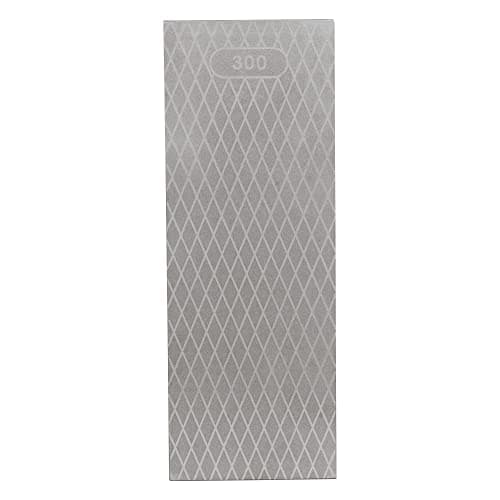
Trend Diamond Sharpening Stone Kit, 8 x 3 in Double Sided
Trend
7.9/10
300 and 1000 on opposite faces with a holder, which is close to a complete sharpening setup in one box for anyone who does not want a polishing stage.
Cost per decade
$33.22
Horizon · tier C
20 years — No lifetime warranty; parts purchasable and resharpenable
No lifetime warranty published by the manufacturer at the date checked. Monolithic edge tool: no separately consumable part, and the edge is renewable by sharpening for as long as there is steel left.
Rebuy risk
Medium
parts listed, resharpenable
Cut rate
8.5
Maintenance
9.5
Finish
6.0
Longevity
7.0
Value
8.5
What it gets right
+Grit pair covers repair and honing sensibly
+Holder included, so nothing slides on the bench
+No maintenance, no soaking
What it costs you
−1000 is not a finishing grit; you will want a strop at minimum
−No published warranty
−Diamond retention is mid-tier
Skip this if…
…you want a polished edge. Add a strop and compound, or add a fine waterstone.
Price as of October 21, 2026. Prices move; Amazon's is the one that counts.
#ad · we may earn a commission from this link to Trend Diamond Sharpening Stone Kit, 8 x 3 in Double Sided
08Flattening waterstones properly
Grit
#140 coarse
Size
210 x 75 mm plate
Construction
1 mm stainless diamond sheet on 10 mm aluminium
Warranty
Not published
Atoma Diamond Sharpener, #140 Coarse
Atoma
7.5/10
The coarse plate in the range, and the grit Atoma itself puts on stone flattening. The diamond sits in raised clusters with channels between them, so slurry has somewhere to go instead of clogging the plate — which is the entire problem with cheaper flatteners.
Cost per decade
$37.45
Horizon · tier C
20 years — No lifetime warranty; parts purchasable and resharpenable
No warranty terms published for the US market at the date checked. Monocrystalline diamond clusters on a 1 mm stainless sheet bonded to a 10 mm machined aluminium base: the plate never needs flattening, and Tsuboman sells the diamond sheet on its own in all four grits, so when the abrasive is spent the base is re-surfaced rather than replaced.
Rebuy risk
Medium
parts listed, resharpenable
Cut rate
9.5
Maintenance
9.0
Finish
3.0
Longevity
9.0
Value
7.0
What it gets right
+Atoma's own guidance puts #140 on aggressive removal and flattening stones, which is what you are buying it for
+Clustered diamond pattern clears swarf instead of loading up with it
+Tsuboman sells the diamond sheet separately in all four grits, so the machined base outlives the abrasive
What it costs you
−Expensive for what is a maintenance accessory rather than a sharpening stone
−No warranty terms published for the US market
−Far too coarse to finish on; this is a flattener that can rough-grind, not a bench stone
Skip this if…
…you sharpen only on diamond plates. There is nothing to flatten and this is a solution to a problem you do not have.
A 1000/6000 combination waterstone and a flattening stone, about $70 together. Working grit and polishing grit in one block, and the flattener that stops it destroying itself. This setup sharpens every edge tool you will ever own.
If you want zero maintenance
A double-sided diamond plate, coarse on one face and fine on the other. Nothing to soak, nothing to flatten, nothing to store carefully, and it will still be flat in thirty years. Add a strop and compound for $30 to get the polish it cannot reach.
Interrupted or continuous surface
A detail worth knowing before you buy diamond. Some plates have a “polka dot” interrupted surface, which clears swarf well and keeps cutting. Others are continuous.
Interrupted surfaces can catch a very narrow chisel — a quarter-inch blade can drop into a gap and rock. If most of your chisels are narrow, buy the continuous version. If you are mostly sharpening plane irons, the interrupted surface is the better cutter.
Size
Bigger than you think. A stone needs to be wider than the widest blade you will sharpen, and a 2-inch plane iron on a narrow stone is genuinely awkward. Eight inches by three is the practical minimum for plane work; the small pocket stones are for knives.
What wears out
Waterstones wear away and are consumed — a heavily used combination stone is a multi-year rather than multi-decade object. Shapton's glass stones have a thin abrasive layer with a visible, finite life. Diamond plates lose their initial aggression in the first weeks and then settle to a stable, slower cutting rate that persists for many years.
That difference is the whole reason the cost-per-decade figures in this roundup separate the way they do.
What you do not need
A twelve-stone progression. Three grits is a luxury and two is enough: a working grit and a polishing grit, or a working grit and a strop. Sharpening equipment is a category where enthusiasm produces very expensive drawers full of stones that all do nearly the same thing.
Two edges that need more than a stone choice
Two tools on this site change the method rather than just the grit. A laminated Japanese chisel has a hollow back you must not lap away and steel hard enough to punish a shallow bevel — how to sharpen Japanese chisels covers the angles and the tapping-out question. And a plane iron that is meant to hog material needs a deliberate curve rather than a straight edge, which is how to camber a plane iron.
Questions
Frequently asked
What sharpening stone should I buy first?+
A 1000/6000 combination waterstone plus a flattening stone. That covers the working and polishing grits and stops the stone dishing, and it will sharpen every edge tool you ever own for about $70.
Are diamond stones better than waterstones?+
They never need flattening and have no consumable element, which is a genuine advantage. Waterstones cut faster and reach a finer polish. Neither wins outright; pick based on whether you want the best edge or the least maintenance.
What grit sharpening stone do I need?+
800 to 1200 is the working grit where a sharp edge is actually made. 4000 to 8000 polishes it. A 1000/6000 combination gives you both. Coarse stones under 400 are for repair, not routine sharpening.
Do I really need a flattening stone?+
With waterstones, yes. They dish as they cut — that is the same mechanism that makes them cut fast — and a dished stone puts a curved bevel on every tool you sharpen. Diamond plates never need it.
How long does a sharpening stone last?+
A waterstone is consumed as it works, so a heavily used one is a multi-year object. A diamond plate has no consumable element and stays usable for decades, losing only its initial aggression in the first weeks.
We have not handled these tools. Nobody here has tested one, owned one, or taken one apart. Specifications come from the manufacturer or the retailer listing; warranty terms come from the maker's own warranty page; the cost-per-decade arithmetic is ours and reproducible. Where we could not verify a figure we say so on the page rather than quietly leaving it out. Read the full method.