Sharpening
The Ruler Trick
A thin ruler under the blade puts a tiny back bevel where it does no harm — and saves an hour of flattening.
We earn a commission when you buy through our Amazon links, at no extra cost to you. It never decides a ranking, and where the best tool in a class is one we earn nothing on, we say so and link it anyway. How this works.
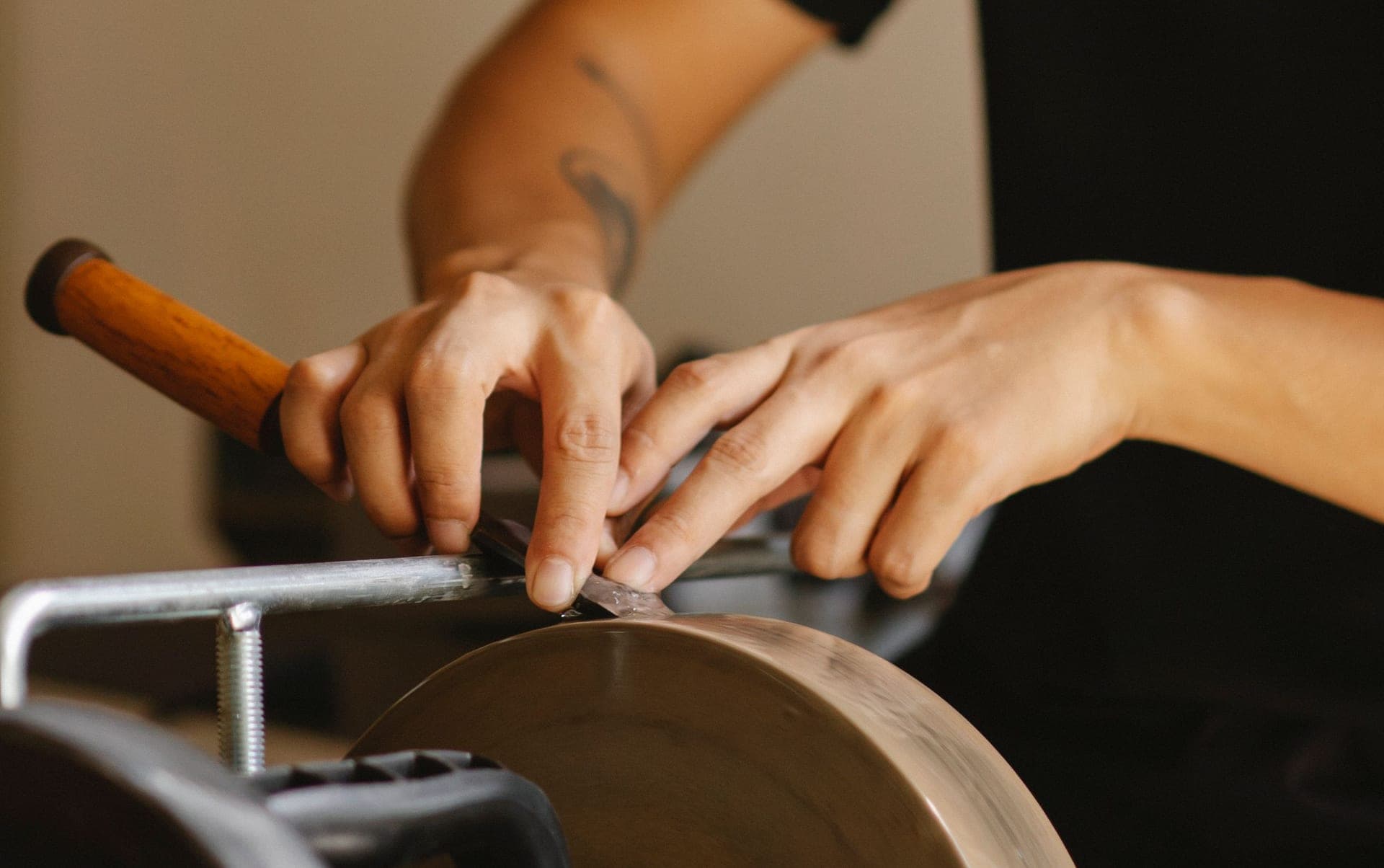
The ruler trick is a shortcut for the back of a plane iron. Instead of lapping the entire back dead flat — slow, tedious work on a hard, thick blade — you lay a thin steel ruler along the far edge of your finest stone, rest the iron across it, and hone. The ruler lifts the back a degree or so, so the stone only touches a narrow polished strip right at the cutting edge. You get the crisp, flat-enough back the edge actually needs without flattening a face you will never see. The technique is usually credited to the English cabinetmaker and teacher David Charlesworth, who taught it for years as a way to save time at the bench.
The problem it solves
A sharp edge is where two polished surfaces meet: the bevel and the back. The bevel is small and quick to hone, but the back is the whole width and length of the blade, and on a new or neglected iron it is rarely flat. Chasing a full mirror back can eat an hour of hard rubbing, and most of that surface plays no part in cutting. Only the last sliver at the very tip meets the wood. The ruler trick concedes that point — it polishes just the sliver that matters and leaves the rest alone.
Step by step
- Pick a thin ruler. A six-inch steel rule around half a millimeter thick is typical. Thicker raises the back bevel too much.
- Lay it on the far long edge of your finest stone. Keep it clear of where the bevel will ride.
- Rest the iron across the ruler, back down. The edge sits on the stone; the far end rides up on the ruler.
- Hone with light pressure. A dozen strokes on a polishing stone raise a bright, narrow strip at the edge.
- Alternate with the bevel. Work the bevel, then the back over the ruler, until the wire edge falls away.
Because you only ever do this on your finest stone, the back bevel stays tiny — a fraction of a degree that no one will ever notice in use. Every time you resharpen, you drop the iron back onto the ruler and refresh the same strip in seconds. Pair it with a microbevel on the front and your whole sharpening routine collapses to a couple of minutes; the reasoning for that front-and-back approach is spelled out in microbevels explained.
Why it is fine on a plane iron but not a chisel
This is the one rule you cannot break. A bevel-down bench plane does not care that the back has a whisker of a bevel, because the back is not a reference surface — the iron is bedded on the frog and the mouth controls the cut. A tiny back bevel there is invisible in the work. A chisel is the opposite. Its flat back is a registration surface: it rides against the wood when you pare, and it must sit dead flat to cut where you aim. Put a back bevel on a chisel and it will dive or ride up, and joinery goes out the window. So keep the ruler for plane irons and flatten chisels the honest way, as covered in how to flatten a chisel back.
The limits and the objections
The ruler trick is not universally loved, and the objections are fair. Purists point out that you are no longer running a truly flat back, which matters if you ever want to use the iron bevel-up or grind it very differently later. On a bevel-up plane, where the back faces the wood, a back bevel changes the cutting geometry, so the trick does not belong there. It also assumes the rest of the back near the edge is reasonably flat to begin with; a badly pitted or dished back still needs real lapping before the ruler can do its job. And because the polished strip is narrow, you must land the edge consistently or you can miss it entirely.
- Use it for: bevel-down bench plane irons you want sharp fast.
- Skip it for: chisels, bevel-up plane irons, and anything with a wrecked back.
Landing the strip every time
Because the polished band is narrow, consistency comes from doing the same thing each session. Set the ruler in the same spot, use the same finest stone, and hold the iron flat so the whole width contacts. If you find the strip wandering or the polish patchy, your stone is probably not flat, or you are varying pressure across the blade. A flat stone and even, light pressure fix nearly every complaint people have with the method, and they cost you nothing but a moment of attention before you start.
None of that makes it a gimmick. For the tools it suits, the ruler trick is one of the highest-return moves in sharpening: a few seconds of setup buys you an edge that would otherwise cost real time to produce. If you keep your stones flat and your routine consistent, it pays off at every sharpening for the life of the tool. Fold it into your normal sequence — there is a full walk-through in how to sharpen a plane iron — and make sure the stone you use it on is genuinely fine and genuinely flat, which is a good reason to invest in the best sharpening stones you can justify.
Questions
Frequently asked
Does the ruler trick work on chisels?
No. A chisel's back is a registration surface that must stay dead flat, and the ruler trick adds a small back bevel that would ruin its accuracy. Use it only on bevel-down plane irons, and flatten chisel backs the traditional way.
How thick should the ruler be?
Thin. A steel rule around half a millimeter is typical, which raises the back only a fraction of a degree. A thicker ruler tilts the iron too much and creates a back bevel big enough to affect the cut.
Will the tiny back bevel weaken the edge?
In practice, no, not on a bevel-down bench plane. The back bevel is a fraction of a degree and sits where it does no harm, because the iron is bedded on the frog. It is a non-issue for the tools the trick is meant for.
Can I use the ruler trick on a bevel-up plane?
Better not. On a bevel-up plane the back faces the wood and helps set the cutting angle, so a back bevel changes the geometry. Keep the ruler trick for bevel-down irons and lap bevel-up irons flat.
Do I need a special stone for it?
Only your finest polishing stone, kept flat. The trick is a final step, so you never use it on coarse grits. A dished stone will spoil the narrow strip you are polishing, so flatten the stone first.
Keep reading
Related
- How to sharpen a plane ironFold the ruler trick into the full sharpening routine.
- How to flatten a chisel backThe honest way to flatten a back that must stay dead flat.
- Microbevels explainedPair a tiny back bevel with a front microbevel for speed.
- The best sharpening stonesThe fine, flat polishing stone the trick depends on.
Back to Sharpening · how we pick · editorial policy