We earn a commission when you buy through our Amazon links, at no extra cost to you. It never decides a ranking, and where the best tool in a class is one we earn nothing on, we say so and link it anyway. How this works.
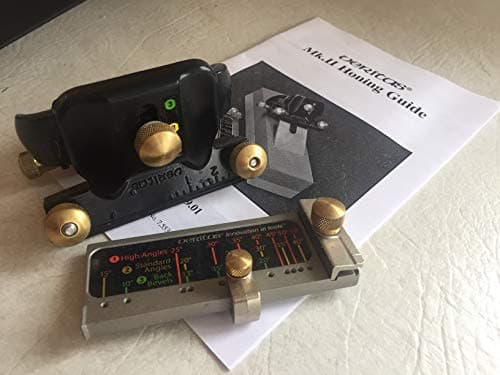
A registration jig that sets projection and angle repeatably, plus a micro-bevel mechanism that adds a couple of degrees without resetting anything. It is the guide that makes sharpening boring, which is the goal.
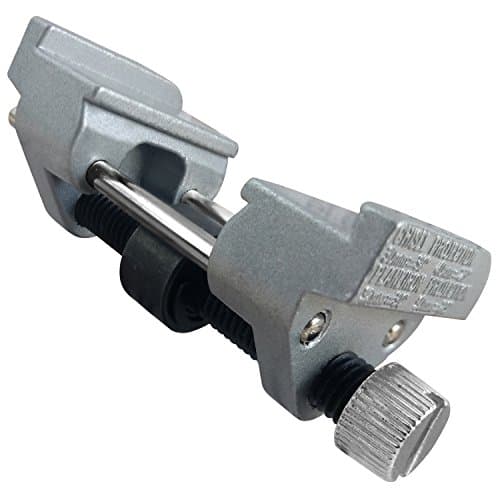
An Eclipse-pattern side clamp for under twenty dollars. It sets the same geometry the expensive guides do, less conveniently, and that is the whole difference.
The guide that makes the case against expensive guides
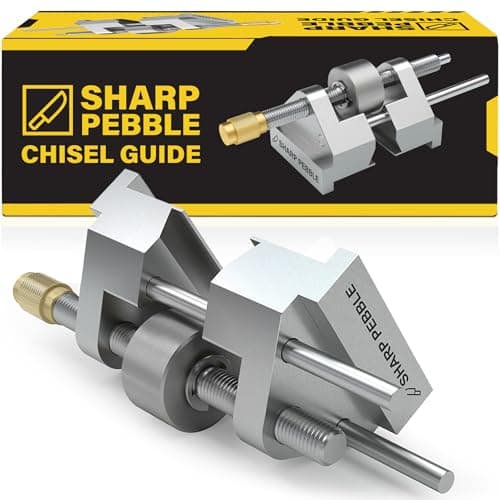
Better machined than the budget Eclipse clones with a broader capacity range, sitting between the cheap guides and the Veritas in both price and convenience.
#ad· Live prices from the Amazon Product API, as of October 21, 2026. Where we have no verified live price we show none, and the cost-per-decade figure is suppressed with it — we would rather leave a gap than print a number that has rotted.
There is a strand of opinion that honing guides are a crutch and that a proper woodworker sharpens freehand. It is not a view we find persuasive.
The point of the exercise is a sharp tool. A jig that delivers a geometrically correct, repeatable bevel on the first attempt is a good jig, and the hours you would spend acquiring the freehand skill are hours not spent making things. Freehand sharpening is genuinely worth learning eventually — it is faster once mastered and needs no equipment — and it is a poor thing to be learning on the same afternoon you are learning to use a new chisel.
What a guide actually does
It holds the blade at a fixed angle to the stone and rolls on a wheel, so the bevel you grind is a single flat plane at a known angle rather than a curve produced by your wrist moving. Two things follow.
The angle is repeatable between sessions. Next month you can put the same blade back in the guide at the same projection and continue exactly the bevel you had, rather than grinding a new one at a slightly different angle and having to remove all the steel in between.
The bevel is flat. A freehand bevel is usually slightly convex, which is not fatal and does make the edge blunter than the nominal angle suggests.
Where a guide stops being optional
On a bevel-up plane.This is the case worth being emphatic about. On a conventional bevel-down bench plane, an inconsistent bevel angle changes how durable the edge is — annoying, not disastrous. On a bevel-up plane, the bevel angle adds directly to the bed angle to produce the cutting angle, so an inconsistent bevel changes how the plane cuts.
If you own a low-angle jack or a block plane and you want the three-irons-three-angles system to work, a guide is part of the system rather than an accessory to it. See bevel up versus bevel down.
What the expensive one buys
The Veritas Mk.II costs more than most of the chisels it will sharpen, and it is worth knowing exactly what the money is for, because it is not accuracy.
A $17 Eclipse-pattern guide sets the same geometry. What the Veritas adds is a registration jig that sets blade projection repeatably without measuring, and a cam mechanism that adds a micro-bevel by rotating an eccentric roller rather than by re-clamping the blade. Both are time savings, and they are real ones if you sharpen daily.
If you sharpen at weekends, they are not worth the difference. Buy the cheap guide, spend the difference on stones, and revisit it if sharpening ever becomes frequent enough that the setup time annoys you.
One thing worth flagging about the Veritas: Lee Valley publish a three-month satisfaction guarantee rather than a defect warranty. For a mechanical jig with no consumable parts that is largely academic, and it is not the lifetime cover the price implies.
The projection problem
The one genuine weakness of cheap guides. The bevel angle is determined by how far the blade projects from the guide, and the cheap guides give you no repeatable way to set that. Solve it with a shop-made setting block: a scrap of wood with a stop, marked with lines for your standard projections. Five minutes to make, and it turns a $17 guide into a repeatable system.
Every pick, in full
The write-ups
01Best honing guide
Type
Side-clamping honing guide with angle jig
Micro-bevel
Built-in eccentric roller
Capacity
Chisels and plane irons
Warranty
Lee Valley: 3-month satisfaction guarantee
Veritas Mk.II Honing System
Veritas
8.4/10
A registration jig that sets projection and angle repeatably, plus a micro-bevel mechanism that adds a couple of degrees without resetting anything. It is the guide that makes sharpening boring, which is the goal.
Cost per decade
$57.50
Horizon · tier C
20 years — No lifetime warranty; parts purchasable and resharpenable
No lifetime warranty published at the date checked. A purely mechanical jig with no cutting edge and no consumable part; the failure mode is a lost thumbscrew rather than wear.
Rebuy risk
High
parts listed
Cut rate
9.0
Maintenance
9.0
Finish
9.5
Longevity
8.5
Value
6.0
What it gets right
+Angle registration is genuinely repeatable between sessions
+Micro-bevel by cam rather than by re-clamping saves real time
+Handles both chisels and plane irons without an adapter
What it costs you
−Costs more than most of the chisels it will sharpen
−Lee Valley publishes a 3-month satisfaction guarantee, not a defect warranty
−More setup steps than a simple Eclipse-style guide
Skip this if…
…you own four chisels and a plane. The cheap guide does the same geometry; this one saves time you may not be spending.
02The guide that makes the case against expensive guides
Type
Eclipse-pattern side clamp
Chisel capacity
1/8 to 1-7/8 in
Plane blade capacity
1-3/8 to 3-1/8 in
Warranty
Not published
Atlin Honing Guide, Eclipse Pattern
Atlin
7.8/10
An Eclipse-pattern side clamp for under twenty dollars. It sets the same geometry the expensive guides do, less conveniently, and that is the whole difference.
Cost per decade
$16.99
Horizon · tier D
10 years — No warranty and no parts availability found
No warranty terms and no replacement-parts listing found at the date checked. A budget jig with cast or stamped components; there is nothing published to support a longer horizon.
Rebuy risk
High
none of the three met
Cut rate
8.0
Maintenance
7.0
Finish
8.5
Longevity
6.0
Value
9.5
What it gets right
+Produces a correct, repeatable bevel from the first attempt
+Cheap enough that there is no reason to sharpen freehand while learning
+Wide enough jaws for plane irons as well as chisels
What it costs you
−Setting projection needs a separate jig or a marked block
−Narrow chisels can rock in the jaws if you are careless
−No micro-bevel mechanism
Skip this if…
…you sharpen daily. The time the Veritas saves adds up at that frequency; at weekend frequency it does not.
Better machined than the budget Eclipse clones with a broader capacity range, sitting between the cheap guides and the Veritas in both price and convenience.
Cost per decade
$42.99
Horizon · tier D
10 years — No warranty and no parts availability found
No warranty terms and no replacement-parts listing found at the date checked. A budget jig with cast or stamped components; there is nothing published to support a longer horizon.
Rebuy risk
High
none of the three met
Cut rate
8.0
Maintenance
7.5
Finish
8.5
Longevity
6.5
Value
8.0
What it gets right
+Wider capacity than most Eclipse clones
+Holds narrow chisels more securely than the cheapest guides
+Rolls straight without wandering
What it costs you
−Twice the price of a basic guide for an incremental gain
−Still needs a projection jig for repeatability
−No published warranty
Skip this if…
…budget is tight. The cheap guide gets the same bevel; spend the difference on stones.
04Holding an angle on things a bench guide will not grip
Type
Clamp with angle settings
Use
Knives and awkward blades
Origin
DMT, USA
Warranty
Warranty page published; term not retrieved
DMT Aligner Blade Guide
DMT
8.2/10
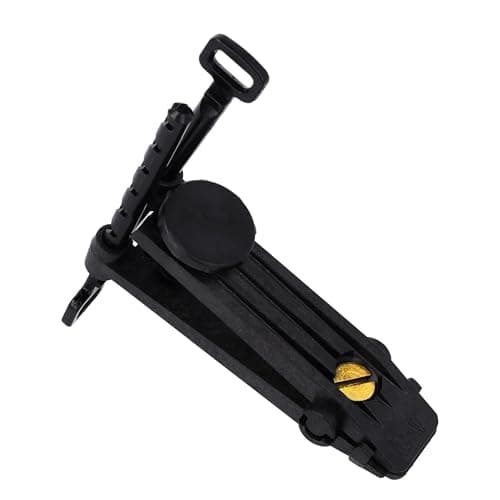
A clamp-and-angle guide for blades a rolling honing guide cannot hold. Narrow, specific, and the right answer when nothing else fits.
Cost per decade
$7.47
Horizon · tier C
20 years — No lifetime warranty; parts purchasable and resharpenable
No lifetime warranty published at the date checked. A purely mechanical jig with no cutting edge and no consumable part; the failure mode is a lost thumbscrew rather than wear.
Rebuy risk
High
parts listed
Cut rate
7.5
Maintenance
9.0
Finish
7.0
Longevity
9.0
Value
8.5
What it gets right
+Grips blade shapes a rolling guide cannot
+Fixed angle settings are repeatable
+Cheap and effectively indestructible
What it costs you
−Not a substitute for a rolling guide on chisels and plane irons
−Angle settings are coarse steps rather than continuous
−Adds a step for something a bench guide does faster
Skip this if…
…you only sharpen chisels and plane irons. A rolling guide is the correct tool for those and this is not.
The jaws must open wide enough for your widest plane iron — usually about 2 inches — and grip your narrowest chisel securely. Narrow chisels rocking in the jaws is the most common complaint about budget guides, and it is worth checking the stated minimum.
Side-clamping versus top-clamping
Side-clamping guides (the Eclipse pattern and most of this list) grip the blade edges, which works with almost anything but can struggle with tapered or very narrow blades. Top-clamping guides press down on the blade face and hold awkward shapes better while being fussier to set. For chisels and plane irons, side-clamping is the right default.
Make the setting block
The single highest-value five minutes in sharpening. A block of scrap with a stop and two pencil lines — one for 25 degrees, one for 30 — lets you set projection identically every time on any guide. It makes a cheap guide behave like an expensive one for the part that actually matters.
What a guide will not do
Camber. A jack plane iron wants a curved edge, and a guide holds the blade straight — you produce camber by varying finger pressure across the width during the stroke, which is a freehand technique performed in a jig. Some guides have a cambered roller to help. It is the one job where the jig fights you slightly. See how to sharpen a plane iron.
The blade that catches people out
The capacity figures above matter most for one tool: a block plane iron is short and often narrow, and it is the blade most likely not to sit properly in a guide that handles everything else. How to sharpen a block plane blade covers which published capacities fit, the projection-block trick that makes an Eclipse-pattern guide repeatable, and what to do when nothing grips.
Questions
Frequently asked
Do I need a honing guide?+
While learning, yes — it produces a correct, repeatable bevel on the first attempt. It becomes close to mandatory on bevel-up planes, where an inconsistent bevel changes how the plane cuts rather than just how sharp it is.
Is the Veritas Mk.II worth the money?+
It buys repeatable projection setting and a cam-driven micro-bevel — time savings rather than accuracy. Worth it if you sharpen daily; not worth it at weekend frequency, where a $17 guide sets the same geometry.
Are honing guides a crutch?+
No. The goal is a sharp tool, and a jig that delivers one immediately is a good jig. Freehand sharpening is worth learning eventually and is a poor thing to be learning on the day you are also learning to use a new chisel.
How do I set a honing guide to the right angle?+
The angle is set by how far the blade projects from the guide. Make a setting block: a scrap of wood with a stop and marked lines for your standard projections. It gives a cheap guide the repeatability of an expensive one.
Can a honing guide put camber on a plane iron?+
Not on its own. Camber comes from varying finger pressure across the blade width during the stroke; some guides have a cambered roller to help. It is the one job where the jig is slightly in the way.
We have not handled these tools. Nobody here has tested one, owned one, or taken one apart. Specifications come from the manufacturer or the retailer listing; warranty terms come from the maker's own warranty page; the cost-per-decade arithmetic is ours and reproducible. Where we could not verify a figure we say so on the page rather than quietly leaving it out. Read the full method.