Sharpening
Ceramic vs Waterstones
Two ways to cut steel with fine abrasive — one soaks and dishes, one wipes clean and barely wears.
We earn a commission when you buy through our Amazon links, at no extra cost to you. It never decides a ranking, and where the best tool in a class is one we earn nothing on, we say so and link it anyway. How this works.
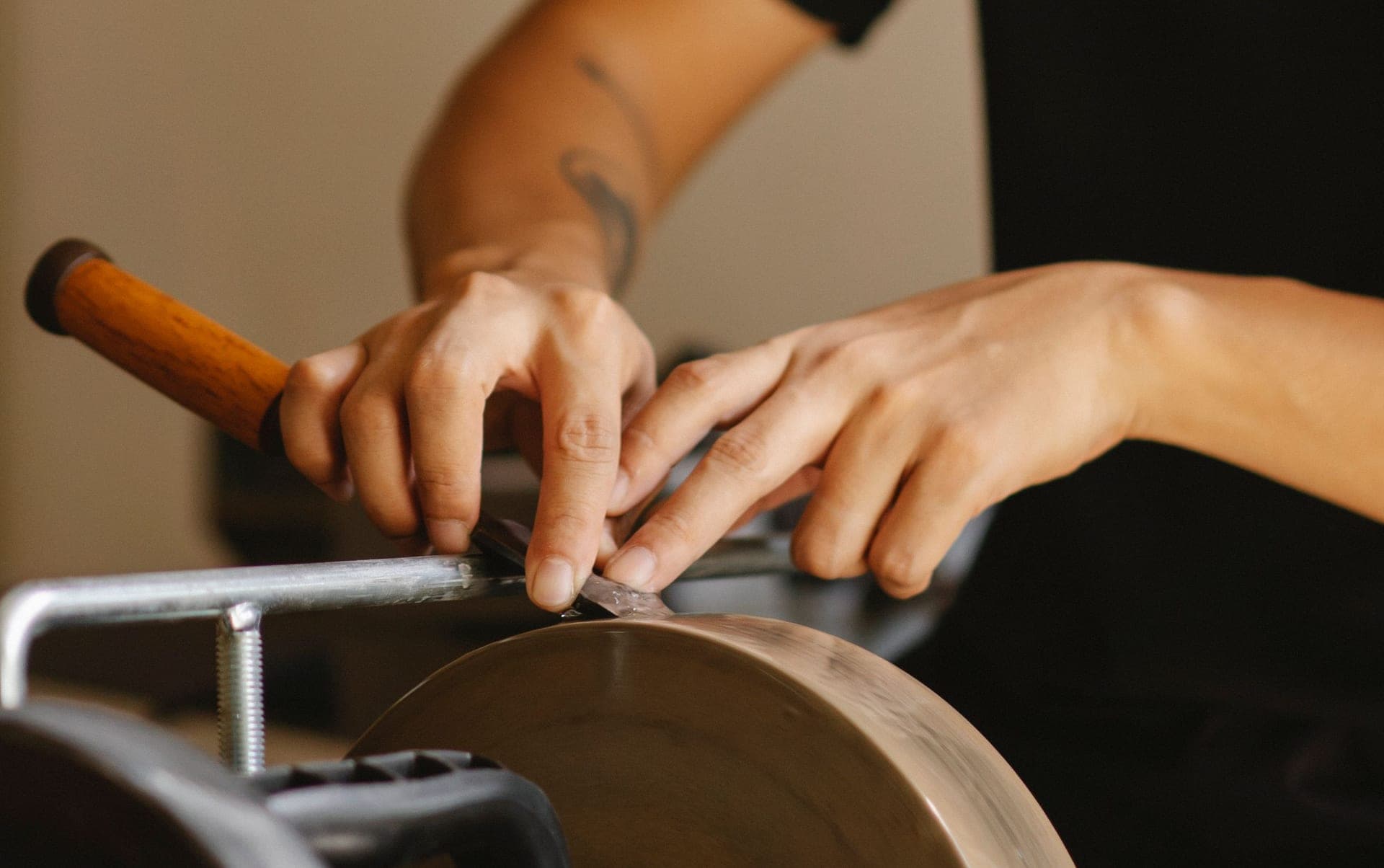
Waterstones and ceramic stones both sharpen with fine abrasive locked in a bond, and both can take a plane iron to a keen edge. What separates them is how that bond behaves. A waterstone is deliberately soft: its binder releases worn grit as a slurry so fresh, sharp abrasive keeps surfacing. A ceramic or sintered stone is the opposite — the abrasive is fired into a dense, extremely hard block that barely wears at all. That single difference — a bond that gives up grit versus a bond that holds on — drives everything else, from how fast they cut to how often you flatten them.
How each one cuts
Waterstones are fast. Because the surface constantly renews itself, you always have sharp grit doing the work, which is why a good waterstone can hog metal off a coarse bevel quickly and still polish nicely up top. Ceramics cut differently. The grit does not shed, so the same particles do the cutting for a long time; they can feel slower and glassier, especially as swarf builds on the surface, and many people give a ceramic a rub with a coarse stone or a nagura to wake it up. On the finest grits the gap narrows, and a hard ceramic can leave a superb polish. If the numbers on the boxes confuse you, start with sharpening grits explained.
Mess, water, and soaking
This is where daily life at the bench diverges. Many waterstones need a soak — minutes in a tub before you can use them — and they throw a gray slurry that gets on everything. That slurry is not a defect; it is part of how they cut. But it means a water tray, splash, and cleanup. Ceramics are usually splash-and-go: a spritz of water and you are honing. They stay far cleaner, produce little slurry, and do not need to live in a soaking tub, which some woodworkers care about a great deal and others do not notice.
Flattening and wear
The soft bond that makes a waterstone cut fast also makes it dish. Rub a blade back and forth and the middle wears low, and a hollow stone rounds your bevels, so waterstones must be flattened often — sometimes every few sharpenings. That is routine maintenance, covered in how to flatten a waterstone, and it slowly eats the stone away. Ceramics barely wear, so they need flattening rarely and lose very little thickness over years of use. The flip side is that when a ceramic does go out of flat or glazes over, it is hard and stubborn to true, and you need a coarse diamond plate to do it.
The feel and feedback
Sharpening by hand is partly about feedback, and the two stones talk to you differently. A waterstone gives a soft, grippy feel through the slurry; many people find it easier to sense when the bevel is riding flat. A ceramic feels hard and slick, more like honing on glass, which some find precise and others find vague. Neither is right, but if you sharpen freehand, the feel matters, and it is worth trying both before you commit a bench to one system.
Maintenance over the years
Think past the first month to the tenth year. A waterstone asks for a small, steady tax: soak it, catch the slurry, and flatten it often, and in return it always cuts fast. A ceramic asks for almost nothing day to day, but the rare time it needs truing is real work with a coarse diamond plate. Neither is high-maintenance in an absolute sense, but the effort lands differently — frequent and light for the waterstone, rare and stubborn for the ceramic — and the one you will keep sharpening on is the one whose upkeep you do not resent.
Side by side
| Factor | Waterstones | Ceramic stones |
|---|---|---|
| Cutting speed | Fast, self-renewing | Slower, can glaze |
| Prep | Often soak first | Splash-and-go |
| Mess | Slurry, needs a water tray | Clean, little slurry |
| Flattening | Frequent; dishes readily | Rare; hard to true |
| Wear over years | Wears down, may be replaced | Barely wears |
| Feel | Soft and grippy | Hard and slick |
Cost over a decade
Sticker price is the wrong way to compare these. A waterstone can be inexpensive up front, but a soft one you flatten constantly is a consumable — you are grinding it away, and a well-used stone gets replaced. A quality ceramic costs more at the register and often little after that, because it hardly wears and rarely needs truing. Over ten years the low-wear stone can be the cheaper one even though it cost more on day one. It is the same buy-it-for-life math that applies to the tools themselves: a stone you flatten and replace has an ongoing cost, and a stone that barely changes does not. That said, cheap ceramics can glaze and disappoint, so quality still decides the outcome.
Where each fits a buy-it-for-life bench
Neither wins outright, and plenty of benches carry both. Waterstones make sense if you value cutting speed and a forgiving feel, and you do not mind the water tray and regular flattening. Ceramics suit a woodworker who wants a clean, low-maintenance stone that is ready in seconds and will look much the same in twenty years. A common compromise is a fast waterstone for coarse and medium work and a hard fine stone for the final polish. Whichever you lean toward, it helps to see how they sit against the other families — there is a fuller shootout in the best sharpening stones, plus focused matchups in waterstones vs diamond stones and oilstones vs waterstones if you are still building your first setup.
The honest summary: waterstones cut fast, feel good, and ask for water and regular flattening; ceramics stay clean, hardly wear, and reward you with low maintenance at a higher entry price. Pick for the way you like to work, buy quality either way, and keep whatever you choose flat — a stone kept true is a stone that lasts a lifetime.
Questions
Frequently asked
Do ceramic stones need soaking?
Usually not. Most ceramics are splash-and-go: a spritz of water and you are honing. That is one of their main appeals over soaking waterstones, along with far less mess at the bench.
Do waterstones really wear out?
Yes, over time. Their soft bond is what makes them cut fast, but it also dishes with use, so you flatten them regularly and slowly grind them away. A well-used waterstone eventually gets replaced.
Which cuts faster?
Waterstones, generally. The surface constantly sheds worn grit and exposes fresh, sharp abrasive, so they remove metal quickly. Ceramics hold their grit longer and can feel slower, especially once they glaze.
Are ceramic stones harder to flatten?
Yes. They rarely need it because they barely wear, but when a ceramic does go out of flat or glazes over, its hardness makes truing slow, and you need a coarse diamond plate to do it.
Which is cheaper in the long run?
Often the ceramic, despite the higher sticker price. A soft waterstone you flatten and replace has an ongoing cost, while a low-wear ceramic can outlast it by years, making it the cheaper choice over a decade.
Keep reading
Related
Back to Sharpening · how we pick · editorial policy