Sharpening
How To Flatten A Waterstone
A dished stone quietly curves every bevel you grind. Keeping the surface true is the least glamorous habit in sharpening and one of the most important.
We earn a commission when you buy through our Amazon links, at no extra cost to you. It never decides a ranking, and where the best tool in a class is one we earn nothing on, we say so and link it anyway. How this works.
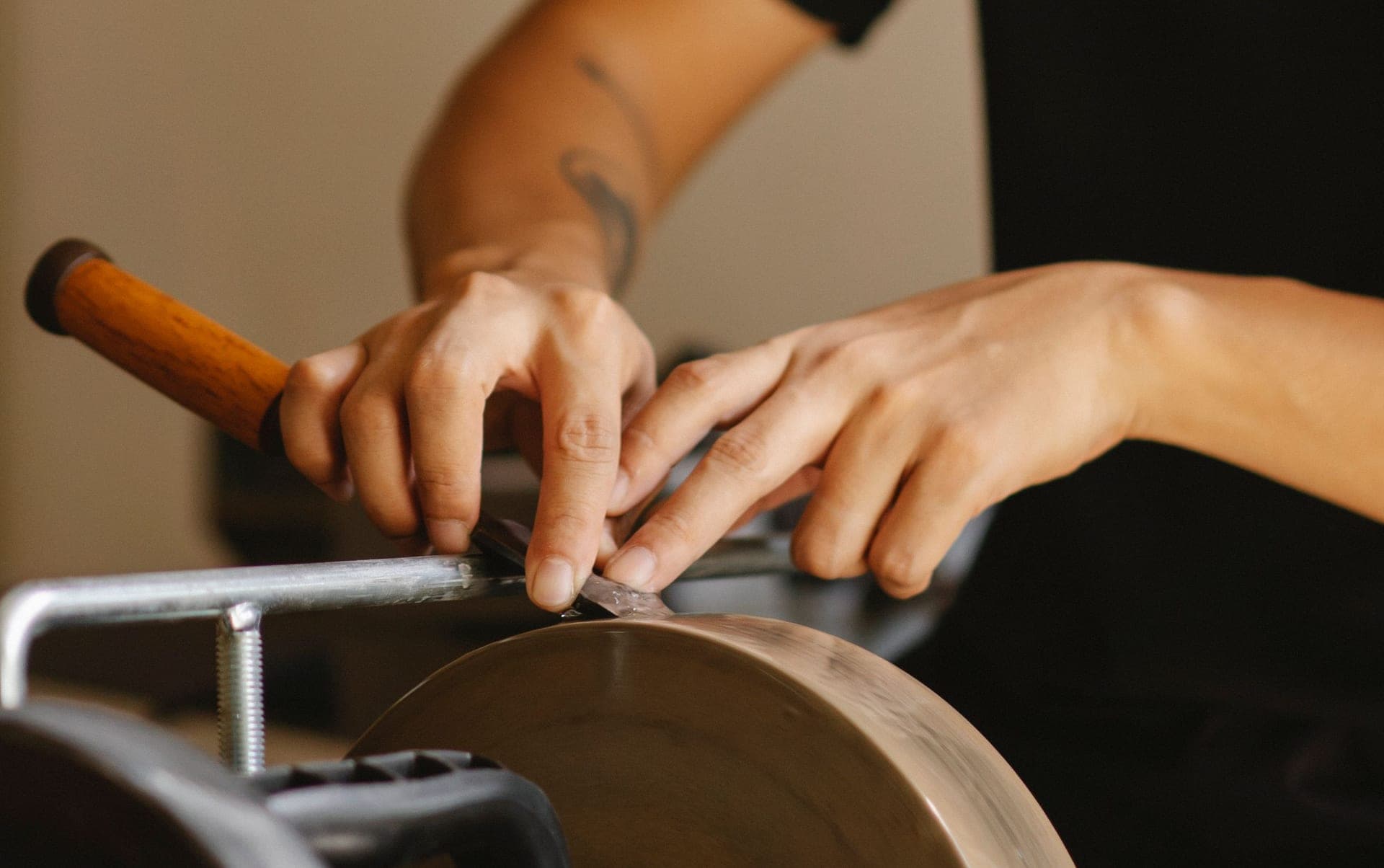
A flat stone is not a detail. It is the difference between a stone that sharpens and a stone that slowly sabotages you, and it is the single most neglected habit in sharpening because the damage is invisible until you go looking for it.
The mechanism that makes a waterstone cut so well is the same one that ruins it. The binder is deliberately soft so it releases spent grit and exposes fresh, sharp particles as you work. That is why waterstones cut fast. It is also why they wear, and they do not wear evenly.
Why stones dish, and why it ruins edges
You do not use the whole surface of a stone equally. You work in the middle, and you tend to work in the same spot. Metal gets removed from the stone fastest where you press hardest and most often, so the center wears down faster than the edges. Within a few sharpening sessions the surface is no longer flat — it has a shallow hollow, a dish, running through the middle.
Here is why that matters. When you hone a bevel, you are lapping a flat steel face against the stone. If the stone is dished, the bevel takes on the negative of that dish: it becomes convex, rounded over. A rounded bevel meets the wood at a blunter effective angle than you intended and the very edge is no longer a crisp line. The tool feels dull even though you just sharpened it, and — this is the cruel part — you will blame your technique, your steel, your angle, everything except the stone, because a dish deep enough to matter is far too shallow to see.
Flat-back work is even less forgiving. When you flatten the back of a chisel or plane iron on a dished stone, you grind a hollow into the back near the edge, and a hollow back can never form a proper cutting edge. This is covered from the tool's side in how to sharpen a plane iron, and it is the reason a true stone comes before any technique.
The three flattening methods
A dedicated flattening stone or lapping plate. A coarse, hard block designed to abrade the waterstone flat. You rub the two together with plenty of water and the high spots on the waterstone come off. Purpose-made flattening stones are cheap and effective; they are themselves consumable but slowly. This is the standard answer and the one to default to.
A coarse diamond lapping plate.The premium version. A coarse diamond plate is dead flat, does not wear, and flattens a waterstone in a few strokes. The reason it is worth the money is that it does two jobs: it flattens your stones and it doubles as a coarse repair surface for reprofiling chipped edges. If you are going to own a coarse diamond plate anyway — and most serious sharpeners end up doing so — you do not need a separate flattening stone. See the best sharpening stones for the plates worth owning.
Wet-dry sandpaper on plate glass.The cheapest route. Stick a sheet of coarse wet-dry paper (around 120–220) to a piece of float glass or a granite surface plate, add water, and rub the stone on it. The glass supplies the flat reference and the paper does the cutting. It works, the consumable cost is trivial, and it is the same trick behind the scary sharp method for sharpening itself. The paper wears quickly when flattening, so keep spare sheets.
| Method | Up-front cost | Speed | Also good for |
|---|---|---|---|
| Flattening stone | Low | Moderate | Nothing else — single purpose |
| Diamond lapping plate | Higher | Fast | Coarse repair and reprofiling |
| Wet-dry on glass | Lowest | Slow, consumable | Scary-sharp sharpening on the same glass |
The pencil-grid check
You cannot flatten what you cannot see, so mark the surface before you start. This is the technique that turns flattening from guesswork into a two-minute certainty.
- With an ordinary pencil, draw a grid or a set of criss-cross lines across the whole face of the stone. Cover it corner to corner.
- Rub the stone on your flattening surface with water, using light, even pressure and moving the whole stone across the plate rather than working one spot.
- Stop and look. The pencil marks disappear first from the high areas — usually the edges and corners — and survive longest in the low center.
- Keep going until every pencil mark is gone. When the last line in the middle vanishes, the entire surface has been abraded to the same plane and the stone is flat.
Redraw and repeat once if you want to confirm the wear pattern is even. It is the most reliable check there is and it costs nothing.
How often to flatten
More often than feels necessary, and the correct habit is to flatten little and often rather than rarely and hard. A stone that is touched up before every sharpening session never develops a dish worth worrying about, and the flattening takes ten seconds. A stone that is flattened once a month has spent most of that month cutting curved bevels.
A reasonable rule: a quick pass before each session for stones you use constantly, and a proper pencil-grid flattening whenever a stone has done heavy work or been used to establish a new bevel. It is far easier to keep a stone flat than to recover a badly dished one.
Coarse versus fine stones
Coarse stones dish fastest because they are softest and remove the most metal, so they need flattening most often — sometimes within a single reprofiling job. Fine polishing stones wear slowly and dish slowly, but they matter just as much, because a rounded bevel on a polishing stone undoes the keenness you were chasing at that grit in the first place.
One practical warning: do not flatten a fine stone on a very coarse plate and then use it expecting a polish. The coarse flattening leaves a coarse surface, and the stone needs a few strokes to re-establish its own fine cutting texture before it will polish again. Match the flattening grit sensibly to the stone, or accept a short break-in.
Diamond plates and oilstones sidestep most of this — diamond plates never dish at all, and hard oilstones dish so slowly that decades pass between flattenings. If the maintenance obligation of waterstones is what puts you off them, that trade is exactly what oilstones versus waterstones is about.
Questions
Frequently asked
How do I know if my waterstone needs flattening?
Draw a pencil grid across the face and rub the stone on a flat surface with water. If the marks vanish from the edges but survive in the center, the stone is dished and needs flattening. In use, a stone that sharpens to a dull-feeling edge is often dished.
What can I use to flatten a waterstone?
A purpose-made flattening stone, a coarse diamond lapping plate, or coarse wet-dry sandpaper stuck to plate glass. The diamond plate is fastest and doubles as a repair surface; the sandpaper route is cheapest.
How often should I flatten my sharpening stone?
Little and often. A quick pass before each session on stones you use constantly, and a full pencil-grid flattening after heavy work or setting a new bevel. Keeping a stone flat is far easier than recovering a badly dished one.
Why does a dished stone ruin my edges?
A hollow in the stone puts a matching convex, rounded bevel on your tool. The edge meets the wood at a blunter effective angle and is no longer crisp, so the tool feels dull right after sharpening — and the dish is too shallow to see, so people blame their technique.
Do diamond stones need flattening?
No. Diamond is bonded to a steel plate that does not wear, so the surface stays flat for life. That is a large part of their appeal. Hard oilstones also dish extremely slowly. Waterstones are the ones that demand regular attention.
Keep reading
Related
- The best sharpening stonesIncluding the plates that flatten and repair in one.
- Oilstones vs waterstonesThe option that barely dishes at all.
- How to sharpen a plane ironWhy a true stone comes before any technique.
- Waterstones vs diamond stonesSpeed against zero maintenance, decided honestly.
- Diamond stones vs oilstonesBoth cut with a permanent abrasive body and both outlast waterstones.
Back to Sharpening · how we pick · editorial policy