We earn a commission when you buy through our Amazon links, at no extra cost to you. It never decides a ranking, and where the best tool in a class is one we earn nothing on, we say so and link it anyway. How this works.
The default first waterstone worldwide. A working edge on one side, a polishing edge on the other, a base to stop it sliding, and a price that removes every excuse not to own one.
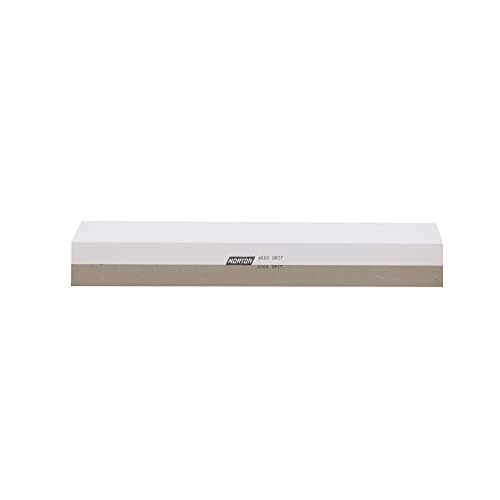
Norton's waterstones are harder than the King equivalents: slower to cut, slower to dish. If flattening is the part you hate, this is the trade to make.
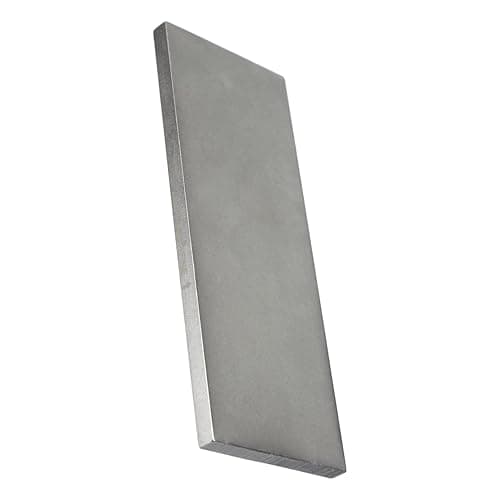
Diamond bonded to a steel plate: it cannot dish, it never needs flattening, and it works dry. For someone who wants sharpening to be a task rather than a hobby, this is the answer.
#ad· Live prices from the Amazon Product API, as of October 21, 2026. Where we have no verified live price we show none, and the cost-per-decade figure is suppressed with it — we would rather leave a gap than print a number that has rotted.
Oilstones have been quietly displaced by waterstones and diamond plates over the last thirty years, and mostly for good reasons. They are also the option best suited to a specific and not-uncommon situation, and they are the only one of the three where “my grandfather bought this” is a routine sentence.
What an oilstone is
A hard, dense stone — natural (Arkansas novaculite) or manufactured (India, Crystolon) — used with a light oil rather than water. The oil floats swarf away so the surface does not clog.
The critical difference from a waterstone is the binder. A waterstone is deliberately soft so it releases spent grit and exposes fresh; an oilstone is hard and does not. So an oilstone cuts with the same particles for its entire life, which is why it cuts more slowly and why it barely wears.
Where oilstones win
Longevity, by a wide margin. A hard Arkansas stone used for decades shows barely any dishing. Waterstones are consumed as they work. If you want the sharpening equipment itself to be a genuine buy-it-for-life object, this is the one.
No water. No soaking, no tray, no damp stone to dry, nothing to freeze in an unheated workshop. Oilstones live in a wooden box on a shelf and are ready when you open it.
Forgiveness. The hard surface tolerates a wobbly stroke far better than a soft waterstone, which will let you gouge a groove into it in one careless session. For freehand sharpening, that hardness is genuinely helpful.
Cost. An India combination stone is cheap and lasts essentially forever. The cost-per-decade arithmetic on oilstones is the best in this entire hub.
Where oilstones lose
Speed, badly. They are the slowest of the three by a clear margin, and it gets worse as steels get harder. Reprofiling a bevel on an oilstone is an exercise in patience.
Modern steels. A2, PM-V11 and the harder Japanese laminated steels are slow going on a natural oilstone. The stone was developed for simple carbon steels and it shows.
Final polish. A hard black Arkansas gives an excellent edge; a fine waterstone gives a better one.
Oil in a workshop. It gets on things. Petroleum oil on a surface you are about to glue or finish is a genuine nuisance, and it is the practical reason most people moved away.
Who should actually buy one
If your workshop is unheated and water freezes there in winter, oilstones solve a real problem. A soaked waterstone that freezes cracks.
If your tools are traditional carbon steel— vintage plane irons, O1 chisels, filed saws — oilstones are what those tools were designed around, and the speed penalty largely disappears.
If you value permanence above all and are genuinely relaxed about sharpening taking longer, this is the most permanent option available.
If you sharpen freehand, the hard surface is more forgiving of an imperfect stroke than a soft waterstone.
The honest recommendation
For most people, a waterstone or a diamond plate is the better first purchase — faster, better suited to modern steels, no oil to manage. See the best sharpening stones.
But if you are restoring vintage tools, working in an unheated space, or specifically want the sharpening equipment to be the most permanent thing in the workshop, the traditional answer is a good answer and it has been quietly written off rather than argued down. It also pairs naturally with vintage tool restoration, where the tools and the stones come from the same era.
Every pick, in full
The write-ups
01Best first stone, and possibly your only one
No product image available
Grit
1000 / 6000 combination
Type
Soaking waterstone
Base
Plastic holder included
Warranty
Not published
King KW65 1000/6000 Combination Whetstone
King
7.8/10
The default first waterstone worldwide. A working edge on one side, a polishing edge on the other, a base to stop it sliding, and a price that removes every excuse not to own one.
Cost per decade
Suppressed — no live price
Horizon · tier C
20 years — No lifetime warranty; parts purchasable and resharpenable
A waterstone is its own consumable: the binder releases spent abrasive, which is why it cuts fast and why it dishes. Rated on realistic service life for occasional workshop use with periodic flattening, not on a warranty — none is published.
Rebuy risk
Medium
parts listed, resharpenable
Cut rate
8.0
Maintenance
6.0
Finish
8.5
Longevity
7.0
Value
9.5
What it gets right
+Two grits in one block covers the whole normal sharpening cycle
+Cheapest credible entry into real sharpening
+Forgiving of imperfect technique in a way harder stones are not
What it costs you
−Dishes quickly and genuinely needs regular flattening
−Needs soaking before use, which is a real friction point
−The 6000 side wears fastest, which is the side you want to keep
Skip this if…
…you will not buy a flattening stone with it. A dished waterstone puts a curved bevel on everything you own.
Norton's waterstones are harder than the King equivalents: slower to cut, slower to dish. If flattening is the part you hate, this is the trade to make.
Cost per decade
$59.75
Horizon · tier C
20 years — No lifetime warranty; parts purchasable and resharpenable
A waterstone is its own consumable: the binder releases spent abrasive, which is why it cuts fast and why it dishes. Rated on realistic service life for occasional workshop use with periodic flattening, not on a warranty — none is published.
Rebuy risk
Medium
parts listed, resharpenable
Cut rate
7.0
Maintenance
8.0
Finish
8.0
Longevity
8.5
Value
7.0
What it gets right
+Dishes noticeably slower than the softer Japanese stones
+4000 is a genuinely usable working polish
+Long service life for a waterstone
What it costs you
−Cuts slower than a King or a Shapton
−Still needs soaking and flattening
−Costs more than twice the King combination
Skip this if…
…you want the fastest possible cut. Harder binder means slower, and that is the deal you are making.
Diamond bonded to a steel plate: it cannot dish, it never needs flattening, and it works dry. For someone who wants sharpening to be a task rather than a hobby, this is the answer.
Cost per decade
$32.65
Horizon · tier C
20 years — No lifetime warranty; parts purchasable and resharpenable
DMT publishes a warranty page and manufactures its bench stones in Marlborough, Massachusetts. We did not retrieve the specific term, so we do not rate it tier A. Diamond is bonded to a steel substrate: the plate never needs flattening and has no consumable element.
Rebuy risk
Medium
parts listed, resharpenable
Cut rate
8.5
Maintenance
10.0
Finish
7.0
Longevity
9.5
Value
7.5
What it gets right
+Zero maintenance: no soaking, no flattening, no storage precautions
+Continuous surface handles narrow chisels without dropping in
+US manufacture, with a published warranty page
What it costs you
−Cannot reach the polish a fine waterstone gives
−Diamond plates lose their initial aggression in the first weeks of use
−Expensive for one grit
Skip this if…
…you want a mirror polish. A diamond plate gets you sharp, not shiny, and the two are not the same goal.
They last far longer, need no water and are more forgiving of a wobbly stroke. They cut more slowly, struggle with modern hard steels, and do not reach as fine a polish. Better for permanence, worse for speed.
Can I use water on an oilstone?+
You can on some manufactured stones, but once a stone has been used with oil it is effectively committed — the oil is in the pores. Pick one and stay with it.
Do oilstones need flattening?+
Far less often than waterstones, because the hard binder does not release grit. A hard Arkansas stone used for decades shows very little dishing.
Are oilstones good for modern tool steels?+
Less so. A2, PM-V11 and hard laminated Japanese steels are slow going on natural oilstones, which were developed around simpler carbon steels. For vintage carbon-steel tools they are excellent.
We have not handled these tools. Nobody here has tested one, owned one, or taken one apart. Specifications come from the manufacturer or the retailer listing; warranty terms come from the maker's own warranty page; the cost-per-decade arithmetic is ours and reproducible. Where we could not verify a figure we say so on the page rather than quietly leaving it out. Read the full method.