Chisels
What Is a Bench Chisel?
It is the chisel that has no specialty, which is exactly why it is the one you buy first and the one every other pattern gets described against.
We earn a commission when you buy through our Amazon links, at no extra cost to you. It never decides a ranking, and where the best tool in a class is one we earn nothing on, we say so and link it anyway. How this works.
The short answer
Quick picks
| # | Tool | Best for | Per decade | Score | Price |
|---|---|---|---|---|---|
| 01 | 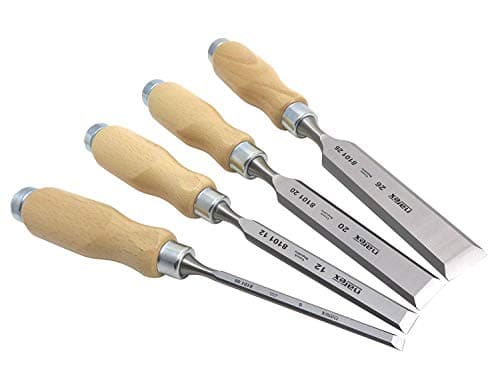 Narex Bevel Edge Chisel Set, 4 Piece The set that makes the case for this whole site. Four sizes, Czech chrome-vanadium hardened properly, beech handles, and a price that leaves budget for the stone you will need anyway. | Best chisels overall, and the end of the argument | $24.00tier C | 8.4/10 | $48.00Amazon |
| 02 | 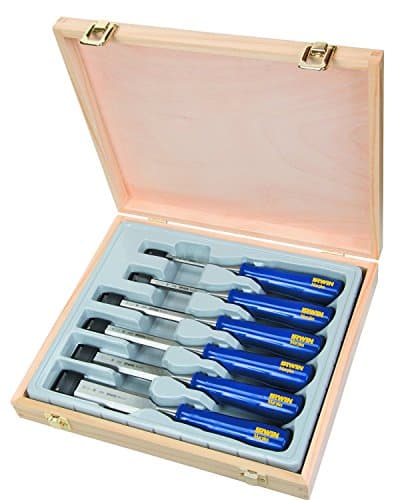 Marples Blue Chip Bevel Edge Chisels, Set of 6 The default UK and US workshop chisel for thirty years. Not the finest steel in this list, but the plastic handles take mallet abuse that would split a wooden one, and six sizes covers everything. | The set that is in every workshop for a reason | $45.08tier C | 7.5/10 | $90.16Amazon |
| 03 | 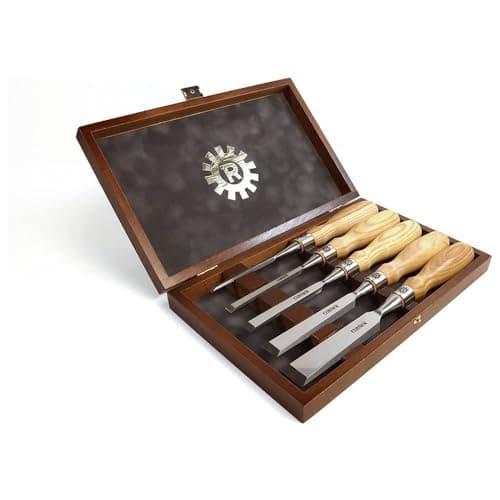 Narex Richter Bevel Edge Chisel Set of 5 Cryogenically treated Cr-V hardened to around HRc 62, ground far finer than the standard line, with ash handles and stainless ferrules. This is where more money buys measurably more edge retention. | The upgrade that is actually an upgrade | $113.50tier C | 8.7/10 | $226.99Amazon |
#ad· Live prices from the Amazon Product API, as of November 22, 2026. Where we have no verified live price we show none, and the cost-per-decade figure is suppressed with it — we would rather leave a gap than print a number that has rotted.
A bench chisel is a general-purpose woodworking chisel with a bevel-edge blade of medium length — roughly 4 to 6 in of steel — a handle you can strike with a wooden or soft-faced mallet, and an edge ground somewhere between 25 and 30 degrees. It is the chisel with no specialty. That is the definition, and it is also the reason it is the first chisel anyone should own: a bench chisel does ninety percent of the chisel work in furniture making acceptably, where every specialized pattern does one slice of that work superbly and the rest of it badly.
The term causes confusion for a boring reason: it is the default. If a chisel is sold as a “wood chisel”, a “bevel-edge chisel”, a “cabinetmaker's chisel” or just “a set of chisels”, it is almost certainly a bench chisel. The name only appears when somebody needs to distinguish it from a mortise chisel, a paring chisel or a firmer — which is why you will mostly meet the phrase in comparisons rather than on a box.
The three things that make it a bench chisel
1. Bevel-edge sides.Look at the blade end-on and the top face is wider than the back: the long sides are chamfered away, leaving a narrow flat called the side land. Those bevels are what let the chisel enter an acute corner — the inside of a dovetail socket, the corner of a hinge mortise — without the square shoulder of the blade bruising the adjacent wood. A chisel with square, unbeveled sides is a firmer chisel, and that single difference is most of what separates the two patterns.
2. Medium blade length. Long enough to register against the work and sight a cut down, short enough to control precisely and to take a mallet blow without flexing. This is the compromise the pattern exists to make. A paring chisel has a much longer, much thinner blade that is better for reaching into assembled work and must never be struck; a mortise chisel has a short, deep, stout blade built to be levered against. A bench chisel sits between them and can be struck.
3. A handle built for a mallet.Either tanged, where a spike runs into a wooden handle usually with a ferrule at the shoulder, or socketed, where a conical cup on the blade takes the handle's matching cone. Both are mallet-rated patterns and socket vs tang chiselscovers which survives abuse better. What matters for the definition is that a bench chisel is meant to be hit — by a wooden, brass or urethane mallet, not by a steel claw hammer.
What bench chisels are actually used for
- Paring joints to a line. Shaving a tenon cheek to fit, trimming a shoulder square, easing a dovetail that is proud. Hand pressure only, no mallet.
- Chopping waste. Dovetail sockets, the waste between saw cuts, hinge and lock mortises in a door edge. Mallet work, in layers, never one deep bite.
- Cleaning a machine cut. The flat bottom of a router-cut recess, the corners a router bit leaves round, the fuzz a dado blade leaves at the base of a groove.
- Fitting hardware.Hinge gains, strike plates, inlay recesses — the whole category of shallow flat-bottomed work, which is the single most common use in a working shop.
- Carpentry on site. Scribing, notching, cleaning housings. This is where the plastic-handled sets earn their keep, because a split wooden handle on a Tuesday is a problem and a scratched polypropylene one is not.
How to use a chiselcovers the mechanics of each of those — which face goes down, where the registration comes from, and why chopping in layers is not a patience exercise but a geometry one.
What it is the wrong tool for
A page that tells you one tool does everything is selling you something. Three jobs genuinely punish a bench chisel:
- Deep through-mortises by hand.Levering waste out of a 3 in deep mortise puts a bending load on the blade that a bench chisel is not shaped for. That is a mortise chisel's entire reason to exist, and bench chisels vs mortise chisels is the comparison in full.
- Long paring cuts inside assembled furniture.You run out of blade and out of sight line. A paring chisel's length is the answer, and paring chisel vs bench chisel is where the two overlap and where they do not.
- Very tight dovetails.A standard bench chisel's side lands are thick enough to bruise the pin next to the socket you are cleaning. The fix is a chisel ground almost to zero on the sides — a dovetail chisel— or accepting a slightly less crisp corner.
And one thing that is not a different pattern but a different material: never use a wood chisel on metal, masonry or a nail. Wood chisel vs cold chisel covers why that swap is the one genuinely dangerous mistake in the category.
Bench chisel vs the names it gets sold under
- Bevel-edge chisel— the same tool. The term describes the blade cross-section; “bench” describes where it is used. Essentially every bench chisel sold today is bevel-edge.
- Cabinetmaker's or joiner's chisel— also the same tool, named for the trade.
- Carpenter's chisel— usually a bench chisel with a tougher handle and softer, more forgiving steel, sold for site work. Sometimes it means a firmer. Check whether the sides are beveled; that tells you which you are looking at.
- Butt chisel— a bench chisel with a deliberately short blade, for hinge work in tight spots. Same pattern, less reach, less registration.
- Oire nomi— the Japanese bench chisel: a laminated hard-steel edge forge-welded to a softer body, hollow-ground back, hooped handle built for a steel genno. Japanese vs western chisels is the comparison, and the short version is that the Japanese tool holds a better edge and asks more of your sharpening.
The full map of patterns, with what each one is for, is chisel types compared.
What actually decides it
Buying guide
The bevel angle, and why 25 or 30 is the whole answer
A bench chisel is ground to a primary bevel of 25 degrees and usually honed with a secondary bevel at 30. That is not a tradition; it is the trade-off between two failure modes. A lower angle gives a thinner, sharper wedge that slices cleanly and chips when struck. A higher angle gives a blunter wedge that survives a mallet and crushes fibers rather than severing them.
- 25 degrees— paring, softwood, clean slicing cuts. If the chisel is mostly pushed by hand, grind it here and leave it.
- 30 degrees— chopping, hardwood, mixed work. This is the default for a chisel that gets hit, and the safe setting for one set that has to do everything.
- 35 degrees— only for a chisel that lives in dense exotic hardwood or on a site. You will feel the loss in paring.
The honing bevel does not need to be the grinding bevel, which is the point most people miss: grind at 25, hone a narrow microbevel at 30, and you get the edge strength of the higher angle while only ever having to remove a sliver of steel to restore it. Microbevels explained is the mechanism and how to sharpen a chisel is the sequence. The by-chisel-type angle chart lives on sharpening angles explained.
One thing worth knowing before you buy anything: a new chisel's back matters more than its bevel. The back is the reference face for every cut, and if the first inch of it is not flat the tool cannot cut to a line no matter how sharp the bevel is. How to flatten a chisel back is the one-time job, and how much of it a set needs is the real difference between a cheap set and a good one.
Which sizes to buy
Bench chisels are sized by blade width, in imperial eighths or metric millimeters. A four-piece set is almost always 1/4, 1/2, 3/4 and 1 in (or 6, 12, 18 and 25 mm), and that is genuinely the set of widths that does the work.
- 1/4 in— dovetail sockets, small hinge gains, anything tight.
- 1/2 in— the one you will reach for most. If you buy a single chisel, buy this.
- 3/4 in— cleaning wider waste and bearing on a shoulder.
- 1 in— paring broad surfaces, flattening a wide tenon cheek, and the poor man's substitute for a slick, which is why it is the width timber framing leans on hardest.
- 1/8 in and 1-1/4 in— real but occasional. Add them later, singly, when a job demands one.
Chisel sizes explained goes further into what each width is for, and how many chisels do you need is the honest answer to the set-size question: fewer than any set contains.
Where the money goes
We rank the field properly on the best wood chisels. In short, across the three sets in the table above and the wider market, price buys three things and only three:
- Hardness, and whether the maker publishes it.The standard Narex set states a hardened Cr-Mn / Cr-V steel without a number; the Richter set states cryogenically treated Cr-V at around HRc 62. The gain in edge retention in hardwood is real and it is incremental — four to five times the price for noticeably longer between honings, not for a different class of tool.
- How flat the back arrives. This is the one that quietly costs you the most, because the work transfers to you. The Richter backs arrive ground and polished; the Marples backs frequently need real lapping. An evening with a stone is the price of the cheaper set.
- What the handle survives.The Marples polypropylene handles take abuse that splits a wooden one — which is why they are in every site van — and they are less pleasant to pare with than beech or ash. That is a genuine trade, not a quality gap.
What price does notbuy is longevity, and this is where the category is unusual. A bench chisel has no consumable part. There is no blade to replace, no mechanism to wear, no casting to crack. Sharpening renews it until the blade is used up, which on a chisel is decades of normal work. Narex publishes no warranty terms we could find and Irwin publishes a limited lifetime warranty that excludes normal wear — and on a chisel, sharpeningis normal wear, so neither term does much. The arithmetic that matters here is on cost per decade, and for chisels it is dominated by nothing breaking rather than by anything being covered.
Before you buy a set at all
Two cautions, both of which save money:
Budget for the stone in the same purchase. No chisel at any price arrives sharp enough to pare end grain, and a dull premium chisel is worse than a sharp cheap one. If the choice is a $200 set with no stone or a $50 set with a good stone, buy the second one. The sharpening starter kit is the minimum that actually works.
Do not buy a ten-piece set to save money. The large sets fill out their piece count with widths you will not use and often with a thinner steel across the whole range. Four good chisels and a stone beat ten indifferent ones, every time. The best budget chisel sets covers which of the cheap sets are honest and which are counted rather than made.
Questions
Frequently asked
What is a bench chisel used for?
General woodworking: paring joints to a line, chopping dovetail sockets and hinge mortises, cleaning up machine cuts, and fitting hardware. It is the chisel with no specialty, which makes it the right first chisel and the wrong tool for the three jobs that need a specialist — deep mortising, long paring inside assembled work, and very tight dovetails.
Is a bench chisel the same as a bevel-edge chisel?
In practice, yes. “Bevel-edge” describes the blade's cross-section — the long sides are chamfered so the tool can enter an acute corner — and “bench” describes where it is used. Nearly every bench chisel sold today is bevel-edge, so the two terms point at the same tool on a shelf. A chisel with square, unbeveled sides is a firmer, not a bench chisel.
What angle should a bench chisel be sharpened to?
Grind the primary bevel at 25 degrees and hone a secondary bevel at 30. If the chisel is mostly pushed by hand in softwood, 25 all through is fine and cuts more cleanly; if it gets struck with a mallet in hardwood, 30 is the setting that stops the edge chipping. 35 degrees is only for dense exotics or site abuse, and you pay for it in paring.
How many bench chisels do I need?
Four: 1/4, 1/2, 3/4 and 1 in. That covers the work, and the 1/2 in alone covers most of it. Add 1/8 in or 1-1/4 in singly when a job asks for one. Larger sets fill their piece count with widths you will not reach for, usually by spending less per chisel to do it.
Can I hit a bench chisel with a hammer?
With a wooden, brass or urethane mallet, yes — that is what the pattern is for. With a steel claw hammer, no: it will split a wooden handle and mushroom a plastic one, and the blow is harder to control. The exception is a Japanese bench chisel, whose hooped handle is specifically built for a steel genno. The best woodworking mallets covers the difference.
Bench chisel or carpenter's chisel?
Usually the same tool under two names, sometimes not. A “carpenter's chisel” tends to mean a bench chisel with a tougher handle and softer, more forgiving steel for site work, but the term is also used for square-sided firmers. Look at the blade end-on: if the long sides are chamfered, it is a bench chisel whatever the box says.
Receipts
Sources
- Taylor Toolworks — Narex Richter unhandled bevel-edge chisel blanks (cryogenically treated Cr-V, published hardness). Retrieved 2026-07-24.
- Classic Hand Tools — Narex range (retailer states a lifetime guarantee; no manufacturer terms published). Retrieved 2026-07-24.
- IRWIN — Warranty Information (limited lifetime warranty on select products, 'as long as the original end-user purchaser owns the product', against 'deficiencies in material and workmanship'; does not cover product 'which fails to operate due to normal wear and tear', nor misuse, abuse, alteration or repair). The former /support-services/guarantees page now redirects to the IRWIN home page. Retrieved 2026-09-10.
- Amazon listing for Narex Bevel Edge Chisel Set, 4 Piece — specifications and price basis, retrieved via the Amazon Product API on 2026-07-24 and refreshed on the daily price check.
- Amazon listing for Marples Blue Chip Bevel Edge Chisels, Set of 6 — specifications and price basis, retrieved via the Amazon Product API on 2026-07-24 and refreshed on the daily price check.
- Amazon listing for Narex Richter Bevel Edge Chisel Set of 5 — specifications and price basis, retrieved via the Amazon Product API on 2026-07-24 and refreshed on the daily price check.
We have not handled these tools. Nobody here has tested one, owned one, or taken one apart. Specifications come from the manufacturer or the retailer listing; warranty terms come from the maker's own warranty page; the cost-per-decade arithmetic is ours and reproducible. Where we could not verify a figure we say so on the page rather than quietly leaving it out. Read the full method.
Keep reading
Related
- The best chisels for door hingesThe hinge-mortise job in full: the widths, the strike cap, and how deep the recess actually is.
- The best wood chiselsThe bench chisel field ranked in full, with every pick's back-flatness and steel assessed.
- Chisel types comparedWhere the bench chisel sits among the mortise, paring, firmer and dovetail patterns.
- Chisel sizes explainedWhat each blade width is actually for, and the four that do the work.
- Sharpening angles explainedThe 25-and-30-degree arithmetic, with the angle chart by chisel type.
- Bench chisels vs mortise chiselsThe one job a bench chisel should not be asked to do, and why the blade shape decides it.
Back to Chisels · how we pick · editorial policy