A beam does not come to the bench. Every criterion that picks a plane for rough boards works backwards once the wood is the thing that cannot be lifted.
We earn a commission when you buy through our Amazon links, at no extra cost to you. It never decides a ranking, and where the best tool in a class is one we earn nothing on, we say so and link it anyway. How this works.
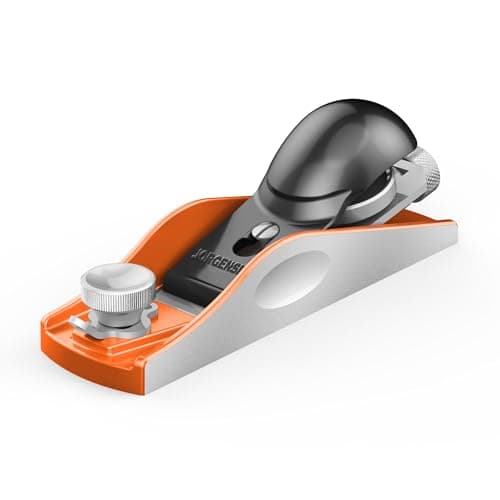
A ductile-iron 60-1/2 with an adjustable mouth and a 3 mm O1 iron, at a fraction of what that combination costs anywhere else on this page. The mouth adjustment is the feature this list is ranked on, and this is the cheapest honest way to get it.
The adjustable mouth at the lowest price it exists for
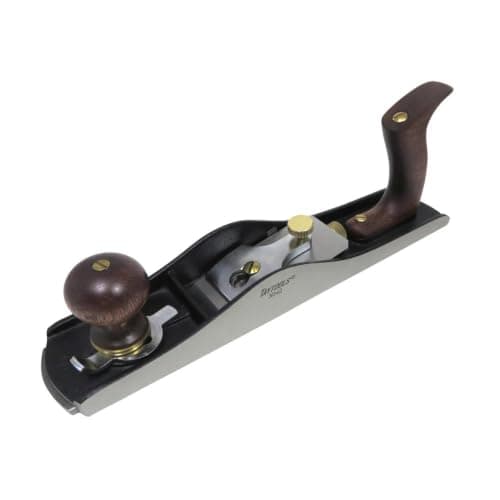
A 12 degree bevel-up jack in stress-relieved ductile iron with a 3/16 in iron and an adjustable mouth, at roughly half what the Stanley No. 62 costs. The bevel-up trick — three irons, three cutting angles, one plane — works the same here.
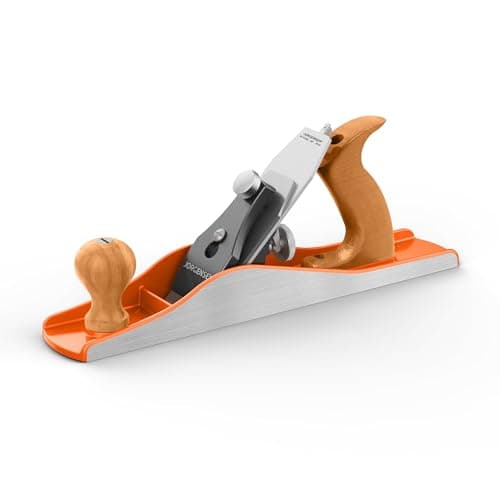
A ductile-iron No. 5 whose maker publishes the three things almost nobody at this price does: a sole tolerance (0.003 in), a numbered replacement iron in 3 mm O1, and a lifetime warranty that needs no receipt. The paperwork is better than the plane's reputation.
The best-documented jack plane under the premium tier
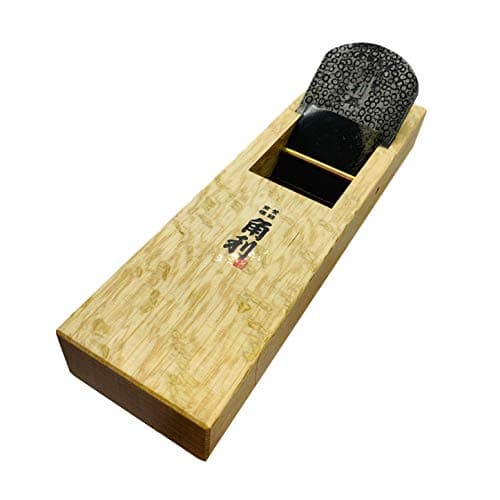
The widest plane here: 50 mm of published cutting width, a 255 mm oil-finished white oak dai and 976 g of mass, which is what you want for the last passes across a glued-up panel. It is also the plane that punishes a neglected sole most, because there is more of it.
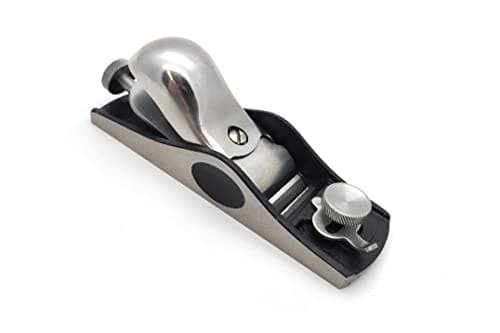
Adjustable mouth, stainless knuckle cap and adjustment screws, and a bed low enough to handle end grain properly. The stainless hardware is the detail that matters in a tool that lives in a pocket.
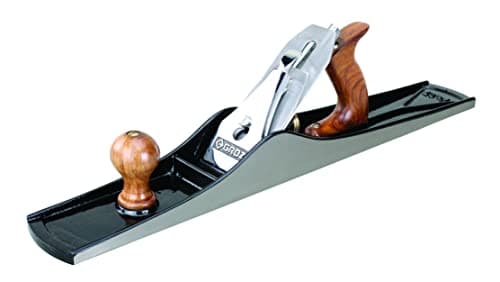
An 18 in gray-iron fore plane from an Indian maker that publishes what most of the field will not: a sole flatness tolerance of 0.003 in and a blade hardness figure. It is the cheapest long plane we could find whose maker put a number on the sole, and that is the whole reason it is here.
The cheapest plane on the page with a published sole tolerance
#ad· Live prices from the Amazon Product API, as of November 22, 2026. Where we have no verified live price we show none, and the cost-per-decade figure is suppressed with it — we would rather leave a gap than print a number that has rotted.
Buy the Jorgensen No. 60-1/2. On a frame, the plane you reach for forty times a day is a low-angle block plane with an adjustable mouth, and this is the cheapest honest way to own that combination: a published 3 mm O1 iron, 1-3/8 in wide, in a stress-relieved ductile-iron body rather than gray cast iron — which matters when the tool spends its life above a deck. If you want one plane that will also fair a beam face and clean a wide tenon cheek, add the Taytools No. 62 low-angle jack. If you want the traditional answer, the KAKURI 60 mm kanna is a pull plane with 50 mm of published cutting width and nothing in it to break.
This page exists because the obvious advice is wrong. Ask what plane to buy for heavy stock and you will be told a long one — a No. 6, a No. 7, something with mass to carry a cut. That is correct advice for rough lumber, where you are making a twisted board flat and the sole is a straightedge that bridges the high spots. It is the wrong advice for timber framing, and the reason is not subtle.
The criterion that decides everything here
The stock cannot be moved. An eight-by-eight Douglas fir beam at sixteen feet weighs more than you do. It is on horses, or it is in a bent, or it is already standing. You cannot flip it, you cannot clamp it in a vise, and you cannot bring it to a bench at a height that suits your shoulders.
Everything follows from that one fact:
The plane is driven one-handed as often as two. You are working a vertical face, an overhead arris, the end of a beam at chest height, or a housing at ankle height. A 4 lb plane with a tote is a two-handed tool on a bench top and an awkward one anywhere else.
You are not flattening anything end to end.The beam was sized by a mill or a chainsaw mill and it is staying that size. Plane work on a frame is local: fair a hump where a shoulder has to seat, clean the cheeks of a tenon, true the bottom of a housing, take the saw marks off a face that will show. Sole length, the entire criterion the rough-lumber page ranks on, becomes close to irrelevant — and on a face with any crown in it, an 18 in sole actively stops you.
Most of the strokes are chamfers. This is the part nobody says out loud. A frame has an enormous number of arrises, every one of them gets eased, and that is hours of one-handed work at 45 degrees along grain and across it. The chamfer is the single most repeated plane operation in the craft.
Half the cutting is end grain or near it.Tenon cheeks, shoulders, beam ends, the ramped bottom of a housing. That means a low bed angle and a mouth you can close — the best hand planes for end grain is the same mechanism argued at bench scale.
The tool lives in grit. Oak dust, sand off a slab, rain, and a drop onto something hard at least once a season. A plane that cracks when dropped, or whose maker will not stand behind it, is a worse buy here than the same plane in a shop.
So the four things we ranked on are: one-handed controllability, an adjustable mouth over a low bed, chamfering manners, and what the maker publishes about surviving abuse. Length and weight are scored as costs, not virtues. That is the inversion, and it is why the order below looks nothing like the rough-stock order.
Why there is no slick or chamfer plane on this list
Two tools a timber framer would genuinely want are not here, and we would rather say why than quietly rank a substitute.
The first is a slick— a two-to-three-inch paring chisel with a long handle, pushed with the shoulder, which is the tool traditionally used to clean tenon cheeks and housing bottoms. Nothing of the kind exists in a listing we can verify, so it is not ranked; the nearest honest substitute is a wide bench chisel used with two hands and no mallet, and what a bench chisel is covers where that tool's limits are.
The second is a dedicated chamfer plane, the V-bodied plane that self-registers on an arris and cuts a chamfer of fixed width. Again: nothing currently purchasable that we can verify. The working answer is a low-angle block plane held at 45 degrees, which is what the picks below reflect, and the chamfer section under them is the technique for getting a consistent result without a jig.
We have also not ranked a scrub plane, for the reason given on the rough-lumber page: none exists in our product data, and inventing a slot to fill is how affiliate pages go bad.
How the six break down
Two block planes (the Jorgensen 60-1/2 and the Taytools 9-1/2) because this is block-plane work more than it is bench-plane work. Both also appear on the best block planes, ranked there on the mouth alone; the order is different here because site survival and the price of replacing a lost tool carry weight that they do not carry in a shop.
One bevel-up jack (the Taytools No. 62), which is the compromise tool: low enough in the bed for end grain, long enough to fair a face, and the only plane here whose cutting angle you can change by regrinding one iron rather than buying another plane. If that mechanism is new to you, bevel up vs bevel down is the whole argument.
One bevel-down jack (the Jorgensen No. 5), which is the tool for the one job on a frame that really is a bench-plane job: taking the mill marks off a face that will be seen, across fourteen inches of sole with a lifetime warranty behind it.
One kanna(the KAKURI 60 mm). A pull stroke is easier to control on a vertical face than a push stroke, which is not a romantic claim — you are pulling toward your own mass instead of pushing away from it. Japanese timber framing is the tradition that solved this problem first, and the best Japanese hand planes covers the setup cost that comes with it.
One fore plane (the Groz No. 6), last, and only for people cutting frame members to size on horses rather than fitting joinery to a frame that is already up.
Every pick, in full
The write-ups
01The adjustable mouth at the lowest price it exists for
Pattern
No. 60-1/2 low angle, 6-1/4 in
Mouth
Adjustable
Iron
O1 steel, 3 mm thick, 1-3/8 in wide
Body
Ductile iron, stress relieved
Jorgensen No. 60-1/2 Low Angle Block Plane
Jorgensen
7.7/10
A ductile-iron 60-1/2 with an adjustable mouth and a 3 mm O1 iron, at a fraction of what that combination costs anywhere else on this page. The mouth adjustment is the feature this list is ranked on, and this is the cheapest honest way to get it.
Cost per decade
$14.02
Horizon · tier C
20 years — No lifetime warranty; parts purchasable and resharpenable
No lifetime warranty published at the date checked. The iron is a standard Bailey-pattern size, so aftermarket replacements from third-party makers are purchasable, and the body is a casting with no consumable part.
Rebuy risk
Medium
parts listed, resharpenable
Sole & body
7.5
Iron & edge
7.5
Adjustment
8.0
Out of box
7.0
Parts & repair
7.0
Value
9.0
What it gets right
+Adjustable mouth at a price where nothing else here has one
+Jorgensen publishes the iron as 3 mm O1, which is thicker than most block plane irons and thicker than most makers will state
+Ductile iron rather than grey cast iron, so a drop onto a concrete floor is less likely to crack it
What it costs you
−No warranty terms published by Jorgensen at all
−Jorgensen publishes no bed angle for this model, only the 60-1/2 designation
−Fit and finish is noticeably below the Taytools above it
Skip this if…
…you want a tool that feels expensive in the hand. The money here went into the mouth and the iron, not the finish.
A 12 degree bevel-up jack in stress-relieved ductile iron with a 3/16 in iron and an adjustable mouth, at roughly half what the Stanley No. 62 costs. The bevel-up trick — three irons, three cutting angles, one plane — works the same here.
Cost per decade
$72.00
Horizon · tier C
20 years — No lifetime warranty; parts purchasable and resharpenable
No lifetime warranty published at the date checked. The iron is a standard Bailey-pattern size, so aftermarket replacements from third-party makers are purchasable, and the body is a casting with no consumable part.
Rebuy risk
Medium
parts listed, resharpenable
Sole & body
8.0
Iron & edge
7.5
Adjustment
7.5
Out of box
7.5
Parts & repair
6.5
Value
8.5
What it gets right
+A 3/16 in iron, thicker than the Stanley's, on a bed the maker lapped to a published 0.003 in
+Adjustable mouth and a low bed, which is the end-grain setup that matters
+Stress-relieved ductile iron body at a price that undercuts every other No. 62 we found
+Lightest plane on the page, which some people prefer in a bevel-up jack
What it costs you
−The Amazon listing title says 55-60 HRC while the maker's own page says 60-65 HRc; one of them is wrong and we could not tell which
−No warranty published, against Stanley's limited lifetime cover on the No. 62
−Spare irons are the whole point of a bevel-up jack and the maker does not list one for this SKU
−Far less history behind the brand than Stanley
Skip this if…
…you plan to run the three-iron system. The Stanley has a listed replacement iron; this one does not, and a bevel-up jack without spare irons is just a long block plane.
03The best-documented jack plane under the premium tier
Size
No. 5 jack, 14 in, 2 in cutter
Iron
O1, 3 mm (1/8 in), 25 deg, part #70731
Sole
Ground flat and square to 0.003 in, per maker
Body
Ductile iron, beech handles, stainless hardware
Warranty
Limited lifetime, no receipt required
Jorgensen No. 5 Jack Plane
Jorgensen
8.0/10
A ductile-iron No. 5 whose maker publishes the three things almost nobody at this price does: a sole tolerance (0.003 in), a numbered replacement iron in 3 mm O1, and a lifetime warranty that needs no receipt. The paperwork is better than the plane's reputation.
Cost per decade
$41.33
Horizon · tier A
30 years — Lifetime warranty, cited
Pony Jorgensen publishes a limited lifetime warranty against deficiencies in material and workmanship on its products, with no time limit on when the tool was bought and no receipt required; it excludes improper use, abuse, alteration and improper repair. The No. 5 product page lists the O1 iron as a numbered replacement part (#70731), so the wear part is purchasable from the maker rather than only from third parties.
Rebuy risk
Low
lifetime warranty, parts listed, resharpenable
Sole & body
7.5
Iron & edge
8.0
Adjustment
7.0
Out of box
7.5
Parts & repair
9.0
Value
9.0
What it gets right
+Pony Jorgensen's limited lifetime warranty applies with no receipt and no time limit — the strongest published cover on this page
+The O1 iron is a numbered part on the maker's own site, so the wear part is purchasable from the source
+Published sole tolerance of 0.003 in, which only the Rockler and Big Horn planes match here
+Thick 3 mm iron at a price closer to the budget planes than the premium ones
What it costs you
−Amazon's listing returned a live price but no availability string at the time of check; the maker's own site lists it as a current product
−The maker's No. 4 in the same line has a reputation for adjuster backlash; the No. 5 page publishes nothing about the adjuster
−Bed angle and weight are not published
−A Bailey-type frog, not a Bedrock: the frog must come off to adjust the mouth
Skip this if…
…the frog matters more to you than the warranty. The Taytools above it beds the iron better; this plane's argument is what is written down.
KAKURI Japanese Large Hand Plane 60mm, White Oak Body
KAKURI
7.0/10
The widest plane here: 50 mm of published cutting width, a 255 mm oil-finished white oak dai and 976 g of mass, which is what you want for the last passes across a glued-up panel. It is also the plane that punishes a neglected sole most, because there is more of it.
Cost per decade
$35.90
Horizon · tier C
20 years — No lifetime warranty; parts purchasable and resharpenable
KAKURI publishes no warranty on its hand planes. Its refund policy states that once an order is completed the product 'cannot be returned or exchanged for any reason attributable to the User', with returns accepted only for items that arrive wrong, damaged or non-conforming. Against that, the blade is published as SK85 in a double layer — a laminated iron renewable by sharpening until the hard layer is consumed — and the wooden body is re-trued by the owner rather than replaced, so nothing about the tool is separately consumable.
Rebuy risk
Medium
parts listed, resharpenable
Sole & body
8.0
Iron & edge
9.0
Adjustment
5.5
Out of box
4.5
Parts & repair
7.5
Value
7.5
What it gets right
+50 mm of cutting width covers a panel in far fewer passes than the 42 and 36 mm planes above it
+976 g carries the cut the way mass does on a western smoother
+Same published SK85 double-layered iron as the smaller KAKURI planes
+Oil-finished body, which is the finish that lets you re-true the sole without stripping anything
What it costs you
−The most expensive KAKURI on the page while the maker's own store charges the same ¥5,000 it charges for the 42 mm
−A 255 mm sole is more wood to keep flat, and a wide iron is more edge to sharpen square
−No warranty published and the same restrictive returns policy
−Heaviest plane here, which tells against it for one-handed work
Skip this if…
…this is your first kanna. Learn the setup on a 42 or a 50 before you take on a 60 mm iron and a 255 mm sole.
Price as of November 22, 2026. Prices move; Amazon's is the one that counts.
#ad · we may earn a commission from this link to KAKURI Japanese Large Hand Plane 60mm, White Oak Body
05Best block plane overall
Pattern
#9-1/2 low angle
Mouth
Adjustable
Hardware
Stainless knuckle cap and screws
Warranty
Not published
Taytools #9-1/2 Low Angle Block Plane
Taytools
8.0/10
Adjustable mouth, stainless knuckle cap and adjustment screws, and a bed low enough to handle end grain properly. The stainless hardware is the detail that matters in a tool that lives in a pocket.
Cost per decade
$41.84
Horizon · tier C
20 years — No lifetime warranty; parts purchasable and resharpenable
No lifetime warranty published at the date checked. The iron is a standard Bailey-pattern size, so aftermarket replacements from third-party makers are purchasable, and the body is a casting with no consumable part.
Rebuy risk
Medium
parts listed, resharpenable
Sole & body
8.5
Iron & edge
7.5
Adjustment
8.5
Out of box
8.0
Parts & repair
7.0
Value
8.5
What it gets right
+Adjustable mouth is the single feature that separates a real block plane from a toy
+Stainless fittings resist the sweat and pocket grit that pit a block plane first
+Machining quality well above the price band
What it costs you
−No published warranty terms
−Iron wants honing before first use like everything else here
−Knuckle cap is a preference; some people want a plain lever cap
Skip this if…
…your hands are large. A block plane is a one-handed tool and this is a compact one.
We earn nothing on this one
The Veritas low-angle block plane is the better tool and we earn nothing on it — it sells direct only. Worth knowing before you buy: Lee Valley publishes a three-month satisfaction guarantee rather than a defect warranty, which is not the lifetime cover the tool's reputation implies. That guarantee wording is published by Lee Valley / Veritas.
06The cheapest plane on the page with a published sole tolerance
Size
No. 6 fore plane, 18 in (458 mm), 2-3/8 in (60 mm) cutter
Iron
Spring steel, 55 +/- 5 HRC per maker; thickness not published
Sole flatness
0.003 in (0.075 mm), per maker
Body
Gray cast iron, fully adjustable frog, hardwood handle and knob
Warranty
Not published
Groz No. 6 Fore Plane (39703)
Groz
6.8/10
An 18 in gray-iron fore plane from an Indian maker that publishes what most of the field will not: a sole flatness tolerance of 0.003 in and a blade hardness figure. It is the cheapest long plane we could find whose maker put a number on the sole, and that is the whole reason it is here.
Cost per decade
$29.98
Horizon · tier C
20 years — No lifetime warranty; parts purchasable and resharpenable
No lifetime warranty published at the date checked. The iron is a standard Bailey-pattern size, so aftermarket replacements from third-party makers are purchasable, and the body is a casting with no consumable part.
Rebuy risk
Medium
parts listed, resharpenable
Sole & body
6.5
Iron & edge
6.0
Adjustment
7.0
Out of box
6.5
Parts & repair
5.5
Value
9.0
What it gets right
+Maker publishes a sole flatness tolerance, 0.003 in, which on this page only the Rockler matches
+Publishes a blade hardness, which the two Big Horn planes and both WoodRivers do not
+Fully adjustable frog and a standard 2-3/8 in cutter width, so an aftermarket iron is a straightforward later purchase
+Costs about what a good sharpening stone does
What it costs you
−Gray cast iron, not ductile: the material the vintage planes were made of, and the one that cracks if dropped
−55 plus or minus 5 HRC is a wide band; the low end of it is soft
−Iron thickness, weight and warranty are not published
−Listed with a modest stock count at the time of check
Skip this if…
…you want the plane to arrive finished. A published tolerance is a promise about the sole, not about the edge, the mouth or the fit of the frog, and at this price expect an evening of setup.
A chamfer plane registers itself. A block plane does not, so the consistency has to come from the hand and from the setup. Four things do almost all of the work:
Close the mouth first. A chamfer runs along grain for most of its length and then crosses it at every joint, shake and knot. A tight mouth is what keeps that transition from lifting a splinter the length of your forearm. This is the reason both block planes on this page have an adjustable mouth and the GreatNeck, which does not, is not on it.
Set the iron finer than feels useful. A chamfer is a dozen light passes, not three heavy ones. Heavy passes on an arris wander, because the plane is riding on two unequal bearing surfaces and the deeper cut makes it rock between them.
Skew the plane. Running the body at an angle to the direction of travel lowers the effective cutting angle and lengthens the effective sole across the chamfer. It is the single biggest improvement available to you and it costs nothing.
Stop the chamfer deliberately.Most frame chamfers are stopped short of the joint with a lamb's-tongue or a simple ramp, which is chisel work, not plane work. Plane the run, then cut the stop.
A shop-made guide — two strips of hardwood screwed into a V that the plane body sits in — will hold a chamfer to a consistent width better than freehand will, and costs an offcut. Nobody we can verify sells a commercial version of it worth linking.
Why mass is a liability here and an asset there
On a bench, mass is stored energy. You start the stroke, the plane carries through the hard patch, and the weight keeps the sole registered on the work. That is why the rough-lumber ranking rewards a heavy plane and why nobody who has flattened a board with a light one argues the point.
Hold the same plane out at arm's length against a vertical post and the arithmetic changes completely. Now the weight is a torque on your wrist, and the stroke is limited by your shoulder rather than by the iron. The KAKURI 60 mm is the clearest illustration on this page: at 976 g it is excellent across a wide face on horses and genuinely tiring overhead, which is why it sits fourth rather than first despite having the best edge of any iron here.
The practical rule: under about 2 lb, a plane is a one-handed tool and you can use it anywhere on a frame. Over about 4 lb, it is a two-handed tool and the work has to come to a height that suits it. Buy in that order.
What sharpening looks like on a site
The honest answer is that it looks worse than it does in a shop, and the tools should be chosen for that. Frame timber is often green or air-dried softwood with the occasional embedded grit, oak pegs blunt an edge fast, and you will not carry a full stone progression to a raising.
Two consequences. First, a bevel-up plane is faster to touch up, because the only bevel in the system is the one you can reach with a stone in your hand — no frog, no cap iron, no reassembly. How to sharpen a plane iron is the sequence; a site touch-up is the last two steps of it.
Second, a plane with a standard iron is worth more here than a better plane with a one-off iron. All six picks take a size somebody else makes: the two block planes and the two jacks take sizes covered by replacement plane irons, and the kanna's laminated SK85 iron is renewed by sharpening rather than replaced at all.
Cost per decade when the tool gets abused
Our cost-per-decade arithmetic runs on published warranty terms and parts listings, never on a feeling about build quality, and on this page the published terms are unusually lopsided:
Jorgensen publishes a limited lifetime warranty against deficiencies in material and workmanship with no time limit and no receipt required, and lists the No. 5's O1 iron as a numbered part (#70731). For a tool that gets dropped, that combination is worth more than any machining tolerance. Note the asymmetry inside the brand, though: that warranty is published at company level, and Jorgensen publishes no terms specific to the 60-1/2 block plane, nor a bed angle for it.
Taytoolspublishes no product warranty at all — what it has is a 90-day return policy on unused goods, which is a returns policy. On the No. 62 it also does not list a spare iron, which is the one thing a bevel-up jack is bought for.
KAKURIpublishes no warranty, and its refund policy says a completed order “cannot be returned or exchanged for any reason attributable to the User”. Against that, there is nothing consumable in the tool: the iron is renewed on a stone and the owner re-trues the wooden sole.
Grozpublishes a sole flatness tolerance of 0.003 in and a blade hardness band of 55 ± 5 HRC, which is more than most of the field states, and no warranty. Its body is gray cast iron — the material that cracks when dropped, which is exactly the risk this page is about.
Warranties and repairability covers why a parts number usually beats a warranty promise: a warranty is a company's intention, a cataloged part is its ongoing commitment.
The honest minimum
If you are cutting your first frame and want to spend as little as possible without buying something you will replace: one low-angle block plane with an adjustable mouth does ninety percent of the plane work on a frame. Add the No. 62 when the tenon cheeks start bothering you, and a jack when you cut a frame with exposed faces. Buying a No. 7 first, which is what the internet will tell you to do for heavy stock, gets you a plane that is superb at a job a frame never asks for.
Questions
Frequently asked
What hand plane do timber framers actually use most?+
A low-angle block plane with an adjustable mouth. It is the plane that chamfers arrises — by volume the most repeated plane operation on a frame — cleans tenon cheeks, and can be used one-handed on a face you cannot reposition. The long bench planes that get recommended for heavy stock are bench tools, and a beam never comes to a bench.
Do I need a No. 7 or No. 8 for timber framing?+
No. A jointer plane is for making a long edge straight, which is a furniture and joinery problem. Frame members are sized at the mill and fitted by joint, not by flattening, so the length that makes a jointer useful is dead weight here. If you are sizing stock on horses rather than fitting a frame, a No. 6 fore plane is as long as this work justifies.
Is a chamfer plane worth buying instead of a block plane?+
It would be, if we could verify one that is currently sold. A V-bodied chamfer plane self-registers on the arris and cuts to a fixed width, which is faster and more consistent than freehand. We do not rank one because we could not find a listing we trust — so the working answer is a low-angle block plane, skewed, with the mouth closed, and a shop-made V guide if you need identical chamfers across many members.
Push plane or Japanese pull plane for timber work?+
A pull plane is easier to control on a vertical or overhead face, because you are pulling the tool toward your own body mass rather than pushing it away. The cost is setup: a kanna is an iron wedged in a wooden body, so the sole has to be conditioned and the iron tapped rather than turned to depth. If you will do that work, it is the better tool for standing timber. If you will not, buy the block plane.
Will a block plane cut green or wet timber?+
Yes, and more easily than dry stock — wet fibers sever cleanly. Two cautions: the shavings are heavy and will pack a tight mouth, so open it slightly for wet work and close it again for chamfers in dry oak; and wet softwood resin plus steel means you wipe and oil the plane at the end of the day rather than at the end of the week.
How do I keep a plane from rusting on a job site?+
Dry it, then put a film on it — camellia oil, a paste wax, or a corrosion inhibitor — and keep it off bare concrete and out of a closed truck box where condensation collects. Rust removal and prevention covers what each option actually does and which ones leave a surface you can still finish over.
We have not handled these tools. Nobody here has tested one, owned one, or taken one apart. Specifications come from the manufacturer or the retailer listing; warranty terms come from the maker's own warranty page; the cost-per-decade arithmetic is ours and reproducible. Where we could not verify a figure we say so on the page rather than quietly leaving it out. Read the full method.