Chisels
What Is A Firmer Chisel
The heavy, square-sided chisel built to be struck, and where it sits between a bench and a mortise chisel.
We earn a commission when you buy through our Amazon links, at no extra cost to you. It never decides a ranking, and where the best tool in a class is one we earn nothing on, we say so and link it anyway. How this works.
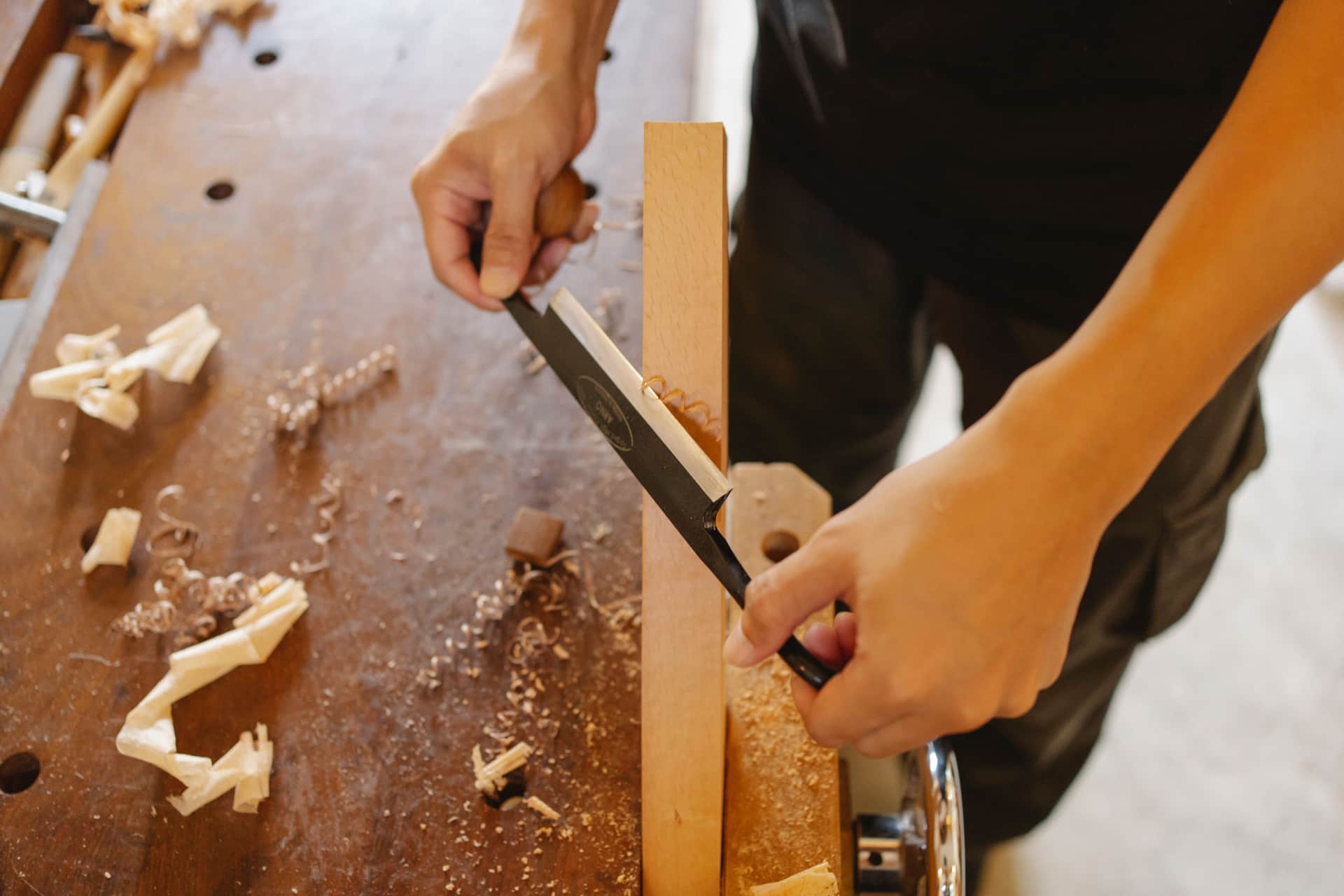
A firmer chisel is a heavy, general-purpose chisel with a thick blade and a cross-section close to square, built to be struck with a mallet and to survive work a lighter chisel would shy away from. The name has nothing to do with your grip and everything to do with an older sense of the word meaning solid and sturdy — a firmer is the plain workhorse you reach for when a job is too rough for a delicate paring chisel yet not deep enough to justify a dedicated mortise chisel.
What actually makes a chisel a firmer
Three things define the type, and only one of them is the shape most people notice first. The blade is thick through its cross-section, so it does not flex or ring when you drive it. The sides are straight and flat — square shoulders running the full width — rather than the fine, angled lands ground onto a modern bench chisel. And the whole tool is built stout, from the neck down to a handle meant to take mallet blows all day.
That near-square section is the whole point. It gives the blade the stiffness to chop and lever without deflecting off your line, and it puts steel behind the edge so the tool keeps cutting where a thinner blade would chatter. A firmer is not subtle. It is the difference between a tool you baby and a tool you simply use.
Firmer versus a bevel-edge bench chisel
The bench chisel most people own today is a bevel-edge chisel: its long sides are ground back to thin lands so the edges can slip into tight, acute corners — the inside of a dovetail, for instance. Those thinned lands are a real advantage for fine joinery, but they cost you steel and stiffness. A firmer keeps its full, square sides, which means more mass behind the edge and far less worry about levering or striking it, at the price of not reaching cleanly into an acute corner.
If you want the full breakdown of how the families overlap and where each earns its keep, chisel types compared lays them side by side. The short version: a bevel-edge chisel is the better all-rounder for cabinet joinery, while a firmer trades that reach for brute durability.
Firmer versus a mortise chisel
It is easy to confuse a firmer with a mortise chisel, because both are thick and both are made to be struck. The difference is proportion and purpose. A mortise chisel is taller than it is wide — a deep, narrow blade with a heavy oval handle and often a leather shock washer — because its one job is to be levered hard against deep waste while chopping a mortise. A firmer is broader and more general; it chops, pares and cleans across a wide range of tasks but is not built for the sustained, heavy prying a mortise demands.
Put simply, a firmer sits between the two: tougher than a bevel-edge bench chisel, less specialized than a mortise chisel. If you are trying to decide which of those ends you actually need, bench chisels versus mortise chisels walks through the trade, and what is a mortise chisel covers the deep-chopping tool on its own.
Where firmers came from
For a long stretch of woodworking history the firmer was simply the chisel — the default bench tool in a joiner's or carpenter's kit before the bevel-edge pattern became standard. Timber-frame work, door and window joinery, boatbuilding and heavy furniture all leaned on firmers because the work was big, the cuts were coarse, and a tool that could be hit hard and levered without snapping was worth more than one that could tickle a dovetail corner.
You still see the logic in old sets: a rack of firmers in graduated widths, each one plain, thick and ready for the mallet. Nothing about them is precious, which is exactly why so many survived a century of use.
Should you buy a firmer today?
For most hand-tool woodworkers building furniture and cabinets, a good set of bevel-edge bench chisels covers the ground a firmer used to, and the thinned lands are genuinely useful for joinery. That is where most people should start — our pick of the best wood chisels is bevel-edge for exactly this reason.
A firmer earns its place when your work runs heavier: timber framing, green woodwork, boatbuilding, rough carpentry, or any job where you are removing a lot of material and would rather not worry about the tool. If you find yourself flinching every time you strike your bevel-edge chisels, or you have cracked a thin blade levering waste, a firmer is the honest answer. Buy one good one in a middling width first — a 3/4 in or a 1 in — and see how often it comes off the rack.
Bought well, a firmer is close to indestructible, which is the whole appeal: it is the chisel you hand down rather than replace. Match the tool to the weight of the work, keep it sharp, and a single quality firmer can outlast every power tool in the shop.
Questions
Frequently asked
Why is it called a firmer chisel?
The name comes from an old sense of the word meaning solid and sturdy, not from anything to do with your grip. A firmer is the thick, robust, general-purpose bench chisel built to be struck — the plain workhorse of a joiner's kit before the thinner bevel-edge pattern became standard.
What is the difference between a firmer and a bench chisel?
A modern bevel-edge bench chisel has its sides ground back to thin lands so it can reach into acute corners like dovetails. A firmer keeps full, square sides, so it has more steel and stiffness for heavy chopping and levering but cannot slip into those tight corners as cleanly.
Can I use a firmer chisel to cut mortises?
You can chop light mortises with one, but it is not the ideal tool. A true mortise chisel is taller than it is wide and built for the heavy levering a deep mortise needs. A firmer is broader and more general, so it will do occasional mortise work without complaint but is happier at wider chopping and paring.
Do I need a firmer chisel if I already own bench chisels?
For furniture and cabinet work, usually not — a good set of bevel-edge bench chisels covers the same ground with more reach. A firmer earns its place only when your work runs heavy: timber framing, boatbuilding, green woodwork or rough carpentry where durability matters more than getting into acute corners.
What size firmer chisel should I buy first?
Start with one good middling blade, a 3/4 in or a 1 in, rather than a full set. That width handles most of the heavier paring and chopping a firmer is bought for, and you can add narrower or wider sizes later only if a specific job asks for them.
Keep reading
Related
- Chisel types comparedSee exactly where the firmer sits among the other patterns.
- What is a mortise chiselThe deep-chopping tool a firmer is often confused with.
- Bench chisels vs mortise chiselsWhich end of the range your work actually needs.
- The best wood chiselsThe bevel-edge set most people should start with instead.
Back to Chisels · how we pick · editorial policy