Chisels
What Is A Mortise Chisel?
A chisel shaped for one violent job: levering waste out of a deep hole without snapping.
We earn a commission when you buy through our Amazon links, at no extra cost to you. It never decides a ranking, and where the best tool in a class is one we earn nothing on, we say so and link it anyway. How this works.
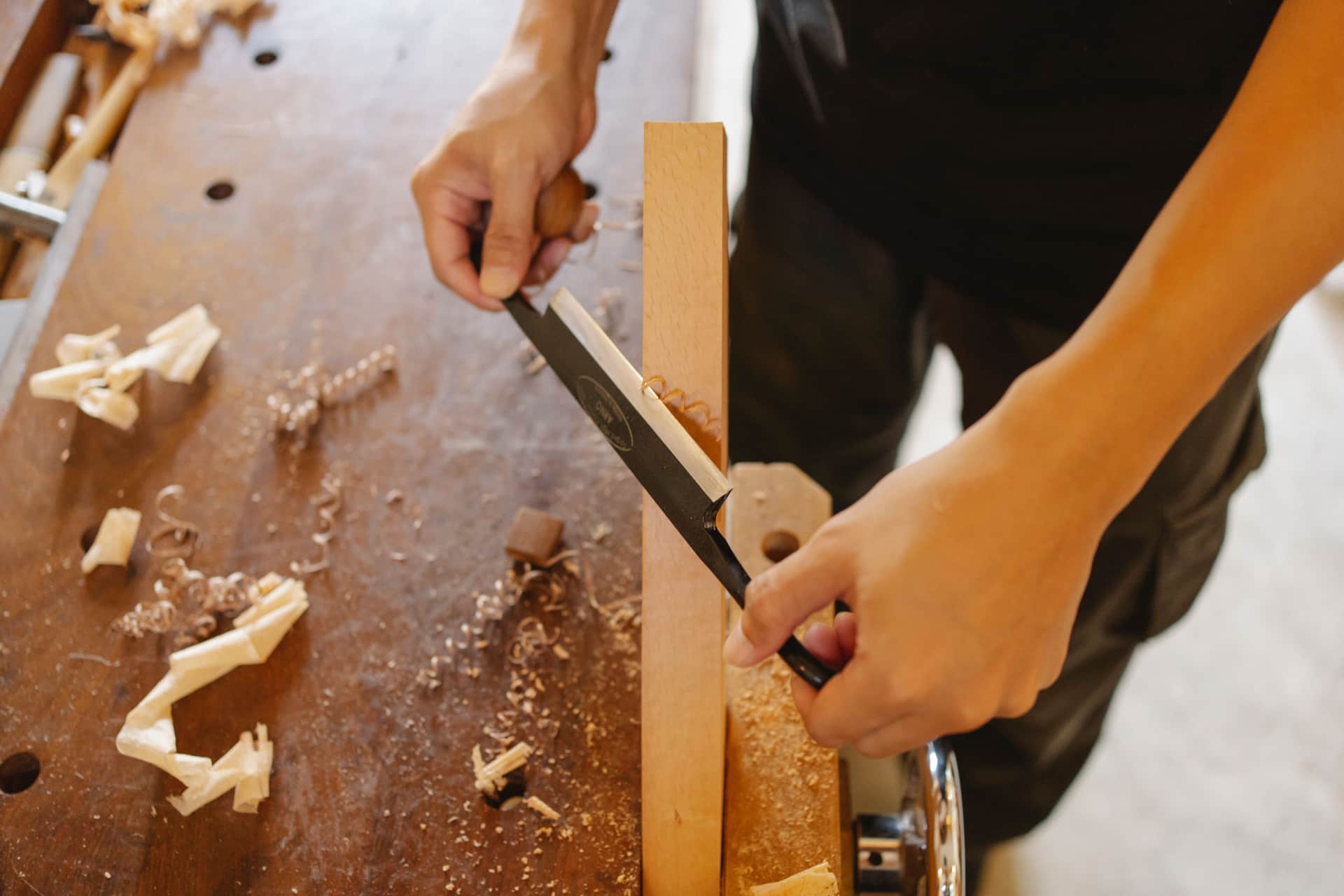
A mortise chisel is a chisel built for one specific, violent job: chopping the deep rectangular holes — mortises — that receive tenons in traditional joinery. Everything about its shape is a response to the way that job abuses a tool, and once you see the job, the shape stops looking clumsy and starts looking obvious.
It is the least versatile chisel in the catalog and the most emphatically correct for its purpose. If you never cut a mortise by hand you will never need one; if you do, nothing else is a substitute, and trying to substitute is how people break chisels. The wider family map is on chisel types compared.
What makes it a mortise chisel
Depth of section. Where a bench chisel blade is thin and flat in cross-section, a mortise chisel is nearly as thick as it is wide — a deep, stiff bar of steel rather than a flat blade. That depth is the entire design. A mortise is chopped by driving the edge in and then rocking the handle to lever a chip of waste up and out, and levering puts an enormous bending load on the blade. A deep section resists bending; a thin one does not.
The sides are typically parallel and square, sometimes very slightly tapered so the blade does not bind in the deep slot it is cutting. There are no beveled side lands to weaken the tool, because a mortise chisel never needs to reach into an acute corner the way a bench chisel does. It trades all of that access for stiffness.
The oval bolstered handle
Two features of the handle earn their keep. First, the bolster: a thick shoulder of steel between the blade and the handle that stops the tang being driven up into the wood and splitting it under repeated heavy blows. A bench chisel does not need much of a bolster; a mortise chisel is hit hard, over and over, and would destroy a plain handle without one.
Second, the handle is often oval rather than round. An oval handle tells your hand the orientation of the edge without your having to look, which matters when you are chopping a line of blows and want the chisel square to the mortise every time. Traditional English mortise chisels also carry a leather or fiber washer under the bolster to cushion the blow, and many have a hooped or ferruled top to take the mallet without splitting.
Sash versus pigsticker
Two patterns dominate, and the names are worth knowing because sellers use them.
A sash mortise chiselis the lighter of the two, named for the window-sash joinery it was made for. It has a deep section but a relatively modest one — stiff enough for furniture-scale mortises, light enough to be pleasant to use. For most hand-cut furniture joinery, a sash mortise chisel is the right weight.
An English “pigsticker” mortise chisel is the heavyweight: a hugely deep, almost square-sectioned blade with a big oval bolstered handle, made for chopping deep mortises in hardwood all day. The nickname comes from the blunt, brutal look of the thing. It is more chisel than most furniture makers need, and it is exactly right if you cut large mortises regularly. The full weight-for-weight comparison is on bench chisels versus mortise chisels.
How you actually chop a mortise with one
The technique is what the tool is shaped for. You mark the mortise with a knife or a mortise gauge, then start chopping across the grain a little in from one end, bevel facing the end you are working toward. Drive the chisel in with the mallet, then lever the handle back toward you: the deep section acts as a rigid arm and pops a chip of waste up out of the slot. Move along, repeat, and the mortise deepens in a series of driven-and-levered bites.
That levering motion is the thing. It is efficient, it is fast, and it depends entirely on a blade stiff enough not to flex or snap as you crank against it. The oval handle keeps you square; the bolster takes the blows; the deep blade takes the leverage. The whole tool is a levering machine.
Why a bench chisel is the wrong tool
Because a bench chisel blade is thin, and the levering that a mortise chisel is built for is precisely the load a thin blade cannot take. A bench chisel driven into a mortise and then levered does not bend and spring back — it snaps, usually where the blade narrows into the tang, usually suddenly. This is the most common way a chisel is broken, and it is entirely avoidable.
You can clean up a machine-cut mortise with a bench chisel, because paring the walls involves no levering. What you cannot do is the chopping-and-levering that produces a mortise from solid wood. If you cut mortises by hand, buy the right tool for it; if you drill or rout them and pare the walls, you need no mortise chisel at all. The count-your-chisels version of this argument is on how many chisels do you need.
Do you need one?
Only if you chop mortises by hand. That is the honest answer. A great many woodworkers cut every mortise with a drill press and a bench chisel, or a plunge router, or a dedicated mortiser, and for them a mortise chisel is a beautiful object with nothing to do.
If you do cut them by hand, you want two or three sizes matched to your common tenon thicknesses — a mortise chisel is sized to be the width of the mortise, so the chisel and the joint are the same dimension, and you buy the sizes your work actually uses rather than a full range. One well-chosen sash mortise chisel covers a surprising amount of furniture work. The best mortise chisels ranks what is actually buyable, with the published hardness figures and a live price on each.
Which width for which joint
Because the chisel is the mortise gauge, picking the width is picking the joint, and it runs in the opposite direction from every other chisel decision you make. You do not size the chisel to the work; you size the work to the chisel. Chop the mortise with whatever width you own, then cut the tenon to the mortise you actually made.
In practice hand-cut furniture converges hard on a small number of widths. Something around 1/4 in handles small frame work — door lights, light rails, anything in stock under about three quarters of an inch thick. Something around 3/8 in, or 10 mm, does most furniture-scale joinery and is the single most useful width if you are only buying one. A 1/2 in earns its place the moment you build a door, a gate or a workbench, where the stock is thick enough that a narrower mortise would leave the tenon under-strength.
The old rule of thumb is that the mortise should be roughly a third of the thickness of the stock. It is a rule of thumb rather than a law — it exists so the cheeks either side of the mortise are not left thinner than the tenon between them — and the width you own is usually the deciding vote anyway. Anything above 1/2 in is joinery scale rather than furniture scale.
One trap worth flagging before you order: the standard Narex mortise chisels are metric — 4, 5, 6, 8, 10, 12, 14 and 16 mm — while the Richter mortise chisels and the English registered-pattern chisels are imperial. A 10 mm chisel cuts 0.394 in, which is close to 3/8 in and is not equal to it. On a bench chisel that distinction is academic; here it decides whether your tenon fits. Chisel sizes explained covers the designations in full.
Sharpening one, and why it is not 25 degrees
A mortise chisel is the one bench-scale chisel that should not be honed at the angle everything else uses. Start at 30 degrees rather than 25, and go to 35 for hardwood or for a chisel hardened to the harder end of the range — Narex itself recommends a 30 to 35 degree secondary bevel on its Richter mortise chisels in hard wood.
The reason is the levering. A shallower edge has less steel behind the apex, and levering drives the load into the edge sideways rather than straight down the blade. A 25 degree edge in a hardwood mortise folds or chips at the corners; a 30 to 35 degree edge does not, and the extra force it takes to drive is irrelevant on a tool you are hitting with a mallet anyway. The full chart, including where every other chisel family sits, is on sharpening angles explained.
The back matters too, and differently from a paring chisel. It needs to be genuinely flat only for the first half inch or so behind the edge — but it needs to be genuinely flat there, because on a mortise chisel the back is the reference face that keeps the walls of the mortise square to each other. The procedure is on how to flatten a chisel back and the general method is on how to sharpen a chisel.
Questions
Frequently asked
What is a mortise chisel used for?
Chopping deep rectangular mortises in solid wood by driving the edge in and levering the waste out. Its deep, stiff blade is built to survive that levering, which would snap a thin bench chisel.
What is the difference between a sash and a pigsticker mortise chisel?
Both are mortise chisels; the sash is the lighter pattern, right for furniture-scale joinery, while the English pigsticker is a heavyweight with a huge square section for chopping large, deep mortises in hardwood all day.
Why can't I use a bench chisel to cut a mortise?
You can chop lightly, but not lever. A mortise is made by levering waste out, and a thin bench chisel blade snaps under that load, usually at the tang. A bench chisel is fine for paring a mortise's walls, not for cutting it from solid.
How are mortise chisels sized?
By the width of the mortise they cut. The chisel is the same width as the slot, so you buy sizes to match your common tenon thicknesses rather than a full range. Two or three sizes cover most hand-cut joinery.
Do I need a mortise chisel?
Only if you chop mortises by hand. If you drill or rout the waste and pare the walls with a bench chisel, you never need one. It is a specialist, not a starter tool.
Keep reading
Related
- The best mortise chiselsThe seven you can actually buy, ranked, with live prices.
- Bench chisels vs mortise chiselsThe two tools side by side, and which to buy first.
- Chisel types comparedWhere the mortise chisel sits in the whole family.
- How many chisels do you needWhether a mortise chisel earns a place in your set.
- The best wood chiselsBench chisels first; add mortise chisels when the job arrives.
Back to Chisels · how we pick · editorial policy