We earn a commission when you buy through our Amazon links, at no extra cost to you. It never decides a ranking, and where the best tool in a class is one we earn nothing on, we say so and link it anyway. How this works.
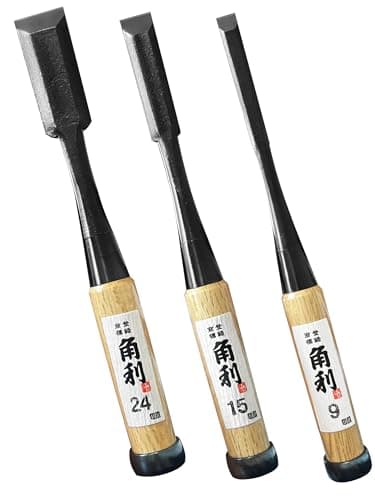
Laminated hard steel over soft iron, hollow-ground backs, hooped handles, made in Japan, at a price where the western equivalents are still using chrome-vanadium.
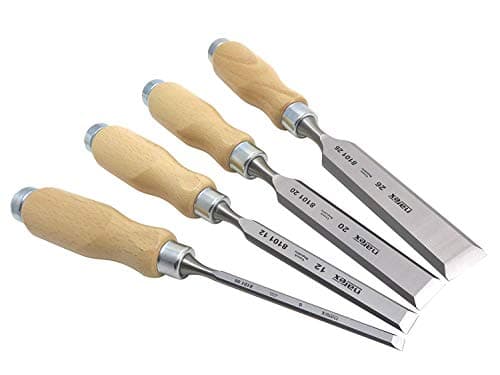
The set that makes the case for this whole site. Four sizes, Czech chrome-vanadium hardened properly, beech handles, and a price that leaves budget for the stone you will need anyway.
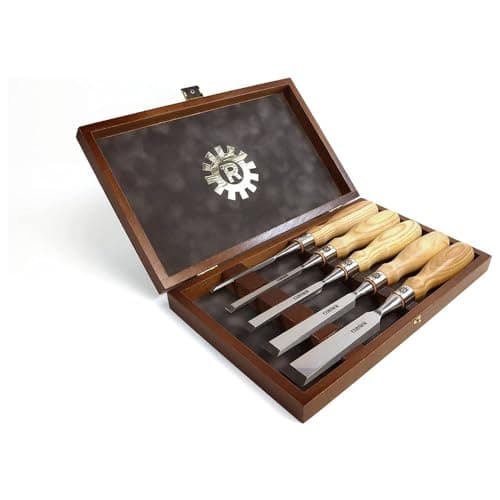
Cryogenically treated Cr-V hardened to around HRc 62, ground far finer than the standard line, with ash handles and stainless ferrules. This is where more money buys measurably more edge retention.
#ad· Live prices from the Amazon Product API, as of October 21, 2026. Where we have no verified live price we show none, and the cost-per-decade figure is suppressed with it — we would rather leave a gap than print a number that has rotted.
Both traditions solve the same problem: steel hard enough to take a superb edge is brittle enough to shatter under a mallet. They solve it differently, and each solution has consequences that show up in how the tool behaves and what it tolerates.
The steel
Western:one piece of steel, hardened throughout, at a compromise hardness — hard enough to hold an edge, soft enough not to shatter. Usually somewhere in the high 50s to low 60s HRc. It is a compromise and it works well.
Japanese:two steels forge-welded. A very hard, high-carbon cutting layer laminated onto a soft, tough iron body. No compromise on the edge steel, because it does not have to survive the shock — the soft body does that. The result is an edge a monolithic chisel cannot match.
The cost is that the hard layer is genuinely brittle, and it is at the working edge. Twisting a Japanese chisel in the cut chips it in a way a western chisel would tolerate.
The back
Western: flat, and you flatten it. On a good chisel that is a few minutes; on a budget one it is twenty minutes of rubbing steel on a stone before the tool works at all.
Japanese: hollow-ground, leaving a narrow land around the perimeter. You only lap that land, so setup is dramatically faster. The catch is long-term: decades of sharpening eventually consume the hollow near the edge, and restoring it (uradashi, tapping the soft back out) is a real skill. A chisel with no hollow left is at the end of its life, which matters if you buy old ones.
The handle
Western: tanged or socketed, plain, ready to use. A socket handle is replaceable by turning a new one.
Japanese: hooped, and the hoop must be seated before first use— compress the wood, tap the ring below the surface, peen the wood over it. This is not optional and almost nothing ships with English instructions saying so. An unseated hoop works loose and can come off under a mallet.
Sharpening
Japanese laminated steel is very hard and responds beautifully to waterstones, which is the traditional pairing for good reason. It is slower on diamond plates than western steel is. Western chisels are more tolerant of whatever you have.
The hollow back means less work per sharpening on the Japanese side; the harder steel means fewer sharpenings. Both point the same direction, which is why people who switch usually do not switch back.
Which to buy
Western if it is your first set. More forgiving, no setup ritual, and if you chip one you learn something cheaply. The four-piece Narex set plus a stone is the answer for most people and is on the main roundup.
Japanese as a second set, once you can sharpen. The edge quality is a genuine step up that no amount of money spent on western chisels buys, and the faster setup is a real ongoing benefit. Available options are on best Japanese chisels.
Western if you are hard on tools. Site work, borrowed tools, mixed materials, hitting things with whatever is nearest. The compromise hardness is a feature in that world.
One thing worth noting
The same comparison in sawsis far less balanced — there the Japanese tool is straightforwardly better for the money and the only real objection is that the teeth cannot be resharpened. With chisels, both traditions produce excellent working tools and the choice is genuinely a preference.
Every pick, in full
The write-ups
01Best Japanese chisels for the money
Set
3 pieces
Construction
Laminated hagane over jigane
Back
Hollow ground (ura)
Origin
Listing states Made in Japan
KAKURI Japanese Wood Chisel Set, 3 Piece (Oire Nomi)
KAKURI
8.2/10
Laminated hard steel over soft iron, hollow-ground backs, hooped handles, made in Japan, at a price where the western equivalents are still using chrome-vanadium.
Cost per decade
$27.90
Horizon · tier C
20 years — No lifetime warranty; parts purchasable and resharpenable
No warranty terms published for the US market at the date checked. A laminated hagane-over-jigane edge is renewable by sharpening until the hard layer runs out, which on a full-size chisel or plane iron is a working lifetime.
Rebuy risk
Medium
parts listed, resharpenable
Steel & edge
9.0
Back flatness
9.0
Handle
8.0
Sizes covered
6.5
Value
8.5
What it gets right
+Hollow-ground back means lapping touches only a narrow land, so setup is fast
+Laminated edge takes a keener edge than a homogeneous western chisel
+Hooped handles are made to be struck
What it costs you
−The hoop must be seated properly before first use, and the instructions assume you know
−Hard laminate chips if you twist it in the cut
−Three sizes only
Skip this if…
…you lever waste out of mortises. A Japanese bench chisel is a paring and chopping tool, not a prybar, and the hard laminate will tell you so.
Price as of October 21, 2026. Prices move; Amazon's is the one that counts.
#ad · we may earn a commission from this link to KAKURI Japanese Wood Chisel Set, 3 Piece (Oire Nomi)
02Best chisels overall, and the end of the argument
Set
4 pieces
Steel
Cr-Mn / Cr-V, hardened
Handles
Beech, tanged
Warranty
Not published by the maker
Narex Bevel Edge Chisel Set, 4 Piece
Narex
8.4/10
The set that makes the case for this whole site. Four sizes, Czech chrome-vanadium hardened properly, beech handles, and a price that leaves budget for the stone you will need anyway.
Cost per decade
$24.45
Horizon · tier C
20 years — No lifetime warranty; parts purchasable and resharpenable
A UK specialist retailer states a lifetime guarantee on Narex chisels; we could not find published warranty terms from Narex itself, so we do not rate it tier A. Unhandled blade blanks are sold separately, and the tool is resharpenable indefinitely.
Rebuy risk
Medium
parts listed, resharpenable
Steel & edge
8.5
Back flatness
8.0
Handle
7.5
Sizes covered
8.5
Value
9.5
What it gets right
+Edge retention indistinguishable from sets at four times the price in normal use
+Backs are flat enough that lapping is a job, not an ordeal
+Four sizes is genuinely the number most people use
+Nothing on the tool is consumable: sharpening renews it indefinitely
What it costs you
−Narex publishes no warranty terms we could find, so it cannot rate tier A
−Lacquer on the handles is functional rather than lovely
−Side lands are thicker than a dedicated dovetail chisel's
Skip this if…
…you cut a lot of tight dovetails. The side lands will bruise the pins; buy a dedicated dovetail chisel for those and keep these for everything else.
Cryogenically treated Cr-V hardened to around HRc 62, ground far finer than the standard line, with ash handles and stainless ferrules. This is where more money buys measurably more edge retention.
Cost per decade
$114.40
Horizon · tier C
20 years — No lifetime warranty; parts purchasable and resharpenable
A UK specialist retailer states a lifetime guarantee on Narex chisels; we could not find published warranty terms from Narex itself, so we do not rate it tier A. Unhandled blade blanks are sold separately, and the tool is resharpenable indefinitely.
Rebuy risk
Medium
parts listed, resharpenable
Steel & edge
9.5
Back flatness
9.5
Handle
9.0
Sizes covered
8.5
Value
7.0
What it gets right
+A published hardness figure, which most makers in this band do not give
+Backs arrive close enough to flat that first-use lapping is minimal
+Holds an edge in hardwood noticeably longer than the standard Narex
What it costs you
−Four to five times the price of the standard set for a real but incremental gain
−Harder steel is slower to bring back once it does dull
−Still no published warranty from the maker
Skip this if…
…you are still learning to sharpen. Harder steel punishes a poor technique more, not less.
As a second set, once you can sharpen, yes: the laminated edge is genuinely better than a monolithic western chisel achieves, and the hollow back makes every sharpening faster. As a first set, they are less forgiving than the situation warrants.
Why do Japanese chisels chip?+
The hard laminated cutting layer is brittle by design — that is the price of the edge quality. It chips when twisted in the cut or used to lever waste. Bench chisels of either tradition are not prybars, but the Japanese ones are less forgiving about it.
Do Japanese chisels need special sharpening?+
Not special, but waterstones suit the hard laminated steel better than diamond plates do, and the hollow back means you only lap a narrow land. The bevel is sharpened the same way as any chisel.
What is the hoop on a Japanese chisel for?+
It stops the handle splitting under mallet blows. It must be seated before first use: compress the wood, tap the ring below the surface, peen the wood over it. Unseated, it works loose and can come off.
We have not handled these tools. Nobody here has tested one, owned one, or taken one apart. Specifications come from the manufacturer or the retailer listing; warranty terms come from the maker's own warranty page; the cost-per-decade arithmetic is ours and reproducible. Where we could not verify a figure we say so on the page rather than quietly leaving it out. Read the full method.