Chisels
How Many Chisels Do You Need
Four. Possibly two. The ten-piece set exists because ten-piece sets sell, not because anyone uses ten.
We earn a commission when you buy through our Amazon links, at no extra cost to you. It never decides a ranking, and where the best tool in a class is one we earn nothing on, we say so and link it anyway. How this works.
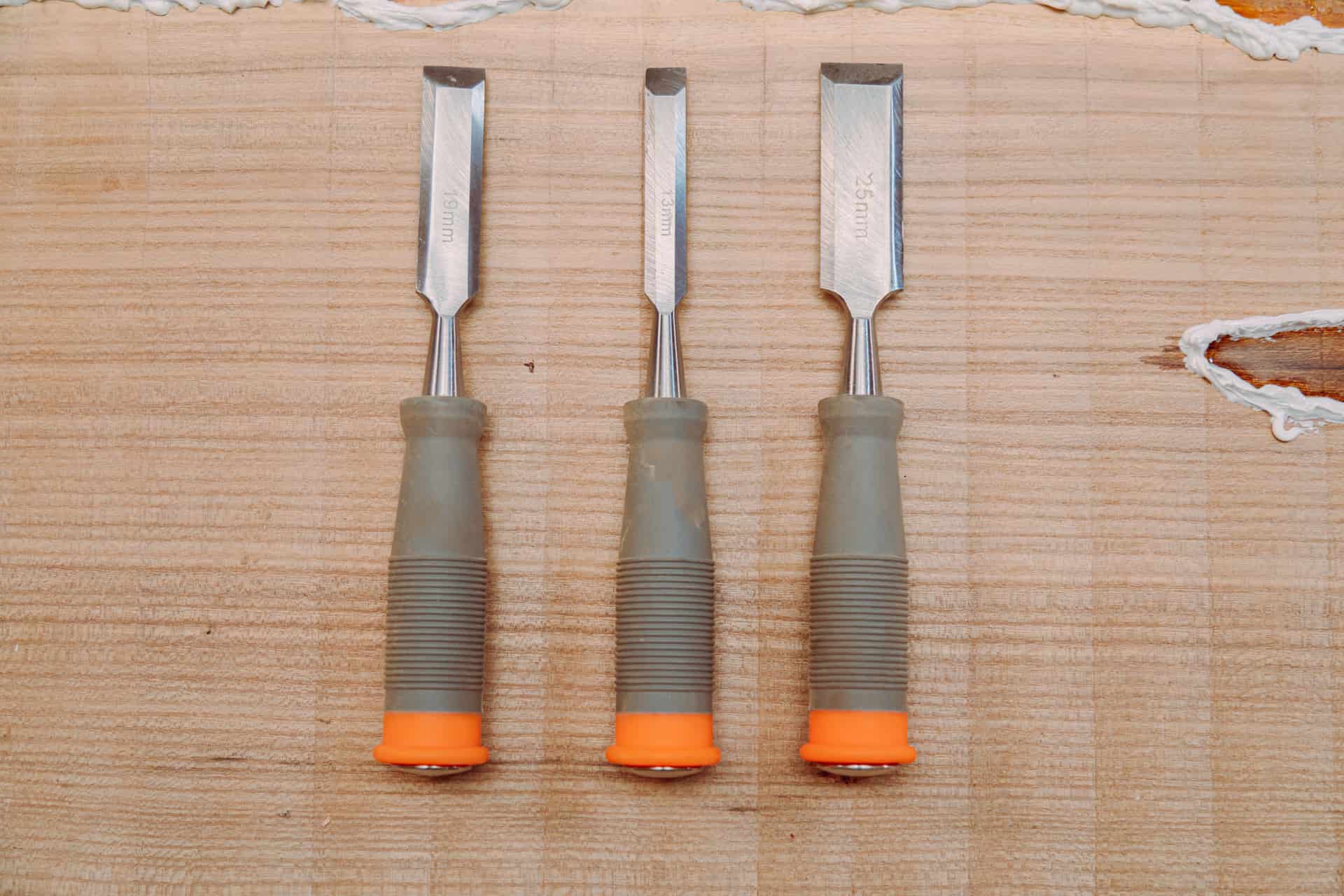
The answer is four, and if you want a shorter answer it is two.
This is a page on a site that earns money when you buy chisels, so it is worth stating the incentive plainly: recommending a ten-piece set would pay us better. It would also be wrong, and the difference between a four-piece and a ten-piece set is roughly the price of the sharpening stone that would actually improve your work.
The four
1/4 inch (6mm)— dovetail sockets, small mortises, cleaning up tight corners. Probably your most-used chisel, and the one to buy the best version of if you buy them individually.
1/2 inch (12mm)— the general-purpose size. Most paring, most chopping, most hinge mortises. If you own one chisel it is this one.
3/4 inch (20mm)— wider paring, tenon cheeks, larger housings. Used less often, missed when absent.
1 inch (26mm)— wide paring, cleaning up large surfaces, anywhere a long straight reference edge helps.
That is essentially all of furniture making. The 1/4 and the 1/2 will do eighty to ninety percent of it.
Why sets go bigger
Because a ten-piece set looks like better value than a four-piece set, and because the incremental cost to a manufacturer of adding 1/8, 3/8, 5/8, 7/8 and 1-1/4 is small. The incremental cost to you is not small, and the sizes you gain are the ones that sit in the roll.
There are two legitimate exceptions. A 1/8 inch is genuinely useful if you cut fine dovetails with narrow pins; nothing else gets in there. And working to metric plans with imperial chisels, or the reverse, produces real annoyance that an extra size sometimes solves.
The arithmetic that matters
Take a budget of $120. Four good chisels and a combination waterstone plus a guide fits inside it. Ten chisels of the same quality does not, and the ten-chisel version has no way to sharpen any of them.
Six months later, the four-chisel woodworker has four sharp chisels and knows how to keep them that way. The ten-chisel woodworker has ten dull chisels and a growing suspicion that hand tools are overrated. This is the most predictable failure in the whole category.
Buying individually
Underrated. Buy a 1/2 inch first, use it for a month, and you will know exactly which second size your work actually wants — and it will be a better-informed choice than any set-buying decision. Individual chisels cost more per unit and less in total, because you only buy the ones you use.
The trade is that sets ship in a roll or a box, and chisels genuinely do need protecting — an edge that rattles against other steel in a drawer is an edge you will be regrinding.
Then stop
Once you have four sharp bench chisels, the next thing that improves your work is not a fifth chisel. It is a better stone, or a saw that cuts to a line, or a plane. Add mortise chisels when you start chopping mortises by hand and not before — see chisel types compared.
The one exception worth naming is a paring chisel, and only because it is not a fifth size — it is a different tool that happens to be chisel-shaped. A long blade on a long handle registers flat on the work in a way a stubby bench chisel cannot, which is why people who fit a lot of joints end up with one. The best paring chisels ranks them, and it is explicit that this is a second-purchase tool rather than a gap in your four.
Questions
Frequently asked
How many chisels do I need for woodworking?
Four sizes — 1/4, 1/2, 3/4 and 1 inch — covers essentially all furniture work, and the 1/4 and 1/2 will do most of it. Larger sets add sizes that sit in the roll.
What is the most useful chisel size?
1/2 inch. It is the general-purpose size for paring, chopping and hinge mortises. If you buy one chisel, buy that one.
Should I buy a chisel set or individual chisels?
Individually is a better-informed way to buy: get a 1/2 inch, use it for a month, and you will know exactly which second size your work wants. Sets are cheaper per chisel and come with a roll, which chisels genuinely need.
Do I need a 1/8 inch chisel?
Only if you cut fine dovetails with narrow pins, where nothing wider will get into the socket. It is the one small size with a real job.
Receipts
Sources
- Classic Hand Tools — Narex range (retailer states a lifetime guarantee; no manufacturer terms published). Retrieved 2026-07-24.
- Amazon listing for Narex Bevel Edge Chisel Set, 4 Piece — specifications and price basis, retrieved via the Amazon Product API on 2026-07-24 and refreshed on the daily price check.
- Amazon listing for Narex Czech Steel Premium Chisels, 4 Piece — specifications and price basis, retrieved via the Amazon Product API on 2026-07-24 and refreshed on the daily price check.
We have not handled these tools. Nobody here has tested one, owned one, or taken one apart. Specifications come from the manufacturer or the retailer listing; warranty terms come from the maker's own warranty page; the cost-per-decade arithmetic is ours and reproducible. Where we could not verify a figure we say so on the page rather than quietly leaving it out. Read the full method.
Keep reading
Related
- The best wood chiselsFour-piece sets, ranked, with cost per decade.
- Chisel types comparedWhen a mortise or paring chisel is actually a different tool.
- The buy-it-for-life starter kitThe whole workshop version of this argument.
- The sharpening starter kitWhat to spend the difference on.
- Chisel sizes explainedTen sizes in a set, four you reach for, two that never leave your hand — here is which is which.
Back to Chisels · how we pick · editorial policy