Chisels
Bench Chisels vs Mortise Chisels
One tool does almost everything; the other survives the one job that snaps the first. Which you actually need.
We earn a commission when you buy through our Amazon links, at no extra cost to you. It never decides a ranking, and where the best tool in a class is one we earn nothing on, we say so and link it anyway. How this works.
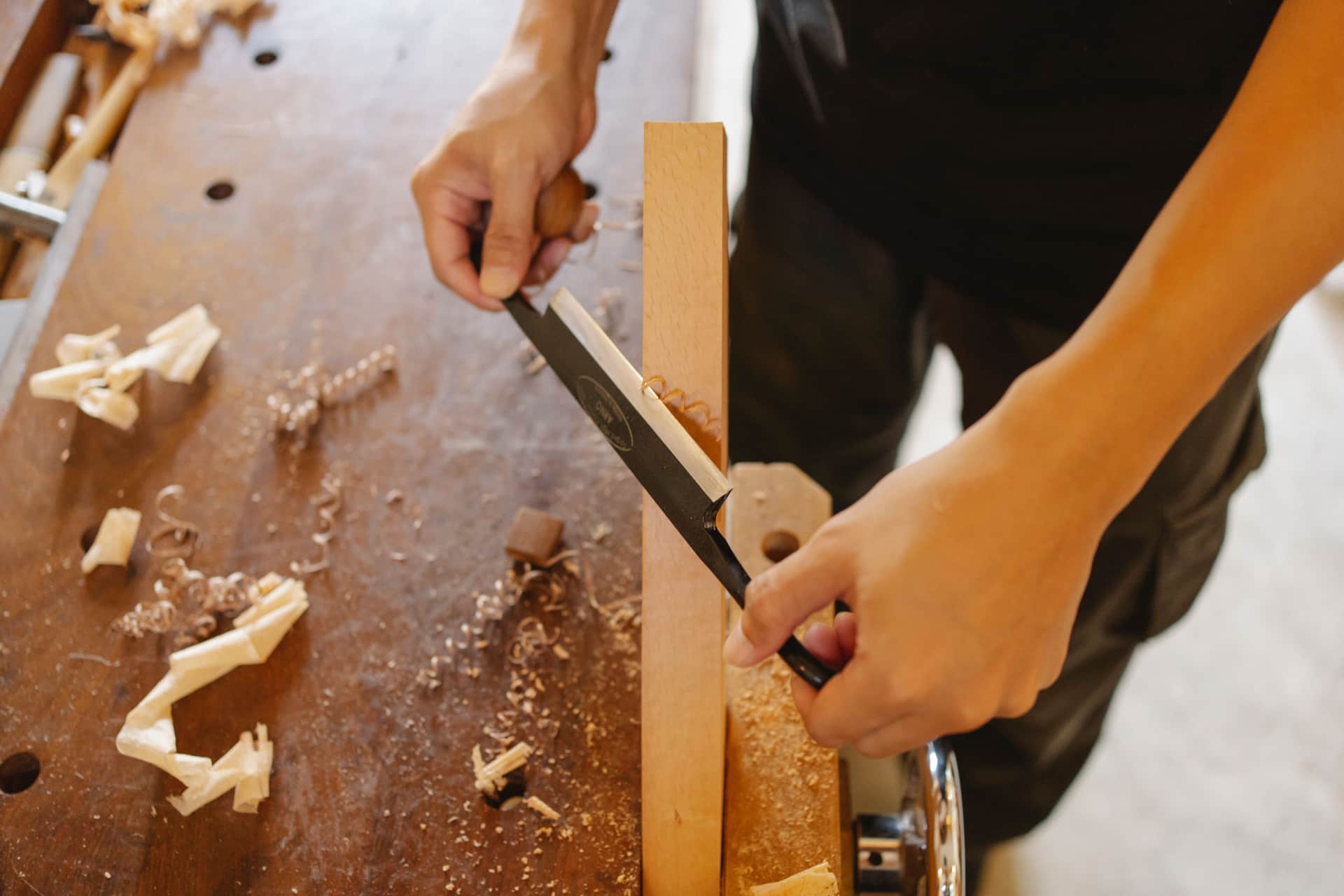
These two chisels look related and are barely the same tool. A bench chisel is a general-purpose blade that pares, chops and cleans up joinery; a mortise chisel is a specialist built to survive one violent job. Understanding where they differ — and, more usefully, where they overlap — tells you which you need and, for most people, why the answer is only one of them.
The blade section is the whole difference
Everything else follows from cross-section. A bench chisel has a thin, flat blade with beveled side lands, so it is light, it reaches into acute corners like dovetail sockets, and it flexes rather than resisting when loaded sideways. A mortise chiselhas a deep blade nearly as thick as it is wide, square-sided, with no beveled lands — a stiff bar of steel that resists bending above everything else.
That single dimension — how deep the blade is front-to-back — decides what each tool can do. The bench chisel's thinness buys access and delicacy. The mortise chisel's depth buys the ability to be levered against without snapping. Neither can have both, which is exactly why they are two different tools rather than one adjustable one. The full family picture is on chisel types compared.
The handle
A bench chisel handle is plain and light — tanged or socketed, round, sized to be tapped with a mallet or pushed by hand. It takes moderate blows and is comfortable for the fine, two-handed control paring wants.
A mortise chisel handle is built to be hammered hard and repeatedly. It usually carries a substantial bolster— a steel shoulder that stops the tang splitting the handle — and is frequently ovalso your hand feels the edge's orientation without looking. Many add a leather washer to cushion the blow and a hoop or ferrule to keep the top from mushrooming. It is a handle designed around abuse; the bench chisel's is designed around control. The details of what makes a mortise chisel a mortise chisel are on what is a mortise chisel.
What each is built to survive
This is the crux, and it is worth being blunt about. A bench chisel is built to survive being pushed and tapped. A mortise chisel is built to survive being levered— driven in and then cranked sideways to pop waste out of a deep slot. Levering is the load that separates them, and it is a load a bench chisel simply cannot take. A thin blade levered against deep waste does not spring; it snaps, usually at the tang, usually without warning.
| Bench chisel | Mortise chisel | |
|---|---|---|
| Blade section | Thin, flat, beveled sides | Deep, square, stiff |
| Handle | Light, plain | Bolstered, often oval, hooped |
| Best at | Paring, chopping joinery, cleanup | Chopping and levering deep mortises |
| Fails when | Levered against heavy waste | Rarely; built for the abuse |
| Reaches acute corners | Yes | No |
| Sizes to own | Four, 1/4 to 1 inch | Two or three, matched to tenons |
Where they overlap
They overlap in one place: light chopping. Both can be driven with a mallet to sever fibers and remove a chip, and for shallow work — a hinge mortise, a shallow housing, cleaning a machine-cut mortise's walls — a bench chisel does the job because none of it involves heavy levering. This overlap is why so many woodworkers get through years of work without ever owning a mortise chisel: they either cut shallow mortises a bench chisel can handle, or they hog out the waste with a drill or router and only pare the walls.
Where the overlap ends is deep mortises in solid wood. The moment the job requires driving deep and levering hard to clear the slot, the bench chisel is out of its depth — literally, in cross-section — and the mortise chisel is the only right tool.
Which to buy first
Bench chisels, without hesitation, and probably bench chisels only for a long time. A four-piece bevel-edge bench set does the overwhelming majority of everything a chisel is asked to do, and it is the foundation every other chisel is added to later. The ranked options are on the best wood chisels.
Add mortise chisels when — and only when — you start chopping deep mortises by hand and feel the bench chisel struggling or fear snapping it. That is a specific, recognizable moment, and it arrives for some woodworkers and never for others. Buying mortise chisels speculatively is buying tools for a job you have not yet decided to do.
Why most people only need bench chisels
Because the job that requires a mortise chisel — hand-chopping deep mortises — is one that machines have largely absorbed. A drill press removes the bulk of a mortise in seconds; a plunge router with a jig cuts clean-walled mortises fast; a dedicated mortiser exists precisely to make the job disappear. In every one of those cases the bench chisel handles the pare-and-clean afterward, and the mortise chisel has nothing to do.
If you cut joinery entirely by hand and enjoy chopping mortises the traditional way, a mortise chisel is a genuine pleasure and the correct tool. If you are like most people — some hand work, some machine work — the honest answer is that a good bench set plus a drill is a complete mortising solution. Deciding how many chisels of any kind you need is its own question, on how many chisels do you need.
Questions
Frequently asked
What is the difference between a bench chisel and a mortise chisel?
Blade section. A bench chisel is thin and flat with beveled sides for access and delicacy; a mortise chisel is deep and square-sectioned to survive being levered against. One pares and chops joinery; the other chops and levers deep mortises.
Which should I buy first, bench or mortise chisels?
Bench chisels, and probably only bench chisels for a long time. A four-piece bench set does most of what any chisel is asked to do. Add mortise chisels only when you start chopping deep mortises by hand.
Can bench chisels cut mortises?
Shallow ones, and the walls of machine-cut ones, because that is chopping and paring without heavy levering. Deep mortises in solid wood require levering that snaps a bench chisel, so those need a mortise chisel.
Do most woodworkers need mortise chisels?
No. Drilling, routing or a dedicated mortiser removes most mortise waste, and a bench chisel pares the walls afterward. Mortise chisels are for hand-chopping deep mortises, which many woodworkers never do.
How many mortise chisels do I need?
If you cut mortises by hand, two or three sizes matched to your common tenon thicknesses, because a mortise chisel is sized to be the width of the joint. If you cut mortises with machines, none. The widths worth owning, and what each one costs, are on the best mortise chisels.
Keep reading
Related
- What is a mortise chisel?The specialist tool in full.
- The best mortise chiselsSeven ranked, with published hardness figures and live prices.
- Chisel types comparedAll four families and which you can skip.
- The best wood chiselsThe bench set to start with.
- How many chisels do you needSizes, and when a second family earns its place.
- What is a firmer chiselThe heavy, square-sided chisel built to be struck, and where it sits between a bench and a mortise chisel.
Back to Chisels · how we pick · editorial policy