Chisels
Wood Chisel vs Cold Chisel
One is ground at 25 degrees to slice wood fibers; the other is ground at 60 degrees to shear steel. Using either in the other's job ruins the tool, and one of the two does it dangerously.
We earn a commission when you buy through our Amazon links, at no extra cost to you. It never decides a ranking, and where the best tool in a class is one we earn nothing on, we say so and link it anyway. How this works.
The short answer
Quick picks
| # | Tool | Best for | Per decade | Score | Price |
|---|---|---|---|---|---|
| 01 | 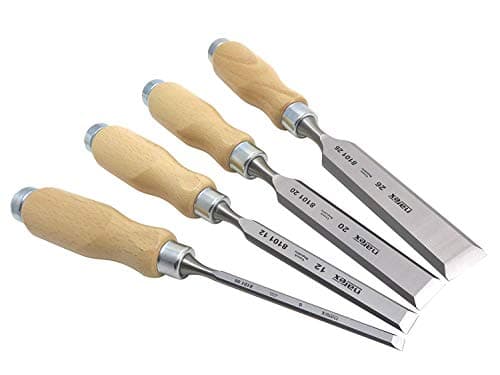 Narex Bevel Edge Chisel Set, 4 Piece The set that makes the case for this whole site. Four sizes, Czech chrome-vanadium hardened properly, beech handles, and a price that leaves budget for the stone you will need anyway. | Best chisels overall, and the end of the argument | $24.50tier C | 8.4/10 | $48.99Amazon |
| 02 | 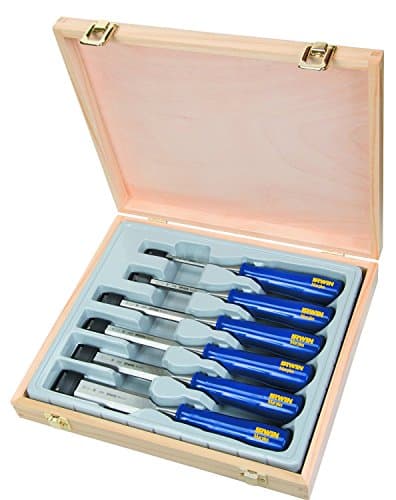 Marples Blue Chip Bevel Edge Chisels, Set of 6 The default UK and US workshop chisel for thirty years. Not the finest steel in this list, but the plastic handles take mallet abuse that would split a wooden one, and six sizes covers everything. | The set that is in every workshop for a reason | $46.06tier C | 7.5/10 | $92.12Amazon |
| 03 | 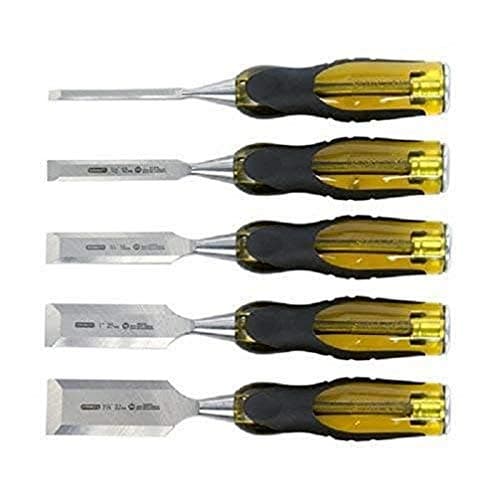 Stanley FatMax Bevel Edge Chisel Set, 5 Piece Built for a tool belt rather than a bench. Bi-material handles and a strike cap that tolerates a framing hammer, which is a legitimate design target even if it is not a furniture one. | Site work where the chisel gets hit with whatever is nearby | $56.98tier C | 6.9/10 | $113.96Amazon |
#ad· Live prices from the Amazon Product API, as of October 16, 2026. Where we have no verified live price we show none, and the cost-per-decade figure is suppressed with it — we would rather leave a gap than print a number that has rotted.
A wood chisel is ground at about 25 to 30 degrees to slice wood fibers; a cold chisel is ground at about 60 degrees to shear cold metal. They are not substitutes in either direction, and the swap that matters most is the dangerous one: a cold chisel struck hard while its struck end is mushroomed can throw a fragment of steel. If what you actually need is a set of wood chisels, the Narex 4-piece bevel-edge set is the pick for most people — properly hardened Czech chrome-vanadium at a price that leaves budget for the stone you will need anyway.
The confusion is understandable. Both tools are a steel blade with a handle, both are hit with something, and hardware stores stock them three feet apart. But they are solving different mechanical problems, and every design difference follows from that.
What each one is actually doing
A wood chisel severs fibers. Wood is a bundle of long cellulose tubes, and cutting it cleanly means slicing across or along those tubes with a very thin, very sharp edge. A thin edge needs a shallow bevel — 25 degrees for paring, 30 for general bench work — and shallow means unsupported, which is why a wood chisel must be made of steel hard enough to hold that delicate edge and must never be used to lever against metal. Our sharpening angles page lists the full range.
A cold chisel shears metal. “Cold” means unheated: the tool cuts, splits or shears steel at room temperature by concentrating an enormous hammer blow into a short, blunt, extremely stout edge. A 60-degree-ish included angle is not a compromise, it is the requirement — any thinner and the edge would fold over on the first blow. The whole tool is a single piece of forged steel, usually hexagonal or octagonal in section, with no handle at all.
Everything else about the two tools derives from those two sentences, and it is worth laying them side by side.
| Wood chisel | Cold chisel | |
|---|---|---|
| Bevel angle | About 25 to 30 degrees | About 60 degrees included |
| Edge | Thin, keen, sharpened to a polish | Blunt, stout, ground not polished |
| Body | Blade plus separate handle; often bevel-edged sides | One forged bar, hex or octagonal |
| Struck with | Mallet, or a hammer only if the handle is built for it | Ball-pein or club hammer, always |
| Struck end | Wood, plastic or a steel hoop depending on the design | Bare steel, deliberately softer than the cutting end |
| Fails by | Chipping the edge, splitting the handle | Mushrooming the struck end, which can shed fragments |
What goes wrong when you swap them
A wood chisel used on metal, masonry or nails is finished immediately. Not damaged — finished, as a fine tool. A 25 degree edge in hardened steel will chip out in a crescent you then have to grind past, which costs you several millimeters of blade and a lot of time at the stone. If there is a nail in the board, find it before the chisel does. The same goes for levering: a wood chisel used as a pry bar bends or snaps, because the steel is hard and therefore not very tough.
A cold chisel used on wood simply does not cut. A 60 degree edge cannot sever fibers; it crushes and splits them, which is why a cold chisel in wood tears a ragged trench and follows the grain wherever the grain wants to go. It is not dangerous, it is just useless, and people conclude that chisels are hard to use when what they actually had was the wrong tool.
The genuinely hazardous case is a mushroomed struck end. A cold chisel is deliberately left softer at the struck end than at the cutting end, so repeated hammer blows spread it into a mushroom with thin flared edges. Those flared edges are work-hardened, brittle, and can break off and fly when hit. The fix is routine shop practice: grind the mushroom back to a clean chamfer regularly, keep the chisel dressed, and wear eye protection whenever you strike one. This is the single reason to be careful about treating these tools as interchangeable, and it applies to the cold chisel regardless of what you are cutting with it.
So what do I hit a wood chisel with?
It depends entirely on the handle, and getting this wrong is the most common way a decent chisel dies young.
- Plain wooden handle, no reinforcement at the struck end: mallet only. A steel hammer will split it, reliably rather than eventually.
- Wooden handle with a leather washer or a hoop:built to be struck, and a steel hammer is acceptable — on a hooped Japanese chisel it is correct.
- Polypropylene or bi-material handle with a strike cap: designed for hammer abuse. The Marples Blue Chip set and the Stanley FatMax set are both in this category, and that toughness is exactly the argument for them on a site rather than at a bench.
- Paring chisel, long and thin: never struck at all. Hand pressure only. Paring chisels explained covers why.
Chisel handle materials works through which handle takes what, and the mallet roundupranks what to hit each type with — including the one genuinely counterintuitive rule, which is that the striking face should always be softer than the thing it strikes.
The other chisels people confuse with these two
Masonry and brick chisels (and “stone chisels”). Wide, very stout, for splitting brick and dressing stone. Closer in principle to a cold chisel than to a wood chisel, and like a cold chisel they want eye protection and a dressed struck end.
Mortise chisels. Wood chisels, but thick in section and ground steeper — 32 to 35 degrees is normal — because they are levering waste out of a deep cut rather than paring. If you keep chipping bench chisels while chopping mortises, this is the tool you are missing: the mortise chisel roundup and bench chisels vs mortise chisels cover the difference.
Firmer chisels. Wood chisels with square rather than beveled sides, stronger for heavy work and worse in a dovetail socket — what is a firmer chisel.
Electrician's and floorboard chisels. Usually wood chisels with hardened struck ends, sold for site work. Treat them as wood chisels that tolerate a hammer, not as cold chisels.
If you only own the wrong one
For woodworking, the three sets in the picks above cover the realistic answers, and they are genuinely different tools rather than three price points.
Bench work, furniture, joinery: the Narex bevel-edge set. Four sizes, Czech chrome-vanadium, beech handles, properly hardened. Its own cons are honest about what you are not getting — Narex publishes no warranty terms we could find, and the side lands are thicker than a dedicated dovetail chisel's.
General workshop use where the chisel will be abused: the Marples Blue Chip set of six. Polypropylene handles that take mallet and hammer abuse, a limited lifetime warranty that excludes normal wear, and steel that dulls faster than the Narex in hardwood. Six sizes covers everything.
A tool belt, site work, demolition-adjacent jobs: the Stanley FatMax set. Bi-material handles with a strike cap that tolerates a framing hammer. Note the warranty detail we flag everywhere it appears: Stanley's cover excludes blades as consumables, which on a chisel means the tool.
For cutting or splitting metal, buy an actual cold chisel — they cost very little, they are a different aisle, and there is no version of this where a woodworking chisel is the cheaper answer. What you should not do is keep one chisel for both jobs. The best wood chisels ranks the bench field in full, and how to use a chisel covers the grip and the blow once you have the right one.
Questions
Frequently asked
Can I use a wood chisel on metal?
No. A wood chisel is ground at 25 to 30 degrees and hardened for edge retention, and that edge will chip out on the first blow against steel. Repairing it costs several millimeters of blade on a coarse stone or a grinder. Use a cold chisel, which is ground at roughly 60 degrees for exactly this.
Can I use a cold chisel on wood?
You can, and it will crush and split the fibers rather than cutting them, leaving a ragged trench that wanders with the grain. It is not dangerous to the wood or to you — just useless. If a cold chisel is all you have and you need to rough out waste, a mallet and a cheap wood chisel will cost less than the time you waste.
What is the difference in bevel angle between a wood and a cold chisel?
Roughly 25 to 30 degrees on a wood chisel against roughly 60 degrees included on a cold chisel. That is the whole story in one number: a thin edge slices fibers, and a stout edge survives shearing steel. Grinding a cold chisel to 25 degrees would make it fold on the first hit.
Why does my cold chisel mushroom at the top?
Because the struck end is deliberately left softer than the cutting end, so repeated hammer blows spread it. That is normal; what is not safe is leaving it. The thin flared edge is brittle and can fly off when struck, so grind the mushroom back to a clean chamfer regularly and wear eye protection when using one.
Should a wood chisel be hit with a hammer or a mallet?
It depends on the handle. A plain wooden handle wants a mallet and will split under a steel hammer. A hooped or heavily ferruled struck end, or a polypropylene handle with a strike cap, will take a hammer. A paring chisel should never be struck with anything. When in doubt, use wood or brass — neither will damage anything.
Is a masonry chisel the same as a cold chisel?
Not the same, but in the same family: a masonry or brick chisel is wider and shaped for splitting and dressing brick and stone, while a cold chisel is narrower and intended for cutting and shearing metal. Both are stout, both are struck with a steel hammer, and both need the struck end kept dressed and your eyes protected.
Receipts
Sources
- Classic Hand Tools — Narex range (retailer states a lifetime guarantee; no manufacturer terms published). Retrieved 2026-07-24.
- IRWIN — Warranty Information (limited lifetime warranty on select products, 'as long as the original end-user purchaser owns the product', against 'deficiencies in material and workmanship'; does not cover product 'which fails to operate due to normal wear and tear', nor misuse, abuse, alteration or repair). The former /support-services/guarantees page now redirects to the IRWIN home page. Retrieved 2026-09-10.
- Stanley Tools — Warranty Information (limited lifetime on hand tools; excludes consumables including 'any blade'). Retrieved 2026-07-24.
- Amazon listing for Narex Bevel Edge Chisel Set, 4 Piece — specifications and price basis, retrieved via the Amazon Product API on 2026-07-24 and refreshed on the daily price check.
- Amazon listing for Marples Blue Chip Bevel Edge Chisels, Set of 6 — specifications and price basis, retrieved via the Amazon Product API on 2026-07-24 and refreshed on the daily price check.
- Amazon listing for Stanley FatMax Bevel Edge Chisel Set, 5 Piece — specifications and price basis, retrieved via the Amazon Product API on 2026-07-24 and refreshed on the daily price check.
We have not handled these tools. Nobody here has tested one, owned one, or taken one apart. Specifications come from the manufacturer or the retailer listing; warranty terms come from the maker's own warranty page; the cost-per-decade arithmetic is ours and reproducible. Where we could not verify a figure we say so on the page rather than quietly leaving it out. Read the full method.
Keep reading
Related
- The best wood chiselsThe bench field in full, if this page sent you shopping.
- Chisel handle materialsWhich handles take a hammer and which split under one.
- Chisel types comparedBench, mortise, paring, firmer and dovetail, side by side.
- The best woodworking malletsWhat to strike a wood chisel with, ranked.
- Sharpening angles explainedThe 25, 30 and 35 degree numbers, and why they differ.
Back to Chisels · how we pick · editorial policy