Hand Saws
Japanese Saw Types Explained
Six patterns, two tooth geometries and one shared idea: cut on the pull and the plate can be thin, because nothing is trying to buckle it.
We earn a commission when you buy through our Amazon links, at no extra cost to you. It never decides a ranking, and where the best tool in a class is one we earn nothing on, we say so and link it anyway. How this works.
The short answer
Quick picks
| # | Tool | Best for | Per decade | Score | Price |
|---|---|---|---|---|---|
| 01 | 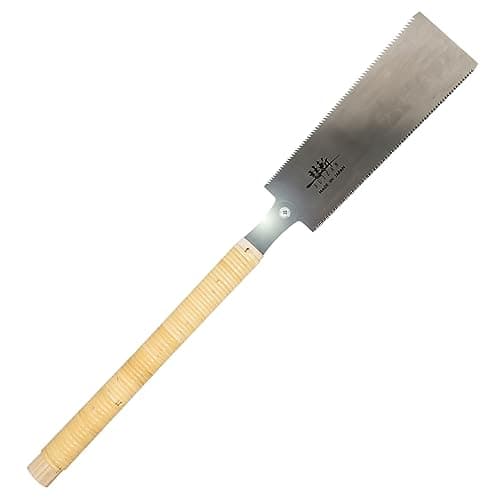 SUIZAN Ryoba Double Edge Pull Saw, 9.5 in Rip teeth on one edge, crosscut on the other, a plate thin enough to cut with almost no force, and a maker who actually sells replacement blades. That last point is why it rates as well as it does. | Best hand saw overall | $24.90tier C | 8.5/10 | $49.80Amazon |
| 02 | 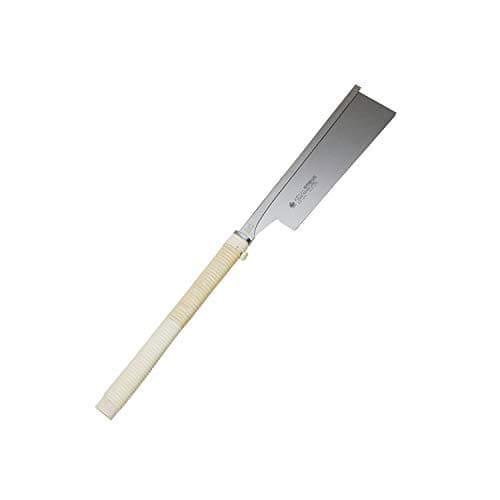 Gyokucho Dozuki Noko Giri Dovetail Saw, 9.5 in The workshop-standard dozuki. Nothing about it is remarkable, which is the recommendation: it has been the default for long enough that the design has no remaining surprises. | The dozuki most Japanese joiners actually own | $21.35tier C | 8.5/10 | $42.70Amazon |
| 03 | 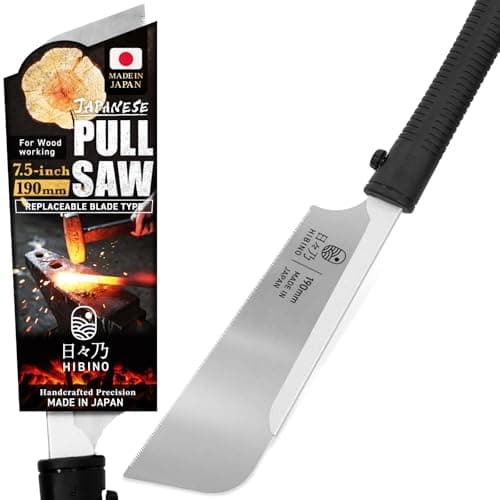 HIBINO Kataba Pull Saw, 7.5 in 14 TPI Crosscut A 7.5 in kataba at a published 14 TPI, made in Japan. A kataba has no spine, which is the trade this page keeps making: you give up the dead-straight tracking of a backed saw and get a cut that can go as deep as the plate is long — which on a panel is the difference between finishing the cut and not. | An unbacked pull saw that can cut past its own depth | $11.99tier D | 6.8/10 | $11.99Amazon |
| 04 | 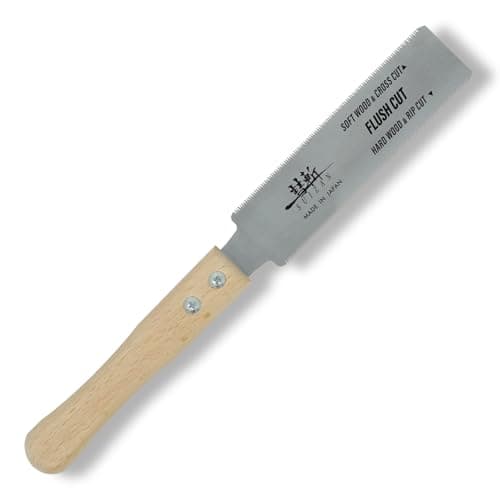 SUIZAN Flush Cut Saw, 6 in A flush-cut saw has no set to its teeth at all, which is the entire reason it exists: the plate can lie flat on a veneered face and cut the thing standing proud of it without scratching the face itself. On sheet goods that is a specific and frequent job — edge banding, solid lippings, plugs in a plywood carcass. | Trimming edge banding and plugs without touching the face | $11.35tier C | 8.3/10 | $22.70Amazon |
#ad· Live prices from the Amazon Product API, as of October 16, 2026. Where we have no verified live price we show none, and the cost-per-decade figure is suppressed with it — we would rather leave a gap than print a number that has rotted.
If you buy one Japanese saw, buy a ryoba — rip teeth on one edge and crosscut teeth on the other, so one saw does both jobs. If you buy two, add a dozuki for joinery, which is the backed saw with the fine crosscut teeth. The other four patterns are specialists and you will know when you need one.
This site has the western family side by side on saw types compared: panel, tenon, dovetail, coping. This is the Japanese equivalent, and the family is organised on different lines — not by size and tooth count the way western saws are, but by what the plate is shaped to do.
The one idea the whole family is built on
A western saw cuts on the push, which puts the plate in compression. A thin plate in compression buckles, so a push saw's plate has to be thick enough not to, which means a wide kerf, which means more material removed and more force per stroke. A backsaw adds a spine to stiffen it further.
A Japanese saw cuts on the pull, which puts the plate in tension. Nothing buckles in tension, so the plate can be as thin as the steel allows — often half the thickness of a western equivalent. Three things follow, and they explain nearly everything else about these saws.
The kerf is narrow, so you remove less wood, the cut is more accurate, and each stroke takes less effort. Japanese vs western saws has the full trade-off.
The teeth are usually impulse-hardened,because a thin plate holds a hardened tooth better than a filed one and the makers chose edge life over renewability. That means most of these saws cannot be sharpened and are designed around a replaceable blade instead — how to replace a Japanese saw blade is the routine.
The handle is a straight wrapped grip, because a pull stroke is a pull with the arm rather than a push from the shoulder, and a pistol grip would be in the way.
The six patterns
Ryoba — the double-edged one. Rip teeth along one edge and crosscut teeth along the other, unbacked, so it cuts as deep as the plate is long. The most versatile saw in the family and the one to own first: it will rip a board to width and cross-cut it to length without changing tools. Which side of a ryoba do you use answers the question everyone asks about it, and ryoba vs dozuki is the choice between the first two patterns here.
Dozuki — the backed joinery saw. A stiffening spine along the top of a very thin plate, fine crosscut teeth, and the most accurate cut in the family. It is the Japanese dovetail and tenon saw. The spine limits depth of cut to roughly the plate below it, so it is a joinery saw and not a panel saw. What is a dozuki saw covers the pattern.
Kataba — the single-edged, unbacked one. One toothed edge, no spine. It splits the difference: deeper cuts than a dozuki and more accuracy than a ryoba, because there is no second set of teeth to scratch the work on the far side of a deep cut. Usually sold as a crosscut. What is a kataba saw has the detail.
Kugihiki — the flush-cut saw. A very flexible unbacked plate with teeth that have no set at all, which is the whole point: the plate lies flat on a finished surface and cuts a dowel or a plug off flush without scratching the face either side of it. It will do nothing else — it binds in any cut more than a few millimetres deep. What is a flush cut saw explains why zero set matters.
Azebiki — the curved-edge starter saw. A short, wide plate with two convex toothed edges, rip on one and crosscut on the other. The curve lets you start a cut in the middle of a board face, which no straight-edged saw can do: it is the tool for beginning a groove or a housing where there is no edge to start from. A genuine specialist, and the one most likely to sit unused.
Anahiki — the big coarse one. A long, heavy unbacked saw with large rip teeth for green timber and construction work. It is a carpenter's saw, not a joiner's, and the overlap with the best hand saws for 2x4s is where that work lives on this site.
Two tooth geometries, and which face to protect
Within the patterns there are only two tooth types, and the distinction is the same one western saws make.
Rip teeth are filed like a row of tiny chisels, square across, and they shear fibers lengthwise. They cut along the grain fast and tear across it.
Crosscut teeth are filed to points with a bevel, and they sever fibers across the grain cleanly. They cut across the grain well and are slow along it. Rip vs crosscut teeth has the geometry, and saw TPI explained covers how the tooth count interacts.
And one thing that is easy to get backwards and free to get right. Teeth tear fibers on the side where they exit the cut. A Japanese saw cuts on the pull, so it exits on the upper face. The face you care about goes down. This is the exact opposite of a western push saw, and it is the single most common reason a careful cut comes out fringed on the wrong side.
Four saws covering the family
One of each of the patterns most people actually use, from our registry, with the live price for each in the table above.
SUIZAN Ryoba 9.5 in— the one to buy first. Rip one edge, crosscut the other, impulse-hardened and the blade is replaceable, which SUIZAN sells directly. If you own no Japanese saw, this is the purchase.
Gyokucho Dozuki Noko Giri 9.5 in— the joinery saw, and the dozuki most Japanese joiners own. Backed, fine crosscut, impulse hardened, and long enough to reach tenon depth as well as dovetail depth.
HIBINO Kataba 7.5 in— a published 14 TPI crosscut, unbacked, made in Japan, and the cheapest saw on the page by a distance. No replacement blade is listed, so treat it as a consumable and buy it accordingly.
SUIZAN Flush Cut Saw 6 in— the kugihiki. Zero set, so it lies on a veneer or a finished face and trims a plug or edge banding off without marking anything. Nothing else substitutes for it, and it does nothing else.
What actually decides it
Buying guide
Which patterns do you actually need?
One saw: a ryoba. Both tooth geometries, unlimited depth of cut, and it will do ninety per cent of what you ask of a hand saw. The best Japanese saws is the full ranking.
Two saws: add a dozuki. Dovetails, tenon shoulders and anything where the cut will be visible. This is the pair most hand-tool woodworkers settle on and stop.
Three saws: add a flush-cut saw. It is cheap, it does one job, and it is the only tool that does that job at all. If you plug screw holes or use edge banding you will reach for it constantly.
Four: a kataba, for cuts deeper than a dozuki can reach but more accurate than a ryoba manages — sawing a wide tenon cheek, for instance.
Beyond that, buy an azebiki only when you have a specific cut that starts in the middle of a board, and an anahiki only if you cut green timber. Neither is a general purchase and both are commonly bought and never used.
Using a pull saw if you have only used western saws
- Do not push. The return stroke is a return, not a cut. Pushing a thin plate into the kerf kinks it, and a kinked plate never cuts straight again.
- Pull with the arm, not the shoulder. A relaxed grip and a long steady pull. These saws cut with far less force than a western saw and force is what makes them wander.
- Start on the pull, at a low angle. Two or three light pulls to establish the kerf before you commit.
- Good face down. Teeth exit on the upper side. This is worth repeating because it is the most common mistake a convert makes.
- Keep the plate dry and lightly oiled. A thin plate rusts through faster than a thick one, and rust in the gullets stops a saw cutting. Cleaning and waxing hand tools covers what to use, and rust removal and prevention is the fix if you left it damp.
Cost per decade on a saw you cannot sharpen
This is where the Japanese family and this site's buy-it-for-life argument meet awkwardly, and it is worth being straight about. Almost every saw in the category has impulse-hardened teeth, which are harder than any file. When they dull, they are done. A filed western backsaw can be jointed, set and refiled indefinitely — how to sharpen a hand saw is that routine, and it is the only genuinely permanent answer in sawing.
The Japanese answer is a replaceable blade: you keep the handle and the spine and buy a new plate on a schedule. Done that way the arithmetic is reasonable, and SUIZAN and Gyokucho both support it — SUIZAN sells blades directly. Done badly, by buying a saw whose blade is not available separately, you own a disposable tool with a nice handle. That is the one thing worth checking before you buy any of these, and it is the reason the HIBINO is ranked where it is on this page rather than higher. Cost per decade has the arithmetic in full.
Questions
Frequently asked
What are the different types of Japanese saws?
Six patterns are worth knowing. Ryoba is double-edged with rip teeth on one side and crosscut on the other. Dozuki is backed with fine crosscut teeth, for joinery. Kataba is single-edged and unbacked, for deeper cuts. Kugihiki is the flush-cut saw with no tooth set. Azebiki has curved edges to start a cut mid-board. Anahiki is the big coarse carpenter's saw for green timber.
Which Japanese saw should I buy first?
A ryoba. It carries both tooth geometries on one plate and has no spine limiting the depth of cut, so one saw rips and cross-cuts at any depth. Add a dozuki second, for dovetails and tenon shoulders where the cut shows.
Why do Japanese saws cut on the pull stroke?
Because it lets the plate be thinner. Pulling puts the plate in tension, and nothing buckles in tension; pushing puts it in compression, which a thin plate cannot take. A thinner plate means a narrower kerf, less wood removed, a more accurate cut and less effort per stroke.
Can Japanese saws be sharpened?
Most cannot. Impulse-hardened teeth are harder than a saw file, which is the trade the makers chose for longer edge life. The designed answer is a replaceable blade: keep the handle, buy a new plate. Traditional hand-filed Japanese saws do exist and can be sharpened, by a specialist rather than at your bench.
Which side of the wood should face up with a Japanese saw?
Good face down. Teeth tear fibers where they exit the cut, and a pull saw exits on the upper face — the opposite of a western push saw, where good face goes up. Getting this backwards fringes the one surface you cared about.
What is the difference between a ryoba and a dozuki?
A ryoba has two toothed edges and no spine, so it rips and cross-cuts at any depth. A dozuki has one fine crosscut edge and a stiffening spine, which makes it far more accurate and limits the cut to roughly the depth of plate below the spine. Ryoba for dimensioning, dozuki for joinery — see ryoba vs dozuki.
Receipts
Sources
- SUIZAN Japan — Replacement Blade collection (replacement blades sold directly for ryoba, dozuki and kataba). Retrieved 2026-07-24.
- SUIZAN Japan — FAQ (warranty, verbatim: "We offer a 30-day warranty from the date of delivery. In case of any initial defects, we will replace the item free of charge." The same FAQ's note that "SUIZAN blades are impulse-hardened and cannot be resharpened" refers to its pull-saw blades, which are sold as a replacement line; no such statement appears on any of its kanna pages). Retrieved 2026-09-24.
- Amazon listing for SUIZAN Ryoba Double Edge Pull Saw, 9.5 in — specifications and price basis, retrieved via the Amazon Product API on 2026-07-24 and refreshed on the daily price check.
- Amazon listing for Gyokucho Dozuki Noko Giri Dovetail Saw, 9.5 in — specifications and price basis, retrieved via the Amazon Product API on 2026-07-24 and refreshed on the daily price check.
- Amazon listing for HIBINO Kataba Pull Saw, 7.5 in, 14 TPI crosscut — specifications and price basis, retrieved via the Amazon Product API on 2026-07-24 and refreshed on the daily price check.
- Amazon listing for SUIZAN Flush Cut Saw, 6 in — specifications and price basis, retrieved via the Amazon Product API on 2026-07-24 and refreshed on the daily price check.
We have not handled these tools. Nobody here has tested one, owned one, or taken one apart. Specifications come from the manufacturer or the retailer listing; warranty terms come from the maker's own warranty page; the cost-per-decade arithmetic is ours and reproducible. Where we could not verify a figure we say so on the page rather than quietly leaving it out. Read the full method.
Keep reading
Related
- Saw types comparedThe western family laid out the same way.
- The best Japanese sawsThe whole category ranked, with prices.
- Japanese vs western sawsPush or pull, and what each tradition gives up.
- How to replace a Japanese saw bladeThe maintenance routine that replaces sharpening.
- Which side of a ryoba do you useTelling the rip edge from the crosscut edge.
Back to Hand Saws · how we pick · editorial policy