Hand Saws
Saw TPI Explained
One number on the blade that decides how the saw feels, how fast it cuts, and how good the cut looks.
We earn a commission when you buy through our Amazon links, at no extra cost to you. It never decides a ranking, and where the best tool in a class is one we earn nothing on, we say so and link it anyway. How this works.
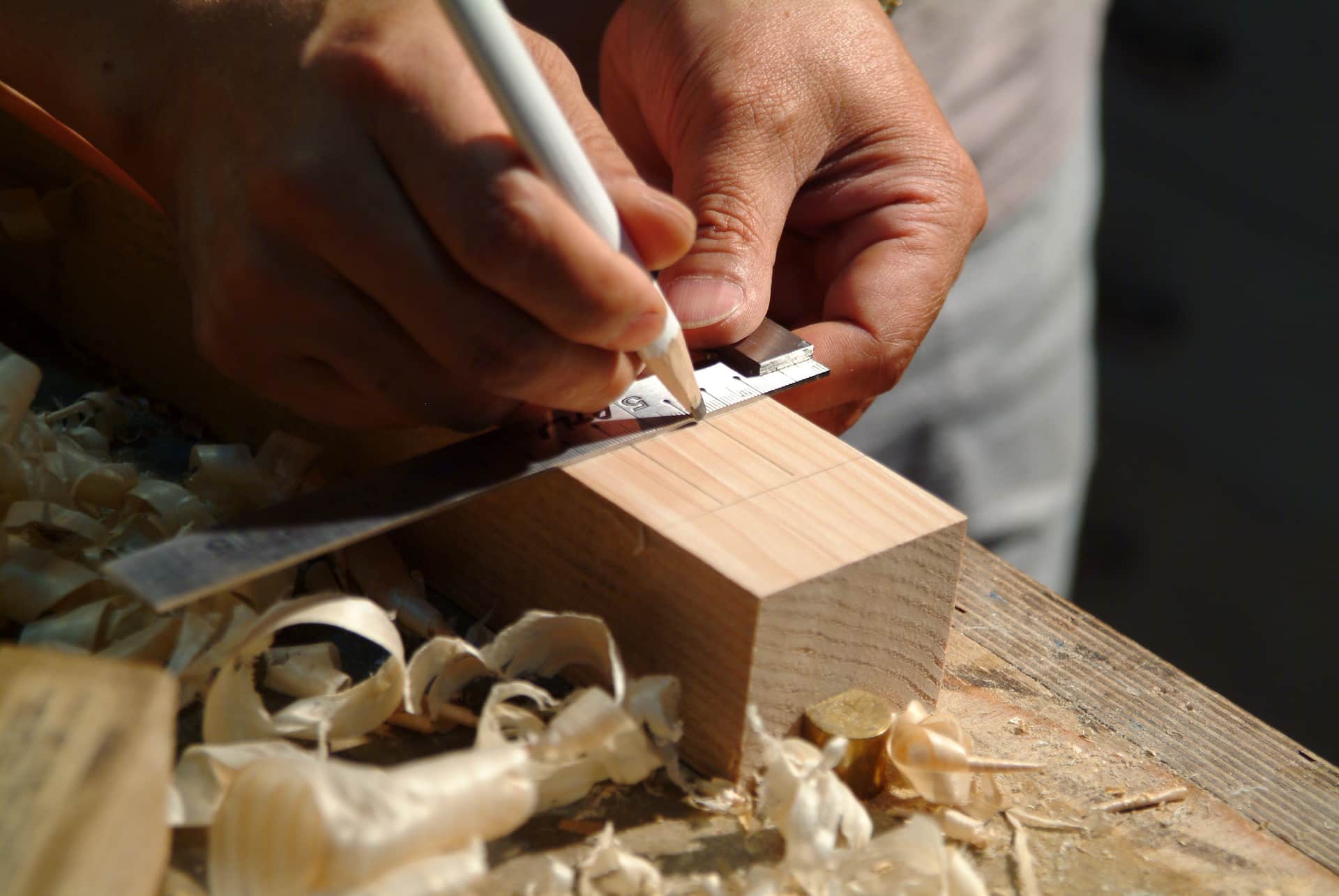
TPI is teeth per inch, and it is the number that decides how a saw feels in use. It is also frequently the only specification printed on the blade, which makes it worth understanding properly.
The trade
More teeth per inch: each tooth removes less material, so the cut is slower, smoother, easier to control and narrower in kerf. Fine work.
Fewer teeth per inch: each tooth is larger and removes more material, so the cut is faster, rougher and harder to start accurately. Stock breakdown.
That is the whole thing. There is no tooth count that is fast and smooth, and any saw claiming both is a compromise sitting in the middle.
TPI versus PPI
A genuinely annoying detail. TPI counts teeth per inch. PPI counts points per inch, and because a one-inch span of teeth has one more point than it has gullets, PPI is always TPI plus one.
British saws are usually labeled in PPI; American and Japanese ones in TPI. A 15 PPI saw and a 14 TPI saw are the same saw. Nobody is trying to mislead you, and it does mean you cannot compare two numbers unless you know which convention each uses.
The numbers to want
| Job | TPI | Why |
|---|---|---|
| Breaking down boards, ripping | 5–8 | Large gullets clear the long shavings a rip cut produces |
| General crosscutting, panel work | 8–12 | Fast enough to be practical, clean enough not to embarrass you |
| Tenon shoulders and cheeks | 12–15 | Controlled cut on a surface that shows in the finished joint |
| Dovetails and fine joinery | 15–22 | Narrow kerf, easy to start, splits a knife line |
| Thin stock, veneer, model work | 22+ | Below about three teeth in the cut the saw jumps and tears |
The rule that explains the bottom row
You want at least three teeth in the material at all times.With fewer than three, the saw catches, jumps, and tears the workpiece — there is never enough tooth engagement to keep the cut steady.
This is why a coarse 7 TPI saw is unusable on quarter-inch stock, and why cutting thin material with a coarse saw feels violent. Work out the thinnest thing you will cut, and make sure your tooth count puts three teeth in it.
Japanese tooth counts read differently
Japanese saws often run higher tooth counts than their western equivalents for the same job, and it does not mean they cut slower. The much thinner plate removes less material per stroke to begin with, so the geometry works out differently.
In practice, do not compare a Japanese saw's TPI directly to a western one's. Buy on the job the saw is sold for — a ryoba for general work, a dozuki for joinery — and the tooth count will be right.
Variable pitch
Some modern saws have finer teeth near the toe and coarser ones along the rest. The fine teeth make the saw easy to start, the coarse ones do the work once the kerf is established. It is a real and sensible feature and it appears mostly on hardpoint saws, where nobody has to file it back.
Questions
Frequently asked
What does TPI mean on a saw?
Teeth per inch. More teeth means a slower, smoother, more controllable cut with a narrower kerf; fewer teeth means a faster, rougher one.
What is the difference between TPI and PPI?
PPI is points per inch and is always TPI plus one, because a one-inch span has one more point than gullet. British saws usually use PPI, American and Japanese ones TPI. A 15 PPI saw is a 14 TPI saw.
What TPI do I need for dovetails?
15 to 22 TPI. Fine enough to start easily and cut a narrow kerf that splits a knife line. Most dozuki sit in or above this range.
Why does my saw jump and tear thin wood?
Too few teeth in the cut. You want at least three teeth engaged in the material at all times; below that the saw catches instead of cutting. Use a finer saw for thin stock.
Receipts
Sources
- Amazon listing for Spear & Jackson Tenon Saw, 12 in 15 PPI — specifications and price basis, retrieved via the Amazon Product API on 2026-07-24 and refreshed on the daily price check.
- Amazon listing for Bahco Prizecut Toolbox Handsaw, 15 in 11 TPI — specifications and price basis, retrieved via the Amazon Product API on 2026-07-24 and refreshed on the daily price check.
- Amazon listing for SUIZAN Dozuki Dovetail Saw, 6 in — specifications and price basis, retrieved via the Amazon Product API on 2026-07-24 and refreshed on the daily price check.
We have not handled these tools. Nobody here has tested one, owned one, or taken one apart. Specifications come from the manufacturer or the retailer listing; warranty terms come from the maker's own warranty page; the cost-per-decade arithmetic is ours and reproducible. Where we could not verify a figure we say so on the page rather than quietly leaving it out. Read the full method.
Keep reading
Related
- Rip vs crosscut teethThe other variable, and the one people get wrong more often.
- Saw types comparedHow tooth count combines with length and back into named saws.
- The best dovetail sawsWhere the high tooth counts live.
- How to sharpen a hand sawFiling your own teeth, and keeping the spacing even.
- Coping saw vs fret sawBoth are a thin blade stretched in a frame, and they are still not interchangeable.
Back to Hand Saws · how we pick · editorial policy