Construction lumber is soft, wet and full of knots, which rules out most of what a woodworking saw is optimized for. Five saws ranked for the cut that actually gets made in a garage.
We earn a commission when you buy through our Amazon links, at no extra cost to you. It never decides a ranking, and where the best tool in a class is one we earn nothing on, we say so and link it anyway. How this works.
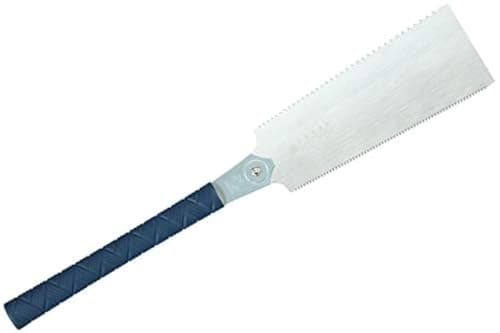
Explicitly built around a replaceable blade, which is the honest way to buy an impulse-hardened saw: you are buying a handle and a spine, and the cutting part is a supply item.
The replaceable-blade ryoba with the widest blade supply
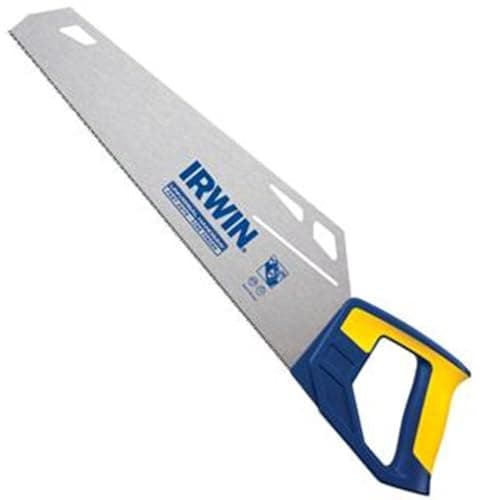
A universal-tooth hardpoint saw that cuts with and across the grain adequately and neither exceptionally. It is the saw you own so you never have to think about owning a saw.
A competent double-edge pull saw at well under the SUIZAN price. It cuts a little rougher and it is the one to buy if you are still deciding whether pull saws suit you.
#ad· Live prices from the Amazon Product API, as of October 16, 2026. Where we have no verified live price we show none, and the cost-per-decade figure is suppressed with it — we would rather leave a gap than print a number that has rotted.
For crosscutting 2x4s, buy the Bahco Prizecut 15 in at 11 TPI — it is the pick for anyone who wants one saw, cuts a handful of studs a month, and does not want to think about it again. If you want the same cut with less effort and are willing to buy a replacement blade eventually, the Gyokucho 240 mm ryoba is the better tool: a pull saw cuts on the thin stroke with a narrow kerf, which on softwood means noticeably less work per cut. And if the job is ripping a 2x4 down its length rather than cutting it off, neither of those is right — buy the Bahco 24 in timber saw.
Construction lumber is a different material from the hardwood a woodworking saw is designed for, and almost every disappointing hand-saw purchase comes from ignoring that. A 2x4 is softwood, usually spruce, pine or fir, frequently still wet from the yard, and it contains knots that are two or three times harder than the wood around them. Soft wet fiber clogs fine teeth, which is why the fine-toothed saw that cuts beautiful dovetails in oak feels gummy and slow in a stud. Knots chip teeth, which is why the saw you use for this is the saw you accept will be replaced. And the cut is almost always rough-tolerance — within a pencil line is fine — so the accuracy a backsaw buys you is accuracy you are paying for and throwing away.
What decides it: three published numbers
We have not cut a stud with any of these. We opened each maker's or retailer's own listing, wrote down only what is published, cited it below, and ranked on that — the method is on the methodology page.
Tooth count, in TPI or PPI. For construction lumber the useful band is roughly 7 to 12 teeth per inch. Coarser than that and the saw is a dedicated rip tool that leaves a surface needing a plane. Finer than that and it loads with damp softwood dust and stops. The Bahco Prizecut publishes 11 TPI, which is at the fine end of that band and the reason it crosscuts cleanly; the Gyokucho 240 publishes 14 TPI crosscut on one edge and 7 TPI rip on the other, which is the single clearest answer to “what if I need both.” Saw TPI explained has the full range and rip vs crosscut teeth covers why the two tooth shapes are not interchangeable.
Length, because length is strokes. A 2x4 is 3-1/2 inches across. A 15 inch saw gives you a usable stroke; a 24 inch saw gives you a long one and makes ripping bearable. The trade is control: a long thin plate wants to wander at the start of a cut, which is why the short saw is the one we recommend first for crosscuts and the long one only for rips.
Can the teeth ever be renewed? This is the question this site exists to ask, and on this page the answer is almost always no. Four of these five saws have impulse-hardened or hardpoint teeth, which are harder than a file and therefore unsharpenable by definition. That is not a scandal — hardpoint teeth stay sharp several times longer than filed teeth in the first place — but it does mean you are buying a consumable, and the honest version of the buy-it-for-life question here is “can I buy the cutting part again?” Only the Gyokucho 240 answers yes: it is explicitly built around a replaceable 610 blade. Everything else on this page, when it dulls, is scrap.
What the makers publish
Saw
Length
Teeth as published
Renewable?
Bahco Prizecut toolbox saw
15 in
11 TPI, hardpoint
No — no replacement plate
Gyokucho ryoba, 240 mm
240 mm
14 TPI crosscut / 7 TPI rip
Yes — replaceable 610 blade
Irwin Universal handsaw
20 in
Universal, hardpoint
No
Bahco Professional Cut timber saw
24 in
Coarse rip pattern, hardpoint
No
KAKURI ryoba, 9.5 in
9.5 in
Ryoba, rip and crosscut, impulse hardened
Blade supply unclear for this model
The row that should change your mind is the second one. Every other saw here is cheaper to buy and more expensive to keep, because keeping it is not an option. If you cut lumber regularly, the replaceable-blade saw is the only one on the page where the tenth year costs the same as the first.
Push or pull, for this specific job
Western saws cut on the push stroke and need a plate stiff enough to be driven into the wood without buckling, which means a thicker plate and a wider kerf. Japanese saws cut on the pull stroke, where the plate is in tension and cannot buckle, so it can be much thinner — a narrower kerf, less wood to remove, less effort per cut. On soft wet framing lumber that advantage is real and easy to feel.
The counter-argument is just as practical. A pull saw wants to be started gently and kept straight; a thin plate kinks if you force or twist it, and a knot can grab it. A hardpoint western saw will survive being used as a crude tool in a way a ryoba will not. If the saw lives in a truck, gets lent out and occasionally cuts a nail, buy the western saw and expect to replace it. Japanese vs western saws goes through the whole comparison, and which side of a ryoba do you use covers the one thing new ryoba owners get wrong.
What is not on this page
Backsaws and tenon saws. The stiffened spine that makes a tenon saw accurate also limits its depth of cut to less than the width of a 2x4, so it physically cannot finish the cut. Same for a backsaw of any kind.
Panel saws, which are the traditional answer. A filed, resharpenable 24 inch panel saw is what a carpenter would have used for this for two centuries, and a good vintage one is still the nicest way to do it. We have not ranked one because the saws currently sold new under that description are mostly hardpoint, which puts them in the same consumable class as the Bahcos. What is a panel saw covers the pattern, and how to restore a hand saw covers bringing a secondhand one back, which is genuinely the buy-it-for-life route for this job.
Circular saws. Obviously faster. This page is for the cuts where getting the cord out, or the batteries are flat, or there are three cuts to make and the saw is in the garage.
Every pick, in full
The write-ups
01The cheap western saw that actually cuts
Length
15 in
Teeth
11 TPI, hardpoint
Type
Toolbox handsaw
Action
Push stroke
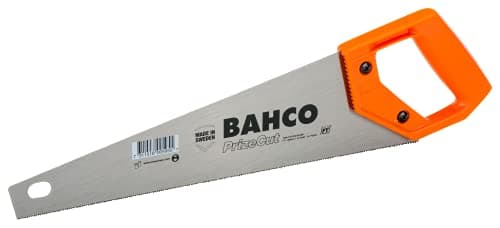
Bahco Prizecut Toolbox Handsaw, 15 in 11 TPI
Bahco
6.8/10
Hardpoint teeth, a comfortable handle, and a plate stiff enough to steer. It is a disposable saw that outperforms its price by a wide margin.
Cost per decade
$33.29
Horizon · tier D
10 years — No warranty and no parts availability found
Impulse-hardened teeth cannot be resharpened, and we could not find a replacement blade listing for this model at the date checked. When the teeth go, the saw goes — which is what the rating below is telling you.
Rebuy risk
High
none of the three met
Cut quality
7.5
Blade life
7.0
Control
7.0
Renewability
3.0
Value
9.5
What it gets right
+Cuts far better than the price suggests
+11 TPI is a sensible general-purpose compromise
+Short enough to live in a toolbox
What it costs you
−Hardpoint teeth cannot be filed
−No replacement blade; when it dulls, it is scrap
−Not a fine joinery saw
Skip this if…
…you want a saw that lasts. Hardpoint plus no replacement plate is the definition of a consumable tool.
02The replaceable-blade ryoba with the widest blade supply
Length
240 mm
Teeth
14 TPI crosscut / 7 TPI rip
Blade
Replaceable, 610 blade
Action
Pull stroke
Gyokucho Ryoba Double Edge, 240 mm TPE Grip
Gyokucho
8.5/10
Explicitly built around a replaceable blade, which is the honest way to buy an impulse-hardened saw: you are buying a handle and a spine, and the cutting part is a supply item.
Cost per decade
Suppressed — no live price
Horizon · tier C
20 years — No lifetime warranty; parts purchasable and resharpenable
The teeth are impulse-hardened and cannot be filed, so the blade is a consumable — but the maker sells replacement blades directly for this model. The handle and spine are the durable part; the blade is a scheduled purchase, not a failure.
Rebuy risk
High
parts listed
Cut quality
9.0
Blade life
8.5
Control
8.0
Renewability
9.0
Value
8.0
What it gets right
+Designed around blade replacement rather than tolerating it
+240 mm is the standard Japanese size with the deepest blade supply
+Handle and spine outlast several blades
What it costs you
−Costs more than the fixed-blade version up front
−You are committed to that blade format
−Still unsharpenable
Skip this if…
…you will never buy a second blade. Then the fixed-blade saw is the cheaper way to the same cuts.
A universal-tooth hardpoint saw that cuts with and across the grain adequately and neither exceptionally. It is the saw you own so you never have to think about owning a saw.
Cost per decade
$33.24
Horizon · tier D
10 years — No warranty and no parts availability found
Impulse-hardened teeth cannot be resharpened, and we could not find a replacement blade listing for this model at the date checked. When the teeth go, the saw goes — which is what the rating below is telling you.
Rebuy risk
High
none of the three met
Cut quality
6.5
Blade life
7.0
Control
6.5
Renewability
3.0
Value
9.0
What it gets right
+Genuinely does both rip and crosscut passably
+Handle is comfortable for extended cutting
+Cheap and available everywhere
What it costs you
−Universal teeth are a compromise in both directions
−Hardpoint, so unsharpenable
−Plate is thin enough to flex if you push hard
Skip this if…
…your work is fine joinery. This is a carpentry saw and does not pretend otherwise.
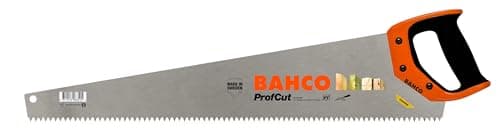
A long, coarse, aggressive saw for reducing boards. Nobody enjoys ripping by hand, and this is the tool that makes it take the least time.
Cost per decade
$42.45
Horizon · tier D
10 years — No warranty and no parts availability found
Impulse-hardened teeth cannot be resharpened, and we could not find a replacement blade listing for this model at the date checked. When the teeth go, the saw goes — which is what the rating below is telling you.
Rebuy risk
High
none of the three met
Cut quality
7.0
Blade life
7.0
Control
6.0
Renewability
3.0
Value
9.0
What it gets right
+Removes material fast, which is the only thing this job needs
+Long plate keeps the cut straight over a long board
+Cheap for the amount of work it does
What it costs you
−Leaves a rough surface that needs planing
−Hardpoint teeth, unsharpenable
−Too coarse for anything approaching joinery
Skip this if…
…you have a track saw or a bandsaw. This is the manual answer to a machine problem.
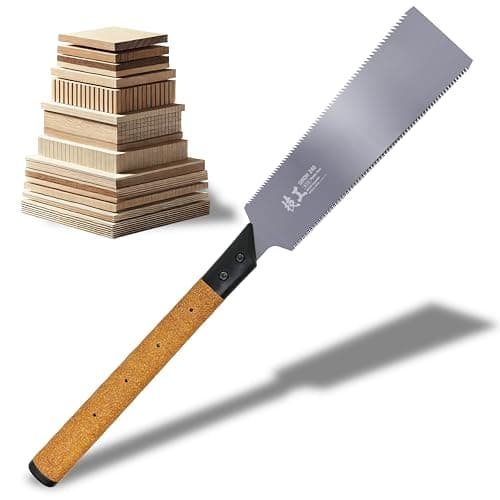
A competent double-edge pull saw at well under the SUIZAN price. It cuts a little rougher and it is the one to buy if you are still deciding whether pull saws suit you.
Cost per decade
$30.80
Horizon · tier D
10 years — No warranty and no parts availability found
Impulse-hardened teeth cannot be resharpened, and we could not find a replacement blade listing for this model at the date checked. When the teeth go, the saw goes — which is what the rating below is telling you.
Rebuy risk
High
none of the three met
Cut quality
8.0
Blade life
7.0
Control
7.5
Renewability
3.5
Value
9.5
What it gets right
+Full-size ryoba capability at an entry price
+Sharp enough out of the packet to be immediately useful
+Low-risk way to find out whether you prefer pulling
What it costs you
−Cut quality is a step below SUIZAN and Gyokucho
−Replacement blade availability is unclear for this model
−Unsharpenable teeth
Skip this if…
…you already know you want a pull saw. Spend the extra on the SUIZAN and get the blade supply with it.
One saw, occasional studs and sheet goods: the Bahco Prizecut, 15 in, 11 TPI. It is the cheapest saw here that cuts cleanly enough to leave a surface you can butt against something, and the 15 inch length is short enough to control one-handed.
You cut lumber most weekends: the Gyokucho 240 mm ryoba. Rip and crosscut edges on one tool, a thin kerf that makes softwood cuts easy, and a published replacement blade so the tool survives the teeth.
It lives in a truck or a site box: the Irwin Universal 20 in. Universal teeth are a compromise in both directions and the plate flexes if you lean on it — and it will still be cutting after a year of abuse that would have finished a pull saw.
You are ripping a 2x4 down its length: the Bahco timber saw, 24 in. Ripping by hand is miserable work and the only thing that helps is a long saw with coarse teeth. Expect to plane the sawn face afterward.
You want to try a pull saw for as little as possible: the KAKURI 9.5 in ryoba. It cuts a step below the Gyokucho and SUIZAN saws and its replacement blade situation is unclear, both of which are in its cons. As a way to find out whether you like pull saws before spending more, it is honest value.
Technique that matters more than the saw
Support the offcut. Most bad crosscuts in framing lumber are not the saw's fault — they are the last inch, where the offcut sags, pinches the plate and splinters off. Support both sides, or hold the offcut up with your free hand for the final strokes.
Start on the pull, even with a western saw. Two or three light backward strokes with the saw tilted low establish a kerf without the teeth skating across the face. Then lift to about 45 degrees and let the saw do the work.
Mark all the way round for anything that has to be square. A line on one face is a guess on the other three. Use a square and carry the line around; then you can see the cut drifting before it matters.
Do not force it through a knot. Slow down, shorten the stroke, let the teeth cut. Forcing a thin plate through a knot is how pull saws get kinked and how hardpoint teeth get chipped.
Keep it dry. Wet softwood leaves resin and moisture on the plate, and a saw left in a damp garage rusts along the teeth first. A wipe and a light oil costs nothing — cleaning and waxing hand tools covers what to use.
Cost per decade when the teeth cannot be sharpened
Four of these five saws have a horizon set by their teeth rather than their steel, and no amount of care extends it: hardpoint and impulse-hardened teeth are harder than a file, which is exactly why they stay sharp longer and exactly why they can never be put back. So the per-decade arithmetic on this page is unusually literal. A cheap hardpoint saw used hard is a two to five year tool; buy it, use it, replace it, and the total is still small. A replaceable-blade ryoba is a handle and a spine you keep, plus a scheduled blade purchase, and over twenty years that is the cheaper column — which is the same conclusion cost per decade keeps reaching on consumable-edge tools.
There is a third option this page cannot rank, and it is worth saying plainly: a filed western saw, new or secondhand, has teeth you can put back forever with a file and a saw set. That is the only genuinely permanent answer in the category. How to sharpen a hand saw explains what is involved before you decide it is for you.
Questions
Frequently asked
What TPI hand saw is best for cutting 2x4s?+
Roughly 7 to 12 teeth per inch. Around 11 TPI crosscuts a stud cleanly without clogging; 7 TPI and coarser is for ripping along the length and leaves a rough face. Finer than about 14 TPI loads up with damp softwood dust and slows down, which is why a dovetail saw feels useless in a 2x4.
Can a Japanese pull saw cut construction lumber?+
Yes, and the thin kerf makes it easier work than a western saw in soft wet fiber. The caution is mechanical rather than theoretical: the plate is thin, so a forced or twisted stroke can kink it, and a hard knot can grab the teeth. Start gently, keep the stroke straight, and do not use it as a pry bar.
How many strokes should a 2x4 crosscut take?+
With a sharp 11 TPI saw and a decent stroke, somewhere in the region of twenty to thirty. If it is taking three times that, the problem is almost always one of three things: the teeth are dull, the saw is too fine for wet softwood, or you are pushing down instead of forward. A saw cuts on weight and stroke length, not on force.
Will a hand saw cut plywood without tearing the face?+
A fine-toothed saw will, with the good face up for a push saw and the good face down for a pull saw — the tearing happens where the teeth exit. Scoring the cut line with a knife first helps more than any saw choice. For a lot of plywood, a circular saw with a straightedge is the right tool and nobody should pretend otherwise. For the cuts a power saw cannot make — notching a fixed panel, scribing to a wall, trimming edge banding — see the best hand saws for plywood.
Can hardpoint saw teeth be sharpened?+
No. The teeth are induction-hardened to a level above what a file can cut, which is the whole point — they hold an edge several times longer than filed teeth. The trade is that when they finally dull the saw is finished, unless it is a model with a replaceable plate. If you want a saw you can maintain forever, buy a filed saw and learn to use a file.
We have not handled these tools. Nobody here has tested one, owned one, or taken one apart. Specifications come from the manufacturer or the retailer listing; warranty terms come from the maker's own warranty page; the cost-per-decade arithmetic is ours and reproducible. Where we could not verify a figure we say so on the page rather than quietly leaving it out. Read the full method.