We earn a commission when you buy through our Amazon links, at no extra cost to you. It never decides a ranking, and where the best tool in a class is one we earn nothing on, we say so and link it anyway. How this works.
Rip teeth on one edge, crosscut on the other, a plate thin enough to cut with almost no force, and a maker who actually sells replacement blades. That last point is why it rates as well as it does.
Gyokucho's hardwood-specific tooth geometry, which is a real distinction rather than a marketing one: fewer, stouter teeth that survive dense timber instead of stripping.
A stiffened back over a very thin crosscut plate. The kerf is narrow enough that the saw goes exactly where the knife line is, which is the whole job of a dovetail saw.
Explicitly built around a replaceable blade, which is the honest way to buy an impulse-hardened saw: you are buying a handle and a spine, and the cutting part is a supply item.
The replaceable-blade ryoba with the widest blade supply
A competent double-edge pull saw at well under the SUIZAN price. It cuts a little rougher and it is the one to buy if you are still deciding whether pull saws suit you.
#ad· Live prices from the Amazon Product API, as of October 21, 2026. Where we have no verified live price we show none, and the cost-per-decade figure is suppressed with it — we would rather leave a gap than print a number that has rotted.
Japanese saws are the clearest value proposition on this entire site. A $40 pull saw cuts better than a $150 western saw, by a margin that is obvious within one cut, and the reason is physics rather than craftsmanship mystique.
The mechanism, in one paragraph
A push saw puts its plate in compression. Compression buckles thin material, so a western saw plate must be thick enough not to fold — and a thick plate cuts a wide kerf, removes more wood, and needs more force.
A pull saw puts its plate in tension, and tension cannot buckle anything. So the plate can be a fraction of the thickness. Narrower kerf, less wood removed, less effort, cleaner cut. Every advantage of a Japanese saw follows from that single change in direction.
The three types worth knowing
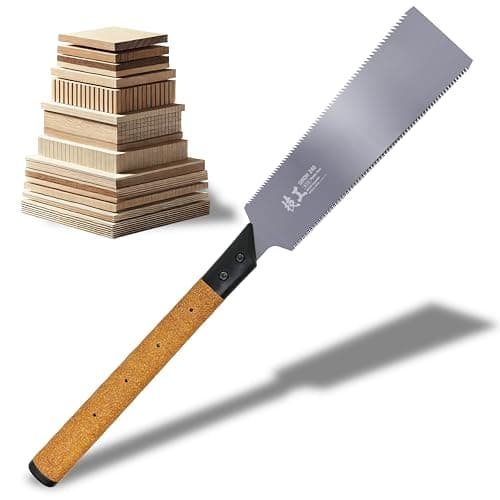
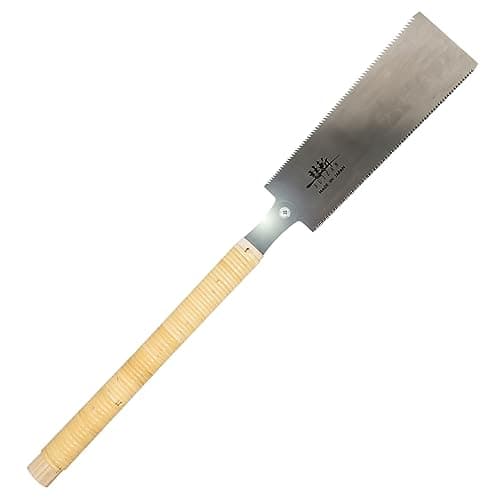
Ryoba— double-edged. Rip teeth on one edge, crosscut on the other. The most versatile single saw you can own, because it solves the wrong-teeth problem by carrying both. If you buy one Japanese saw, buy this.
Dozuki— backed, very fine crosscut. The joinery saw: a stiffening spine over an extremely thin plate, for cutting to a line. Best dovetail saw most people will ever use, and depth-limited by the spine. See the best dovetail saws.
Kataba— single-edged, unbacked. No spine, so no depth limit, and no spine means less rigidity. The saw for deep cuts a dozuki cannot reach.
The full ryoba-versus-dozuki decision is on ryoba vs dozuki.
The caveat that never goes away
Impulse-hardened teeth cannot be filed. The tooth tips are induction-hardened well past what a saw file can cut, which is why they stay sharp for so long and why, when they eventually dull, that is the end of the blade.
So the question that actually decides a Japanese saw purchase is not brand or price. It is: does this maker sell a replacement blade for this model? SUIZAN maintain a replacement-blade line and sell it directly. Gyokucho blades are a long-established standard with good supply. For the cheaper marketplace saws, often nobody does, and when the teeth go the saw goes.
That distinction is what separates tier C from tier D in the ratings below, and it is the single most useful thing to check before buying one.
Hardwood versus softwood geometry
One detail worth knowing because it is real and rarely explained. Japanese saws are often filed for a specific timber density. Hardwood geometry uses fewer, stouter teeth that survive dense oak and maple; softwood geometry uses finer, more aggressive teeth that cut pine fast and can strip in hardwood.
Gyokucho in particular label their hardwood variants, and using a softwood-filed saw repeatedly in oak is a good way to lose teeth. Match the saw to what you actually cut.
How not to ruin one
A thin plate kinks, and a kinked plate is scrap. Three rules: almost no downward pressure, never twist it to steer a wandering cut, and never store it loose in a drawer against other steel. If a cut is going wrong, back out and restart rather than correcting mid-cut.
If you are still working out which pattern you need rather than which model, Japanese saw types explained covers ryoba, dozuki, kataba, kugihiki, azebiki and anahiki and what each one is for.
Every pick, in full
The write-ups
01Best hand saw overall
Length
9.5 in
Teeth
Rip one edge, crosscut the other
Blade
Impulse hardened, replaceable
Action
Pull stroke
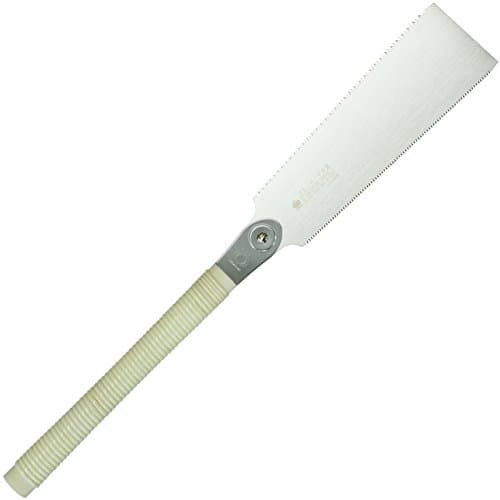
SUIZAN Ryoba Double Edge Pull Saw, 9.5 in
SUIZAN
8.5/10
Rip teeth on one edge, crosscut on the other, a plate thin enough to cut with almost no force, and a maker who actually sells replacement blades. That last point is why it rates as well as it does.
Cost per decade
$24.90
Horizon · tier C
20 years — No lifetime warranty; parts purchasable and resharpenable
The teeth are impulse-hardened and cannot be filed, so the blade is a consumable — but the maker sells replacement blades directly for this model. The handle and spine are the durable part; the blade is a scheduled purchase, not a failure.
Rebuy risk
High
parts listed
Cut quality
9.5
Blade life
8.0
Control
8.0
Renewability
8.0
Value
9.0
What it gets right
+Two saws in one, and both edges are good rather than compromised
+SUIZAN sells replacement blades directly, so the handle is the lasting purchase
+Thin kerf means less wood removed and much less effort
What it costs you
−Impulse-hardened teeth cannot be filed; when they go, you buy a blade
−The blade warranty stated on the replacement blades is one month
−A thin plate kinks if you force or twist it
Skip this if…
…your definition of buy-it-for-life excludes consumables. A ryoba is a handle plus a scheduled blade purchase, and no amount of framing changes that.
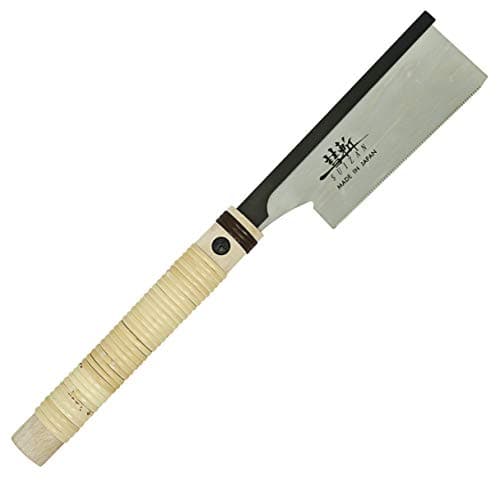
Gyokucho's hardwood-specific tooth geometry, which is a real distinction rather than a marketing one: fewer, stouter teeth that survive dense timber instead of stripping.
Cost per decade
$19.00
Horizon · tier C
20 years — No lifetime warranty; parts purchasable and resharpenable
The teeth are impulse-hardened and cannot be filed, so the blade is a consumable — but the maker sells replacement blades directly for this model. The handle and spine are the durable part; the blade is a scheduled purchase, not a failure.
Rebuy risk
High
parts listed
Cut quality
9.5
Blade life
8.5
Control
8.0
Renewability
7.5
Value
8.5
What it gets right
+Tooth geometry genuinely optimized for dense hardwood
+Gyokucho blades are a long-established standard in Japan
+Cuts cleaner in oak and maple than a general-purpose ryoba
What it costs you
−Slower in softwood than a softwood-geometry saw
−Replacement blade availability varies by model in the US
−Unsharpenable teeth
Skip this if…
…you mostly cut pine and construction lumber. The hardwood geometry works against you there.
A stiffened back over a very thin crosscut plate. The kerf is narrow enough that the saw goes exactly where the knife line is, which is the whole job of a dovetail saw.
Cost per decade
$19.40
Horizon · tier C
20 years — No lifetime warranty; parts purchasable and resharpenable
The teeth are impulse-hardened and cannot be filed, so the blade is a consumable — but the maker sells replacement blades directly for this model. The handle and spine are the durable part; the blade is a scheduled purchase, not a failure.
Rebuy risk
High
parts listed
Cut quality
9.5
Blade life
8.0
Control
9.5
Renewability
8.0
Value
9.0
What it gets right
+Kerf narrow enough to split a knife line reliably
+Replacement blades sold by the maker
+6 inch is the right length for drawer-scale dovetails
What it costs you
−The back limits depth of cut absolutely
−Impulse-hardened teeth cannot be filed
−The thin plate is unforgiving of a forced stroke
Skip this if…
…you cut deep tenons. The spine will bottom out and there is no way around it.
04The replaceable-blade ryoba with the widest blade supply
Length
240 mm
Teeth
14 TPI crosscut / 7 TPI rip
Blade
Replaceable, 610 blade
Action
Pull stroke
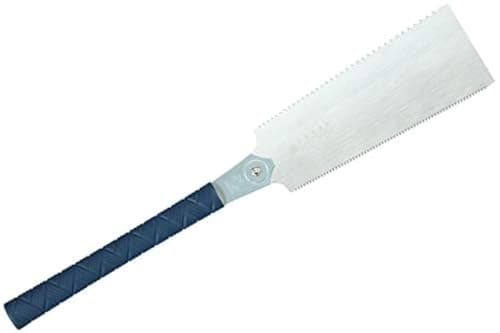
Gyokucho Ryoba Double Edge, 240 mm TPE Grip
Gyokucho
8.5/10
Explicitly built around a replaceable blade, which is the honest way to buy an impulse-hardened saw: you are buying a handle and a spine, and the cutting part is a supply item.
Cost per decade
Suppressed — no live price
Horizon · tier C
20 years — No lifetime warranty; parts purchasable and resharpenable
The teeth are impulse-hardened and cannot be filed, so the blade is a consumable — but the maker sells replacement blades directly for this model. The handle and spine are the durable part; the blade is a scheduled purchase, not a failure.
Rebuy risk
High
parts listed
Cut quality
9.0
Blade life
8.5
Control
8.0
Renewability
9.0
Value
8.0
What it gets right
+Designed around blade replacement rather than tolerating it
+240 mm is the standard Japanese size with the deepest blade supply
+Handle and spine outlast several blades
What it costs you
−Costs more than the fixed-blade version up front
−You are committed to that blade format
−Still unsharpenable
Skip this if…
…you will never buy a second blade. Then the fixed-blade saw is the cheaper way to the same cuts.
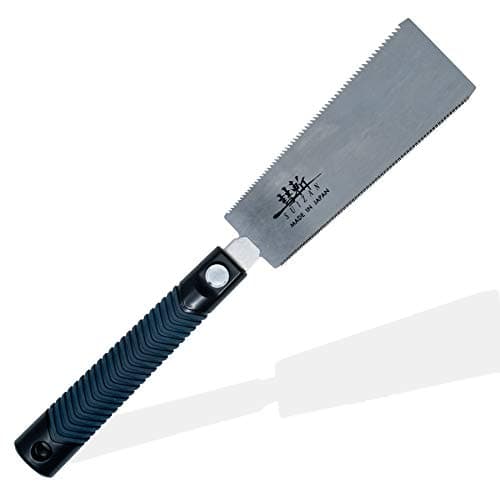
The same saw at a size that suits joinery and box work better than breaking down stock. Easier to control, less capacity.
Cost per decade
$19.40
Horizon · tier C
20 years — No lifetime warranty; parts purchasable and resharpenable
The teeth are impulse-hardened and cannot be filed, so the blade is a consumable — but the maker sells replacement blades directly for this model. The handle and spine are the durable part; the blade is a scheduled purchase, not a failure.
Rebuy risk
High
parts listed
Cut quality
9.0
Blade life
8.0
Control
8.5
Renewability
8.0
Value
8.5
What it gets right
+Much easier to steer accurately than the 9.5 inch
+Replacement blades available from the maker
+Good first pull saw if the work is small
What it costs you
−Depth of cut is limited by the plate height
−Same unsharpenable teeth as the larger version
−Slower through thick stock
Skip this if…
…you are breaking down boards. Buy the 9.5 inch; you will run out of blade depth immediately.
A competent double-edge pull saw at well under the SUIZAN price. It cuts a little rougher and it is the one to buy if you are still deciding whether pull saws suit you.
Cost per decade
$30.80
Horizon · tier D
10 years — No warranty and no parts availability found
Impulse-hardened teeth cannot be resharpened, and we could not find a replacement blade listing for this model at the date checked. When the teeth go, the saw goes — which is what the rating below is telling you.
Rebuy risk
High
none of the three met
Cut quality
8.0
Blade life
7.0
Control
7.5
Renewability
3.5
Value
9.5
What it gets right
+Full-size ryoba capability at an entry price
+Sharp enough out of the packet to be immediately useful
+Low-risk way to find out whether you prefer pulling
What it costs you
−Cut quality is a step below SUIZAN and Gyokucho
−Replacement blade availability is unclear for this model
−Unsharpenable teeth
Skip this if…
…you already know you want a pull saw. Spend the extra on the SUIZAN and get the blade supply with it.
A 9.5-inch ryoba, from SUIZAN or Gyokucho. Both edges are good rather than compromised, it handles stock breakdown and joinery, and replacement blades exist. It is the single best saw purchase most people can make.
Length
9.5 inch is the general-purpose size. The 7-inch is easier to control and runs out of depth on anything substantial; the 240mm/12-inch class is for breaking down larger stock. Blade height limits depth of cut absolutely, so buy for the deepest cut you actually make.
Fixed blade or replaceable
Replaceable, if the option exists at a sensible premium. Buying a saw designed around blade replacement means the handle and spine are the lasting purchase, which is the only coherent way to own an unsharpenable tool. It also usually means better blade supply, because the format is standard.
What about a Japanese saw for a western workflow?
They integrate fine. The only genuine adjustment is that you cut on the pull, which means your body position and clamping change — the workpiece wants to be held so it does not move toward you, and many people find they saw more accurately once they adjust.
One real incompatibility: pull saws do not work well in western miter boxes and bench hooks designed for push saws, because the stop is on the wrong side. Not a dealbreaker, worth knowing before you buy a jig.
Before the first cut
If this is your first pull saw, two habits save a blade. Do not push it — the plate is in tension on the pull and in compression on the push, and a forced return stroke is how thin plates kink. And on a ryoba, check which edge you are using: which side of a ryoba do you use explains how to tell the rip edge from the crosscut edge, since nothing on the saw says so.
Questions
Frequently asked
What is the best Japanese saw for beginners?+
A 9.5-inch ryoba. Rip and crosscut edges in one saw, forgiving to use, and replacement blades available from the good makers. It handles almost everything a beginner needs to cut.
Why do Japanese saws cut on the pull stroke?+
Because pulling puts the plate in tension rather than compression, so it cannot buckle and can therefore be much thinner. Thinner plate means narrower kerf, less wood removed and less effort. Every advantage follows from that.
Can you sharpen a Japanese saw?+
Not the impulse-hardened ones, which is almost all of them — the teeth are harder than a file. Buy from a maker who sells replacement blades, so the handle is the lasting purchase.
What is the difference between a ryoba and a dozuki?+
A ryoba is double-edged, unbacked and general-purpose. A dozuki has a stiffening spine and very fine crosscut teeth for joinery, and the spine limits depth of cut. See ryoba vs dozuki.
Are Japanese saws fragile?+
The plates are thin and will kink if forced or twisted, and the teeth chip if the saw hits something it was not filed for. Used correctly — light pressure, no steering — a blade lasts a long time.
We have not handled these tools. Nobody here has tested one, owned one, or taken one apart. Specifications come from the manufacturer or the retailer listing; warranty terms come from the maker's own warranty page; the cost-per-decade arithmetic is ours and reproducible. Where we could not verify a figure we say so on the page rather than quietly leaving it out. Read the full method.