Hand Saws
What Is A Kataba Saw?
The Japanese saw for deep cuts a dozuki cannot reach and cleaner cuts a ryoba cannot match. One cutting edge, no back, and a very thin plate.
We earn a commission when you buy through our Amazon links, at no extra cost to you. It never decides a ranking, and where the best tool in a class is one we earn nothing on, we say so and link it anyway. How this works.
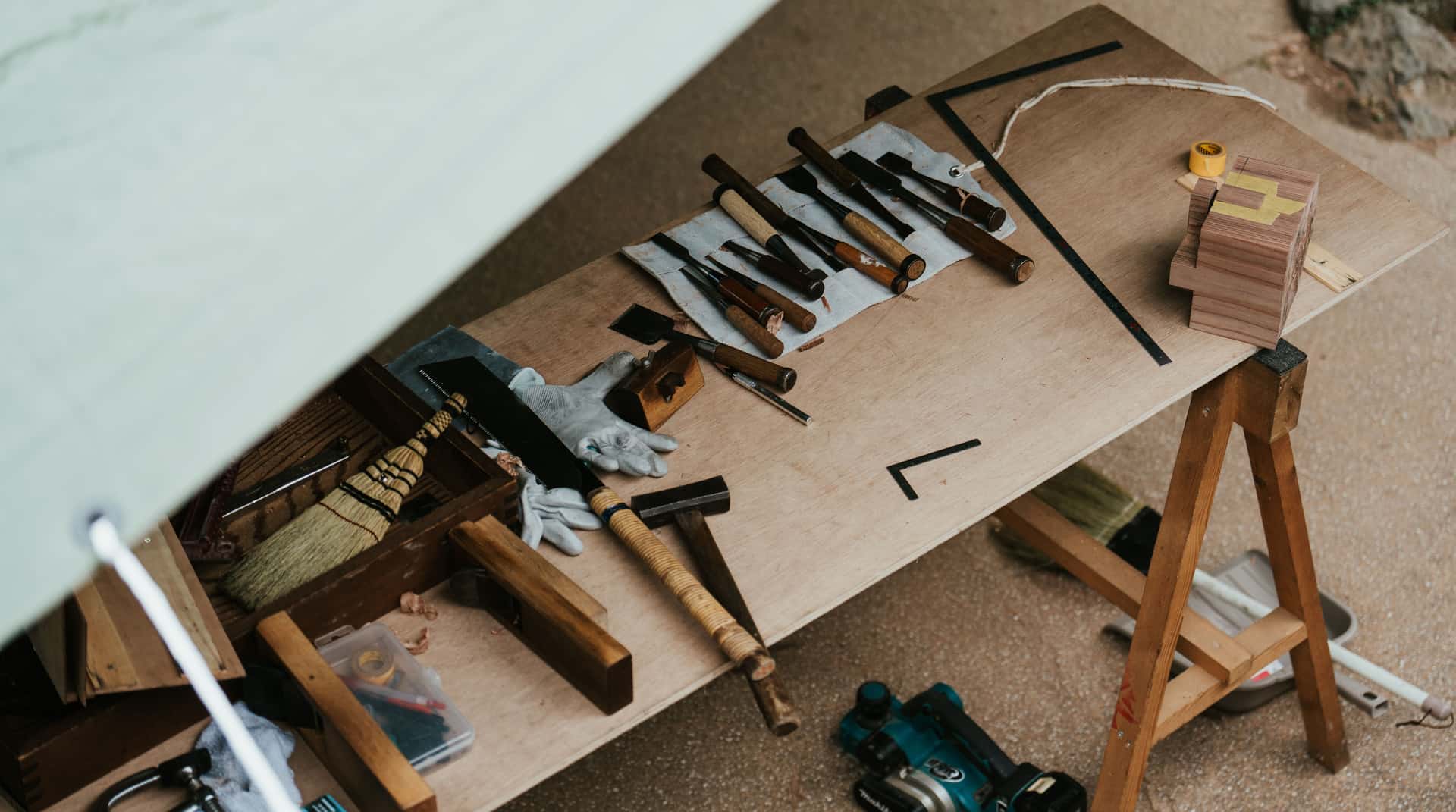
A kataba is a single-edged Japanese pull saw with no reinforcing back. The name means roughly “single blade,” and it sits between the two Japanese saws people meet first: it has the deep reach of a ryoba but only one row of teeth, and it lacks the stiffening spine of a dozuki. Understanding where it fits explains a saw that a lot of people overlook and then wish they had bought sooner.
Single-edged, and why that matters
A ryoba is double-edged — rip teeth on one edge, crosscut on the other. A kataba has teeth on one edge only. That sounds like a downside, and for versatility it is, but the single edge buys two real things. First, the back of the blade is a smooth, toothless spine you can rest against your other hand or a guide without it biting. Second, and more importantly, the opposite edge of a ryoba is always in the way when you make a deep cut; on a kataba it is not, so the saw can lie flat into an awkward corner or against a shoulder that a ryoba's second set of teeth would foul.
Because it is single-edged, a kataba is filed for one job: you buy a rip kataba or a crosscut kataba depending on the work, rather than getting both in one saw. That specialization is the price of the cleaner access.
No back, so no depth limit
This is the kataba's defining advantage over a dozuki. A dozuki has a folded spine that makes its very thin plate rigid enough to cut a dovetail to a line — but that spine also stops the saw dead once it reaches the wood, capping the depth of cut at the distance from the teeth to the back. The whole trade is covered in ryoba vs dozuki.
A kataba has no back at all, so it can cut as deep as the blade is wide. That makes it the Japanese saw for cuts too deep for a dozuki: deep tenon shoulders, wide boards, flush cuts on a proud through-tenon. The cost of losing the spine is rigidity — without a back the plate flexes more than a dozuki's, so it is a little less surgically precise on the very finest joinery. For most cuts, that difference is small and the extra reach is decisive.
Rip or crosscut plates
Kataba come filed either for ripping or for crosscutting, and because the saw is single-edged you choose one when you buy. A crosscut kataba is the more common general-purpose choice, handling the across-grain cuts that make up most bench work; a rip kataba is what you reach for when ripping along the grain in deeper stock. If you find yourself buying both a rip and a crosscut kataba, that is the point at which a ryoba — both filings in one saw — starts to look like the tidier answer.
Impulse-hardened, replaceable blades
Like nearly all modern Japanese saws, most kataba have impulse-hardened teeth: the tooth tips are induction-hardened well past what a file can cut. That hardness is exactly why they stay sharp so long, and exactly why, when they finally dull, you cannot sharpen them. The answer, as everywhere in this category, is a replaceable blade.
So the question that actually decides a kataba purchase is not brand or price — it is whether the maker sells a replacement blade for that specific model. If they do, you are buying a lasting handle and treating the blade as a scheduled consumable, which is a coherent ownership model. If they do not, the saw is genuinely disposable once the teeth go. This is the same test that separates a good Japanese saw from a throwaway one, and it is worked through on Japanese vs western saws.
When a kataba beats a western panel saw
For deep cuts where you still want accuracy and a clean face, a kataba often outperforms a western unbacked panel saw for the same reason every Japanese saw does: the pull stroke puts the plate in tension rather than compression, so it can be far thinner. A thinner plate means a narrower kerf, less wood removed, less effort, and a cleaner cut. Where a panel saw plows a wide kerf through the board, a kataba slices a fine one.
The western panel saw keeps two advantages worth naming. A filed one can be sharpened forever, which the impulse-hardened kataba cannot, and its thicker plate tolerates abuse — forcing, twisting, careless storage — that would kink a thin Japanese plate. If you break down a lot of rough, dirty, or reclaimed stock, the tougher western saw may be the more sensible tool. For clean, accurate deep cuts in good timber, the kataba is hard to beat, and how to place it against every other option is on how to choose a hand saw.
Blade length and depth of cut
Because a kataba has no back to stop it, its depth of cut is limited only by how wide the blade is, and blades come in a range of lengths and widths for different work. A shorter, narrower kataba is easy to control for bench-scale cuts; a longer, wider one reaches deeper and clears a longer stroke for breaking down bigger stock. Blade length also sets the stroke: a longer plate lets you cut faster with fewer, longer pulls, while a short one is slower but more controllable. Buy for the deepest and longest cut you actually make rather than the biggest saw on the shelf, because a plate wider than you need is just more thin steel to keep from kinking.
How to use a kataba
Like every Japanese saw, a kataba cuts on the pull, so the technique is the reverse of a western saw. Start the cut with light pull strokes to establish the kerf, keep almost no downward pressure, and let the thin plate do the work — pressing is what makes it wander or kink. Position and clamp the work so it is braced against the pull rather than dragged toward you, which is the main adjustment a western-trained hand has to make. Use long, smooth pulls that use most of the blade, and do nothing on the push: let the teeth ride back weightless. If the cut drifts, ease off and correct gently, or back out and restart rather than twisting the plate. The pull-stroke habit takes a few hours to stop feeling backwards, and most people find they cut more accurately once it clicks.
Caring for a thin plate
A kataba's plate is thin and a kinked plate is scrap, so a little care goes a long way. Never force or twist it, never store it loose in a drawer against other steel where the fine teeth chip, and keep it lightly oiled so it does not rust. Because the teeth are usually impulse-hardened you cannot sharpen them — the maintenance is simply to protect the blade until it dulls and then fit a replacement. Store it hanging or sheathed, treat the pull stroke gently, and a blade lasts a long time; abuse it once by leaning on it or steering it hard, and you can ruin it in a single cut.
A kataba in a western workflow
Japanese saws slot into a western bench without much fuss, and the kataba is among the easiest to adopt because it does the deep, straightforward cuts a panel saw would — just cleaner. The one real adjustment is workholding: a pull saw wants the work held so it is not dragged toward you, so a face vise, holdfasts, or a bench hook oriented for the pull all help. Pull saws do not sit well in western miter boxes and bench hooks built for push saws, because the stop ends up on the wrong side, so if you rely on jigs you may want ones set up for pull cutting. None of this is a barrier; it is a small resetting of habits, and many woodworkers keep a kataba on the bench precisely because it makes deep cuts feel effortless.
Choosing a kataba
Three things decide a good kataba purchase. First, filing: pick a crosscut plate for general across-grain work or a rip plate for deeper ripping, remembering the saw has only one edge. Second, blade size: match it to the depth and length of cut you actually make. Third, and most important, replacement blades: buy from a maker who sells them for that specific model, so the handle is the lasting purchase and the blade is a scheduled cost rather than a dead end. Get those three right and a kataba is a saw you will reach for constantly; get the last one wrong and it is a good saw with a short life.
Is a kataba worth adding?
For a lot of woodworkers, yes — once they own a ryoba and have felt where it falls short. The ryoba is more versatile, but its double edge gets in the way in tight corners and its unbacked plate flexes on deep, precise cuts; the dozuki is more precise but cannot reach deep. The kataba fills exactly that gap, a clean and thin deep cut with good access, and it is inexpensive enough that adding one is an easy decision. It will not replace your first saw, but it quickly becomes the one you grab for the cuts the other two do awkwardly.
Where it fits in a kit
A kataba is rarely a first Japanese saw — that is almost always a ryoba, for its versatility. It earns its place as the saw you add when you keep hitting the depth limit of a dozuki or want cleaner, thinner cuts than a ryoba's flexing double-edged plate gives on deep work. Think of it as the specialist between the two: more reach than a dozuki, more precision and cleaner access than a ryoba, at the cost of only having one edge. The ranked Japanese options, with replacement-blade availability checked, are on the best Japanese saws.
Questions
Frequently asked
What is a kataba saw used for?
Deep, accurate cuts in wood — deeper than a dozuki can reach and cleaner than a ryoba manages on the same work. Being single-edged and backless, it slices a fine kerf into deep tenon shoulders, wide boards, and awkward corners a double-edged saw would foul.
What is the difference between a kataba and a ryoba?
A ryoba is double-edged with rip teeth on one edge and crosscut on the other, so it is more versatile. A kataba has a single cutting edge, filed for either rip or crosscut, which lets it reach into corners and lie flat where a ryoba's second edge would get in the way.
How is a kataba different from a dozuki?
A dozuki has a stiffening back that makes it exceptionally precise but caps its depth of cut. A kataba has no back, so it flexes a little more but can cut as deep as the blade is wide. Use a dozuki for fine shallow joinery, a kataba when the cut is too deep for the dozuki.
Can a kataba saw be sharpened?
Usually not — most kataba have impulse-hardened teeth that are harder than a file. That is why they stay sharp so long, and why the answer when they dull is a replacement blade. Buy from a maker who sells replacement blades so the handle is the lasting purchase.
Is a kataba better than a western panel saw?
For clean, accurate deep cuts in good stock, usually yes — the pull stroke lets it cut a much thinner kerf with less effort. A western filed panel saw is tougher for rough or dirty stock and can be sharpened forever, which the kataba cannot.
Keep reading
Related
- Ryoba vs dozukiThe two Japanese saws a kataba sits between.
- The best Japanese sawsRanked, with replacement-blade availability checked.
- Japanese vs western sawsThe pull-stroke advantage, and the consumable-blade trade.
- How to choose a hand sawWhere a kataba fits against every other option.
- What is a flush cut sawA saw with no set to its teeth, made to trim a proud dowel off without scratching the surface around it.
Back to Hand Saws · how we pick · editorial policy