Hand Saws
Which Side of a Ryoba Do You Use?
Two edges, two jobs, and one direction of travel. Telling them apart takes five seconds once you know what to look at, and using the wrong one explains almost every bad cut.
We earn a commission when you buy through our Amazon links, at no extra cost to you. It never decides a ranking, and where the best tool in a class is one we earn nothing on, we say so and link it anyway. How this works.
The short answer
Quick picks
| # | Tool | Best for | Per decade | Score | Price |
|---|---|---|---|---|---|
| 01 | 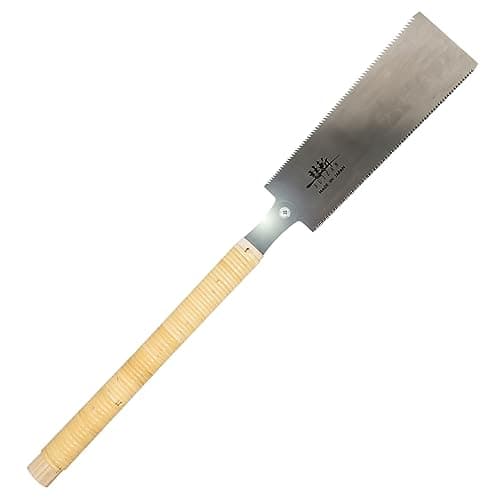 SUIZAN Ryoba Double Edge Pull Saw, 9.5 in Rip teeth on one edge, crosscut on the other, a plate thin enough to cut with almost no force, and a maker who actually sells replacement blades. That last point is why it rates as well as it does. | Best hand saw overall | $24.90tier C | 8.5/10 | $49.80Amazon |
| 02 | 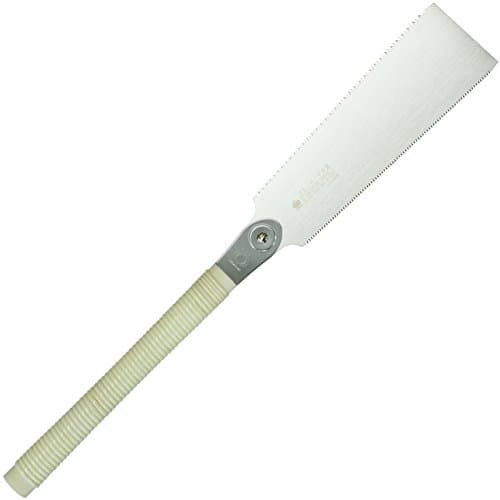 Gyokucho Razorsaw Ryoba, 9.5 in Gyokucho's hardwood-specific tooth geometry, which is a real distinction rather than a marketing one: fewer, stouter teeth that survive dense timber instead of stripping. | The ryoba specified for hardwood | $19.00tier C | 8.4/10 | $38.00Amazon |
| 03 | 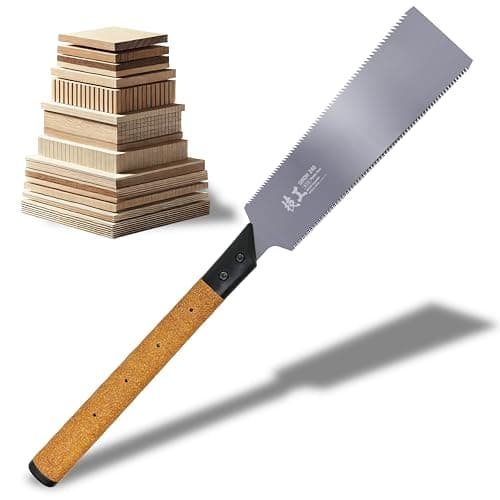 KAKURI Japanese Pull Saw Ryoba, 9.5 in A competent double-edge pull saw at well under the SUIZAN price. It cuts a little rougher and it is the one to buy if you are still deciding whether pull saws suit you. | The cheapest full-size ryoba worth buying | $30.80tier D | 7.1/10 | $30.80Amazon |
#ad· Live prices from the Amazon Product API, as of October 16, 2026. Where we have no verified live price we show none, and the cost-per-decade figure is suppressed with it — we would rather leave a gap than print a number that has rotted.
Use the edge with the coarse, fewer, chisel-faced teeth to cut along the grain, and the edge with the finer, more numerous, knife-pointed teeth to cut across it. That is the whole answer: ryobameans “both edges,” and the two edges are a rip saw and a crosscut saw sharing one plate. And whichever edge you use, the saw cuts on the pullstroke — you draw it toward you and it removes wood; you push it back and it does nothing but reposition. If you only own one Japanese saw, the SUIZAN 9.5 in ryoba is the one we would buy, because the maker actually sells replacement blades for it.
This is the single most common point of confusion for anyone coming to Japanese saws from western ones, and it is not helped by the fact that most ryobas arrive with no markings and no instructions. Nothing on the saw says “rip” or “crosscut.” You are expected to look at the teeth, and once you know what you are looking at you will never need to ask again.
Telling the two edges apart
Hold the saw so the light rakes across the teeth and compare the two edges on three things.
- Count them. The crosscut edge has visibly more teeth per inch. On the Gyokucho 240 mm ryoba the maker publishes the figures outright: 14 TPI on the crosscut edge, 7 TPI on the rip edge. That factor of two is typical, and it is obvious once you hold the two edges side by side.
- Look at the tooth shape. Rip teeth are little chisels: the front face is close to square across the plate, and each tooth pares out a shaving as it is drawn through fiber running the same direction as the cut. Crosscut teeth are little knives, with the faces beveled so each tooth severs fibers at an angle. The rip teeth look blunter and taller; the crosscut teeth look pointier and finer.
- Look at the length of the toothed section. On many ryobas the rip edge's teeth get progressively larger toward the tip, because ripping is bulk removal and the work happens in long strokes. The crosscut edge is more uniform along its length.
If you are still unsure, the test that never lies: make two short cuts in a scrap of softwood, one along the grain and one across it, with the same edge. The correct edge feels like it is cutting; the wrong one feels like it is scraping and chattering.
Which edge for which cut
Along the grain — the rip edge. Ripping a board narrower, cutting a tenon cheek, splitting a strip off the edge of a plank: anything where the kerf runs parallel to the fibers. Rip teeth clear a lot of material fast and leave a rough surface, which is correct, because a ripped face gets planed.
Across the grain — the crosscut edge. Cutting a board to length, cutting a tenon shoulder, trimming a rail: anything where the kerf crosses the fibers. Crosscut teeth sever rather than pare, which is why they leave a much cleaner surface, and why they are slower.
At an angle — crosscut, almost always. A miter is closer to a crosscut than a rip, and a cut at 45 degrees made with rip teeth tears badly. The rule of thumb: if the cut is more across the fibers than along them, use the crosscut edge.
In plywood, MDF or any sheet good — crosscut. There is no single grain direction to rip along, and the fine edge is the one that will not tear the face veneer. Rip vs crosscut teeth goes into the geometry, and saw TPI explained covers how coarse is too coarse for a given thickness.
Why it cuts on the pull
A western saw cuts on the push, which means the plate is in compression while it is doing work — and a thin plate in compression buckles. So a push saw needs a thick plate, or a stiffening back, to stay straight. A Japanese saw cuts on the pull, which puts the plate in tension, and a plate in tension cannot buckle no matter how thin it is. That single mechanical difference is why Japanese saws have much thinner plates, much narrower kerfs, and need noticeably less force per cut.
Three practical consequences follow, and they are the things people get wrong in the first hour.
Do not push. Lift the saw slightly on the return and let it ride back. Pushing hard into the wood is how thin plates get kinked, and a kinked plate never cuts straight again.
Start on a pull, with the saw almost flat. Place the teeth where you want the kerf, draw the saw gently toward you two or three times at a shallow angle to establish a groove, then raise to a working angle. A pull saw is far easier to start accurately than a push saw, which is one of its real advantages.
Let the weight of the saw do the work. The whole tool is designed around a light stroke. If you are leaning on it, the teeth are dull or you are using the wrong edge.
The three ryobas worth owning, and what separates them
All three of these are 9.5 in double-edge pull saws with impulse-hardened teeth, which means none of them can be refiled. What separates them is what happens when the teeth go.
| Ryoba | Published teeth | Blade supply | Best for |
|---|---|---|---|
| SUIZAN 9.5 in | Rip one edge, crosscut the other | Replacement blades sold direct by the maker | The one to own if you own one |
| Gyokucho Razorsaw 9.5 in | Ryoba, hardwood tooth geometry | Varies by model in the US | Dense hardwood, where fine teeth strip |
| KAKURI 9.5 in | Ryoba, rip and crosscut | Unclear for this model | Finding out whether pull saws suit you |
The Gyokucho entry is worth a sentence on its own, because “hardwood geometry” sounds like marketing and is not: fewer, stouter teeth survive dense timber where a fine-toothed softwood saw strips its points. The flip side is in its cons — it is slower in pine than a softwood-geometry saw. If you mostly cut construction lumber, buy the softwood pattern and see the framing lumber roundup.
If what you actually want is the finest possible crosscut rather than a two-in-one saw, a ryoba is the wrong tool and a backed dozuki is the right one — ryoba vs dozuki is the direct comparison, and what is a kataba saw covers the single-edge pattern that splits the difference. When the teeth finally go, how to replace a Japanese saw blade covers getting the new one on.
Questions
Frequently asked
Which side of a ryoba is for ripping?
The edge with fewer, coarser, chisel-shaped teeth — typically about half the tooth count of the other edge. On the Gyokucho 240 mm, which publishes both figures, that is the 7 TPI edge against the 14 TPI crosscut edge. Use it for cuts that run along the grain.
Do Japanese saws cut on the push or the pull?
The pull. The plate is in tension on the working stroke, which is why it can be so thin without buckling, and why the kerf is narrow and the cut takes less force. Lift slightly on the return rather than pushing the saw back into the cut.
Can I use the rip edge for a crosscut if I am in a hurry?
You can, and it will tear the fibers at both the entry and the exit and leave a surface you will have to clean up. On a rough cut inside a joint nobody will see, that is a reasonable trade. On anything that shows, turn the saw over — it takes two seconds.
Why does my ryoba bind in the cut?
Usually one of three things. The kerf is closing on the plate because the board is releasing tension — drive a wedge or a screwdriver into the kerf behind the saw. Or the saw is being pushed and the plate has bowed. Or you are using the crosscut edge for a long rip, where the fine teeth pack with long fibers and stop clearing.
Is the unused edge of a ryoba dangerous?
It is sharp and it is pointed at your other hand, so yes, treat it with respect: keep the steadying hand well clear of the top edge, and store the saw in its sleeve or a slot rather than loose in a drawer. This is the one genuine ergonomic cost of a double-edged saw, and it is why some people prefer a single-edged kataba.
Can ryoba teeth be sharpened?
Not the impulse-hardened ones, which is almost every ryoba sold new today — the teeth are harder than a file. Traditional non-hardened Japanese saws can be filed, and there are specialists who do it, but the practical answer for a modern ryoba is to buy a replacement blade. That is why blade availability is the first thing we check on any pull saw.
Receipts
Sources
- SUIZAN Japan — Replacement Blade collection (replacement blades sold directly for ryoba, dozuki and kataba). Retrieved 2026-07-24.
- SUIZAN Japan — FAQ (warranty, verbatim: "We offer a 30-day warranty from the date of delivery. In case of any initial defects, we will replace the item free of charge." The same FAQ's note that "SUIZAN blades are impulse-hardened and cannot be resharpened" refers to its pull-saw blades, which are sold as a replacement line; no such statement appears on any of its kanna pages). Retrieved 2026-09-24.
- KAKURI Corporation — Refund policy ("After the order of a Product is completed, the Product cannot be returned or exchanged for any reason attributable to the User"; returns accepted for items that arrive wrong, damaged or non-conforming, unused and in original packaging; return shipping borne by KAKURI "only in the case of defective products or returns due to our fault"; no product warranty of any length is stated). Retrieved 2026-09-24.
- Amazon listing for SUIZAN Ryoba Double Edge Pull Saw, 9.5 in — specifications and price basis, retrieved via the Amazon Product API on 2026-07-24 and refreshed on the daily price check.
- Amazon listing for Gyokucho Razorsaw Ryoba, 9.5 in — specifications and price basis, retrieved via the Amazon Product API on 2026-07-24 and refreshed on the daily price check.
- Amazon listing for KAKURI Japanese Pull Saw Ryoba, 9.5 in — specifications and price basis, retrieved via the Amazon Product API on 2026-07-24 and refreshed on the daily price check.
We have not handled these tools. Nobody here has tested one, owned one, or taken one apart. Specifications come from the manufacturer or the retailer listing; warranty terms come from the maker's own warranty page; the cost-per-decade arithmetic is ours and reproducible. Where we could not verify a figure we say so on the page rather than quietly leaving it out. Read the full method.
Keep reading
Related
- Ryoba vs dozukiWhich of the two Japanese saws to buy first.
- Rip vs crosscut teethThe geometry behind the two edges on your saw.
- The best Japanese sawsThe full pull-saw field, ranked on blade supply.
- How to replace a Japanese saw bladeWhat to do when the teeth finally go.
- What is a kataba sawThe single-edged pattern, if the second edge makes you nervous.
Back to Hand Saws · how we pick · editorial policy