We earn a commission when you buy through our Amazon links, at no extra cost to you. It never decides a ranking, and where the best tool in a class is one we earn nothing on, we say so and link it anyway. How this works.
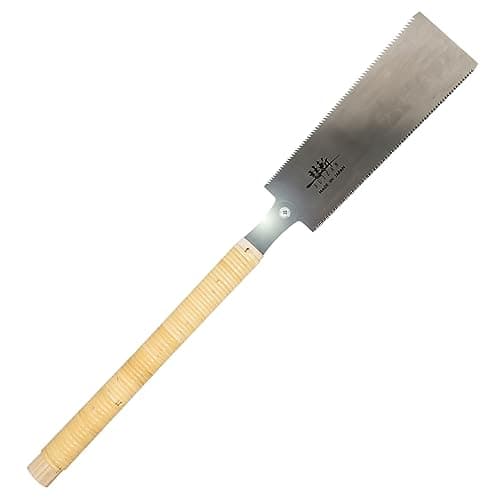
Rip teeth on one edge, crosscut on the other, a plate thin enough to cut with almost no force, and a maker who actually sells replacement blades. That last point is why it rates as well as it does.
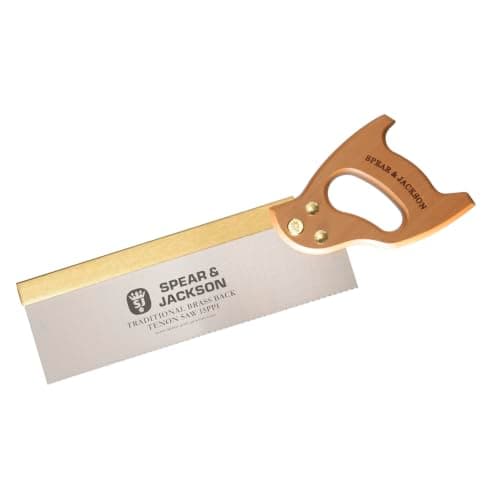
Sheffield-made, filed teeth, a proper back, and a price that does not assume you are a collector. This is the western answer to the dozuki for anyone who wants to sharpen rather than replace.
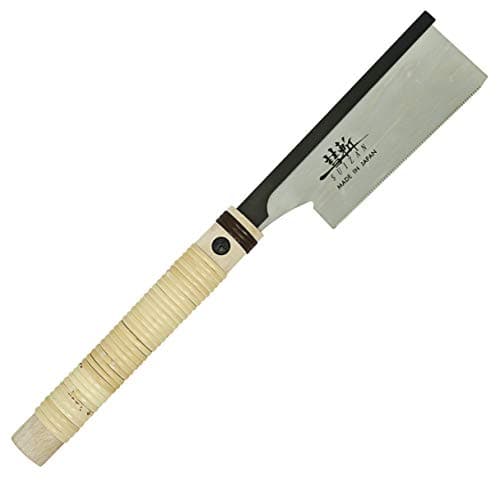
A stiffened back over a very thin crosscut plate. The kerf is narrow enough that the saw goes exactly where the knife line is, which is the whole job of a dovetail saw.
#ad· Live prices from the Amazon Product API, as of October 21, 2026. Where we have no verified live price we show none, and the cost-per-decade figure is suppressed with it — we would rather leave a gap than print a number that has rotted.
Saw catalogs list a dozen types with overlapping names and no explanation of what distinguishes them. There are really only three variables — length, tooth count, and whether there is a back — and every name in the catalog is a combination of those three chosen for a job.
The three variables
Length. Longer plate, longer stroke, faster cutting, less control. A 26-inch panel saw removes material fast; a 6-inch dovetail saw does not, and does not need to.
Tooth count (TPI). More teeth is slower, smoother, more controllable and a narrower kerf. Fewer teeth is faster and rougher. See saw TPI explained.
Back or no back.A folded spine over the plate makes a thin plate rigid, which buys accuracy — and sets a hard limit on depth of cut, because you cannot saw past the spine.
The types
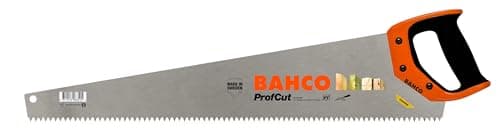
Panel / hand saw. Long, unbacked, coarse. Breaking boards down to rough size. 20 to 26 inches, 7 to 11 TPI. The Bahco and Irwin saws on this site are these.
Tenon / carcass saw. Backed, medium length, medium tooth count. Tenon shoulders and cheeks, and general joinery. Around 10 to 14 inches, 12 to 15 PPI. The most useful backsaw if you own one.
Dovetail saw. Backed, short, very fine. Cutting to a line on small joints. 6 to 10 inches, 15 to 20+ TPI. See best dovetail saws.
Gents saw. A dovetail saw with a straight turned handle instead of a pistol grip. A grip preference, not a different tool.
Coping saw. A thin blade in a sprung frame, for curves and for removing dovetail waste. Genuinely useful and genuinely cheap, and the one specialist saw most people should own. The frame limits how far from an edge you can reach, which is the number the best coping sawsranks them on — along with how the blade is tensioned, because the blade itself is a universal commodity.
Flush-cut saw. Unset teeth so the plate can lie flat on a surface without scratching it. Trimming plugs and through-tenons. One job, does it perfectly, nothing else does it at all.
Ryoba, dozuki, kataba. The Japanese equivalents: general-purpose double-edged, backed joinery, and unbacked single-edged respectively. See ryoba vs dozuki.
The back and its cost
Worth restating because it catches people out. A backsaw cannot cut deeper than the distance from the teeth to the spine. On drawer dovetails that is irrelevant; on a wide tenon shoulder it is a hard wall, and buying a 6-inch dovetail saw for tenon work is a purchase people regret quickly.
Kataba and unbacked western saws trade the rigidity for unlimited depth. That is the whole decision.
How few you need
Two saws covers most furniture work: a ryoba for breaking down and general cutting, and a dozuki or a filed tenon saw for joinery. Under $80 together.
Three adds a coping saw for removing dovetail waste and cutting curves, at about fifteen dollars, and it is the best third saw by a distance.
Everything past that is a job-specific purchase. Buy a flush-cut saw the first time you have a proud plug to trim, not before.
Everything above is the western family. The Japanese patterns are organised on different lines — by what the plate is shaped to do rather than by size and tooth count — and Japanese saw types explained lays that family out the same way.
Every pick, in full
The write-ups
01Best hand saw overall
Length
9.5 in
Teeth
Rip one edge, crosscut the other
Blade
Impulse hardened, replaceable
Action
Pull stroke
SUIZAN Ryoba Double Edge Pull Saw, 9.5 in
SUIZAN
8.5/10
Rip teeth on one edge, crosscut on the other, a plate thin enough to cut with almost no force, and a maker who actually sells replacement blades. That last point is why it rates as well as it does.
Cost per decade
$24.90
Horizon · tier C
20 years — No lifetime warranty; parts purchasable and resharpenable
The teeth are impulse-hardened and cannot be filed, so the blade is a consumable — but the maker sells replacement blades directly for this model. The handle and spine are the durable part; the blade is a scheduled purchase, not a failure.
Rebuy risk
High
parts listed
Cut quality
9.5
Blade life
8.0
Control
8.0
Renewability
8.0
Value
9.0
What it gets right
+Two saws in one, and both edges are good rather than compromised
+SUIZAN sells replacement blades directly, so the handle is the lasting purchase
+Thin kerf means less wood removed and much less effort
What it costs you
−Impulse-hardened teeth cannot be filed; when they go, you buy a blade
−The blade warranty stated on the replacement blades is one month
−A thin plate kinks if you force or twist it
Skip this if…
…your definition of buy-it-for-life excludes consumables. A ryoba is a handle plus a scheduled blade purchase, and no amount of framing changes that.
Sheffield-made, filed teeth, a proper back, and a price that does not assume you are a collector. This is the western answer to the dozuki for anyone who wants to sharpen rather than replace.
Cost per decade
$15.62
Horizon · tier C
20 years — No lifetime warranty; parts purchasable and resharpenable
No lifetime warranty published at the date checked. The teeth are filed rather than impulse-hardened, so they can be resharpened and reset by hand indefinitely — the reason nineteenth-century saw plates are still in working use.
Rebuy risk
Medium
parts listed, resharpenable
Cut quality
8.0
Blade life
9.5
Control
8.0
Renewability
9.5
Value
8.5
What it gets right
+Filed teeth mean this saw can be renewed indefinitely
+15 PPI is fine enough for joinery, coarse enough to be efficient
+Substantial back keeps the plate genuinely rigid
What it costs you
−Needs its teeth dressed and set before it does its best work
−Wider kerf than any Japanese equivalent
−Handle finish is rough at the price
Skip this if…
…you will not sharpen it. Everything good about this saw is downstream of that.
A stiffened back over a very thin crosscut plate. The kerf is narrow enough that the saw goes exactly where the knife line is, which is the whole job of a dovetail saw.
Cost per decade
$19.40
Horizon · tier C
20 years — No lifetime warranty; parts purchasable and resharpenable
The teeth are impulse-hardened and cannot be filed, so the blade is a consumable — but the maker sells replacement blades directly for this model. The handle and spine are the durable part; the blade is a scheduled purchase, not a failure.
Rebuy risk
High
parts listed
Cut quality
9.5
Blade life
8.0
Control
9.5
Renewability
8.0
Value
9.0
What it gets right
+Kerf narrow enough to split a knife line reliably
+Replacement blades sold by the maker
+6 inch is the right length for drawer-scale dovetails
What it costs you
−The back limits depth of cut absolutely
−Impulse-hardened teeth cannot be filed
−The thin plate is unforgiving of a forced stroke
Skip this if…
…you cut deep tenons. The spine will bottom out and there is no way around it.
A long, coarse, aggressive saw for reducing boards. Nobody enjoys ripping by hand, and this is the tool that makes it take the least time.
Cost per decade
$42.45
Horizon · tier D
10 years — No warranty and no parts availability found
Impulse-hardened teeth cannot be resharpened, and we could not find a replacement blade listing for this model at the date checked. When the teeth go, the saw goes — which is what the rating below is telling you.
Rebuy risk
High
none of the three met
Cut quality
7.0
Blade life
7.0
Control
6.0
Renewability
3.0
Value
9.0
What it gets right
+Removes material fast, which is the only thing this job needs
+Long plate keeps the cut straight over a long board
+Cheap for the amount of work it does
What it costs you
−Leaves a rough surface that needs planing
−Hardpoint teeth, unsharpenable
−Too coarse for anything approaching joinery
Skip this if…
…you have a track saw or a bandsaw. This is the manual answer to a machine problem.
What is the difference between a tenon saw and a dovetail saw?+
Size and tooth count. A tenon saw is longer with fewer teeth for tenon shoulders and general joinery; a dovetail saw is shorter and much finer for cutting small joints to a line. Both are backed.
What does the back on a saw do?+
It stiffens a thin plate so it can be steered accurately. The cost is depth: you cannot saw deeper than the distance from the teeth to the spine.
How many saws do I need?+
Two covers most work: one general-purpose saw for breaking down stock and one fine backed saw for joinery. A coping saw is an excellent and cheap third.
What is a flush-cut saw for?+
Trimming plugs and through-tenons flush with a surface. The teeth have no set, so the plate lies flat without scratching. It does one job and nothing else does that job.
We have not handled these tools. Nobody here has tested one, owned one, or taken one apart. Specifications come from the manufacturer or the retailer listing; warranty terms come from the maker's own warranty page; the cost-per-decade arithmetic is ours and reproducible. Where we could not verify a figure we say so on the page rather than quietly leaving it out. Read the full method.