Hand Saws
What Is A Dozuki Saw
A pull saw with a stiffening spine - the Japanese answer to the Western dovetail and tenon saw.
We earn a commission when you buy through our Amazon links, at no extra cost to you. It never decides a ranking, and where the best tool in a class is one we earn nothing on, we say so and link it anyway. How this works.
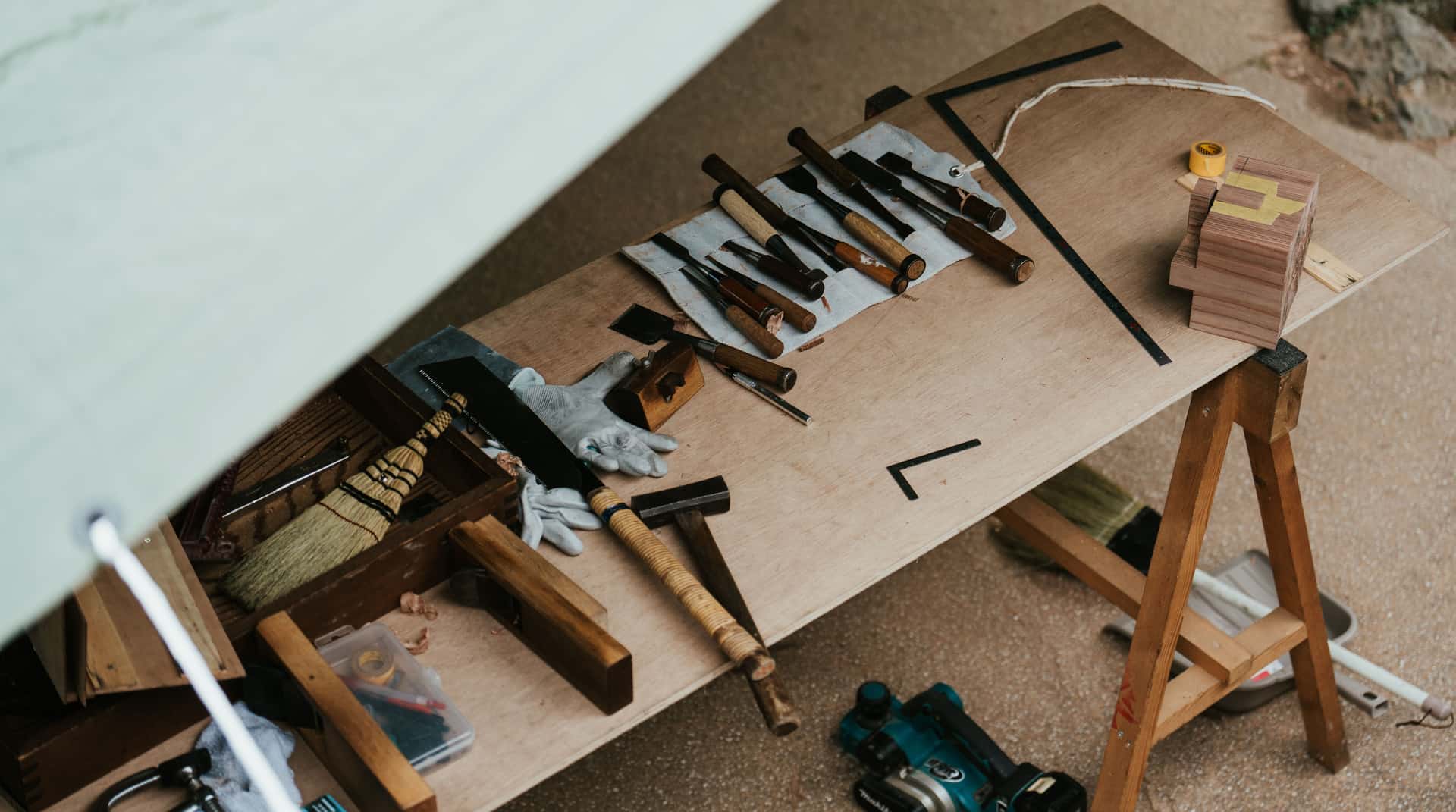
A dozuki is the Japanese joinery saw: a pull saw with a stiffening spine along its back and a row of fine crosscut teeth, made for the most precise cuts a woodworker asks for. The name refers to that back — dozuki means the saw is braced — and it is the direct Japanese counterpart to the Western dovetail and tenon saws. If you have seen a dovetail sawn so cleanly the kerf looks drawn on rather than cut, there is a good chance a dozuki did it.
What the spine does
Left to itself, the blade of a dozuki is extraordinarily thin — thinner than almost any Western saw plate — and a plate that thin would flex and wander with nothing to steady it. The folded brass or steel spine solves that: it holds the top edge rigid so the teeth track a dead-straight line, exactly as the back on a Western backsaw does. The difference is that the dozuki cuts on the pull stroke, which keeps the thin blade in tension and lets it stay flat instead of buckling the way a pushed blade of the same thickness would.
What you cut with it
The dozuki is a joinery specialist. Its fine crosscut teeth and thin kerf make it the natural choice for the shoulder and cheek cuts of tenons, for fine crosscutting, and above all for cutting dovetails, where a narrow, accurate kerf is everything. The picks worth owning for that work are gathered in the best dovetail saws, which includes dozuki-style pull saws alongside the Western options, because for many people a dozuki is the easiest route to a clean dovetail. It is not the saw for deep rip cuts or breaking down stock — a ryoba or a panel saw does that — but for cuts that have to be exact, little beats it.
Dozuki versus ryoba
The other saw most people meet first is the ryoba, the two-edged saw with rip teeth on one edge and crosscut teeth on the other and no spine at all. The ryoba is the versatile all-rounder; the dozuki is the precision instrument. A ryoba cuts deeper and does more jobs, while a dozuki cuts shallower — the spine limits depth — but far more accurately. The full comparison, and which to buy first, is laid out in ryoba versus dozuki. Most joiners end up owning both.
Dozuki versus a Western backsaw
A dozuki and a Western dovetail saw do the same job by opposite means. The Western saw is stiffer and heavier, cuts on the push, and is filed from soft steel you can resharpen at home. The dozuki is lighter, cuts on the pull, and leaves a thinner kerf, but its hard teeth are usually replaced rather than sharpened. If the idea of a back on a saw is new to you, what a backsaw is explains the family both saws belong to and why that spine matters for accuracy.
What the thin kerf buys you
A dozuki removes remarkably little wood per cut, and that thin kerf pays off twice. It means less effort, because there is less material to sever on each stroke, and it means more accuracy, because a fine kerf leaves more room to split a line exactly and wastes less of your layout. On dovetails in particular, a narrow kerf lets the joint go together tight with crisp, gap-free lines. The cost is depth: the spine stops the cut once the wood is deeper than the exposed plate, so a dozuki is a joinery saw, not a saw for deep ripping.
Sizes and tooth counts
Dozuki are not one saw but a small family. Blade lengths run from stubby models made for small parts and model work up to longer plates for furniture-scale joinery, and the tooth count climbs as the work gets finer — a general dozuki carries teeth fine enough for clean crosscuts, while a dedicated dovetail dozuki is finer still. As a rule, more teeth per inch leave a smoother, more accurate cut but slow you down and clog sooner in deep or resinous wood, so the right choice depends on the joints you cut most. Whatever the size, the kerf stays thin, which is the whole point of the pattern. If you are buying one saw to start, a mid-length dozuki with a moderately fine tooth is the most useful all-rounder.
Getting the most out of one
A dozuki rewards a light touch more than almost any other saw. Start the cut on the pull with the blade barely weighted, let the fine teeth find the line, and never force it — press down and the thin plate will flex and the cut will wander, exactly the fault the saw is built to avoid. Let the length of the stroke do the work, keep your eye directly over the line, and stop the moment the spine reaches the wood, because that is as deep as it will go. Keep it clean and lightly oiled between uses, and store it so nothing presses on the delicate teeth. Treated that way, a dozuki cuts joinery cleaner and with less effort than most people expect the first time they pick one up.
Blades that swap, not sharpen
Like most Japanese saws, a modern dozuki usually has a replaceable, impulse-hardened blade rather than a resharpenable one. When the teeth dull, you fit a fresh blade and keep the handle and spine — the process is covered in how to replace a Japanese saw blade. That is what makes a dozuki a buy-it-for-life tool despite its delicate teeth: the part that wears is cheap and renewable. For the patterns and makers worth starting with, the best Japanese saws is the place to look.
Questions
Frequently asked
What is a dozuki saw used for?
Fine joinery: the cheeks and shoulders of tenons, precise crosscuts, and especially dovetails. Its stiff spine and fine crosscut teeth make it one of the most accurate saws you can own.
What is the difference between a dozuki and a ryoba?
A dozuki has a spine and one row of fine crosscut teeth for accuracy but limited depth. A ryoba has no spine and two edges, rip and crosscut, so it cuts deeper and does more jobs but less precisely.
Is a dozuki the same as a dovetail saw?
They do the same work. A dozuki is the Japanese, pull-stroke, thin-kerf version of the Western dovetail saw. Both use a stiffening back and fine teeth to cut joinery cleanly.
Why does a dozuki have a stiff back?
Its blade is extremely thin and would flex without support. The brass or steel spine holds the top edge rigid so the teeth track a straight line, the same reason a Western backsaw has a spine.
Can you sharpen a dozuki?
Usually not. Most modern dozuki have impulse-hardened teeth too hard for a file, so you replace the blade when it dulls rather than sharpening it, keeping the handle and spine.
Keep reading
Related
- Ryoba vs dozukiThe all-rounder against the precision saw, and which to buy first.
- What is a backsawThe Western family the dozuki mirrors, spine and all.
- The best Japanese sawsWhere to start if you want a dozuki worth keeping.
- How to replace a Japanese saw bladeHow to renew the dozuki blade when its hard teeth finally dull.
Back to Hand Saws · how we pick · editorial policy