We earn a commission when you buy through our Amazon links, at no extra cost to you. It never decides a ranking, and where the best tool in a class is one we earn nothing on, we say so and link it anyway. How this works.
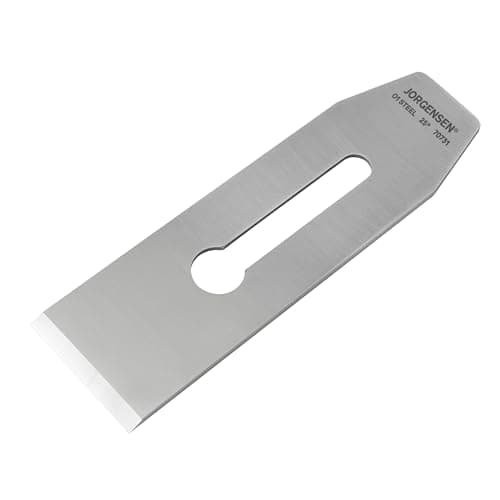
Almost the only blade at this price whose maker will name the steel: O1, published at Rockwell 60-64, 3 mm thick and 2 in wide. It is not a Hock, and it does not need to be — it is the cheapest honest way to find out whether you actually prefer an O1 edge.
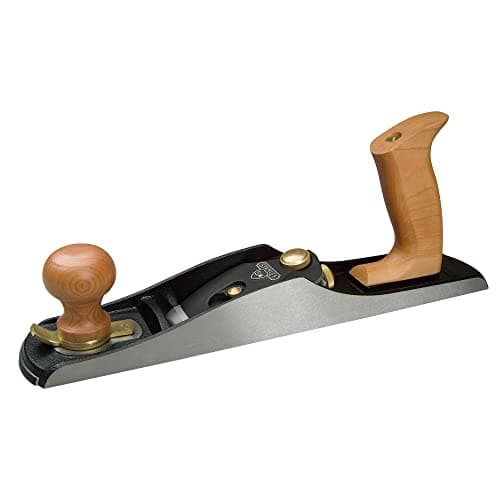
Bevel-up at a 12 degree bed, which means the bevel you grind sets the cutting angle. Grind three irons at three angles and one plane covers end grain, general work and figured hardwood.
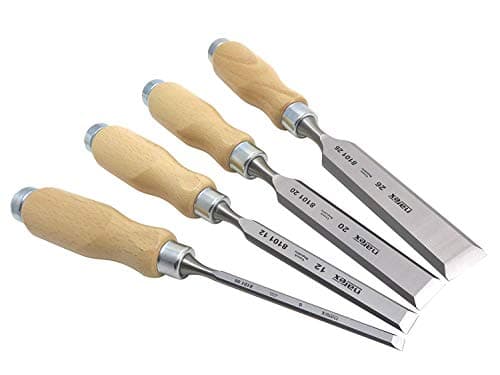
The set that makes the case for this whole site. Four sizes, Czech chrome-vanadium hardened properly, beech handles, and a price that leaves budget for the stone you will need anyway.
#ad· Live prices from the Amazon Product API, as of October 16, 2026. Where we have no verified live price we show none, and the cost-per-decade figure is suppressed with it — we would rather leave a gap than print a number that has rotted.
O1 sharpens faster and takes a finer edge. A2 keeps its edge longer and is slower to bring back. Both are hardened to roughly the same number, both will outlive you, and neither one will make you better at planing. That is the whole answer. What follows is why it is true, what the published numbers actually say, and the retail complication nobody mentions: on most tools you can buy today, you do not get to choose.
What the two steels actually are
These are not woodworking inventions. Both are standard AISI tool steels with published datasheets, used across die-making and tooling long before anyone ground one into a plane iron.
O1 is an oil-hardening steel and very nearly a plain carbon steel. Its published composition is about 0.94% carbon, 1.20% manganese, 0.30% silicon, 0.50% chromium and 0.50% tungsten. The manganese is what lets it harden in an oil quench — the “O” in the name — and beyond that there is not much alloy in it at all.
A2 is an air-hardening steel with roughly ten times the chromium: about 1.00% carbon, 0.75% manganese, 0.30% silicon, 5.00% chromium, 1.00% molybdenum and 0.25% vanadium. Chromium, molybdenum and vanadium are all carbide formers. That is the entire difference, and everything a woodworker notices at the bench follows from it.
The datasheets say the consequence plainly. A2 is described as intermediate in wear resistance between O1 and D2, the high-carbon high-chromium die steel. The O1 sheet says the opposite from the other direction: where greater wear resistance is required, look to higher-alloy steels such as A2 or D2. Neither document is talking about woodworking, which is exactly why they are worth quoting — they have no side in this argument.
Both run at about the same hardness
This is the part that surprises people, because the folk version of this comparison usually goes “A2 is harder.” It is not, as tool makers actually run it.
Hock's O1 irons are published at Rc62. Hock's A2 irons are published at 62 HRC. Lie-Nielsen hardens its A2 blades to Rockwell 60–62. Jorgensen publishes Rockwell 60–64 for its O1 replacement blade. Four sets of published figures, two steels, one band.
So the difference is not hardness. It is what the hardness is made of. O1 gets there mostly through carbon dissolved in a fine-grained matrix. A2 gets there with a population of chromium and vanadium carbides distributed through it — particles considerably harder than the steel around them. Those particles are why A2 resists abrasion longer, and they are also why the abrasive in your sharpening stone has a harder time cutting it, and why the very apex of an A2 edge cannot be brought quite as fine as an O1 apex can. One mechanism, three consequences, all of them consistent.
The trade, in the words of people who sell both
We have no lab and we have not handled these blades, so the useful evidence here is what the makers and specialist retailers who stock both steels are willing to say in print — people with an obvious commercial reason to call every steel excellent.
Infinity Tools, selling Hock's O1 iron alongside the A2 one, writes that they “actually prefer this steel over the harder A2 steel since it sharpens much quicker and holds a consistently sharp edge.” That is a retailer arguing you should buy the cheaper of the two blades on their shelf.
From the other direction, the specification for Hock's A2 iron says the cryogenic treatment “increases the toughness of the steel without affecting its hardness (62 HRC)” and that this “significantly reduces edge chipping when working with challenging woods.” Read that carefully: it is a maker telling you that A2 has a chipping tendency worth engineering against. Both of those statements are the trade, admitted by the side that would rather not admit it.
The complication: most tools will not tell you
Here is the thing that makes this comparison less useful than the search volume suggests. Below the premium tier, the steel grade is usually not published at all.
Woodcraft's own specification for the WoodRiver V3 replacement blade reads “hardened, precision-ground steel” and a 25 degree bevel. That is the entire material disclosure on a blade from a respected house brand. Most bench chisel sets under $250 are chrome-vanadium, chrome-manganese or an unnamed high-carbon steel, which is neither A2 nor O1 and is fine. Almost every replacement iron on Amazon says “high carbon steel” and stops.
Which means the practical version of this question is not “A2 or O1?” It is “is this maker willing to name the steel and the hardness at all?” A published grade plus a published Rockwell range is a real quality signal, because it is a claim the maker can be held to. “Hardened steel” is not a claim. It is a sentence. We ranked the whole replacement-blade shelf on exactly that test — who names a grade, who names a hardness, and who names neither — on the best replacement plane irons.
The four tools below are the ones this argument actually resolves to on a site that only recommends things you can buy right now. They are not ranked against each other — they are four different answers to the same question.
Rust, which decides it for some people
Half a percent of chromium is not corrosion resistance. Five percent is not either — neither of these steels is stainless, and both will rust if you put them away damp. But the gap between them is real and it shows up in a garage workshop in winter: O1 spots first, and it spots faster.
If your shop is unheated and humid and you are honest with yourself about how often you wipe tools down, that is a legitimate reason to prefer A2 that has nothing to do with edge retention. It is also an argument for a can of wax and a habit, which is cheaper than either blade.
So which one
Choose O1 if you sharpen willingly and often, if you do a lot of paring and fine smoothing where the last increment of keenness is the point, if you work mostly in softer woods, or if you sharpen freehand on natural or soft waterstones. O1 is also the right first choice simply because it teaches you faster: it comes back to sharp so quickly that you stop postponing it.
Choose A2 if you plane long sessions in abrasive or figured hardwoods, if your sharpening setup is diamond plates or hard ceramic stones, if you resent stopping mid-job, or if your shop is damp. A2 rewards a slightly steeper bevel and a good stone, and punishes neither patience nor neglect as much as O1 does.
Choose neither, deliberately if you are buying your first set of chisels. A properly hardened chrome-manganese set at fifty dollars plus a stone will outperform an exotic steel with no stone every single time, which is the argument we make at length in the best wood chisels.
Almost the only blade at this price whose maker will name the steel: O1, published at Rockwell 60-64, 3 mm thick and 2 in wide. It is not a Hock, and it does not need to be — it is the cheapest honest way to find out whether you actually prefer an O1 edge.
Cost per decade
$10.49
Horizon · tier C
20 years — No lifetime warranty; parts purchasable and resharpenable
No lifetime warranty published by the manufacturer at the date checked. Monolithic edge tool: no separately consumable part, and the edge is renewable by sharpening for as long as there is steel left.
Rebuy risk
Medium
parts listed, resharpenable
Steel & edge
8.5
Thickness
8.5
Fitment
6.0
Published specs
9.0
Value
9.5
What it gets right
+Jorgensen publishes the grade, the hardness range and both dimensions — most blades at any price publish none of them
+3 mm is roughly half again the thickness of a stock Bailey-pattern iron, which is where chatter goes away
+O1 comes back to sharp in a fraction of the strokes A2 asks for
+Nothing on it is consumable: it is renewable by sharpening until the steel runs out
What it costs you
−Jorgensen states fitment only for its own No. 4 and No. 5 planes; 2 in is the common Bailey-pattern width but the maker does not publish Stanley or Record fitment
−O1 rusts. Half a percent of chromium is not corrosion resistance, and a damp shop will find that out
−Edge life is genuinely shorter than A2's — you are trading it for sharpening speed
−No warranty terms published for the blade
Skip this if…
…you resent sharpening. The whole argument for O1 is that resharpening is cheap in minutes, and that only pays if you are willing to do it more often.
We earn nothing on this one
The reference O1 iron in North America is Ron Hock's — 0.95% carbon, Rc62, ground in the USA, and roughly twice this price. It is not sold on Amazon, so we earn nothing on it, and we cite it here as the yardstick rather than as somewhere to send you. Those figures come from its listing at Woodcraft.
Price as of October 16, 2026. Prices move; Amazon's is the one that counts.
#ad · we may earn a commission from this link to Jorgensen Replacement Plane Blade, O1, No. 4 / No. 5
02The one plane to own if you only own one
Size
No. 62 low angle jack, 14 in
Bed angle
12 deg, bevel up
Iron
A2, thick section
Mouth
Adjustable
Stanley No. 62 Sweetheart Low Angle Jack Plane
Stanley
8.2/10
Bevel-up at a 12 degree bed, which means the bevel you grind sets the cutting angle. Grind three irons at three angles and one plane covers end grain, general work and figured hardwood.
Cost per decade
Suppressed — no live price
Horizon · tier A
30 years — Lifetime warranty, cited
Stanley publishes a limited lifetime warranty on hand tools against material and workmanship defects. Note it excludes consumables including 'any blade' — the casting is covered, the iron is not. Bailey-pattern irons are a standard size and replacements are widely sold.
Rebuy risk
Low
lifetime warranty, parts listed, resharpenable
Sole & body
8.5
Iron & edge
8.5
Adjustment
8.0
Out of box
8.0
Parts & repair
9.0
Value
7.0
What it gets right
+One body, three effective cutting angles, if you buy spare irons
+Low bed angle plus adjustable mouth is the best end-grain setup at this price
+Simple architecture: no frog to fettle, fewer things to get wrong
What it costs you
−Spare irons are the whole point and they are an extra purchase
−Bevel-up geometry means a chipped edge changes your cutting angle, not just your sharpness
−Heavier and longer than a smoother if that is the only job
Skip this if…
…you have already committed to a bevel-down set. Mixing the two systems means two sharpening setups for no benefit.
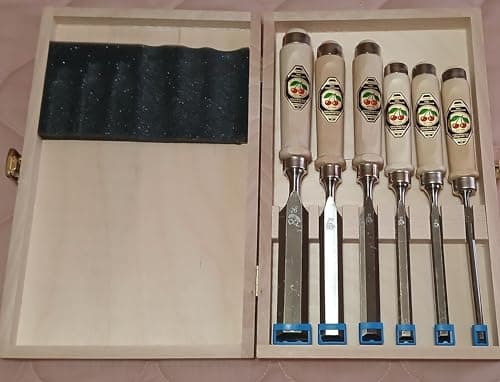
03German steel and a hornbeam handle you will not replace
Set
6 pieces
Steel
High carbon, Solingen forged
Handles
Hornbeam
Warranty
Not published
Two Cherries Bevel Edge Chisels, 6 Piece in Wooden Box
Two Cherries
8.3/10
Solingen-forged carbon steel, hardened hard, in a set that people genuinely do hand down. The unpolished version costs less and cuts identically.
Cost per decade
$90.00
Horizon · tier C
20 years — No lifetime warranty; parts purchasable and resharpenable
No lifetime warranty published by the manufacturer at the date checked. Monolithic edge tool: no separately consumable part, and the edge is renewable by sharpening for as long as there is steel left.
Rebuy risk
Medium
parts listed, resharpenable
Steel & edge
9.0
Back flatness
8.5
Handle
9.0
Sizes covered
8.5
Value
6.5
What it gets right
+Carbon steel sharpens faster than A2 and takes a keener edge
+Hornbeam handles are the most durable wooden option in this list
+Set of six in a box is a coherent one-time purchase
What it costs you
−Carbon steel rusts if you leave it damp; this is a maintenance obligation
−No published warranty terms
−Priced well above the point where more money buys more cutting
Skip this if…
…your workshop is a damp garage. Carbon steel and humidity is a fight you will lose.
Price as of October 16, 2026. Prices move; Amazon's is the one that counts.
#ad · we may earn a commission from this link to Two Cherries Bevel Edge Chisels, 6 Piece in Wooden Box
04Best chisels overall, and the end of the argument
Set
4 pieces
Steel
Cr-Mn / Cr-V, hardened
Handles
Beech, tanged
Warranty
Not published by the maker
Narex Bevel Edge Chisel Set, 4 Piece
Narex
8.4/10
The set that makes the case for this whole site. Four sizes, Czech chrome-vanadium hardened properly, beech handles, and a price that leaves budget for the stone you will need anyway.
Cost per decade
$24.50
Horizon · tier C
20 years — No lifetime warranty; parts purchasable and resharpenable
A UK specialist retailer states a lifetime guarantee on Narex chisels; we could not find published warranty terms from Narex itself, so we do not rate it tier A. Unhandled blade blanks are sold separately, and the tool is resharpenable indefinitely.
Rebuy risk
Medium
parts listed, resharpenable
Steel & edge
8.5
Back flatness
8.0
Handle
7.5
Sizes covered
8.5
Value
9.5
What it gets right
+Edge retention indistinguishable from sets at four times the price in normal use
+Backs are flat enough that lapping is a job, not an ordeal
+Four sizes is genuinely the number most people use
+Nothing on the tool is consumable: sharpening renews it indefinitely
What it costs you
−Narex publishes no warranty terms we could find, so it cannot rate tier A
−Lacquer on the handles is functional rather than lovely
−Side lands are thicker than a dedicated dovetail chisel's
Skip this if…
…you cut a lot of tight dovetails. The side lands will bruise the pins; buy a dedicated dovetail chisel for those and keep these for everything else.
A2's chromium and vanadium carbides are harder than the abrasive in some traditional stones, which is the real reason people describe A2 as “slow”. It is not that the steel is harder overall — we have seen that both run around Rc62 — it is that parts of it are harder than what you are cutting it with.
Diamond and modern ceramic abrasives cut A2 without complaint. Softer natural stones and some budget waterstones struggle, and the experience the owner reports is “this blade never gets sharp”, which is a stone problem wearing a steel problem's clothes. If you already own A2 tools and sharpening feels like a chore, read waterstones vs diamond stones before you blame the blade.
The reverse is also true and less often said: O1 on an aggressive coarse diamond plate is almost too easy to remove, and it is simple to grind away more blade than you meant to. Neither steel is difficult. They just want different things.
Bevel angle, and the one number worth remembering
The common shop guidance is that A2 wants a slightly steeper edge than O1 — often quoted as 30 degrees rather than 25 — because a very acute A2 edge is more prone to micro-chipping, while O1 will hold an acute edge and simply wear rather than break.
Lie-Nielsen's own advice for its A2 blades points the same way from a different angle: honing a secondary bevel of 5 to 10 degrees on top of the grind, they write, will “increase performance, help achieve a razor edge quickly, and improve edge life in hardwoods.” That secondary bevel is exactly the steeper apex described above, and it is also the fastest way to sharpen either steel, because you are honing a sliver instead of a whole face. The mechanics of that are in microbevels explained, and the numbers behind the angles in sharpening angles explained.
What cryogenic treatment is actually for
Cryogenic treatment gets marketed as a hardness upgrade. It is not. Hock's own specification says the process “increases the toughness of the steel without affecting its hardness (62 HRC)”. Lie-Nielsen cryo-treats and double-tempers its A2 at Rockwell 60–62. Narex applies the same idea to its Richter chrome-vanadium chisels.
In other words, cryo is a fix for A2's specific weakness — brittleness at the apex — not a way to make the steel harder or longer-lasting. When you see “cryogenically treated A2” on a spec sheet, read it as the maker addressing chipping, and treat its absence on a cheap A2 blade as a reason to grind that extra five degrees.
Where PM-V11 and the Japanese laminated steels sit
Both of the interesting alternatives try to escape this trade rather than pick a side.
Powder-metallurgy steels such as Veritas's PM-V11 are made by a process that produces a much finer, more evenly distributed carbide structure than conventionally cast A2, which is what allows a steel to be both wear-resistant and reasonable to sharpen. They are sold direct rather than through Amazon, cost accordingly, and are a genuine step sideways off the line A2 and O1 sit on.
Japanese laminated tools do the same thing with geometry instead of metallurgy: a very hard, high-carbon cutting layer forge-welded to a soft iron body, so the brittle steel is only present where it cuts. The hard layer sharpens like an extremely good O1 and is supported well enough not to shatter. That comparison, in full, is in Japanese vs western chisels.
The buy-it-for-life view: this decision does not affect tool life
It is worth ending on the thing that makes this an easier choice than the internet suggests. Neither steel is a consumable. There is no cartridge, no insert and no replacement schedule; the edge is renewed by sharpening for as long as there is steel left, which on a full-thickness plane iron or a bench chisel is decades of daily use.
A2 does not last longer than O1 in the sense that matters to a buy-it-for-life buyer. Between sharpenings, yes — measurably. Over the life of the tool, no. What you are actually choosing between is two different distributions of your own time: more minutes at the bench and fewer at the stones, or the reverse. Choose the one that matches the person you actually are on a Sunday afternoon, and then spend the argument money on a better stone.
Questions
Frequently asked
Is A2 better than O1 for plane irons?+
No, and neither is worse. A2 holds an edge longer between sharpenings; O1 sharpens faster and takes a marginally finer edge. Both are run at around Rockwell 60–64 by the makers who publish figures, and both are renewable by sharpening indefinitely. If you dislike sharpening, A2. If you sharpen willingly and want the keenest possible edge, O1.
Which is harder, A2 or O1?+
As tools are actually sold, they are hardened to the same range. Hock publishes Rc62 for both its O1 and its A2 irons; Lie-Nielsen publishes Rockwell 60–62 for A2. A2 resists wear better not because it is harder overall but because roughly 5% chromium plus molybdenum and vanadium form hard carbides inside it.
Why is A2 so hard to sharpen?+
Because the carbides that give it wear resistance are harder than the abrasive in some traditional stones. Diamond plates and hard ceramic stones cut A2 without difficulty; softer natural and budget waterstones struggle. If A2 feels impossible, suspect the stone before the steel.
Does O1 rust more than A2?+
Yes. O1 carries about 0.5% chromium against A2's 5%, and neither is stainless, so both need wiping down — but O1 is the one that spots overnight in a damp shop. In an unheated garage that is a real reason to prefer A2, independent of anything to do with edges.
What bevel angle should I use on A2?+
Shop practice is a slightly steeper edge than you would put on O1 — commonly 30 degrees rather than 25 — because a very acute A2 apex is more prone to micro-chipping. Lie-Nielsen recommends honing a secondary bevel 5 to 10 degrees above the grind on its A2 blades, which achieves the same thing and sharpens faster.
How do I know which steel my chisel or plane iron is?+
Usually you cannot, because most makers do not publish it. A named grade and a published Rockwell range is the signal to look for; “hardened steel” or “high carbon steel” with no number tells you nothing. Below roughly $250 a set, western bench chisels are typically chrome-vanadium, chrome-manganese or an unnamed high-carbon steel rather than either A2 or O1.
We have not handled these tools. Nobody here has tested one, owned one, or taken one apart. Specifications come from the manufacturer or the retailer listing; warranty terms come from the maker's own warranty page; the cost-per-decade arithmetic is ours and reproducible. Where we could not verify a figure we say so on the page rather than quietly leaving it out. Read the full method.