Twenty-five dollars is the one place in this workshop where the cheap tool is not a compromise. It is also the place where almost nothing is repairable.
We earn a commission when you buy through our Amazon links, at no extra cost to you. It never decides a ranking, and where the best tool in a class is one we earn nothing on, we say so and link it anyway. How this works.
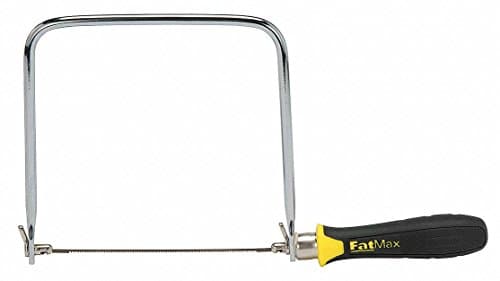
A high-carbon steel frame with a 6-3/4 in deep throat, a hardwood handle and a blade that turns to any angle, under a maker warranty that is limited-lifetime on hand tools and explicitly excludes blades. On most tools that exclusion is fatal. On a coping saw it is the correct exclusion, because the blade was always a consumable.
The deepest published throat at the lowest honest price
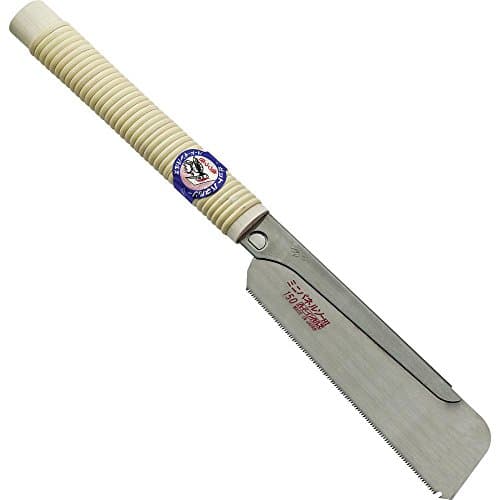
106 teeth on a 150 mm blade — roughly 18 teeth per inch, the finest count on this page by a clear margin, and on a veneered face that is the number that decides whether you get a clean edge or a fringe. The stiffening back is what makes it a panel saw rather than a flexible kataba: the plate cannot wander out of the line you scored.
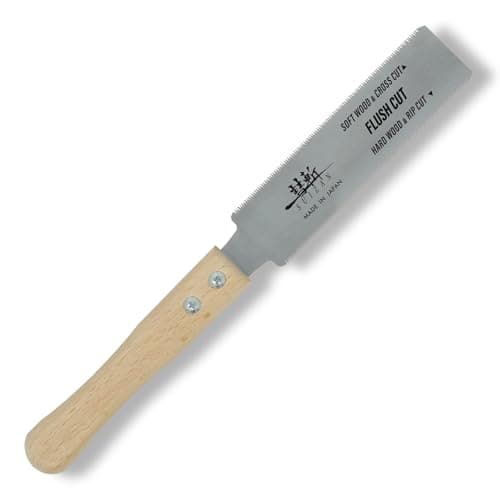
A flush-cut saw has no set to its teeth at all, which is the entire reason it exists: the plate can lie flat on a veneered face and cut the thing standing proud of it without scratching the face itself. On sheet goods that is a specific and frequent job — edge banding, solid lippings, plugs in a plywood carcass.
Trimming edge banding and plugs without touching the face
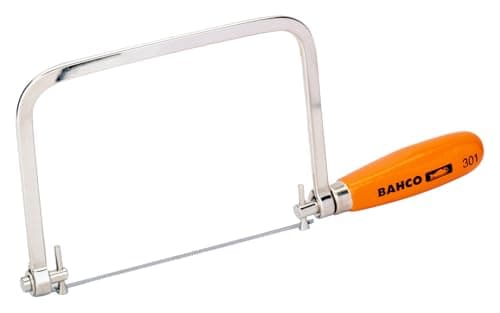
A nickel-plated steel frame, a beech handle and a 14 TPI blade of hardened and tempered carbon steel with the teeth milled and set — and the only coping saw in the ordinary price range whose seller publishes warranty wording at all, as a limited warranty against defects in workmanship and materials. Everything else here is sold with silence or with a returns window.
The one frame in the normal price range with published warranty wording
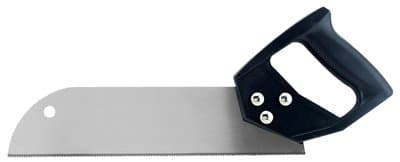
A 12 in plate at a published 16 TPI, sold as a laminate saw. It is the only tool on this page whose maker names the material it is for, and 16 TPI is in the right band: fine enough not to chip a melamine face, coarse enough to clear MDF dust instead of packing with it.
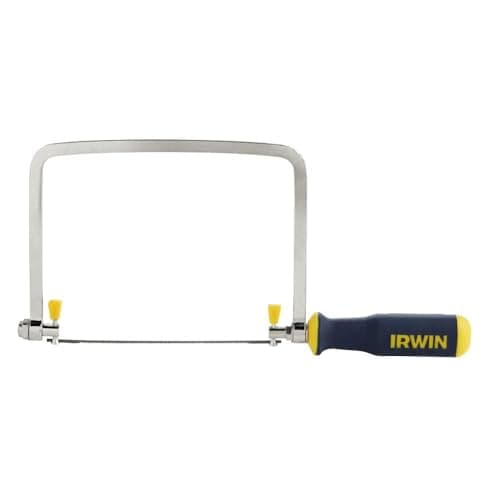
A flat-bar frame, DuraSteel pins, a high-speed steel blade and a triangular ProTouch handle, for single digits at the date checked. The flat bar is a real engineering choice — a flat section resists the twisting that round-rod frames do badly — and IRWIN publishes a limited lifetime warranty on select products at the brand level.
#ad· Live prices from the Amazon Product API, as of November 22, 2026. Where we have no verified live price we show none, and the cost-per-decade figure is suppressed with it — we would rather leave a gap than print a number that has rotted.
The verdict: buy the Gyokucho Razor Dozuki. Under twenty dollars for a backed saw that will cut joinery accurately out of the packet, and there is no western backsaw anywhere near this price that competes — it is not close. It is the right saw for anyone who wants to cut a dovetail or a tenon shoulder this weekend without spending real money first. The budget pick is the IRWIN ProTouch coping saw, the cheapest tool on the page and a flat-bar frame rather than the twisting round rod most budget frames use. Prices are live below, with the date they were checked.
This band is unusual on this site, because it is the one place where cheap is not a compromise on the cut. A twenty-dollar dozuki cuts a cleaner joint than a hundred-dollar western backsaw straight from the box. What it is a compromise on is permanence, and that is the honest frame for the whole page: six of the seven saws here have impulse-hardened or hard-pointed teeth that no file will touch, which means the day they dull is the day they become scrap. The saws you can file back to new forever are on the best tenon saws, and they start at roughly a third more than the top of this band.
Why the cheap Japanese saws win on the cut
A pull saw cuts on the pull stroke, so the plate is in tension rather than compression. A plate in tension cannot buckle, which means it can be made very thin, which means the kerf is narrow and the saw tracks the line you scored instead of wandering. A western saw cuts on the push, puts the plate in compression, and therefore has to be thicker to stay straight — and a thicker plate needs more set, a wider kerf and more force.
None of that is a quality difference. It is geometry, and it is why a $18 dozuki can be accurate while a $18 western backsaw cannot. The full argument is on Japanese versus western saws.
The second thing to understand before buying in this band is impulse hardening. The teeth on almost every cheap Japanese saw are induction-hardened to a depth of a few thousandths of an inch. They stay sharp two to three times longer than a filed tooth and they cannot be filed at all. That is the trade the price is buying, and it is why the write-ups below keep saying whether a replacement blade exists.
The saw to buy: Gyokucho Razor Dozuki
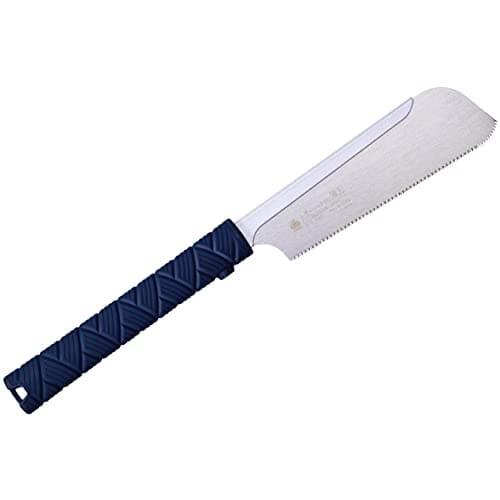
A backed dozuki with fine impulse-hardened crosscut teeth, model 770-3500, for under twenty dollars. It is genuinely accurate for joinery out of the packet, the back keeps the thin plate rigid in the cut, and it is cheap enough that a kinked plate is annoying rather than expensive.
The handle is basic, replacement-blade availability for this specific model is patchy in the US, and it is not a saw anyone hands down. Buy it to learn on and buy a better one when you know what you want. What the pattern is for is on what is a dozuki saw, and the field at every price is on the best dovetail saws.
The coping frames, and the one number that decides them
Three coping saws sit in this band and they are not interchangeable, because the spec that matters is throat depth — how far from the edge of the board you can reach. It is also the number most listings bury.
The Stanley 15-106 publishes the deepest throat here at 6-3/4 in, on a high-carbon steel frame with a hardwood handle, under Stanley's limited lifetime warranty on hand tools. That warranty explicitly excludes blades, and on a coping saw that is the correct exclusion rather than a weasel: the blade was always a consumable, so the cover lands on the only part that was ever meant to last. Tension is set by turning the handle, which is less repeatable than a cam lever and is the known failure mode — the handle unwinding mid-cut.
The Bahco BAH301 is the one frame in the ordinary price range whose seller publishes warranty wording at all, and the only one that specifies its blade steel: hardened and tempered carbon steel at 14 TPI with the teeth milled and set, on a nickel-plated frame with a lacquered beech handle and full 360 degree blade rotation. Neither Bahco nor the retailers publish a throat depth, which is the frustrating omission on an otherwise unusually documented tool.
The IRWIN ProTouch is the budget pick, at single digits on the date checked. The flat-bar frame section is a real engineering choice — a flat section resists the twist that round-rod frames do badly — and the blade is high-speed steel rather than plain carbon. The catch is the throat: 5-1/2 in, more than an inch less reach than the Stanley at similar money. IRWIN's limited lifetime warranty applies to “select products” and this saw's retailer page publishes no warranty statement, so we cannot tell you it is covered. The wider field is on the best coping saws.
The two specialists worth owning at this price
The Rockler mini dozuki panel saw publishes 106 teeth on a 150 mm blade — roughly 18 TPI, the finest published count in this band by a clear margin. On a veneered face that number is what decides whether you get a clean edge or a fringe, and the stiffening back stops the plate following plywood's alternating grain. The spine limits depth of cut to about the blade's depth, and no replacement blade is listed, so the teeth are the horizon.
The SUIZAN flush-cut saw has no set to its teeth at all, which is the whole reason it exists: the plate lies flat on a veneered face and cuts off whatever stands proud of it — edge banding, a solid lipping, a plug in a plywood carcass — without marking the face. SUIZAN sells replacement blades directly and publishes a 30-day initial-defect warranty, which makes it a handle you keep rather than a saw you discard, and almost nobody in the pull-saw market publishes any warranty at all. A zero-set saw binds in any cut deeper than a few millimetres, so it is strictly a second saw. See what is a flush cut saw.
Sheet goods, and the saw that says so
The GreatNeck 12 in laminate saw publishes both a length and a tooth count — 16 TPI — and is the only saw in this band whose maker names the material it is for. 16 TPI is the right compromise for melamine and MDF: fine enough not to chip the face, coarse enough to clear dust instead of packing with it. It is unbacked, so depth of cut is not limited the way the dozukis' is.
GreatNeck's limited lifetime warranty excludes blades by name, which on a one-piece handsaw leaves the warranty covering the handle; no replacement plate is listed, so when the teeth dull the saw is scrap. It is a consumable sold at a consumable's price, and the warranty wording says so more plainly than we could. The sheet-goods field is ranked on the best hand saws for plywood.
What twenty-five dollars cannot buy
A saw you can hand down. Every pick here is either impulse hardened, hard pointed, or a frame holding a consumable blade. That is not a flaw in the band, it is the band: the reason these saws cut well is the same reason they cannot be renewed, because hardening the teeth past a file is what keeps them sharp without sharpening.
If permanence is the point — and on this site it usually is — the cheapest genuinely renewable saw is a filed western backsaw at roughly thirty dollars, and learning to sharpen it is the price of admission. That route is on how to sharpen a hand saw, and the saws that reward it are on the best tenon saws under $50.
Every pick, in full
The write-ups
01The cheapest saw here that cuts a clean dovetail
Type
Dozuki, backed
Teeth
Fine crosscut, impulse hardened
Model
770-3500
Action
Pull stroke
Gyokucho Razor Dozuki Saw with Blade
Gyokucho
7.5/10
Under twenty dollars for a saw that will cut joinery accurately. There is no comparable western backsaw at this price, and it is not close.
Cost per decade
$17.95
Horizon · tier D
10 years — No warranty and no parts availability found
Impulse-hardened teeth cannot be resharpened, and we could not find a replacement blade listing for this model at the date checked. When the teeth go, the saw goes — which is what the rating below is telling you.
Rebuy risk
High
none of the three met
Cut quality
8.5
Blade life
7.0
Control
8.5
Renewability
4.0
Value
9.5
What it gets right
+Extraordinary value; nothing western competes at this price
+Genuinely accurate for joinery straight out of the packet
+Cheap enough that a kinked plate is annoying rather than expensive
What it costs you
−Handle is basic
−Replacement blade availability for this specific model is patchy in the US
−Not a saw anyone hands down
Skip this if…
…you are buying for life. Buy this to learn on and a better one when you know what you want.
02The deepest published throat at the lowest honest price
Frame
High-carbon steel
Throat
6-3/4 in (deepest published here)
Blade
6-1/2 in pin-end; turns to any angle
Tension
Set by turning the handle
Handle
Hardwood, weatherproof finish
Warranty
Limited lifetime on hand tools; blades excluded
Stanley 15-106 Coping Saw
Stanley
8.1/10
A high-carbon steel frame with a 6-3/4 in deep throat, a hardwood handle and a blade that turns to any angle, under a maker warranty that is limited-lifetime on hand tools and explicitly excludes blades. On most tools that exclusion is fatal. On a coping saw it is the correct exclusion, because the blade was always a consumable.
Cost per decade
$6.47
Horizon · tier A
30 years — Lifetime warranty, cited
The maker publishes a limited lifetime warranty on hand tools against defects in material and workmanship, and explicitly excludes blades from it. On a plane or a handsaw that exclusion guts the cover, because the blade is the tool. On a coping saw it does not: the blade was always a few-dollar consumable in a standard size, so the warranty covers exactly the part that is supposed to last — the frame, the tension screw and the handle.
Rebuy risk
Medium
lifetime warranty, parts listed
Cut quality
7.5
Blade life
7.5
Control
7.0
Renewability
9.5
Value
9.0
What it gets right
+Deepest published throat on this page at 6-3/4 in, which is what decides whether you can reach the middle of a workpiece
+Stanley's limited lifetime warranty covers the frame against material and workmanship defects, and the blade exclusion costs you nothing here
+Hardwood handle, so it can be reshaped or replaced rather than discarded
+Uses the universal 6-1/2 in pin-end blade, including Stanley's own 15-061 15 TPI packs
+Cheap enough that owning two with different blades in them is a reasonable thing to do
What it costs you
−Stanley publishes no TPI for the blade it ships with, and the shipped blade is the weakest part of the package
−Handle-turn tensioning, so the tension is whatever your wrist last decided — the known failure mode is the handle unwinding as you cut
−Build quality in this line has varied noticeably over the years, and we are rating the published specification, not a sample
−Nothing about the frame is adjustable beyond blade angle
Skip this if…
…you want repeatable tension. The handle-turn system is the compromise that buys the price, and no amount of care makes it a cam lever.
None published; Rockler publishes a satisfaction guarantee
Rockler Japanese Mini Dozuki Panel Saw, 150mm
Rockler
7.4/10
106 teeth on a 150 mm blade — roughly 18 teeth per inch, the finest count on this page by a clear margin, and on a veneered face that is the number that decides whether you get a clean edge or a fringe. The stiffening back is what makes it a panel saw rather than a flexible kataba: the plate cannot wander out of the line you scored.
Cost per decade
$23.00
Horizon · tier D
10 years — No warranty and no parts availability found
Impulse-hardened teeth cannot be resharpened, and we could not find a replacement blade listing for this model at the date checked. When the teeth go, the saw goes — which is what the rating below is telling you.
Rebuy risk
High
none of the three met
Cut quality
9.5
Blade life
7.0
Control
9.0
Renewability
3.0
Value
8.5
What it gets right
+The highest published tooth count on the page, which is exactly what a veneered face needs
+A backed blade stays in the scored line instead of following the plywood's alternating grain
+150 mm is enough blade for edge banding, small panel cuts and notches, in a saw that fits a toolbox
+Rockler stocks it as a regular catalog item rather than a one-off import
What it costs you
−The spine limits depth of cut to roughly the blade's depth, so it cannot cut across a full sheet
−No plate thickness, set or steel specification published
−No replacement blade listed for this specific saw, so the teeth are the horizon
−A fine-toothed backed saw is slow in anything thicker than nominal 3/4 in stock
Skip this if…
…you need to break a full sheet down. Nothing on this page does that well; a circular saw and a straightedge does, and pretending otherwise would be dishonest.
04Trimming edge banding and plugs without touching the face
Blade
6 in
Set
None — flush cutting
Pattern
Kataba, single edge, pull stroke
Teeth per inch
Not published on this listing
Warranty
SUIZAN publishes a 30-day initial-defect warranty
SUIZAN Flush Cut Saw, 6 in
SUIZAN
8.3/10
A flush-cut saw has no set to its teeth at all, which is the entire reason it exists: the plate can lie flat on a veneered face and cut the thing standing proud of it without scratching the face itself. On sheet goods that is a specific and frequent job — edge banding, solid lippings, plugs in a plywood carcass.
Cost per decade
$9.08
Horizon · tier C
20 years — No lifetime warranty; parts purchasable and resharpenable
The teeth are impulse-hardened and cannot be filed, so the blade is a consumable — but the maker sells replacement blades directly for this model. The handle and spine are the durable part; the blade is a scheduled purchase, not a failure.
Rebuy risk
High
parts listed
Cut quality
9.0
Blade life
7.5
Control
8.0
Renewability
8.5
Value
8.5
What it gets right
+Zero set means the plate rests on the veneer and cuts the proud part off without marking it — no other saw here can do this
+SUIZAN sells replacement blades directly, which makes this a handle you keep rather than a saw you discard
+SUIZAN publishes an actual written warranty, which almost nobody in the pull-saw market does
+A flexible plate bends into a curve to reach a plug slightly below the surface
What it costs you
−A zero-set saw binds in any cut deeper than a few millimeters, because there is no kerf clearance at all
−Single-purpose: it will not crosscut a panel and should not be asked to
−Teeth per inch is not published for this model
−The flexible plate kinks permanently if you force or twist it
Skip this if…
…you want one saw for sheet goods. This is the second saw you buy, after the one that actually cuts panels.
05The one frame in the normal price range with published warranty wording
Frame
Nickel-plated steel
Blade
6-1/2 in, 14 TPI, hardened and tempered carbon steel
Blade mount
Retaining pins, turnable 360 deg
Handle
Lacquered beech
Warranty
Limited warranty against defects in workmanship and materials
Bahco BAH301 Coping Saw
Bahco
8.0/10
A nickel-plated steel frame, a beech handle and a 14 TPI blade of hardened and tempered carbon steel with the teeth milled and set — and the only coping saw in the ordinary price range whose seller publishes warranty wording at all, as a limited warranty against defects in workmanship and materials. Everything else here is sold with silence or with a returns window.
Cost per decade
$9.86
Horizon · tier C
20 years — No lifetime warranty; parts purchasable and resharpenable
No lifetime warranty published for this frame at the date checked. What sets the horizon instead is that the consumable is a 6-1/2 in pin-end blade — an industry-standard size carried by Bahco, Olson, Stanley and a dozen generic sellers at a few dollars per pack — so the part that wears out can always be bought, from somebody, at a price that does not matter. There is nothing else on the tool to consume: a frame, a tension screw and a handle.
Rebuy risk
High
parts listed
Cut quality
8.0
Blade life
7.5
Control
7.5
Renewability
8.5
Value
8.5
What it gets right
+Published warranty wording, which no other frame in this price range here has
+Blade steel is actually specified — hardened and tempered carbon steel with milled and set teeth — rather than left as 'steel'
+Full 360 degree blade rotation on retaining pins, so the frame can be swung clear of the work mid-cut
+Takes the universal 6-1/2 in pin-end blade, and Bahco sells its own 303 blades in 5-packs
+Wooden handle rather than molded plastic, which can be reshaped or replaced with a dowel if it ever splits
What it costs you
−Neither the maker nor the retailer publishes a throat depth for this frame, which is the single most useful number on a coping saw
−No weight published on the US retailer pages we read
−Tension is set by turning the handle, which is less repeatable than a cam lever and can loosen under hard use
−14 TPI is a compromise pitch — coarse for tight curves in thin stock, fine for ripping a cope in trim
Skip this if…
…you need a deep throat. The Stanley below publishes 6-3/4 in and costs about the same; this frame's case is the warranty and the published blade steel, not reach.
06The only saw here actually sold for this material
Length
12 in
Teeth
16 TPI, published
Handle
Plastic
Stroke
Push
Warranty
Limited lifetime, blades excluded by name
GreatNeck 12 in Laminate Saw, 16 TPI
GreatNeck
6.4/10
A 12 in plate at a published 16 TPI, sold as a laminate saw. It is the only tool on this page whose maker names the material it is for, and 16 TPI is in the right band: fine enough not to chip a melamine face, coarse enough to clear MDF dust instead of packing with it.
Cost per decade
$13.80
Horizon · tier D
10 years — No warranty and no parts availability found
The maker publishes a limited lifetime warranty and excludes blades from it by name, which on a one-piece handsaw leaves the cover sitting on the handle. No replacement plate is listed, and the teeth are set and hardened at the factory rather than filed, so when they dull the saw is finished. The horizon is the floor value and the rating is what that combination means.
Rebuy risk
High
none of the three met
Cut quality
7.5
Blade life
6.0
Control
7.0
Renewability
2.0
Value
9.5
What it gets right
+Publishes both a length and a tooth count, which on this page is more than most
+16 TPI is the right compromise for melamine and MDF: fine enough for the face, coarse enough to clear dust
+Unbacked, so depth of cut is not limited the way a dozuki's is
+The cheapest saw on the page by a margin, and it is a purpose-sold tool rather than a generic one
What it costs you
−GreatNeck's limited lifetime warranty explicitly excludes blades, which on a one-piece handsaw leaves the warranty covering the handle
−No replacement plate is listed, so when the teeth dull the saw is scrap
−No plate thickness, set or steel specification published
−A plastic handle on a push saw flexes under load in a way a closed wooden handle does not
Skip this if…
…you want a saw you can maintain. This is a consumable sold at a consumable's price, and the warranty wording says so more plainly than we could.
Brand-level limited lifetime on select products; not stated for this item
IRWIN ProTouch Coping Saw (2014400)
IRWIN
7.7/10
A flat-bar frame, DuraSteel pins, a high-speed steel blade and a triangular ProTouch handle, for single digits at the date checked. The flat bar is a real engineering choice — a flat section resists the twisting that round-rod frames do badly — and IRWIN publishes a limited lifetime warranty on select products at the brand level.
Cost per decade
$4.50
Horizon · tier C
20 years — No lifetime warranty; parts purchasable and resharpenable
No lifetime warranty published for this frame at the date checked. What sets the horizon instead is that the consumable is a 6-1/2 in pin-end blade — an industry-standard size carried by Bahco, Olson, Stanley and a dozen generic sellers at a few dollars per pack — so the part that wears out can always be bought, from somebody, at a price that does not matter. There is nothing else on the tool to consume: a frame, a tension screw and a handle.
Rebuy risk
High
parts listed
Cut quality
6.5
Blade life
7.5
Control
6.5
Renewability
8.5
Value
9.5
What it gets right
+Cheapest frame here by a wide margin, from a brand with a published warranty program
+Flat-bar frame section resists twist better than the round rod on most budget frames
+High-speed steel blade is a step up from the plain carbon blade most frames ship with
+Takes the universal 6-1/2 in pin-end blade like everything else here
What it costs you
−Shallowest throat on this page at 5-1/2 in — more than an inch less reach than the Stanley at similar money
−IRWIN's warranty applies to 'select products' and the retailer page for this saw publishes no warranty statement at all, so we cannot tell you this specific saw is covered
−Molded plastic handle: comfortable, but not something you can reshape or replace
−IRWIN's warranty language excludes product that 'fails to operate due to normal wear and tear', which on a hand-tensioned frame is most of what goes wrong
Skip this if…
…you expect to cope anything wider than five inches from the edge. The throat is the spec that bites here, and it is the one most listings bury.
Buy the pattern, not the price. A coping saw and a dozuki are not alternatives to each other: one cuts curves and internal shapes, the other cuts straight joinery lines. Decide the cut first. The taxonomy is on saw types compared.
On a coping frame, throat depth is the spec. It decides whether you can reach the middle of the workpiece, and it is the number most listings omit. Two of the three frames here publish one; buy on the published number rather than the photograph.
Check for a replacement blade before you commit. A frame saw with a universal 6-1/2 in pin-end blade is a tool for life with a consumable in it. A backed saw with no listed replacement blade is finished when the teeth are, however well it cut on day one.
Tooth count follows the material, not the budget. Roughly 16 to 18 TPI for veneered faces and thin stock, 11 to 12 for general crosscutting in solid wood, coarser again for ripping. Fine teeth in thick stock are slow and will pack with dust. The full chart is on saw TPI explained.
Questions
Frequently asked
What is the best hand saw under $25?+
The Gyokucho Razor Dozuki, for cutting joinery. Under twenty dollars buys a backed Japanese saw that tracks a scored line accurately out of the packet, and no western backsaw at this price can do it — the reason is the pull stroke and the thin plate, not the brand.
Are cheap Japanese saws actually good?+
On the cut, yes, and not marginally. A plate pulled in tension can be made thinner than one pushed in compression, so the kerf is narrower and the saw wanders less. What you give up is renewability: the teeth are impulse hardened and cannot be filed, so the saw is a consumable.
Can you sharpen a saw this cheap?+
Six of the seven here, no — impulse-hardened and hard-pointed teeth are harder than any saw file. The three coping frames take a replaceable universal 6-1/2 in pin-end blade, which is the same idea by another route: the frame lasts and the teeth are bought by the packet.
What is the cheapest saw that will cut a dovetail?+
The Gyokucho Razor Dozuki, at under twenty dollars. If you want the joint and the saw to both last, the cheapest renewable option is a filed 10 in Spear & Jackson tenon saw at about thirty, which needs its teeth dressed before it does its best work.
Which coping saw reaches furthest from the edge?+
The Stanley 15-106, at a published 6-3/4 in throat — the deepest published figure in this band, and more than an inch more reach than the IRWIN at a similar price. Bahco publishes no throat depth for the BAH301 at all.
We have not handled these tools. Nobody here has tested one, owned one, or taken one apart. Specifications come from the manufacturer or the retailer listing; warranty terms come from the maker's own warranty page; the cost-per-decade arithmetic is ours and reproducible. Where we could not verify a figure we say so on the page rather than quietly leaving it out. Read the full method.