We earn a commission when you buy through our Amazon links, at no extra cost to you. It never decides a ranking, and where the best tool in a class is one we earn nothing on, we say so and link it anyway. How this works.
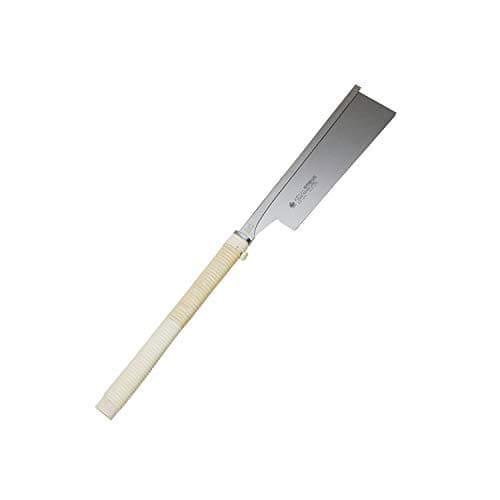
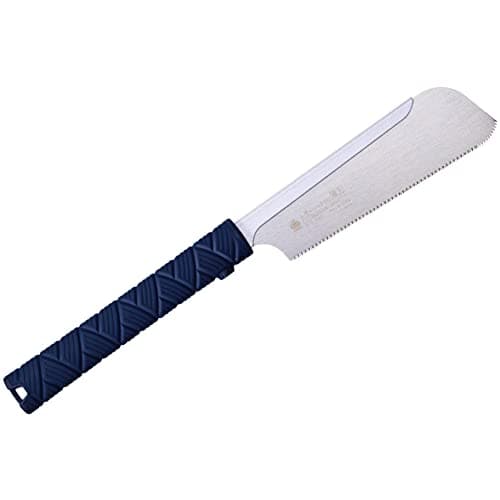
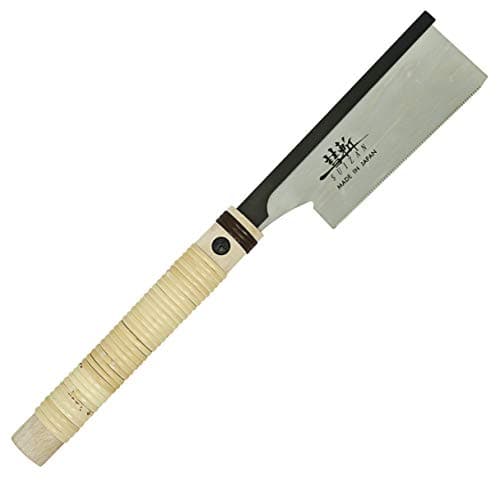
A stiffened back over a very thin crosscut plate. The kerf is narrow enough that the saw goes exactly where the knife line is, which is the whole job of a dovetail saw.
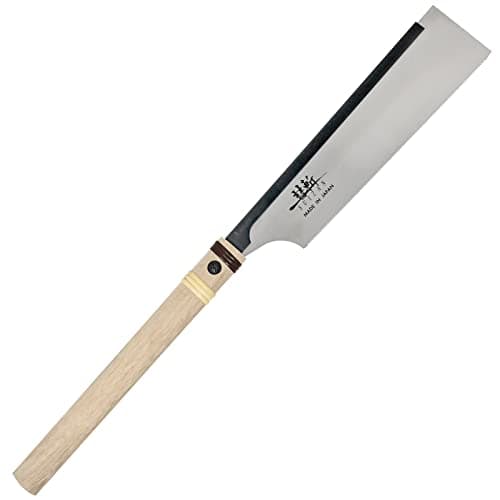
The workshop-standard dozuki. Nothing about it is remarkable, which is the recommendation: it has been the default for long enough that the design has no remaining surprises.
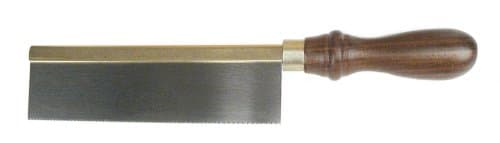
A traditional filed gents saw from Sheffield. It does not cut as cleanly out of the box as a dozuki, and unlike a dozuki you can put the teeth back for the rest of your life.
#ad· Live prices from the Amazon Product API, as of October 21, 2026. Where we have no verified live price we show none, and the cost-per-decade figure is suppressed with it — we would rather leave a gap than print a number that has rotted.
Cutting dovetails by hand is one job with one requirement: the saw has to go exactly where the knife line is and stay there. Everything about a dovetail saw follows from that.
Kerf is the whole argument
The kerf is the width of the slot the saw cuts. On a dovetail, that width is the gap between the pin and the tail, and a joint fits when that gap is zero.
A thick-kerf saw removes more wood than you intended and leaves a joint that fits loosely no matter how carefully you sawed. A thin-kerf saw splits the knife line and the joint closes. This is why Japanese dozuki dominate this category: a backed pull saw runs a plate thin enough to cut a kerf that western backsaws cannot approach, because a push saw's plate has to resist buckling and a pull saw's does not.
It is also why the cheapest saw in this roundup — a seventeen-dollar Gyokucho dozuki — cuts a cleaner dovetail than western backsaws costing five times more. There is no western equivalent at that price, and it is not close.
What the back does
A dovetail saw has a folded brass or steel spine over the top of the plate. That spine makes a very thin plate rigid enough to steer, which is what makes a thin kerf usable rather than just possible.
It also sets an absolute limit on depth of cut: you can only saw until the spine hits the wood. On drawer-scale dovetails that is irrelevant. On deep tenon shoulders it is a hard stop, which is why there is a size decision here and why the 9.5-inch versions exist.
The renewability question, again
Same problem as the rest of this hub. The dozuki cut better and their impulse-hardened teeth cannot be filed; the western backsaws cut a wider kerf and can be resharpened forever.
The Crown gents saw and the Spear & Jackson tenon saws in this list are the renewable options. They are Sheffield-made with filed teeth and, with a saw file and some practice, they will still be cutting in eighty years. Out of the box they cut noticeably worse than a dozuki, and both want their teeth dressing before they do their best work.
Our honest read: if you are cutting dovetails now and want them to fit, buy a dozuki. If you want a saw your grandchild will sharpen, buy the filed backsaw and learn to file it. Doing both costs under $80 together, and that is not a silly answer.
Which size
6 inch for drawer-scale dovetails. Easier to start accurately, more controllable, and the depth limit will never bother you.
9.5 inch if you also cut tenon shoulders. More capacity, slightly harder to start cleanly, and the longer thin plate is more vulnerable if you force it.
If you can only have one and your work is furniture-scale, take the 6 inch. Starting a cut accurately matters more day to day than reaching depth occasionally.
Two follow-ups to this page. If the saw wanders off the angle rather than off the line, dovetail saw guides explained covers what a magnetic jig does and does not fix. And if you want a saw you can keep cutting forever rather than replacing, how to sharpen a dovetail saw is the routine and the file sizes.
Every pick, in full
The write-ups
01Best dovetail saw
Length
6 in
Teeth
Fine crosscut
Back
Stiffened spine
Blade
Replaceable
SUIZAN Dozuki Dovetail Saw, 6 in Crosscut
SUIZAN
8.8/10
A stiffened back over a very thin crosscut plate. The kerf is narrow enough that the saw goes exactly where the knife line is, which is the whole job of a dovetail saw.
Cost per decade
$19.40
Horizon · tier C
20 years — No lifetime warranty; parts purchasable and resharpenable
The teeth are impulse-hardened and cannot be filed, so the blade is a consumable — but the maker sells replacement blades directly for this model. The handle and spine are the durable part; the blade is a scheduled purchase, not a failure.
Rebuy risk
High
parts listed
Cut quality
9.5
Blade life
8.0
Control
9.5
Renewability
8.0
Value
9.0
What it gets right
+Kerf narrow enough to split a knife line reliably
+Replacement blades sold by the maker
+6 inch is the right length for drawer-scale dovetails
What it costs you
−The back limits depth of cut absolutely
−Impulse-hardened teeth cannot be filed
−The thin plate is unforgiving of a forced stroke
Skip this if…
…you cut deep tenons. The spine will bottom out and there is no way around it.
The workshop-standard dozuki. Nothing about it is remarkable, which is the recommendation: it has been the default for long enough that the design has no remaining surprises.
Cost per decade
$21.35
Horizon · tier C
20 years — No lifetime warranty; parts purchasable and resharpenable
The teeth are impulse-hardened and cannot be filed, so the blade is a consumable — but the maker sells replacement blades directly for this model. The handle and spine are the durable part; the blade is a scheduled purchase, not a failure.
Rebuy risk
High
parts listed
Cut quality
9.0
Blade life
8.5
Control
9.0
Renewability
8.0
Value
8.0
What it gets right
+The reference dozuki against which others get described
+Excellent balance and a handle that suits long sessions
+Blade supply is well established
What it costs you
−Depth limited by the back, as with any dozuki
−Unsharpenable teeth
−Costs more than the entry Gyokucho for a refinement most beginners will not notice
Skip this if…
…you want one saw for everything. A dozuki is a joinery specialist and nothing else.
A traditional filed gents saw from Sheffield. It does not cut as cleanly out of the box as a dozuki, and unlike a dozuki you can put the teeth back for the rest of your life.
Cost per decade
$20.18
Horizon · tier C
20 years — No lifetime warranty; parts purchasable and resharpenable
No lifetime warranty published at the date checked. The teeth are filed rather than impulse-hardened, so they can be resharpened and reset by hand indefinitely — the reason nineteenth-century saw plates are still in working use.
Rebuy risk
Medium
parts listed, resharpenable
Cut quality
7.5
Blade life
9.5
Control
8.0
Renewability
9.5
Value
8.0
What it gets right
+Filed teeth can be sharpened and set indefinitely by hand
+Genuinely a lifetime tool rather than a lifetime handle
+Straight turned handle suits a light, controlled grip
What it costs you
−Out of the box it needs the teeth dressed to cut at its best
−Cuts a wider kerf than any dozuki
−The straight handle is a preference; some people hate it
Skip this if…
…you have no intention of learning to sharpen a saw. Unsharpened, this is worse than a fifteen-dollar dozuki forever.
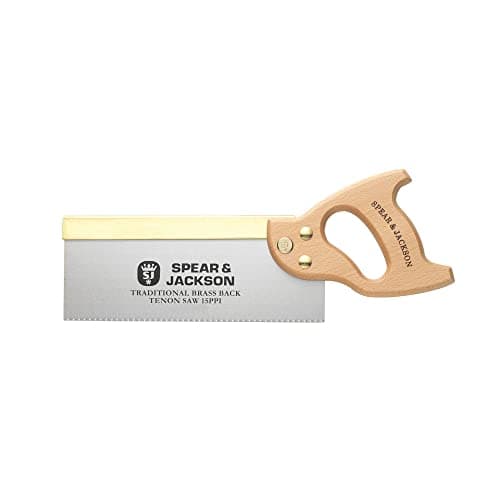
The 12 inch shortened to a size that suits small joinery. Same filed teeth, same renewability, more control.
Cost per decade
$14.99
Horizon · tier C
20 years — No lifetime warranty; parts purchasable and resharpenable
No lifetime warranty published at the date checked. The teeth are filed rather than impulse-hardened, so they can be resharpened and reset by hand indefinitely — the reason nineteenth-century saw plates are still in working use.
Rebuy risk
Medium
parts listed, resharpenable
Cut quality
7.5
Blade life
9.5
Control
8.5
Renewability
9.5
Value
8.5
What it gets right
+Easier to control than the 12 inch on small work
+Resharpenable indefinitely
+Cheaper than any premium dovetail saw by a wide margin
What it costs you
−15 PPI is still coarser than an ideal dovetail filing
−Requires the same tooth-dressing work before it excels
−Kerf is wide for fine pins
Skip this if…
…you want the cleanest possible dovetail out of the box. That is the dozuki, and it is not close.
The dozuki scaled up for larger joinery. Same accuracy, more depth before the spine stops you, slightly harder to start cleanly.
Cost per decade
$29.40
Horizon · tier C
20 years — No lifetime warranty; parts purchasable and resharpenable
The teeth are impulse-hardened and cannot be filed, so the blade is a consumable — but the maker sells replacement blades directly for this model. The handle and spine are the durable part; the blade is a scheduled purchase, not a failure.
Rebuy risk
High
parts listed
Cut quality
9.0
Blade life
8.0
Control
8.5
Renewability
8.0
Value
8.0
What it gets right
+Handles tenon shoulders that a 6 inch cannot reach
+Same replaceable-blade supply as the smaller version
+Long stroke means fewer passes on a big cut
What it costs you
−Harder to start accurately than the 6 inch
−Overkill for drawer dovetails
−Longer thin plate is more vulnerable to kinking
Skip this if…
…dovetails are the job. The 6 inch is more controllable at that scale.
06The cheapest saw here that cuts a clean dovetail
Type
Dozuki, backed
Teeth
Fine crosscut, impulse hardened
Model
770-3500
Action
Pull stroke
Gyokucho Razor Dozuki Saw with Blade
Gyokucho
7.5/10
Under twenty dollars for a saw that will cut joinery accurately. There is no comparable western backsaw at this price, and it is not close.
Cost per decade
$18.15
Horizon · tier D
10 years — No warranty and no parts availability found
Impulse-hardened teeth cannot be resharpened, and we could not find a replacement blade listing for this model at the date checked. When the teeth go, the saw goes — which is what the rating below is telling you.
Rebuy risk
High
none of the three met
Cut quality
8.5
Blade life
7.0
Control
8.5
Renewability
4.0
Value
9.5
What it gets right
+Extraordinary value; nothing western competes at this price
+Genuinely accurate for joinery straight out of the packet
+Cheap enough that a kinked plate is annoying rather than expensive
What it costs you
−Handle is basic
−Replacement blade availability for this specific model is patchy in the US
−Not a saw anyone hands down
Skip this if…
…you are buying for life. Buy this to learn on and a better one when you know what you want.
Almost no downward pressure. On a pull saw the cutting happens because the teeth are sharp, not because you push them into the wood, and pressure is what makes a thin plate wander or kink.
Start with the saw nearly flat, use your thumb as a fence against the plate, and take two or three very light strokes to establish a kerf. Once the kerf exists it steers the saw for you.
Rip or crosscut for dovetails?
Dovetails are cut along the grain, so a rip filing is technically correct and is what western dovetail saws use. Most dozuki are crosscut-filed and cut dovetails superbly anyway, because at these very fine tooth counts the distinction matters much less. Do not overthink it; a fine dozuki works.
Marking matters more than the saw
A knife line, not a pencil line. A knife severs the fibers at the boundary, which gives the saw a physical groove to drop into and gives the chisel a wall to register against. Half of what people blame on their saw is a pencil line and a saw that had nothing to follow. A wheel marking gauge is the tool for this — see the starter kit.
What kills a dovetail saw
Twisting it to correct a wandering cut. If the cut is going wrong, stop, back out and restart — steering a thin plate mid-cut is how you kink it, and a kinked plate never cuts straight again. Storage matters too: hang it or sheathe it, never loose against other steel.
Questions
Frequently asked
What saw is best for cutting dovetails?+
A Japanese dozuki. The backed, very thin plate cuts a kerf narrow enough to split a knife line, which is exactly what a dovetail needs. A 6-inch is the right size for drawer-scale work.
What is a dozuki saw?+
A Japanese backsaw: a stiffening spine over a very thin crosscut plate, cutting on the pull stroke. It is the joinery saw of Japanese woodworking and the best dovetail saw most people will ever use.
Do I need a rip-filed saw for dovetails?+
Technically dovetails are cut along the grain so rip filing is correct, and western dovetail saws use it. At the very fine tooth counts on a dozuki the distinction matters much less, and crosscut-filed dozuki cut dovetails superbly.
Why does my dovetail saw wander off the line?+
Usually too much pressure, or steering. Let the saw cut under its own weight and establish the kerf with two or three very light strokes. Also check you marked with a knife rather than a pencil — a knife line gives the saw a groove to follow.
Is a gents saw good for dovetails?+
Yes, and it is the renewable option: filed teeth that can be sharpened indefinitely. Out of the box it cuts a wider kerf than a dozuki and usually wants its teeth dressing before it does its best work.
We have not handled these tools. Nobody here has tested one, owned one, or taken one apart. Specifications come from the manufacturer or the retailer listing; warranty terms come from the maker's own warranty page; the cost-per-decade arithmetic is ours and reproducible. Where we could not verify a figure we say so on the page rather than quietly leaving it out. Read the full method.