We earn a commission when you buy through our Amazon links, at no extra cost to you. It never decides a ranking, and where the best tool in a class is one we earn nothing on, we say so and link it anyway. How this works.
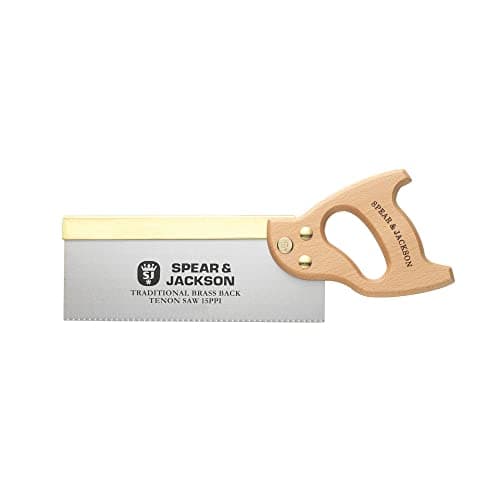
Sheffield-made, filed teeth, a proper back, and a price that does not assume you are a collector. This is the western answer to the dozuki for anyone who wants to sharpen rather than replace.
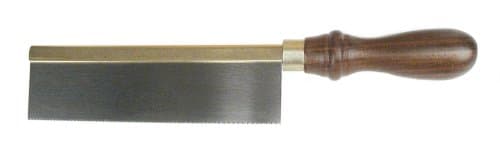
A traditional filed gents saw from Sheffield. It does not cut as cleanly out of the box as a dozuki, and unlike a dozuki you can put the teeth back for the rest of your life.
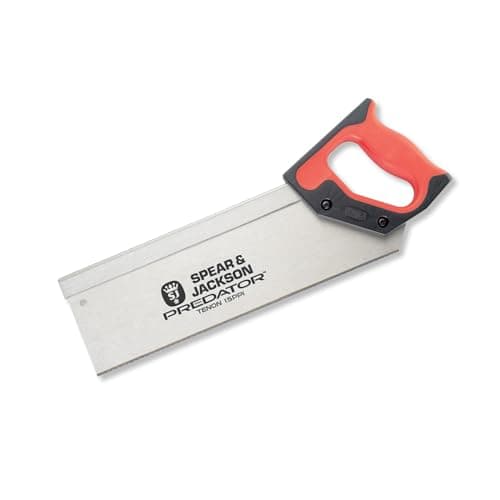
Spear & Jackson's own page for the B9812 says 15 PPI hard pointed teeth, a solid steel back and a high impact polystyrene handle. Hard pointed means the teeth are hardened past the point a file will touch, so this saw cannot be renewed — when the teeth dull, it is finished. It costs about a sixth of the Crown and it is on this page precisely so nobody buys it by accident.
The honest answer when you need a backsaw today and will not sharpen it
#ad· Live prices from the Amazon Product API, as of November 22, 2026. Where we have no verified live price we show none, and the cost-per-decade figure is suppressed with it — we would rather leave a gap than print a number that has rotted.
The verdict: buy the 12 in Spear & Jackson tenon saw at 15 PPI. Sheffield-made, filed teeth, a proper back, and a price that does not assume you are a collector — it is the right saw for anyone who intends to learn to sharpen and then never buy a backsaw again. The budget pick is the 10 in version of the same saw: the cheapest tool here whose teeth can still be filed back to new in thirty years, and easier to control on small work. Prices below are live, with the date they were checked.
This band has one real question in it and it is not sharpness. All four saws cut. Three of them have filed teeth, which means a saw file will touch them and the saw can be renewed for as long as there is plate left. One has hard-pointed teeth, which are hardened past what a file can cut, and when they dull that saw is finished. The price difference between those two categories here is about four dollars, which is the single most lopsided trade on this site.
The field above this band — brass-backed Sheffield saws and the premium makers — is ranked on the best tenon saws, where the winner costs more than twice the top of this page and earns it on plate thickness and back mass rather than on renewability.
Why filed teeth decide this page
A saw tooth does two things: it cuts, and it clears. Cutting dulls it; clearing depends on the set, the slight alternating bend that makes the kerf wider than the plate so the saw does not bind. Both are restorable with a triangular file and a saw set, which is why a western filed saw was historically a tool that outlived its owner.
Hard-pointed and impulse-hardened teeth skip that whole system. The teeth are induction hardened to a few thousandths of an inch, they stay sharp two or three times longer than a filed tooth, and then nothing can be done about them. For a saw you keep in a van that is a reasonable bargain. For a bench saw on a buy-it-for-life site it is the wrong side of the trade, and it is why the cheapest saw on this page ranks last. The procedure is on how to sharpen a hand saw.
The saw to buy: Spear & Jackson 12 in, 15 PPI
Sheffield-made, with filed teeth at 15 PPI, a substantial back that keeps the plate genuinely rigid, and a price that undercuts every premium backsaw by a wide margin. 15 PPI is fine enough for joinery and coarse enough to be efficient across a tenon shoulder.
It needs its teeth dressed and set before it does its best work, the kerf is wider than any Japanese equivalent, and the handle finish is rough for the money. Every good thing about this saw is downstream of being willing to file it; if you are not, buy a dozuki and be happier. What the pattern is for is on what is a backsaw.
The budget pick: the same saw at 10 in
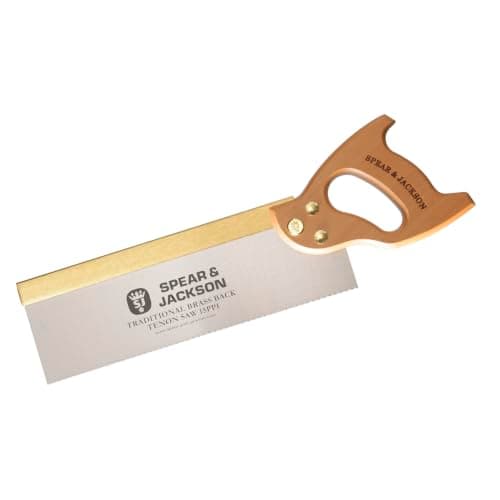
The 12 in shortened to a size that suits small joinery: same filed teeth, same renewability, more control. It is easier to steer than the 12 in on dovetail-scale work and cheaper than any premium dovetail saw by a wide margin.
15 PPI is still coarser than an ideal dovetail filing and the kerf is wide for fine pins, so it is a tenon saw being used for dovetails rather than a dovetail saw. It wants the same tooth-dressing work before it excels. The distinction between the two patterns is on tenon saw vs dovetail saw.
The traditional option: Crown 187 gents saw
A filed 8 in gents saw from Sheffield with a straight turned handle. It does not cut as cleanly out of the box as a dozuki, and unlike a dozuki you can put the teeth back for the rest of your life — it is genuinely a lifetime tool rather than a lifetime handle.
Out of the box it needs the teeth dressed to cut at its best, the kerf is wider than any dozuki, and the straight handle is a preference that some people dislike intensely. Unsharp and unsharpened, it is worse than a fifteen dollar dozuki forever, which is the honest warning to put next to the word “traditional”.
The one to buy knowingly or not at all
The Spear & Jackson Predator is on this page precisely so that nobody buys it by accident. Spear & Jackson's own page for the B9812 states 15 PPI hard-pointed teeth, a solid steel back and a high-impact polystyrene handle. It cuts cleanly and accurately out of the box, it is the cheapest saw here by a clear margin, and the moulded handle includes 45 and 90 degree guide faces, which is genuinely useful on shoulder cuts.
And hard-pointed teeth cannot be filed or reset, so the saw is a consumable with no replacement blade — the opposite of everything else on this page. The handle cannot be removed for filing and will not be repaired in thirty years, and Spear & Jackson publishes no warranty terms for it. Buy it if you need a backsaw today and know you will never sharpen one. Do not buy it as a first bench saw.
What you still have to buy
A file and a saw set, if you took the advice above. A triangular saw file in the right size for 15 PPI teeth plus a saw set is a small fraction of any of these saws, and it is what converts a thirty dollar purchase into a tool your grandchildren could use. We do not rank a saw file on this site because no saw file, saw set or saw vice exists in our product registry, and we will not point you at a product we cannot verify a listing for — the sizes to search for are named on how to sharpen a dovetail saw.
Every pick, in full
The write-ups
01A resharpenable western backsaw at a sane price
Length
12 in
Teeth
15 PPI, filed
Type
Tenon saw, backed
Action
Push stroke
Spear & Jackson Tenon Saw, 12 in 15 PPI
Spear & Jackson
8.7/10
Sheffield-made, filed teeth, a proper back, and a price that does not assume you are a collector. This is the western answer to the dozuki for anyone who wants to sharpen rather than replace.
Cost per decade
$16.52
Horizon · tier C
20 years — No lifetime warranty; parts purchasable and resharpenable
No lifetime warranty published at the date checked. The teeth are filed rather than impulse-hardened, so they can be resharpened and reset by hand indefinitely — the reason nineteenth-century saw plates are still in working use.
Rebuy risk
Medium
parts listed, resharpenable
Cut quality
8.0
Blade life
9.5
Control
8.0
Renewability
9.5
Value
8.5
What it gets right
+Filed teeth mean this saw can be renewed indefinitely
+15 PPI is fine enough for joinery, coarse enough to be efficient
+Substantial back keeps the plate genuinely rigid
What it costs you
−Needs its teeth dressed and set before it does its best work
−Wider kerf than any Japanese equivalent
−Handle finish is rough at the price
Skip this if…
…you will not sharpen it. Everything good about this saw is downstream of that.
The 12 inch shortened to a size that suits small joinery. Same filed teeth, same renewability, more control.
Cost per decade
$15.02
Horizon · tier C
20 years — No lifetime warranty; parts purchasable and resharpenable
No lifetime warranty published at the date checked. The teeth are filed rather than impulse-hardened, so they can be resharpened and reset by hand indefinitely — the reason nineteenth-century saw plates are still in working use.
Rebuy risk
Medium
parts listed, resharpenable
Cut quality
7.5
Blade life
9.5
Control
8.5
Renewability
9.5
Value
8.5
What it gets right
+Easier to control than the 12 inch on small work
+Resharpenable indefinitely
+Cheaper than any premium dovetail saw by a wide margin
What it costs you
−15 PPI is still coarser than an ideal dovetail filing
−Requires the same tooth-dressing work before it excels
−Kerf is wide for fine pins
Skip this if…
…you want the cleanest possible dovetail out of the box. That is the dozuki, and it is not close.
A traditional filed gents saw from Sheffield. It does not cut as cleanly out of the box as a dozuki, and unlike a dozuki you can put the teeth back for the rest of your life.
Cost per decade
$20.18
Horizon · tier C
20 years — No lifetime warranty; parts purchasable and resharpenable
No lifetime warranty published at the date checked. The teeth are filed rather than impulse-hardened, so they can be resharpened and reset by hand indefinitely — the reason nineteenth-century saw plates are still in working use.
Rebuy risk
Medium
parts listed, resharpenable
Cut quality
7.5
Blade life
9.5
Control
8.0
Renewability
9.5
Value
8.0
What it gets right
+Filed teeth can be sharpened and set indefinitely by hand
+Genuinely a lifetime tool rather than a lifetime handle
+Straight turned handle suits a light, controlled grip
What it costs you
−Out of the box it needs the teeth dressed to cut at its best
−Cuts a wider kerf than any dozuki
−The straight handle is a preference; some people hate it
Skip this if…
…you have no intention of learning to sharpen a saw. Unsharpened, this is worse than a fifteen-dollar dozuki forever.
04The honest answer when you need a backsaw today and will not sharpen it
Size
12 in (305 mm), 15 PPI
Teeth
Hard pointed — NOT resharpenable
Blade
Hardened and tempered carbon steel
Back
Solid steel back
Handle
High impact polystyrene, 45/90 deg angle guide
Spear & Jackson Predator Tenon Saw, 12 in 15 PPI
Spear & Jackson
6.1/10
Spear & Jackson's own page for the B9812 says 15 PPI hard pointed teeth, a solid steel back and a high impact polystyrene handle. Hard pointed means the teeth are hardened past the point a file will touch, so this saw cannot be renewed — when the teeth dull, it is finished. It costs about a sixth of the Crown and it is on this page precisely so nobody buys it by accident.
Cost per decade
$16.99
Horizon · tier D
10 years — No warranty and no parts availability found
Impulse-hardened teeth cannot be resharpened, and we could not find a replacement blade listing for this model at the date checked. When the teeth go, the saw goes — which is what the rating below is telling you.
Rebuy risk
High
none of the three met
Cut quality
7.5
Blade life
6.0
Control
7.0
Renewability
1.5
Value
8.5
What it gets right
+Cuts cleanly and accurately out of the box, and hard pointed teeth stay sharp longer than filed teeth do before they die
+The cheapest saw here by a wide margin, and genuinely in stock
+The molded handle includes 45 and 90 degree guide faces, which is useful on shoulder cuts
+A steel back is still a rigid back; this is not a floppy plate
What it costs you
−Hard pointed teeth cannot be filed or reset, so the saw is a consumable with no replacement blade — the opposite of everything else on this page
−The polystyrene handle cannot be removed for filing and will not be repaired or replaced in thirty years
−Spear & Jackson publishes no warranty terms for it
−15 PPI is a fine crosscut-weight filing, so it is slow in the long grain of a tenon cheek
Skip this if…
…you expect to still own this saw in ten years. You will not. Every other saw on this page can be filed back to new; this one gets thrown away, and that is the whole reason it is ranked last.
Price as of November 22, 2026. Prices move; Amazon's is the one that counts.
#ad · we may earn a commission from this link to Spear & Jackson Predator Tenon Saw, 12 in 15 PPI
How
What actually decides it
Buying guide
Filed or hard pointed is the whole decision. Check the listing wording before the price. “Hard point”, “hardpoint” and “impulse hardened” all mean the same thing: this saw cannot be sharpened.
15 PPI is the right pitch in this band. Fine enough for a clean shoulder, coarse enough to cross a tenon cheek without packing. Finer filings exist and belong on dovetail saws, not on a general backsaw. See saw TPI explained.
Length follows the joint. 12 in for tenon shoulders and casework, 10 in or an 8 in gents saw for dovetails and small parts. Longer is not more capable on joinery; it is more saw to keep in the line.
Budget an hour of tooth dressing. Every filed saw here arrives with teeth that will cut and are not yet at their best. Jointing, filing and setting them once is the difference between a saw that is fine and a saw that is a pleasure.
Questions
Frequently asked
What is the best tenon saw under $50?+
The 12 in Spear & Jackson at 15 PPI. It is Sheffield-made with filed teeth, so it can be sharpened and set indefinitely, and the back is substantial enough to keep the plate rigid. It needs its teeth dressed before it does its best work.
Can tenon saws under $50 be sharpened?+
Three of the four here can — both Spear & Jackson filed saws and the Crown gents saw. The Predator cannot: its teeth are hard pointed, which means hardened past the point a saw file will cut, and there is no replacement blade.
Tenon saw or dovetail saw first?+
A 12 in tenon saw, because it will cut dovetails adequately and a dovetail saw will not cut tenon shoulders at all. Add the smaller saw when the kerf on the big one starts annoying you. The patterns are compared on tenon saw vs dovetail saw.
Is a cheap filed saw better than an expensive hardpoint one?+
For a bench, yes, over any timescale longer than a couple of years. A filed saw is a tool with a consumable edge you own the means to restore. A hardpoint saw is a sharp object with an expiry date, however good the cut is on day one.
We have not handled these tools. Nobody here has tested one, owned one, or taken one apart. Specifications come from the manufacturer or the retailer listing; warranty terms come from the maker's own warranty page; the cost-per-decade arithmetic is ours and reproducible. Where we could not verify a figure we say so on the page rather than quietly leaving it out. Read the full method.