We earn a commission when you buy through our Amazon links, at no extra cost to you. It never decides a ranking, and where the best tool in a class is one we earn nothing on, we say so and link it anyway. How this works.
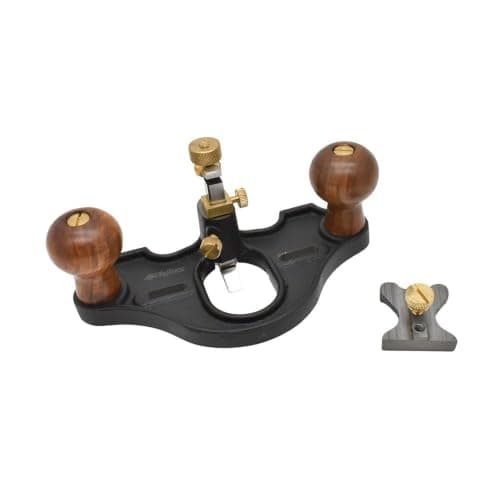
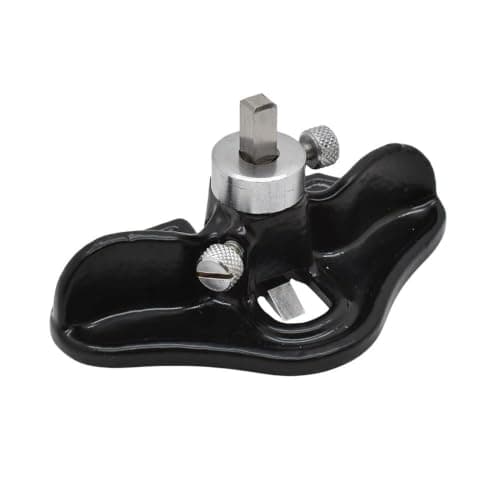
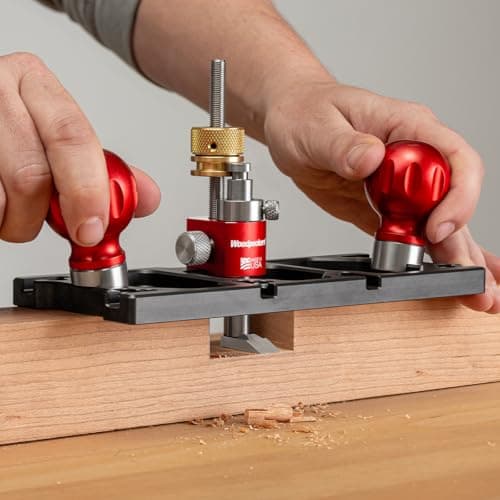
A ductile iron base with a zero-backlash thumbwheel and both a straight and a spear-point cutter in the box. The thumbwheel is the reason to want it: on every other plane here, setting a depth means taking up slack first and guessing how much, and on a tool whose whole job is cutting two surfaces to the same depth, slack is the error.
The one that treats depth setting as a measuring problem
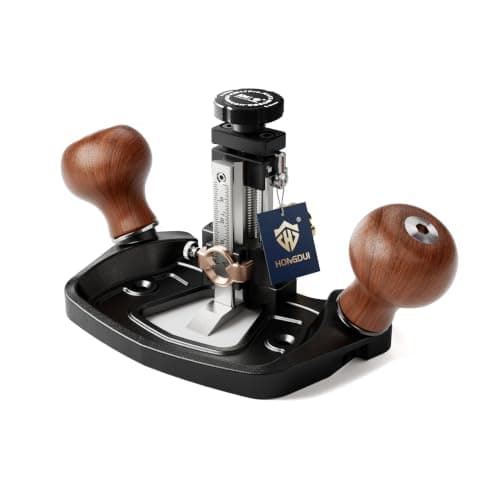
The only plane here whose listing says it does both throats. A closed throat supports the work on all four sides of the cutter and is what you want for a through dado; an open throat lets you see the cutter meet the line, which is what you want when the cut is stopped and the far wall matters.
A 1/4 in cutter in a ductile cast iron body with a 4-1/8 by 1-1/4 in base, and the only router plane on this page whose listing states a blade hardness at all: 55-60 HRC. That is not a premium figure, but a published figure beats an implied one, and at this price nothing else here publishes anything.
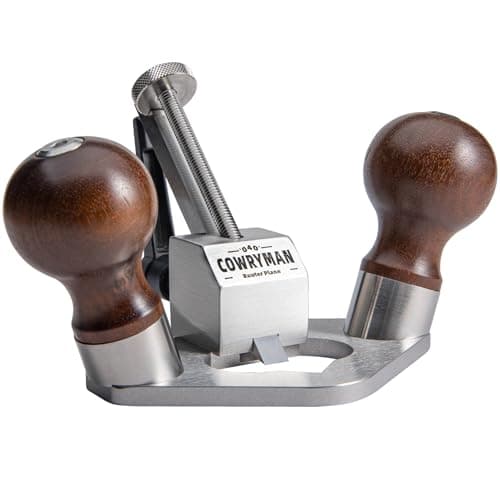
An 8 mm one-piece cutter in high-speed steel, and HSS is the meaningful word: it holds an edge markedly longer than the 55-60 HRC carbon cutters at this money, and a one-piece cutter has no brazed joint to come apart. Cowryman also sells the cutters separately, which on this page is rarer than it should be.
A 7-1/2 in closed-throat plane that ships with both a fence and a frog, which is the full-size Stanley 71 configuration at roughly a third of what the surviving clones of it cost. The fence is the part worth noticing: without one, a router plane follows the surface it sits on and nothing else.
A fence and a frog at the middle of the price range
A 4 in closed-throat mini with a depth stop, which is the feature that separates a router plane from a chisel held at an angle. The depth stop is what lets you creep down to a line in repeatable passes instead of setting a cut and hoping.
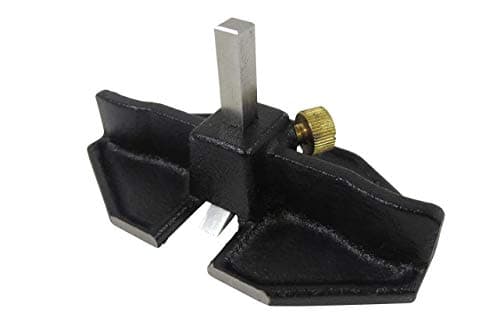
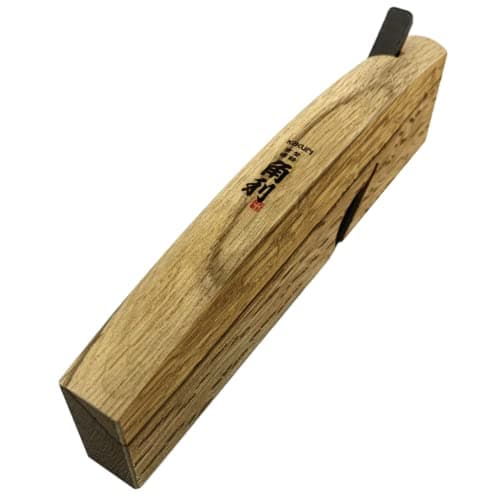
An 18 mm Japanese grooving and rabbet plane rather than a western router plane, and the distinction is worth making before you buy: it excels at running a groove along a line and is not trying to level the floor of a wide housing. For boxes, drawer bottoms and small frames it is the right shape.
Grooves and rabbets on small work, Japanese pattern
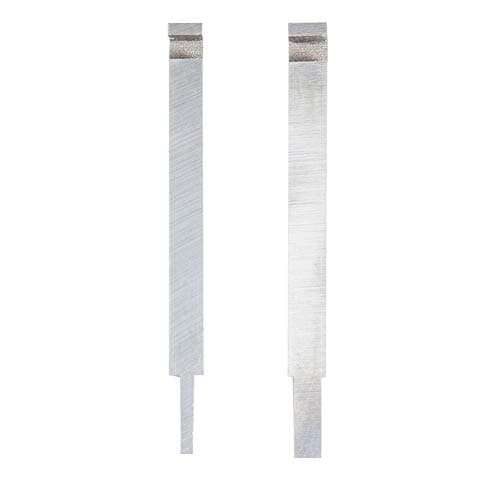
Two one-piece HSS straight cutters, 3 mm and 6 mm. This is on the page because a router plane is a casting plus a cutter, and the casting does not wear out — so the honest buy-it-for-life question is not which plane, it is whether the cutter can be bought again. On most of this page it cannot.
The part that decides whether the plane is a lifetime tool
#ad· Live prices from the Amazon Product API, as of October 16, 2026. Where we have no verified live price we show none, and the cost-per-decade figure is suppressed with it — we would rather leave a gap than print a number that has rotted.
Buy the Woodpeckers router plane if repeatable depth is worth real money to you, and the Taytools 468334 small router plane if it is not. Those two sit at opposite ends of this page for one reason: the Woodpeckers publishes a zero-backlash depth thumbwheel and the Taytools publishes a blade hardness, and between them they are the only planes here that publish anything a buyer can check. If you want the longest-wearing cutter for the least money, the Cowryman 040 is the one — its cutter is stated as one-piece high-speed steel, and Cowryman sells the cutters separately.
A router plane is the simplest tool in the shop and the easiest one to buy badly. It is a flat base with a cutter dropping through it, and the cutter is held at a fixed distance below the base. Slide it across a cut and it removes everything standing above that distance — not relative to your eye, not relative to the wobble in your wrist, but relative to the surface the base is sitting on. That is the whole mechanism, and it is why a router plane does something no chisel can: it makes a surface parallel to another surface. A tenon cheek that is the same thickness at both ends. A dado whose floor is level from one side of a carcass to the other. A hinge mortise the same depth as the leaf that goes in it.
What decides it, in the order that matters
We have not used any of these planes. We opened each listing, wrote down only what is published, cited it below, and ranked on that — the method is on the methodology page. On this category that discipline is unusually revealing, because most router plane listings publish almost nothing.
1. Can you buy the cutter again? This is first because it is the only question with a permanent answer. A router plane body is a casting with no wear part in it: there is no frog to work loose, no mouth to widen, no tote to split. It will outlive you whatever you do. The cutter will not — and a router plane cutter is an L-shaped or spear-point blade ground to one maker's post diameter and clamp opening, so unlike a bench plane iron there is no standard size and no aftermarket. Three of the seven planes here have cutters sold as their own items. Four do not, and for those four the honest horizon is however long that one cutter lasts.
2. How is depth set, and does it come back? Every router plane sets depth. The difference is whether you can return to a setting. Most of these use a threaded post with a locking nut, and the slack in that thread is the error in your cut: you wind down, overshoot, wind back, and the cutter sits somewhere in the backlash. That is fine when there is one cut to make. It is not fine when you are cutting both cheeks of six tenons and they all have to match, which is the job this tool is for. The Woodpeckers is the only plane here whose listing claims a zero-backlash adjuster, and the Big Horn 19363 is the cheapest with a depth stop at all.
3. Open throat or closed? A closed throat surrounds the cutter with base on all four sides, so the plane is supported however far into a wide housing it travels. An open throat removes the metal in front of the cutter so you can watch the edge arrive at a line. Which one is right depends entirely on your work: through dados and tenon cheeks want closed, stopped housings and inlay recesses want open, and the HONGDUI KM-17 PRO is the only plane here whose listing says it converts between the two.
4. Base size against the cut. A router plane references the surface on both sides of the cut. If the housing is wider than the base, the base drops into it and the tool stops being a router plane and becomes a small awkward chisel. This is the mistake behind most disappointed reviews of 4 in minis: nothing is wrong with the plane, it is simply too small for the cut. The Taytools and Big Horn 19344 are the two that publish base dimensions, which is the only way to check before buying.
What the makers publish
Plane
Size as published
Depth control
Spare cutter?
Woodpeckers WRP
Not published; ductile iron base
Zero-backlash thumbwheel
Yes
HONGDUI KM-17 PRO
Not published
Threaded post
No listing found
Taytools 468334
4-1/8 x 1-1/4 in base, 1/4 in cutter
Threaded post
Yes — cutters sold separately
Cowryman 040
8 mm cutter; base not published
Threaded post
Yes — straight and L-shaped sets
Big Horn 19344
7-1/2 in, closed throat, fence and frog
Threaded post
No listing found
Big Horn 19363
4 in, closed throat
Depth stop
No listing found
KAKURI mini
18 mm width
Wedged, Japanese pattern
No listing found
Read the last column before the first one. Four of these seven planes are, on the published evidence, single-cutter tools: good castings with a consumable in them that nobody sells you a second copy of. That does not make them bad buys — a cutter sharpened carefully lasts many years, and two of them cost less than a decent chisel — but it is the difference between a tool you keep and a tool you have.
Why the steel grade matters less here than anywhere else
On a bench plane the iron is doing continuous work along a long cut, and edge retention is most of what you are paying for. A router plane cutter takes a very small bite over a very short distance and spends most of its life not cutting at all. So the gap between the Cowryman's published HSS and the Taytools' published 55-60 HRC carbon steel is real but smaller in practice than the same gap would be on a smoothing iron. A2 vs O1 steel goes through what the grades actually buy you, and sharpening grits explained covers the one thing that does change with HSS: you need a diamond plate, because a soft waterstone will glaze against it.
The practical consequence is the reverse of what you would expect. On this page, cheap steel in a plane whose cutter you can replace is a better long-term position than good steel in a plane whose cutter you cannot. That is the same arithmetic cost per decade keeps arriving at on tools with a consumable edge.
What is not on this page
The Veritas and Lie-Nielsen router planes. These are the two best router planes made, and both sell direct rather than through Amazon, so we earn nothing on either and cannot route a tracked link to them. They are the answer if the budget stretches and you are willing to buy direct — Veritas vs Lie-Nielsen covers how the two makers differ and what each publishes.
The Taytools 777077 No. 71. A full-size closed-throat plane on the Stanley 71 pattern, which would have ranked well. It came back “Temporarily out of stock” from the Amazon catalog at the date checked, and this site does not feature a listing nobody can buy. Worth watching if you want the traditional pattern with a published cutter size.
Electric routers. Faster at everything a router plane does except the one thing it is bought for: referencing an existing surface to make a new one parallel to it. A powered router references its own base plate and a jig you built; a router plane references the wood. Hand planes vs power tools has the general version of this argument.
Plough and combination planes. A plough plane cuts a groove to a depth and a distance from an edge; a router plane levels the floor of a cut that already exists. They look adjacent and solve different problems. The KAKURI mini on this page is a grooving plane rather than a router plane, and it is ranked last for exactly that reason — its listing is honest about what it is and we are too.
Every pick, in full
The write-ups
01The one that treats depth setting as a measuring problem
Base
Ductile iron
Cutters
Spear-point and straight, both included
Depth adjustment
Zero-backlash thumbwheel
Mounting
3 blade mount positions
Warranty
None published on the listing
Woodpeckers Router Plane (WRP)
Woodpeckers
8.0/10
A ductile iron base with a zero-backlash thumbwheel and both a straight and a spear-point cutter in the box. The thumbwheel is the reason to want it: on every other plane here, setting a depth means taking up slack first and guessing how much, and on a tool whose whole job is cutting two surfaces to the same depth, slack is the error.
Cost per decade
$150.00
Horizon · tier C
20 years — No lifetime warranty; parts purchasable and resharpenable
No defect warranty published for this plane at the date checked. What sets the horizon instead is that the matching cutter is sold as its own item, which on a router plane is the whole question: the cutter is an L-shaped blade ground to fit this maker's post and clamp, so there is no aftermarket to fall back on. The body is a casting with nothing in it to consume, and the cutter sharpens for years before it needs replacing at all.
Rebuy risk
Medium
parts listed, resharpenable
Base & body
9.0
Cutter & edge
8.5
Depth setting
9.5
Throat & fence
8.0
Parts & repair
7.0
Value
6.0
What it gets right
+A zero-backlash depth thumbwheel is the single feature that matters most on this tool, and it is the only plane here that publishes one
+Ships with both a straight cutter and a spear-point, so inlay and dado work need no second purchase
+Three mount positions cover bullnose work, where the cutter has to sit forward of the base to reach into a stopped housing
+Woodpeckers builds in Strongsville, Ohio, and on its squares publishes an out-of-tolerance repair-or-replace guarantee with, in its words, no fine print
What it costs you
−No warranty is published for this plane itself; the guarantee we can cite covers its precision squares, and we are not going to pretend that transfers
−The most expensive tool on the page by a wide margin, and the gap buys repeatability rather than a better cut
−No base width, weight or cutter thickness published on the listing
−Stock was in single digits at the date checked
Skip this if…
…you set depth once per project and work to a knife line. The backlash this tool removes is only expensive if you are resetting the cutter repeatedly and need to land on the same number.
The only plane here whose listing says it does both throats. A closed throat supports the work on all four sides of the cutter and is what you want for a through dado; an open throat lets you see the cutter meet the line, which is what you want when the cut is stopped and the far wall matters.
Cost per decade
$208.99
Horizon · tier D
10 years — No warranty and no parts availability found
No warranty terms and no replacement cutter listed for this plane or this maker at the date checked. On a router plane the cutter is not a standard size — it is ground to this body's post and clamp — so when it is gone there is nothing to buy. Sharpening renews the edge for many years; the rating is what the missing spare means, not a judgment on the casting.
Rebuy risk
High
resharpenable
Base & body
8.0
Cutter & edge
7.5
Depth setting
8.0
Throat & fence
9.5
Parts & repair
5.0
Value
6.5
What it gets right
+Convertible throat covers both the through-dado case and the stopped-housing case without owning two planes
+HONGDUI tools in this class are consistently finished well enough to use out of the box, which is not true of the sub-$50 castings further down
+Sits in the price band where the premium western planes start, without the lead time
+In stock in normal quantities at the date checked, which several planes on this page were not
What it costs you
−The listing publishes no base dimensions, no weight, no cutter width and no steel specification — the thinnest spec sheet at this price on the page
−No warranty of any length is published
−No replacement cutter is listed for it, and a router plane cutter is not a size you can source generically
−Second-dearest tool here with the least documentation behind the money
Skip this if…
…you want to know what you are buying before it arrives. This is a well-regarded tool sold on reputation rather than on a published specification.
A 1/4 in cutter in a ductile cast iron body with a 4-1/8 by 1-1/4 in base, and the only router plane on this page whose listing states a blade hardness at all: 55-60 HRC. That is not a premium figure, but a published figure beats an implied one, and at this price nothing else here publishes anything.
Cost per decade
$26.34
Horizon · tier C
20 years — No lifetime warranty; parts purchasable and resharpenable
No defect warranty published for this plane at the date checked. What sets the horizon instead is that the matching cutter is sold as its own item, which on a router plane is the whole question: the cutter is an L-shaped blade ground to fit this maker's post and clamp, so there is no aftermarket to fall back on. The body is a casting with nothing in it to consume, and the cutter sharpens for years before it needs replacing at all.
Rebuy risk
Medium
parts listed, resharpenable
Base & body
7.5
Cutter & edge
7.0
Depth setting
7.0
Throat & fence
6.5
Parts & repair
8.0
Value
9.0
What it gets right
+Publishes a blade hardness, which not one other plane on this page does
+Publishes its base dimensions, so you can tell before buying whether it will bridge your dado
+The small base is the right size for hinge mortises and inlay recesses, where a 7 in base simply will not sit down
+Taylor Toolworks sells router plane cutters as their own items, so the wear part is purchasable
What it costs you
−55-60 HRC is the softest published edge here and will need honing more often than the HSS cutters above
−A 1/4 in cutter is too narrow to clean a tenon cheek in one pass
−Taylor Toolworks publishes a 90-day refund policy and states no product warranty
−Stock was in double digits but not deep at the date checked
Skip this if…
…the job is tenon cheeks and wide housings. This is a small-work plane and the 1/4 in cutter is the reason it is cheap.
An 8 mm one-piece cutter in high-speed steel, and HSS is the meaningful word: it holds an edge markedly longer than the 55-60 HRC carbon cutters at this money, and a one-piece cutter has no brazed joint to come apart. Cowryman also sells the cutters separately, which on this page is rarer than it should be.
Cost per decade
$44.50
Horizon · tier C
20 years — No lifetime warranty; parts purchasable and resharpenable
No defect warranty published for this plane at the date checked. What sets the horizon instead is that the matching cutter is sold as its own item, which on a router plane is the whole question: the cutter is an L-shaped blade ground to fit this maker's post and clamp, so there is no aftermarket to fall back on. The body is a casting with nothing in it to consume, and the cutter sharpens for years before it needs replacing at all.
Rebuy risk
Medium
parts listed, resharpenable
Base & body
7.0
Cutter & edge
9.0
Depth setting
7.0
Throat & fence
7.0
Parts & repair
8.5
Value
8.5
What it gets right
+High-speed steel cutter, published as such — the longest-wearing edge on the page below the premium tier
+One-piece cutter with no brazed junction, which is where cheap L-shaped cutters fail
+Cowryman lists straight cutters and L-shaped cutters as separate items, so the consumable is a catalog part
+In stock at the date checked
What it costs you
−No base material, base size, weight or hardness figure published
−No warranty of any length published
−HSS is harder to hone than carbon steel and wants a diamond plate rather than a soft waterstone
−8 mm is a narrow cutter for tenon work; it is a joinery-tuning width
Skip this if…
…you sharpen on soft waterstones only. HSS will glaze a cheap stone and take a long time doing it.
05A fence and a frog at the middle of the price range
Length
7-1/2 in
Throat
Closed
Included
Fence and frog
Cutter width
Not published
Warranty
None published
Big Horn 19344 Router Plane with Fence
Big Horn
7.2/10
A 7-1/2 in closed-throat plane that ships with both a fence and a frog, which is the full-size Stanley 71 configuration at roughly a third of what the surviving clones of it cost. The fence is the part worth noticing: without one, a router plane follows the surface it sits on and nothing else.
Cost per decade
$114.82
Horizon · tier D
10 years — No warranty and no parts availability found
No warranty terms and no replacement cutter listed for this plane or this maker at the date checked. On a router plane the cutter is not a standard size — it is ground to this body's post and clamp — so when it is gone there is nothing to buy. Sharpening renews the edge for many years; the rating is what the missing spare means, not a judgment on the casting.
Rebuy risk
High
resharpenable
Base & body
7.5
Cutter & edge
6.5
Depth setting
7.0
Throat & fence
8.5
Parts & repair
5.0
Value
8.5
What it gets right
+Ships with the fence, so grooves parallel to an edge are a setup rather than a jig-building exercise
+Full 7-1/2 in base spans a wide housing and keeps the cut flat across it
+Closed throat supports the work on all four sides of the cutter, which is what keeps a dado's floor even
+In stock in normal quantities at the date checked
What it costs you
−No cutter width, no base width, no weight and no steel specification published
−No warranty of any length published, and no replacement cutter listed
−A closed throat hides the cutter at exactly the moment you want to see it meet a stopped line
−Big Horn is a house brand; the castings are good value and the documentation behind them is thin
Skip this if…
…most of your router plane work is stopped housings and inlay. Buy the open-throat or convertible plane and keep the view of the cutter.
A 4 in closed-throat mini with a depth stop, which is the feature that separates a router plane from a chisel held at an angle. The depth stop is what lets you creep down to a line in repeatable passes instead of setting a cut and hoping.
Cost per decade
$24.99
Horizon · tier D
10 years — No warranty and no parts availability found
No warranty terms and no replacement cutter listed for this plane or this maker at the date checked. On a router plane the cutter is not a standard size — it is ground to this body's post and clamp — so when it is gone there is nothing to buy. Sharpening renews the edge for many years; the rating is what the missing spare means, not a judgment on the casting.
Rebuy risk
High
resharpenable
Base & body
6.0
Cutter & edge
6.0
Depth setting
7.5
Throat & fence
6.5
Parts & repair
5.0
Value
9.0
What it gets right
+Has a depth stop at a price where most tools do not, which is the difference between creeping to a line and guessing at it
+4 in base fits inside a hinge mortise and on a tenon cheek, where a full-size plane overhangs
+Cheapest tool on the page that is a router plane rather than a novelty
+In stock in normal quantities at the date checked
What it costs you
−Nothing is published beyond length, throat and the depth stop — no cutter width, no steel, no weight
−No warranty and no replacement cutter listed
−A 4 in base will rock on a housing wider than itself, which is the whole job on a dado
−Finishing at this price usually means lapping the base and honing the cutter before first use
Skip this if…
…your housings are wider than the base. A router plane works by bridging the cut and referencing the surface either side of it; too small a base cannot do that.
07Grooves and rabbets on small work, Japanese pattern
Width
18 mm
Pattern
Japanese grooving and rabbet plane
Body
Not published
Steel
Not published
Warranty
None published; returns only for wrong or damaged goods
KAKURI Mini Router Plane 18mm
KAKURI
6.7/10
An 18 mm Japanese grooving and rabbet plane rather than a western router plane, and the distinction is worth making before you buy: it excels at running a groove along a line and is not trying to level the floor of a wide housing. For boxes, drawer bottoms and small frames it is the right shape.
Cost per decade
$17.40
Horizon · tier C
20 years — No lifetime warranty; parts purchasable and resharpenable
KAKURI publishes no warranty on its hand planes. Its refund policy states that once an order is completed the product 'cannot be returned or exchanged for any reason attributable to the User', with returns accepted only for items that arrive wrong, damaged or non-conforming. Against that, the blade is published as SK85 in a double layer — a laminated iron renewable by sharpening until the hard layer is consumed — and the wooden body is re-trued by the owner rather than replaced, so nothing about the tool is separately consumable.
Rebuy risk
Medium
parts listed, resharpenable
Base & body
7.0
Cutter & edge
8.0
Depth setting
5.5
Throat & fence
6.0
Parts & repair
5.0
Value
8.5
What it gets right
+Purpose-shaped for grooves and rabbets on small work, which is a real job the western planes here do clumsily
+KAKURI's tools are made in Japan and consistently arrive usable
+The cheapest way onto this page, and it does its narrow job properly
+18 mm is a useful groove width for drawer bottoms and box panels
What it costs you
−Not a substitute for a router plane: it cannot bridge a housing and reference the surface either side of the cut
−KAKURI publishes no warranty of any length, and its refund policy says a completed order cannot be returned for any reason attributable to the buyer
−No steel grade, body material or weight published
−Stock was in low double digits at the date checked
Skip this if…
…you are buying this to level tenon cheeks or clean a dado. Buy a western router plane for that and this for grooves.
08The part that decides whether the plane is a lifetime tool
Widths
3 mm and 6 mm
Steel
One-piece HSS
Profile
Straight
Fitment
Cowryman router planes; check your post and clamp before ordering
Cowryman Router Plane Straight Cutters, 3mm + 6mm
Cowryman
7.6/10
Two one-piece HSS straight cutters, 3 mm and 6 mm. This is on the page because a router plane is a casting plus a cutter, and the casting does not wear out — so the honest buy-it-for-life question is not which plane, it is whether the cutter can be bought again. On most of this page it cannot.
Cost per decade
$24.99
Horizon · tier D
10 years — No warranty and no parts availability found
This is a consumable, not a tool: it is used up. The horizon is the floor value and the rating below is accurate rather than unkind — you will buy this again, and the cost-per-decade figure is only useful for comparing one consumable against another.
Rebuy risk
High
none of the three met
Steel & edge
9.0
Thickness
7.0
Fitment
6.0
Published specs
7.5
Value
8.5
What it gets right
+Turns a router plane from a sealed tool into a maintainable one
+HSS holds its edge far longer than the carbon cutters supplied with budget planes
+A narrow cutter is the one you want for inlay and for cleaning a small stopped housing
+In stock at the date checked
What it costs you
−Router plane cutters are not a standard size — these are sized to Cowryman's post and clamp and may not fit another maker's plane
−Two narrow widths only; no wide cutter in this set
−A consumable, which is the whole point of it being here
−Needs a diamond plate to hone properly
Skip this if…
…you do not own the plane these fit. Measure the post and the clamp opening on your own plane first, because nobody publishes a cross-reference.
Price as of October 16, 2026. Prices move; Amazon's is the one that counts.
#ad · we may earn a commission from this link to Cowryman Router Plane Straight Cutters, 3mm + 6mm
How
What actually decides it
Buying guide
Which one should you buy?
You cut a lot of tenons and want them to match: the Woodpeckers WRP. The zero-backlash thumbwheel is the only feature on this page that addresses repeatability directly, and repeatability is the reason to own a router plane rather than a chisel. It is also the most expensive tool here by a wide margin, and the gap buys precision of setting rather than a better cut.
You want one router plane and will not buy another: the HONGDUI KM-17 PRO. Convertible throat means you are not choosing between through dados and stopped housings, which is the choice every other plane here forces. The honest caveat is in its cons: HONGDUI publishes nothing about it, and you are buying on reputation.
Hinge mortises, inlay and small joinery, on a budget: the Taytools 468334. A 4-1/8 in base and a 1/4 in cutter are the right proportions for small work, Taylor Toolworks sells the cutters separately, and it is the only plane here that publishes a hardness figure. Check your housings are narrower than 4 in first.
You want the cutter to outlast the decade: the Cowryman 040, with a set of its straight cutters alongside it. One-piece HSS, published as such, and the consumable is a catalog item. This is the buy-it-for-life answer on the page that does not require buying direct from a premium maker.
Wide housings and grooves parallel to an edge: the Big Horn 19344. A 7-1/2 in base spans a wide dado and the included fence turns edge-parallel grooves into a setup rather than a jig. No spare cutter is listed, which is its ceiling.
You want to find out whether you need one at all: the Big Horn 19363 mini. It has a depth stop, which is the minimum that makes a router plane a router plane, and it costs less than a chisel. Expect to lap the base and hone the cutter before first use.
Setting one up, and the five minutes that decide everything
Lap the base before the first cut. A router plane that rocks is a router plane that cuts two depths. Rub the base on a flat abrasive surface until the scratch pattern is even across it. This matters more here than on a bench plane, because a bench plane averages its errors over a long stroke and a router plane does not. How to flatten a plane sole covers the method, and it is the same one.
Hone the cutter properly, including the back. An L-shaped cutter has a tiny bevel on an awkward blade and is genuinely fiddly to hold. Most people give up and use it blunt. Flatten the back first — the back is half of every edge — then work the bevel. How to sharpen a plane iron applies, and so does how to flatten a chisel back for the back-flattening half.
Approach the depth from one direction only. Whatever the adjuster, always arrive at your final setting by winding the cutter down, never by backing up to it. That takes the backlash out of the equation even on a plane that has plenty of it, and it is free.
Set depth from the work, not from a ruler. For a tenon, set the cutter to touch the cheek you already have and then take one small increment. For a hinge, sit the leaf on the base and set the cutter to the leaf. You are copying a thickness, not measuring one.
Take absurdly small bites. A router plane cutter is unsupported ahead of the cut, so a deep pass chatters and digs. Several shallow passes are faster than one deep one, because the deep one leaves a surface you have to fix.
Work in from both edges on a through cut. The cutter exits at the far edge and blows the fibers out with it. Cut in from one side, then turn the work and cut in from the other, and the two passes meet in the middle with no exit to tear.
Cost per decade on a tool that cannot wear out
Router planes make the per-decade arithmetic unusually clean, because the body genuinely is permanent. A ductile iron casting with a threaded post in it has nothing to consume. So the whole cost of ownership past the purchase is cutters, and the whole question is whether cutters exist.
On the three planes here with cataloged cutters, a realistic lifetime cost is the plane plus a cutter every decade or two of regular use — and “regular use” for a router plane is light, because it only ever takes a few passes per joint. On the four without, you are buying a fixed number of sharpenings: perhaps fifteen or twenty years of hobby work before the cutter is short enough to stop clamping properly, and then a good casting with nothing to put in it. The cheapest tools here are cheap partly because of that, and the arithmetic still favors them if the alternative is not owning a router plane at all.
The thing that actually kills router planes is neither of those. It is rust in a drawer, because this is a tool used a few times per project and then put away damp. Rust removal and prevention covers what to do about it, and the hand tool maintenance checklist has the five-minute version.
Questions
Frequently asked
What is a router plane actually for?+
Making one surface parallel to another. The cutter is locked at a fixed distance below the base, so whatever the base sits on becomes the reference: slide it along and it cuts everything to that one depth. In practice that means leveling tenon cheeks so both shoulders seat, evening the floor of a dado or housing across a carcass, and sinking a hinge mortise to exactly the thickness of the leaf. A chisel can get close; a router plane is repeatable.
Do I need a router plane if I own an electric router?+
They solve different problems. An electric router references its own base and whatever jig you clamp down, which is why it is excellent at cutting a groove in a known place and awkward at correcting a joint that already exists. A router plane references the wood around the cut, so it can walk into a sawn tenon and take it down to a line without any setup at all. Most hand-tool woodworkers own both and reach for the hand tool for fitting work.
Open throat or closed throat?+
Closed if most of your cuts go all the way through — through dados, tenon cheeks, wide housings — because the base supports the cutter on all four sides. Open if you work on stopped housings, inlay recesses and anything where you need to see the cutter meet a line. If you genuinely cannot predict, the convertible plane on this page exists for that, and a closed-throat plane is the safer single choice.
Can router plane cutters be replaced?+
Sometimes, and it is worth checking before you buy rather than after. A router plane cutter is ground to fit one maker's post diameter and clamp opening, so there is no standard size and no generic aftermarket the way there is for bench plane irons. Three of the seven planes on this page have cutters sold separately; four do not. If you want a tool your grandchildren can use, that column matters more than the steel grade.
What size router plane should I buy first?+
Match the base to the widest cut you expect to make, because a base narrower than the housing drops into it and the tool stops referencing anything. For general furniture joinery a full-size plane around 7 in is the safe single choice. A 4 in mini is right for hinges, small boxes and inlay, and wrong the first time you meet a wide dado. Only two listings on this page publish base dimensions at all, which is one reason those two rank where they do.
Why is my router plane chattering and digging in?+
Almost always too deep a cut, because the cutter is unsupported ahead of the edge and there is nothing to stop it diving. Back the depth off and take several passes. The other two causes are a base that was never lapped flat, so the plane rocks and the cut varies, and a cutter that is simply blunt — an L-shaped cutter is awkward to hone and gets neglected more than any other edge in a shop.
We have not handled these tools. Nobody here has tested one, owned one, or taken one apart. Specifications come from the manufacturer or the retailer listing; warranty terms come from the maker's own warranty page; the cost-per-decade arithmetic is ours and reproducible. Where we could not verify a figure we say so on the page rather than quietly leaving it out. Read the full method.