We earn a commission when you buy through our Amazon links, at no extra cost to you. It never decides a ranking, and where the best tool in a class is one we earn nothing on, we say so and link it anyway. How this works.
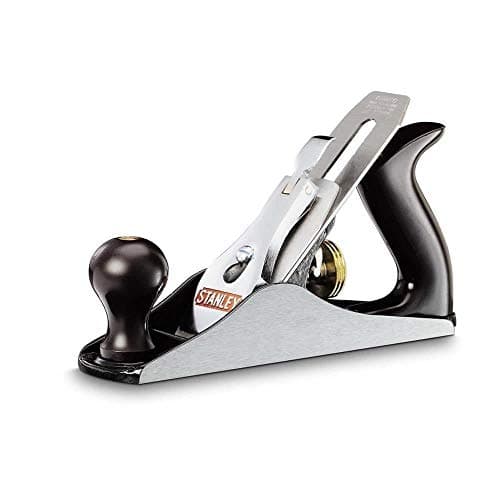
The current production Bailey is the same architecture as the plane your grandfather owned, at a price that leaves room in the budget for a stone. It needs more fettling than the Sweetheart and rewards it.
The pattern everything else copies, at half the Sweetheart price
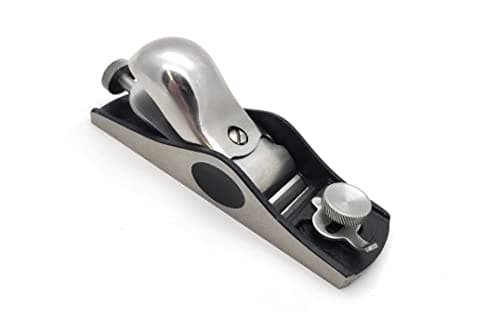
Adjustable mouth, stainless knuckle cap and adjustment screws, and a bed low enough to handle end grain properly. The stainless hardware is the detail that matters in a tool that lives in a pocket.
#ad· Live prices from the Amazon Product API, as of October 21, 2026. Where we have no verified live price we show none, and the cost-per-decade figure is suppressed with it — we would rather leave a gap than print a number that has rotted.
This gets argued as an identity question and it is not one. There are jobs a hand plane does better than any machine, jobs a machine does better than any hand plane, and a large middle where the deciding factors are noise, dust, space and how many boards you have to get through.
Where the hand plane genuinely wins
Surface quality. A sharp plane severs wood fibers; abrasives tear them and leave a fuzzed surface that only looks smooth. A planed surface reflects light differently, takes finish more evenly, and does not need progressive grits. This is not romanticism, it is a description of what the two processes do to the fiber ends.
Anything already assembled. Trimming a proud through-tenon, easing an edge on a glued carcass, fitting a drawer in its opening. A machine needs the workpiece to come to it; a plane goes to the workpiece.
Fitting to a line. Taking off two thousandths of an inch at one end of a joint. There is no machine adjustment fine enough, and a hand plane does it by feel in three passes.
Small quantities. Setting up a machine to do one edge takes longer than doing the edge by hand.
Where the machine wins outright
Thicknessing. Taking six rough boards to a consistent thickness is what a planer is for. Doing it by hand is possible and it is genuinely hard work; anyone who tells you otherwise has done it twice.
Repeatability across a batch. Twelve identical parts want a machine setting, not twelve judgments.
Wood that fights back. Some highly figured and interlocked timber tears out under any hand plane setup and yields to a drum sander. A high cutting angle helps and does not always win.
Volume. If the work is a paying job with a deadline, the machine is the answer and the plane is the finishing touch.
The costs nobody puts in the comparison
A benchtop thickness planer is a few hundred dollars, takes a square meter of floor, is loud enough to need hearing protection, and produces a volume of chips that needs a dust extractor to manage — which is another few hundred dollars and another square meter. A hand plane costs under $120, hangs on a wall, is quiet enough to use in a shared building at nine at night, and produces shavings you sweep up.
For a lot of people the machine is not more expensive than the plane; it is more expensive than the room they have. That is usually the actual deciding factor, and it rarely appears in the comparison.
The honest hybrid
Most people who work well do both: machines for dimensioning, hand tools for fitting and finishing. A thickness planer and a smoothing plane is a far more capable pairing than either alone, and it is what most professional shops that care about surface quality actually run. The purism runs in both directions and neither version makes better furniture.
Every pick, in full
The write-ups
01The pattern everything else copies, at half the Sweetheart price
Size
No. 4 smoother, 9 in sole
Pattern
Bailey, bevel down
Bed angle
45 deg
Warranty
Limited lifetime, blades excluded
Stanley Bailey No. 4 Smoothing Plane
Stanley
7.5/10
The current production Bailey is the same architecture as the plane your grandfather owned, at a price that leaves room in the budget for a stone. It needs more fettling than the Sweetheart and rewards it.
Cost per decade
$32.24
Horizon · tier A
30 years — Lifetime warranty, cited
Stanley publishes a limited lifetime warranty on hand tools against material and workmanship defects. Note it excludes consumables including 'any blade' — the casting is covered, the iron is not. Bailey-pattern irons are a standard size and replacements are widely sold.
Rebuy risk
Low
lifetime warranty, parts listed, resharpenable
Sole & body
7.0
Iron & edge
6.5
Adjustment
8.0
Out of box
6.0
Parts & repair
9.0
Value
8.5
What it gets right
+Same warranty position as the Sweetheart at a much lower price
+Standard Bailey iron size, so a $40 aftermarket iron transforms it
+Every setup guide, video and parts diagram ever written applies to it
What it costs you
−Sole flatness out of the box is inconsistent and may need lapping
−Factory iron is thinner and softer than the Sweetheart's A2
−Tote and knob finish is functional rather than pleasant
Skip this if…
…you want to open the box and take a shaving. This is a plane you set up first; budget an evening.
Adjustable mouth, stainless knuckle cap and adjustment screws, and a bed low enough to handle end grain properly. The stainless hardware is the detail that matters in a tool that lives in a pocket.
Cost per decade
$46.49
Horizon · tier C
20 years — No lifetime warranty; parts purchasable and resharpenable
No lifetime warranty published at the date checked. The iron is a standard Bailey-pattern size, so aftermarket replacements from third-party makers are purchasable, and the body is a casting with no consumable part.
Rebuy risk
Medium
parts listed, resharpenable
Sole & body
8.5
Iron & edge
7.5
Adjustment
8.5
Out of box
8.0
Parts & repair
7.0
Value
8.5
What it gets right
+Adjustable mouth is the single feature that separates a real block plane from a toy
+Stainless fittings resist the sweat and pocket grit that pit a block plane first
+Machining quality well above the price band
What it costs you
−No published warranty terms
−Iron wants honing before first use like everything else here
−Knuckle cap is a preference; some people want a plain lever cap
Skip this if…
…your hands are large. A block plane is a one-handed tool and this is a compact one.
We earn nothing on this one
The Veritas low-angle block plane is the better tool and we earn nothing on it — it sells direct only. Worth knowing before you buy: Lee Valley publishes a three-month satisfaction guarantee rather than a defect warranty, which is not the lifetime cover the tool's reputation implies. That guarantee wording is published by Lee Valley / Veritas.
For surface quality, fitting work and small quantities, yes. For thicknessing boards and batch repeatability, no. They are different tools that happen to share a name.
Can a hand plane replace sanding?+
On most timber, yes, and the result is better: a plane severs the fibers where an abrasive tears them. Highly figured or interlocked grain sometimes still needs abrasive.
Is hand planing hard work?+
Fitting and finishing work is not. Thicknessing rough boards by hand genuinely is, and that is the job a machine is for.
Do I still need hand planes if I own machines?+
For anything already assembled, and for the final surface, yes. A smoother and a block plane complement a machine shop rather than competing with it.
We have not handled these tools. Nobody here has tested one, owned one, or taken one apart. Specifications come from the manufacturer or the retailer listing; warranty terms come from the maker's own warranty page; the cost-per-decade arithmetic is ours and reproducible. Where we could not verify a figure we say so on the page rather than quietly leaving it out. Read the full method.