We earn a commission when you buy through our Amazon links, at no extra cost to you. It never decides a ranking, and where the best tool in a class is one we earn nothing on, we say so and link it anyway. How this works.
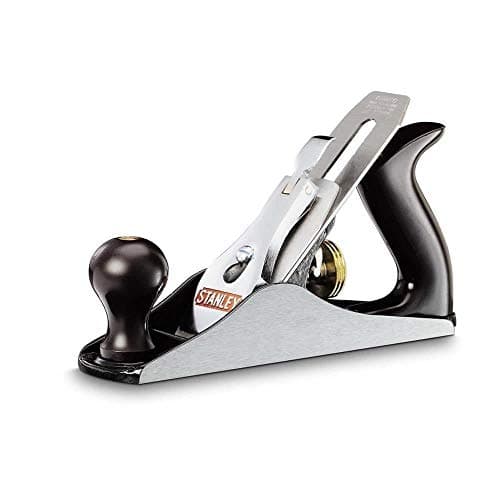
The current production Bailey is the same architecture as the plane your grandfather owned, at a price that leaves room in the budget for a stone. It needs more fettling than the Sweetheart and rewards it.
The pattern everything else copies, at half the Sweetheart price
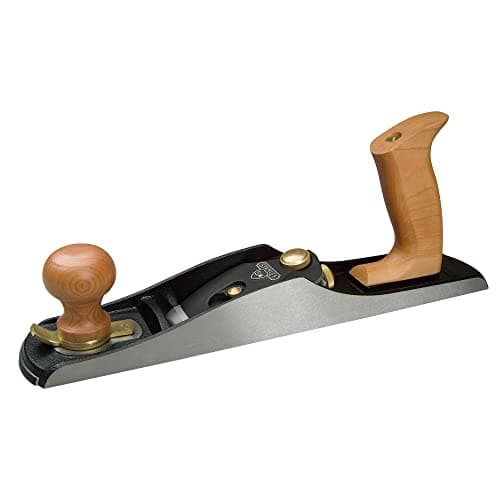
Bevel-up at a 12 degree bed, which means the bevel you grind sets the cutting angle. Grind three irons at three angles and one plane covers end grain, general work and figured hardwood.
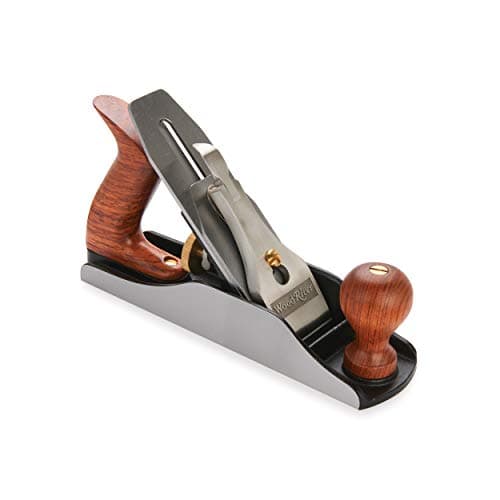
Woodcraft's house premium plane, third revision, and the revision matters — V3 fixed the frog fit and iron thickness complaints that dogged the earlier versions.
#ad· Live prices from the Amazon Product API, as of October 21, 2026. Where we have no verified live price we show none, and the cost-per-decade figure is suppressed with it — we would rather leave a gap than print a number that has rotted.
The three bench planes people argue about are the jack (No. 5, around 14 inches), the smoother (No. 4, around 9 inches) and the jointer (No. 7, around 22 inches). They differ in sole length, and because of that they differ in the job they can do — but they also differ in how you sharpen them, which is the part most guides leave out and the part that actually makes them behave differently.
The jack: removing material
The jack is the general-purpose plane and the first one most people should own. Fourteen inches is long enough to start flattening a board and short enough to be manageable. Its traditional job is roughing: taking a twisted, cupped board down to something approximately flat, fast.
A jack set up for that job has a cambered iron— ground with a pronounced curve across its width, so it takes a thick shaving in the middle and nothing at the edges. That curve is what stops the corners digging in, and it is why a jack can hog material without leaving tracks. A jack with a straight iron is a mediocre smoother.
The smoother: the last pass
The smoother is short deliberately. By the time you reach for it the surface is already flat; its only job is to leave a finish, and a short sole lets it follow the surface into the places a longer plane would skip.
A smoother is sharpened almost straight, with only the faintest camber at the corners to stop them scoring the work, and set to take a shaving thin enough to read through. Done properly this replaces sanding entirely and leaves a surface that reflects light better than any abrasive can, because the fibers are severed rather than torn.
The jointer: making things straight
Twenty-two inches of sole exists for one purpose: making an edge straight enough to glue. Two boards jointed with a long plane close along their whole length with hand pressure. Two boards jointed with a short one meet at the ends and gap in the middle, or the reverse, and the glue line shows forever.
It is the least frequently used of the three and the hardest to substitute for. If you glue up panels, you need one. If you buy boards wide enough for what you make, you do not.
Which two
Jack and smoother. That pair handles rough stock through to finish surface, and it is what we would buy with a fixed budget. The jointer is the third purchase, added when a glue-up fails and you understand exactly why.
There is one shortcut worth knowing: a low-angle jack with two or three irons ground at different bevel angles does a convincing impression of all three, because bevel-up geometry means the bevel sets the cutting angle. It is not as good at any one job as a dedicated plane, and it is one object instead of three. Bevel up versus bevel down explains the mechanism.
The numbers in between
A No. 3 is a small smoother for small work. A No. 4-1/2 is a wide smoother that damps vibration better on difficult grain. A No. 6 fore plane splits the difference between jack and jointer. All three are real tools with real uses, and none of them is a first, second or third purchase. Buy them when a specific job makes you want one.
One job none of these three can do at all, at any size: cut into an inside corner. Every bench plane sets its iron in from the sides of the body, so it cannot reach the last fraction of an inch where a tenon's cheek meets its shoulder. That is a joinery plane's work, and the ranked, buyable ones are on the best shoulder planes.
There is a second job none of them can do, and it is the one people discover last: cutting a surface to a set depth parallelto the surface the plane is standing on. A bench plane takes the high spots off whatever it meets; it has no way to stop at a dimension. For tenon cheeks that all have to finish the same thickness, or a dado floor that has to stay level across a carcass, the tool is a router plane — a flat base with the cutter locked a fixed distance below it. Those are ranked on the best router planes.
Every pick, in full
The write-ups
01The pattern everything else copies, at half the Sweetheart price
Size
No. 4 smoother, 9 in sole
Pattern
Bailey, bevel down
Bed angle
45 deg
Warranty
Limited lifetime, blades excluded
Stanley Bailey No. 4 Smoothing Plane
Stanley
7.5/10
The current production Bailey is the same architecture as the plane your grandfather owned, at a price that leaves room in the budget for a stone. It needs more fettling than the Sweetheart and rewards it.
Cost per decade
$32.24
Horizon · tier A
30 years — Lifetime warranty, cited
Stanley publishes a limited lifetime warranty on hand tools against material and workmanship defects. Note it excludes consumables including 'any blade' — the casting is covered, the iron is not. Bailey-pattern irons are a standard size and replacements are widely sold.
Rebuy risk
Low
lifetime warranty, parts listed, resharpenable
Sole & body
7.0
Iron & edge
6.5
Adjustment
8.0
Out of box
6.0
Parts & repair
9.0
Value
8.5
What it gets right
+Same warranty position as the Sweetheart at a much lower price
+Standard Bailey iron size, so a $40 aftermarket iron transforms it
+Every setup guide, video and parts diagram ever written applies to it
What it costs you
−Sole flatness out of the box is inconsistent and may need lapping
−Factory iron is thinner and softer than the Sweetheart's A2
−Tote and knob finish is functional rather than pleasant
Skip this if…
…you want to open the box and take a shaving. This is a plane you set up first; budget an evening.
Bevel-up at a 12 degree bed, which means the bevel you grind sets the cutting angle. Grind three irons at three angles and one plane covers end grain, general work and figured hardwood.
Cost per decade
Suppressed — no live price
Horizon · tier A
30 years — Lifetime warranty, cited
Stanley publishes a limited lifetime warranty on hand tools against material and workmanship defects. Note it excludes consumables including 'any blade' — the casting is covered, the iron is not. Bailey-pattern irons are a standard size and replacements are widely sold.
Rebuy risk
Low
lifetime warranty, parts listed, resharpenable
Sole & body
8.5
Iron & edge
8.5
Adjustment
8.0
Out of box
8.0
Parts & repair
9.0
Value
7.0
What it gets right
+One body, three effective cutting angles, if you buy spare irons
+Low bed angle plus adjustable mouth is the best end-grain setup at this price
+Simple architecture: no frog to fettle, fewer things to get wrong
What it costs you
−Spare irons are the whole point and they are an extra purchase
−Bevel-up geometry means a chipped edge changes your cutting angle, not just your sharpness
−Heavier and longer than a smoother if that is the only job
Skip this if…
…you have already committed to a bevel-down set. Mixing the two systems means two sharpening setups for no benefit.
03Premium feel without the premium-maker lead time
Size
No. 4 smoother
Pattern
Bedrock-style
Iron
Thick section, high carbon
Revision
V3
WoodRiver #4 Bench Plane, V3
WoodRiver
7.9/10
Woodcraft's house premium plane, third revision, and the revision matters — V3 fixed the frog fit and iron thickness complaints that dogged the earlier versions.
Cost per decade
$116.99
Horizon · tier C
20 years — No lifetime warranty; parts purchasable and resharpenable
No lifetime warranty published at the date checked. The iron is a standard Bailey-pattern size, so aftermarket replacements from third-party makers are purchasable, and the body is a casting with no consumable part.
Rebuy risk
Medium
parts listed, resharpenable
Sole & body
9.0
Iron & edge
8.5
Adjustment
8.5
Out of box
8.0
Parts & repair
7.0
Value
6.5
What it gets right
+Heavy, well-machined body that damps vibration on difficult grain
+Thick iron and substantial chipbreaker, minimal chatter
+In stock far more reliably than the small premium makers
What it costs you
−Priced against Lie-Nielsen and Veritas without the parts catalog either has
−Heavier than some people want in a smoother
−No published lifetime warranty terms found
Skip this if…
…the price difference to a Lie-Nielsen is money you have. At that point buy the one with the replacement-parts catalog behind it.
What is the difference between a jack plane and a smoothing plane?+
Sole length and iron shape. A jack is longer with a cambered iron for fast material removal; a smoother is shorter with a nearly straight iron for the finishing pass. The sharpening difference matters as much as the size difference.
Do I need a jointer plane?+
Only if you edge-joint boards for glue-ups. A 22-inch sole is what makes two edges close along their whole length; shorter planes leave a gap that shows in the glue line.
What does a cambered iron do?+
It curves the cutting edge across its width so the plane takes a thick shaving in the middle and nothing at the corners. That stops the corners digging in and leaving tracks, which is what lets a jack remove material fast.
Can one plane do everything?+
A low-angle jack comes closest, because grinding different bevel angles on spare irons changes the effective cutting angle. It is a genuine one-plane answer, and it needs those spare irons to be one.
We have not handled these tools. Nobody here has tested one, owned one, or taken one apart. Specifications come from the manufacturer or the retailer listing; warranty terms come from the maker's own warranty page; the cost-per-decade arithmetic is ours and reproducible. Where we could not verify a figure we say so on the page rather than quietly leaving it out. Read the full method.