We earn a commission when you buy through our Amazon links, at no extra cost to you. It never decides a ranking, and where the best tool in a class is one we earn nothing on, we say so and link it anyway. How this works.
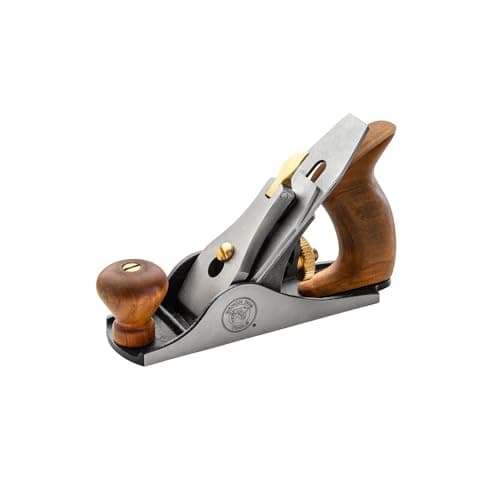
The only No. 1 here whose maker publishes the whole specification — 1.21 in blade, 0.078 in thick, 55-60 HRC, 25 degree bevel, 45 degree seat, 1.25 lb — and sells the matching spare blade as a cataloged part. On a plane whose iron fits nothing else, that second fact is what makes it a tool rather than an ornament.
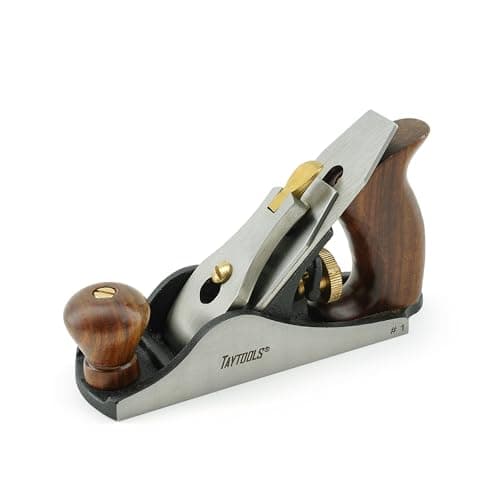
A No. 1 bench plane at roughly a third of what the other two cost, from a brand that publishes a full specification for every other plane it sells. For this one it publishes nothing at all, and that absence is the whole case against it.
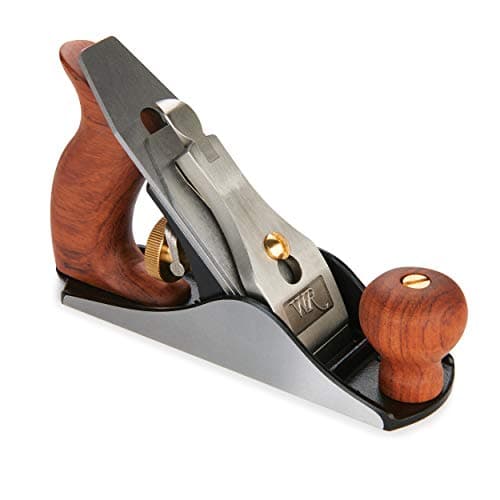
Stress-relieved ductile iron, soles and sides machined flat and square, 1.3 lb, and a cataloged spare iron at a published 20.99 dollars. It is the best-built plane of the three and it costs more than a full-size No. 4 from most makers, which is the trade you are actually making.
The best-made small plane, at a price that has to be justified
The kanna reduced to a size where the setup burden is proportionate to the job. A good way to find out whether you get on with a pull plane before committing to a full-size one.
#ad· Live prices from the Amazon Product API, as of October 19, 2026. Where we have no verified live price we show none, and the cost-per-decade figure is suppressed with it — we would rather leave a gap than print a number that has rotted.
Buy the Bench Dog No. 1. It is the only plane here whose maker publishes the entire specification — a 1.21 in iron, 0.078 in thick, hardened to 55-60 HRC, ground at 25 degrees and bedded at 45, in a 5.67 in body weighing 1.25 lb — and the only one that sells the matching iron as a cataloged part. If you want the same pattern for a third of the money, the Taytools #1 is the one to look at, with the caveat that Taytools publishes nothing about it at all. And if what you actually want is a small plane you will use every day rather than a small plane you will admire, buy a block plane and stop reading: the Stanley No. 9 is the pocket version and the best block planes ranks the ones worth owning.
“Mini hand plane” covers three genuinely different tools, and the search term hides the difference. There is the No. 1, the smallest size in the old Bailey numbering: a 5-1/2 to 5-3/4 in bench plane with a tote and a knob and a frog, built to the same pattern as a No. 4 and scaled down until it fits in a fist. There is the mini kanna, a Japanese pull plane reduced to a wooden block the size of a deck of cards. And there is the small block plane, which is not a miniature at all — it is the ordinary tool most people mean when they say they want a little plane.
All three are on this page, ranked against each other, because the buying decision is genuinely between them.
The specification that decides it
On a bench plane the iron is a commodity. A No. 4 takes a 2 in Bailey-pattern iron, a standard that half a dozen makers supply, so when the original is finally used up you buy another from whoever you like — the best replacement plane irons is that whole market.
A No. 1 iron is about 1-1/4 in wide. It fits nothing else, nobody makes an aftermarket version, and there is no standard for it to conform to. So the question that decides a mini plane is not the casting, the finish, or the brass: it is whether the maker or the retailer lists the blade as a part you can buy on its own. Two of the three No. 1s here do. One does not.
Bench Dog No. 1: Rockler catalogs the spare blade as part 270041, 1.21 in wide and 0.078 in thick, sold separately.
WoodRiver #1 V3:Woodcraft lists the matching iron as item 159006 at a published $20.99 on the plane's own page.
Taytools #1: no replacement iron listed, and no specification published for the plane either.
That is not a small distinction on a tool this site exists to judge. A plane whose iron can be replaced is a thirty-year purchase; a plane whose iron cannot is a ten-year one, however well it is machined. The arithmetic is on cost per decade, and it is the reason the cheapest plane here does not win.
What else decides it
1. Mass, and the fact that there is none. A No. 1 weighs about 1-1/4 lb. A No. 4 weighs four to five. Mass is what carries a plane through a cut and damps the chatter that puts ripples in a surface, and a mini plane has almost none of it, so every cut has to be light and the iron has to be genuinely sharp. The weight is not a flaw — it is the point, because the tool exists to work where a heavy plane will not fit — but it sets the ceiling on what the plane can do.
2. Whether the sides are square to the sole. Small planes get used against things: a fence, a shoulder, the edge of a scrap clamped to the work. Woodcraft states the WoodRiver's soles and sides are machined flat and square. Nobody else here says anything about the sides at all, which makes it something to check on arrival rather than something to trust — the same five-minute check described on the best hand planes for shooting boards.
3. Published numbers at all. This category is unusually bad for documentation. Of the five planes here, one publishes a complete specification, one publishes dimensions and a steel description, one publishes a blade width and a body material, one publishes a warranty that excludes the blade, and one publishes nothing. We rank the ones that tell you what you are buying above the ones that do not, and we say which is which rather than filling the gaps.
4. Whether a mini plane is the right answer. It very often is not, and a roundup that will not say so is selling rather than advising. A No. 1 does three things well: it eases and cleans small parts, it fits into a recess no bench plane will enter, and it works one-handed on a piece too small to clamp. For everything else — chamfers, end grain, fitting a drawer, trimming a plug — a low-angle block plane is better in every measurable way and costs less.
What the makers publish
Plane
Size
Iron
Spare iron cataloged?
Bench Dog No. 1
5.67 in sole, 1.61 in wide, 1.25 lb
1.21 in, 0.078 in thick, 55-60 HRC
Yes — part 270041
Taytools #1 (241492)
Not published
Not published
No
WoodRiver #1 V3
5-3/4 in long, 1-1/2 in wide, 1.3 lb
1-13/64 in, high carbon steel
Yes — item 159006, $20.99
KAKURI Mini Block Plane
36 mm blade width, wooden dai
Laminated, SK85 double layer
Not applicable — the iron is re-trued, not replaced
Stanley No. 9 (1-12-020)
Pocket block pattern, cast iron
Entry-level, fixed mouth
No — warranty excludes blades by name
The useful reading of that table is that the two columns on the right disagree with the price list. The cheapest No. 1 publishes the least and renews the worst; the dearest publishes well and renews well but costs more than a full-size smoother from most makers. The one in the middle is the pick, which is how these pages usually end when a category is honestly documented.
The brass miniature sets, and why none is ranked
Search “mini hand plane” and most of what comes back is a three-piece brass set for twenty to sixty dollars: a tiny block plane, a bullnose and a scraper, in a box. We checked the market on the date on this page and the position has not changed: these sets are sold under a dozen different names, no maker publishes a blade steel, a hardness, a bed angle or a dimension for any of them, and in several cases the same photographs appear under three brands.
They are not frauds. They are modeling tools, and for shaping a small radius on a piece of basswood or cleaning up a scale model they work about as well as they need to. They are also the wrong thing to buy if you are planing wood: the irons are too thin to hold an edge under load, the bodies are too light to carry a cut, and there is nothing to adjust. We have not ranked one because we cannot tell you what is in the box, and that is the whole standard this site is built on — our methodology explains why a page here would rather have four picks than five fabricated ones.
What a mini plane asks of the iron
More than a bench plane does, because there is no mass to help. Two consequences follow, and both are more demanding than they sound.
It must be sharp, not nearly sharp. A 1-1/4 lb plane cannot force a dull edge through anything. If the shaving is dust rather than a ribbon, the iron is the problem and nothing else is. How to sharpen a plane ironis the routine, and a short iron will not sit in half the honing guides sold — the short-iron problem is covered on how to sharpen a block plane blade, and it applies in full to a No. 1.
It wants a whisper of camber, or none. A 1.21 in iron taking a fine shaving on a small part does not need relief across its width the way a jack does; what it needs is corners that are just knocked off so they cannot dig in and leave a line. How to camber a plane iron covers the shapes and which jobs want which.
Every pick, in full
The write-ups
01Best mini plane overall
Sole
5.67 in long, 1.61 in wide
Blade
1.21 in wide, 0.078 in thick, 55-60 HRC
Angles
25 deg bevel on a 45 deg seat
Weight
1.25 lb
Spare blade
Cataloged, part 270041
Bench Dog No. 1 Smoothing Plane
Bench Dog
7.5/10
The only No. 1 here whose maker publishes the whole specification — 1.21 in blade, 0.078 in thick, 55-60 HRC, 25 degree bevel, 45 degree seat, 1.25 lb — and sells the matching spare blade as a cataloged part. On a plane whose iron fits nothing else, that second fact is what makes it a tool rather than an ornament.
Cost per decade
$62.49
Horizon · tier C
20 years — No lifetime warranty; parts purchasable and resharpenable
No defect warranty published for this plane at the date checked. What sets the horizon instead is that the matching iron is a cataloged item sold on its own, which on a No. 1 matters more than it would on a bench plane: the iron is roughly 1-1/4 in wide, fits no other plane, and has no aftermarket. The body is a casting with nothing else in it to consume, so the spare-blade listing is what makes the tool renewable.
Rebuy risk
Medium
parts listed, resharpenable
Sole & body
8.0
Iron & edge
7.5
Adjustment
7.5
Out of box
8.0
Parts & repair
8.0
Value
6.0
What it gets right
+Rockler publishes blade width, blade thickness, hardness, bevel, seat angle, sole dimensions and weight — nothing here is left to guesswork
+The matching iron is a cataloged part sold on its own, which is the whole durability argument for a plane whose blade size is unique to it
+Ships with a Certificate of Inspection for that individual plane
+Sapele handle rather than a painted hardwood blank
What it costs you
−No warranty terms published for this plane at any length
−The spec sheet says cast iron while Rockler's own press material describes the Bench Dog line as ductile iron — the two disagree and only one can be right
−1.25 lb and a 1.21 in iron means light cuts in small places; it will not flatten anything
−Costs most of what a full No. 4 smoother costs and does a fraction of the work
Skip this if…
…you do not already own a smoother. A No. 1 is the plane you buy fourth, not first — buy a No. 4 and come back.
A No. 1 bench plane at roughly a third of what the other two cost, from a brand that publishes a full specification for every other plane it sells. For this one it publishes nothing at all, and that absence is the whole case against it.
Cost per decade
$47.67
Horizon · tier D
10 years — No warranty and no parts availability found
No warranty terms and no replacement-parts listing found for this item or maker at the date checked. The horizon is the floor value, and the rating below is what that absence means.
Rebuy risk
High
resharpenable
Sole & body
6.0
Iron & edge
6.0
Adjustment
6.5
Out of box
6.5
Parts & repair
4.0
Value
8.5
What it gets right
+A third the price of the other No. 1s here, which is the right order of magnitude for a tool this specialized
+Taytools is the same house brand behind the Bedrock-style planes this site ranks first in two other categories
+In stock in normal quantities at the date checked
What it costs you
−No sole length, no blade width, no blade thickness, no hardness, no body material and no weight published anywhere we could find
−No replacement iron listed, and a No. 1 iron has no aftermarket to fall back on
−No warranty terms published
−Taytools publishes a full spec sheet for its #4, #5, #5-1/2 and #7 — the silence on this one is conspicuous
Skip this if…
…you want to know what you are buying before it arrives. Pay the difference for the Bench Dog and get the numbers.
03The best-made small plane, at a price that has to be justified
Dimensions
1-1/2 in wide, 5-3/4 in long
Blade
1-13/64 in, high carbon steel
Body
Stress-relieved ductile iron
Weight
1.3 lb
Spare blade
Cataloged, item 159006
WoodRiver #1 Bench Hand Plane V3
WoodRiver
7.5/10
Stress-relieved ductile iron, soles and sides machined flat and square, 1.3 lb, and a cataloged spare iron at a published 20.99 dollars. It is the best-built plane of the three and it costs more than a full-size No. 4 from most makers, which is the trade you are actually making.
Cost per decade
$94.49
Horizon · tier C
20 years — No lifetime warranty; parts purchasable and resharpenable
No defect warranty published for this plane at the date checked. What sets the horizon instead is that the matching iron is a cataloged item sold on its own, which on a No. 1 matters more than it would on a bench plane: the iron is roughly 1-1/4 in wide, fits no other plane, and has no aftermarket. The body is a casting with nothing else in it to consume, so the spare-blade listing is what makes the tool renewable.
Rebuy risk
Medium
parts listed, resharpenable
Sole & body
9.0
Iron & edge
7.5
Adjustment
7.5
Out of box
8.5
Parts & repair
8.0
Value
4.5
What it gets right
+Woodcraft states the soles and sides are machined flat and square — on a plane this small, a square side is what lets it work against a fence
+Ductile iron rather than gray cast iron, so a drop off the bench is less likely to crack it
+The matching iron is a cataloged item at a published price, so the tool is renewable
+V3 is the revision that addressed the frog fit and iron thickness complaints across the WoodRiver line
What it costs you
−The most expensive plane here by a wide margin, for the least capable job
−No blade thickness, no bed angle and no warranty published
−Woodcraft's 90-day satisfaction guarantee is a returns policy, not a defect warranty
−Hardwood tote and knob with the species unnamed
Skip this if…
…the price difference against the Bench Dog is money you would rather put toward a jointer. Both planes do the same small jobs.
The kanna reduced to a size where the setup burden is proportionate to the job. A good way to find out whether you get on with a pull plane before committing to a full-size one.
Cost per decade
$28.90
Horizon · tier C
20 years — No lifetime warranty; parts purchasable and resharpenable
No warranty terms published for the US market at the date checked. A laminated hagane-over-jigane edge is renewable by sharpening until the hard layer runs out, which on a full-size chisel or plane iron is a working lifetime.
Rebuy risk
Medium
parts listed, resharpenable
Sole & body
7.0
Iron & edge
8.5
Adjustment
5.0
Out of box
5.0
Parts & repair
7.0
Value
8.0
What it gets right
+Low-commitment introduction to laminated Japanese irons
+Genuinely useful for chamfers and small fitting work
+No mechanism to fail
What it costs you
−Too small for any surfacing work
−Same dai conditioning requirement as a full-size kanna
−Not a substitute for a western block plane on site
Skip this if…
…you need one block plane that does everything. This one is deliberately specialized.
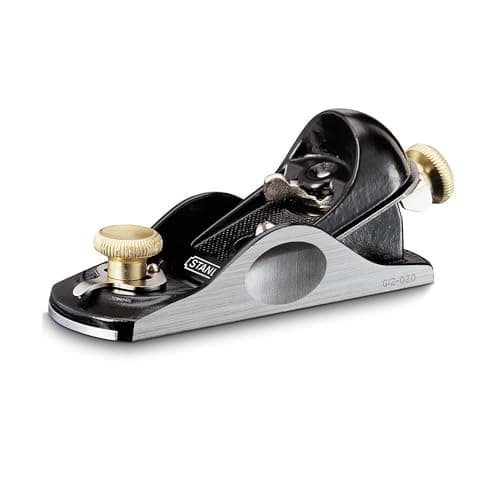
Compact, unfussy, and covered by the same warranty as the rest of the range. Not a joinery tool, and does not pretend to be.
Cost per decade
$19.83
Horizon · tier A
30 years — Lifetime warranty, cited
Stanley publishes a limited lifetime warranty on hand tools against material and workmanship defects. Note it excludes consumables including 'any blade' — the casting is covered, the iron is not. Bailey-pattern irons are a standard size and replacements are widely sold.
Rebuy risk
Low
lifetime warranty, parts listed, resharpenable
Sole & body
6.0
Iron & edge
5.5
Adjustment
5.5
Out of box
6.5
Parts & repair
9.0
Value
7.5
What it gets right
+Small enough to actually live in a pocket or apron
+Under the published limited lifetime warranty on the casting
+Nothing on it to break or lose
What it costs you
−Fixed mouth and standard bed angle
−Too small for anything but light easing work
−Iron quality is entry-level
Skip this if…
…this is going to be your only plane. It is a supplement, not a foundation.
Best overall: the Bench Dog No. 1. Every number published, a cataloged spare iron, a Certificate of Inspection in the box and a sapele handle. It is the only plane here that is documented like a tool rather than described like a gift.
Cheapest real No. 1: the Taytools #1. The same pattern for roughly a third of the money, from a brand whose Bedrock-style planes this site ranks first elsewhere. Buy it knowing that no dimension, no steel and no spare iron is published, and that if the iron is ever ruined the plane is finished.
Best made: the WoodRiver #1 V3. Stress-relieved ductile iron, sides machined square to the sole, a published weight, and a replacement iron at a published price. The price is the problem: it is more than a full-size smoother from several makers, for a plane that does far less work.
If you want a small plane that is also a different mechanism: the KAKURI mini kanna. A 36 mm laminated iron in a wooden body, pulled rather than pushed, with no mechanism to fail and nothing to rebuy. It is the cheapest honest way to find out whether you get on with a pull plane before committing to a full-size one — the best Japanese hand planes is the full-size version of that decision.
If you want a small plane you will actually use daily: the Stanley No. 9. It is a fixed-mouth, standard-angle pocket block plane under a published limited lifetime warranty on the casting, and it will ease more edges in a year than any No. 1 will in a decade. It is last on this list only because it is not a mini plane in the sense people search for.
What a mini plane is genuinely good at
Small parts held in one hand. A drawer pull, a hinge filler, a key for a miter. A No. 1 lets you hold the work in one hand and plane with the other, which no full-size plane allows.
Inside a carcass or a tight recess. A 5-3/4 in body gets into a case, a drawer opening or a stopped rabbet where a No. 4 will not reach.
Model and instrument work. Braces, bridges, small radius work — the best hand planes for guitar making ranks these planes against the other jobs in a build.
Teaching the motion. A light plane will not bully its way through a bad setup, which makes it an unforgiving and therefore effective way to learn what a properly set iron feels like. How to set up a hand plane is the sequence.
What it is not for: flattening, thicknessing, jointing an edge, or any surface longer than your hand. Those are jobs for a smoother, a jack and a jointer.
Cost per decade on a plane with a one-off iron
A mini plane has an easy life. It takes fine shavings off small parts, it never sees a nail, and nothing in the casting is under load. Left alone in a drawer it will outlive everyone reading this.
So the horizon is the iron, and the iron is the one part this category does not standardize. Rockler catalogs the Bench Dog blade at part 270041; Woodcraft catalogs the WoodRiver iron as item 159006 at $20.99; Taytools lists nothing. On a plane you will sharpen a few times a year for forty years, one $21 line item in a catalog is worth more than any amount of brass — which is why the two documented planes sit above the cheap one, and why the KAKURI, whose iron is renewed rather than replaced, rates better on parts than its price suggests.
Neither Rockler nor Woodcraft publishes a defect warranty on these planes. Woodcraft publishes a 90-day satisfaction guarantee, which is a returns policy; warranties and repairability covers why those two things keep getting confused, and why a parts catalog is the stronger signal of the pair.
Questions
Frequently asked
What is a No. 1 hand plane actually for?+
Small parts, tight recesses and one-handed work. It is a 5-1/2 to 5-3/4 in bench plane built to the same pattern as a No. 4, scaled down until it fits in a fist. It is not a smaller smoother in the sense of doing the same job more slowly — at 1-1/4 lb it cannot carry a cut through a wide surface at all.
Are the cheap brass mini plane sets worth buying?+
For modeling, they are fine. For woodworking, no. No maker publishes a blade steel, a hardness, a bed angle or a dimension for any of them, the irons are too thin to hold an edge under load and the bodies too light to carry a cut. We have not ranked one on this page because we cannot verify what is in the box.
Should I buy a No. 1 or a block plane?+
A block plane, unless you specifically need the No. 1 pattern. A low-angle block plane with an adjustable mouth costs less, does end grain properly, and is the plane most woodworkers reach for most often. Buy the No. 1 fourth or fifth, not first.
Can you replace the iron in a mini plane?+
Only if the maker sells one. A No. 1 iron is around 1-1/4 in wide, fits no other plane and has no aftermarket, so there is nothing generic to fall back on. Rockler catalogs the Bench Dog blade and Woodcraft catalogs the WoodRiver iron; the Taytools has no replacement listed, which is the main reason it is not the pick here.
Is a mini kanna easier or harder to use than a No. 1?+
Harder to set up, easier to cut with. A kanna is a laminated iron wedged in a wooden body, so the dai has to be conditioned and the iron tapped to depth rather than turned to it — but once set, a pull stroke on a laminated edge takes a cleaner shaving than any plane at this size and price. There is also nothing in it to break.
We have not handled these tools. Nobody here has tested one, owned one, or taken one apart. Specifications come from the manufacturer or the retailer listing; warranty terms come from the maker's own warranty page; the cost-per-decade arithmetic is ours and reproducible. Where we could not verify a figure we say so on the page rather than quietly leaving it out. Read the full method.