Hand Planes
Flattening Rough Lumber by Hand
Rough stock becomes flat stock in a fixed order, and each stage has one plane that suits it. Skip a stage and you spend the time anyway, with worse results.
We earn a commission when you buy through our Amazon links, at no extra cost to you. It never decides a ranking, and where the best tool in a class is one we earn nothing on, we say so and link it anyway. How this works.
The short answer
Quick picks
| # | Tool | Best for | Per decade | Score | Price |
|---|---|---|---|---|---|
| 01 | 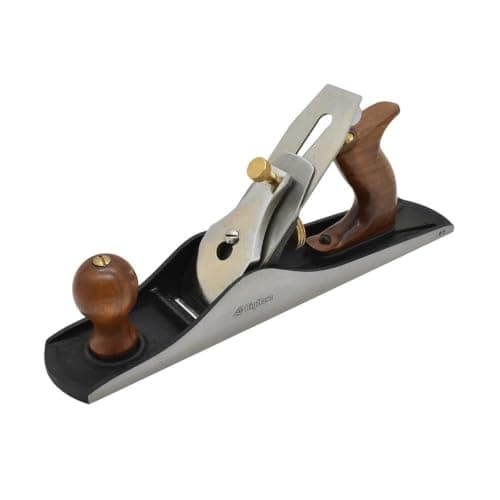 Big Horn 19328 Jack Plane, No. 5 A gray cast iron No. 5 whose maker publishes a sole tolerance, a blade hardness and a bed angle — the same three numbers Rockler publishes — at hardware-store money. It is the budget pick because the paperwork exists, not because the casting is special. | The cheapest No. 5 with a published flatness tolerance | $42.72tier C | 6.7/10 | $85.43Amazon |
| 02 | 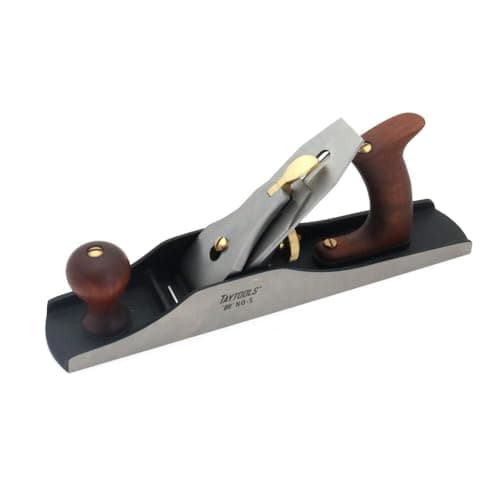 Taytools #5 Bedrock-Style Jack Plane The same Bedrock-pattern frog and lapped ductile body as our best first plane, stretched to a 14 in jack, with a cryogenically treated O1 iron the maker actually publishes a thickness and hardness for. Nothing else on this page combines that frog, that iron and this price. | Best jack plane overall | $70.00tier C | 8.2/10 | $139.99Amazon |
| 03 | 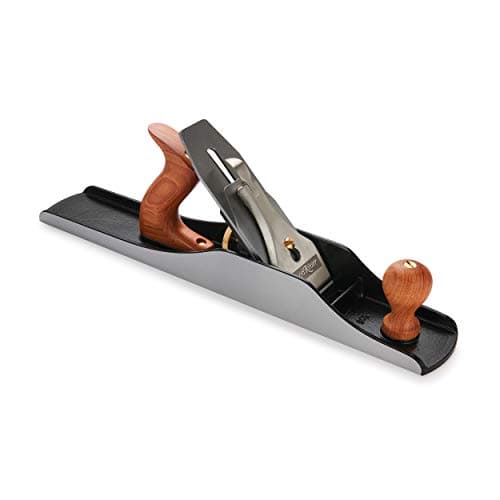 WoodRiver #6 Bench Plane, V3 The same stress-relieved ductile castings and fully machined Bedrock-based frog as the WoodRiver #7, in the 18 in fore-plane length at 7-3/4 lb. For a home shop that joints medium edges and flattens panels, it is the one long plane that does both jobs without the weight of a No. 7. | The fore plane for a shop that will never buy a full jointer | $120.00tier C | 7.8/10 | $239.99Amazon |
| 04 | 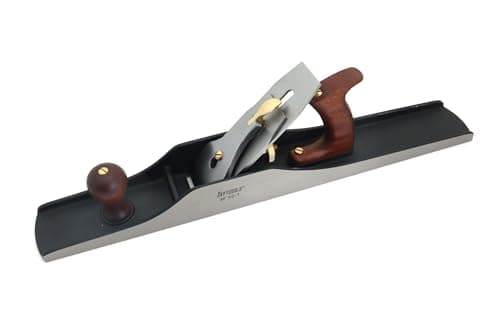 Taytools #7 Bedrock-Style Jointer Plane The full 22 in jointer from the same Bedrock-frog line as our best jack: a ductile body and frog, sole and sides lapped over the whole length, 9.6 lb of mass, and a cryogenically treated O1 iron the maker publishes a thickness and a hardness for. Nothing else on this page combines that frog, that iron and this price. | Best jointer plane overall | $100.00tier C | 8.3/10 | $199.99Amazon |
#ad· Live prices from the Amazon Product API, as of October 16, 2026. Where we have no verified live price we show none, and the cost-per-decade figure is suppressed with it — we would rather leave a gap than print a number that has rotted.
If you are buying one plane to flatten rough lumber, buy a No. 5 jack and camber its iron — the Taytools #5 Bedrock-style is the pick, and the Big Horn 19328 is the cheap version of the same idea. A cambered jack does most of the work in this sequence and it is the only plane in it that cannot be substituted. The long plane that follows it matters second, and a smoother matters last — which is the exact reverse of the order most people buy them in.
Flattening a rough board by hand is not a skill so much as an order of operations. The board arrives cupped, twisted, bowed or all three, and sawn on a machine that left a surface no finish will sit on. You cannot fix all of that at once and you cannot fix it in an arbitrary order, because each stage depends on a reference the previous stage created. The sequence is the same one every pre-industrial shop used and the same one a machine shop uses today with a jointer and a planer: make one face flat, make one edge square to it, bring the second face parallel, then square the ends. What changes with hand tools is that you choose the plane for each stage yourself.
Stage one: one face flat, with a cambered jack
Pick the face that is closest to flat already, put the board on the bench between stops, and find out where it is high. A winding stick at each end will show twist; a straightedge across the width will show cup; sighting along the length will show bow. Mark the high spots in pencil and plane them off diagonally — across the grain at roughly 45 degrees in both directions — rather than along it.
This is the stage that wants a cambered iron: the edge ground with a deliberate curve, in the region of a 10 inch radius, so the plane takes a thick shaving in the middle and feathers out at the sides instead of digging two tracks. A straight iron taking a thick shaving leaves ridges and jams in the cut. A cambered one removes material fast and leaves a scalloped surface that the next plane erases. Doing this with a No. 5 is the cheap, standard answer; doing it with a dedicated scrub plane is faster on very rough or very thick stock, and how to camber a plane iron covers grinding the curve.
Flat here means flat, not smooth. You are finished with this stage when the board sits on the bench without rocking, the winding sticks agree at both ends, and a straightedge touches across the width everywhere. The surface will look terrible. That is correct.
Stage two: the long plane, and why length is the whole argument
Now take the scallops off and make the face genuinely straight along its length, which is a job decided almost entirely by sole length. A short plane rides down into every hollow it meets and takes material out of the low spots as cheerfully as the high ones; a long plane bridges the hollows and can only cut the high spots, which is what “straightening” physically means. That is the entire case for an 18 to 22 inch plane, and it is why jack plane vs jointer plane is not really a preference question.
Two reasonable choices. A No. 6 fore plane at around 18 inches is the shop-wide compromise: long enough to straighten a face and most edges, light enough to use for an hour, and the one long plane a small shop can justify. A No. 7 jointer at 22 inches is the correct tool if you joint edges for glue-ups longer than about four feet, and the WoodRiver #6's own listing is blunt about the limit — an 18 inch sole starts to follow a long edge rather than straighten it. The cost is mass: the Taytools #7 publishes 9.6 lb, which is a lot of plane to push for a morning.
Use the same plane, or the same length of plane, to square the first edge to the flat face. Set a square against the face, plane the edge, check again, and correct by shifting the shaving to one side of the iron rather than by tilting the plane.
Stage three: thickness, and stage four: smooth
With one flat face and one square edge you have a reference, and bringing the second face parallel becomes marking and removing rather than judging: set a marking gauge to the finished thickness, run it from the flat face all the way around, then plane the second face down to that line with the cambered jack again and straighten it with the long plane. Only then does a smoother come out, and only on the faces that will show. A smoothing plane is a finishing tool; using one to flatten a cupped board is a way to spend an afternoon moving a hollow around.
The practical consequence for buying: of the four planes in this sequence, the one you cannot work without is the jack, the one that most improves the result is the long plane, and the one most people buy first is the smoother. If your money is going in one direction, send it in the order the work happens.
What each plane in the sequence publishes
| Plane | Stage | Published size | Published iron |
|---|---|---|---|
| Big Horn 19328 No. 5 | Camber it for stage one | 14 in sole, 2-1/2 in wide | 1/8 in carbon, 55-60 HRC; sole flat 0.002-0.004 in |
| Taytools #5 Bedrock-style | Stage one, and general work | 14 in sole, 2-1/2 in wide | O1 cryo, 0.120 in, 54-58 HRc |
| WoodRiver #6 V3 | Stage two, shop-wide compromise | 17-3/4 x 2-7/8 in, 7-3/4 lb | High carbon, 2-3/8 in, 25 deg bevel |
| Taytools #7 Bedrock-style | Stage two, long edges | 22-1/8 in sole, 9.6 lb | O1 cryo, 0.120 in, 54-58 HRc |
Two of those four publish an iron thickness and a hardness range; all four publish a length, which is the number that actually decides the work. Note what none of them publish: a warranty. Taytools lists a 90-day return on unused items and nothing beyond it, Big Horn publishes no warranty at all, and Woodcraft's listing for the #6 carries a 30-day defect replacement. In this class the long-horizon question is not the warranty, it is whether the casting is stress-relieved ductile iron — which the Taytools pair and the WoodRiver state, and the Big Horn, by its own listing, does not.
What this sequence does not need
A fourth plane. Jack, long plane, smoother. A scrub plane is a nice-to-have that makes stage one faster on thick stock; a shoulder plane and a block plane are joinery tools with no role here.
A perfectly flat bench. It helps, and it is not a prerequisite. What you need is a surface that does not rock and a way to stop the board sliding: a pair of stops, a holdfast, or a batten screwed to the bench top.
A machine. A jointer and a thickness planer do stages one to three faster, and no tool does stage four better than a hand plane. If you own the machines the hand-tool version of this sequence is still worth knowing, because a board wider than your jointer bed is a hand-tool job whether you planned for it or not.
What it does need is sharpening, more than any other hand-tool job, because you are removing a lot of material and a dull cambered iron simply stops cutting. One stone, one guide, and the habit of stopping to hone before it feels necessary — how to sharpen a plane iron has the sequence, and how to flatten a plane sole is worth reading first if the plane is secondhand.
Questions
Frequently asked
What is the best hand plane for flattening boards?
A No. 5 jack with a cambered iron for the roughing, then a No. 6 or No. 7 to straighten what the jack left. If you can only own one, own the jack: it is the plane that removes the material, and a longer plane with a straight iron cannot do its job until the gross cup and twist are gone.
Do I need a scrub plane?
No, unless you regularly take rough or thick stock down by several millimeters. A scrub has a narrow, heavily cambered iron and an open mouth and is genuinely faster at hogging; a No. 5 with a 10 inch radius camber does the same work slightly slower and then does ten other jobs a scrub cannot. Buy the jack first.
How much camber should a jack plane iron have?
For roughing, a curve in the region of an 8 to 10 inch radius — enough that a thick shaving feathers out at the edges instead of leaving tracks. A smoother wants far less, barely visible, just enough to stop the corners digging in. Those are two different irons, which is one reason a spare iron is worth more than a spare plane.
Can I flatten a board with just a No. 4 smoothing plane?
You can make it smooth; you will struggle to make it flat. A 10 inch sole follows the hollows rather than bridging them, and a smoother's fine mouth clogs on the thick shavings this work needs. It is the last plane in the sequence, not a substitute for the first two.
Which face do I flatten first?
The one already closer to flat, and on a cupped board that means the concave face, because it sits on the bench on its two edges instead of rocking on a crown. Check for twist with winding sticks before you commit: a board with a lot of twist may need to be flattened from the convex side to keep enough thickness.
Receipts
Sources
- Big Horn Corporation — 19328 Jack Plane #5 ("Cast iron" body; 14 in sole, 2-1/2 in wide; 2 in "Hardened Carbon Steel" blade, 1/8 in thick, 55-60 HRC; 45 degree blade seat; sole flatness "0.002" to 0.004" tolerance"; "Adjustable frog helps control the mouth opening"; "Sapele front knob and rear handle"; weight, warranty and price not published on the page). Retrieved 2026-09-16.
- Taylor Tools — Taytools #5 Premium Bedrock Style Flattop Jack Plane ("ductile cast iron" body, 14 in sole, 2-1/2 in wide, "sole and sides are precision-lapped flat across the entire length"; 2 in wide "0.120"-thick" iron of "cryogenically treated O1 steel" "hardened and tempered to 54-58 HRc"; frog "designed based on the early Stanley Bedrock planes" with "fully machined, full-surface contact between the frog and the body" and a mouth that "can be adjusted without disassembling the frog and iron"; 1/8 in cap iron; sapele handles; 5 lb; 90-day return on unused items; no warranty, flatness tolerance or replacement iron stated). Retrieved 2026-09-16.
- Taylor Tools — Taytools #7 Premium Bedrock Style Flattop Jointer Plane, SKU 778234 ("The body and frog are made from ductile cast iron, and the sole and sides are precision-lapped flat across the entire length of the plane"; "22-1/8" long, 2-7/8" wide, and weighing 9.6 pounds"; "The 0.120"-thick, 2-3/8"-wide cryogenically treated O1 steel iron is hardened and tempered to 54-58 HRc"; frog "designed based on the early Stanley Bedrock planes" with "fully machined, full-surface contact between the frog and the body" and a mouth that "can be adjusted without disassembling the frog and iron assembly"; 1/8 in cap iron; sapele knob and tote; "10+ Available" at retrieval; no warranty, flatness tolerance or replacement iron stated). Retrieved 2026-09-19.
- Woodcraft — WoodRiver #6 Bench Plane V3 ("Stress-relieved ductile iron castings"; "Plane Dimensions (W x L): 2-7/8" x 17-3/4""; 2-3/8 in "High carbon steel" blade; "Fully machined adjustable frogs"; "Soles and sides are machined flat and square within tightly held tolerances"; "7-3/4 pounds"; replacement blade item 153919 listed separately with a 25 degree bevel; blade thickness, hardness and bed angle not published; items "considered defective will be replaced by the manufacturer if contacted within 30 days of the purchase date"; the retailer's own price was below the Amazon listing at retrieval). Retrieved 2026-09-19.
- Taylor Toolworks — Refund Policy ("you may return them within 90 days of delivery" with items "in their original, new, unopened packaging"; "We currently do not offer exchanges."; a fee may be deducted from the refund for products returned without their original package; original shipping charges non-refundable. No product warranty is stated). Retrieved 2026-10-02.
- Lie-Nielsen Toolworks — No. 7 Jointer Plane ("22" long"; "Blade is 2-3/8" wide x .140" thick"; iron body "8-1/4 lbs"; "Iron tools are cast from Ductile Iron", "fully stress relieved"; "A2 cryogenically treated Tool Steel, hardened to Rockwell 60-62 and double tempered"; Bedrock-type frog "adjustable from the rear without having to remove the blade and cap"; bedded at 45 degrees bevel down; 1/8 in chipbreaker; cherry knob and handle. Guarantee, verbatim: "Materials and workmanship are guaranteed for the life of your tool. Call for repairs or replacement parts."). Retrieved 2026-09-19.
- Amazon listing for Big Horn 19328 No. 5 Jack Plane — specifications and price basis, retrieved via the Amazon Product API on 2026-07-24 and refreshed on the daily price check.
- Amazon listing for Taytools #5 Bedrock-Style Jack Plane — specifications and price basis, retrieved via the Amazon Product API on 2026-07-24 and refreshed on the daily price check.
- Amazon listing for WoodRiver #6 Bench Plane, V3 — specifications and price basis, retrieved via the Amazon Product API on 2026-07-24 and refreshed on the daily price check.
- Amazon listing for Taytools #7 Bedrock-Style Jointer Plane — specifications and price basis, retrieved via the Amazon Product API on 2026-07-24 and refreshed on the daily price check.
We have not handled these tools. Nobody here has tested one, owned one, or taken one apart. Specifications come from the manufacturer or the retailer listing; warranty terms come from the maker's own warranty page; the cost-per-decade arithmetic is ours and reproducible. Where we could not verify a figure we say so on the page rather than quietly leaving it out. Read the full method.
Keep reading
Related
- The best jack planesThe plane that does stage one, ranked.
- The best jointer planesThe long plane that does stage two.
- What is a scrub planeThe optional fourth plane, and when it is worth owning.
- How to camber a plane ironGrinding the curve this sequence depends on.
- Jack plane vs jointer planeWhy sole length, not price, decides stage two.
Back to Hand Planes · how we pick · editorial policy