We earn a commission when you buy through our Amazon links, at no extra cost to you. It never decides a ranking, and where the best tool in a class is one we earn nothing on, we say so and link it anyway. How this works.
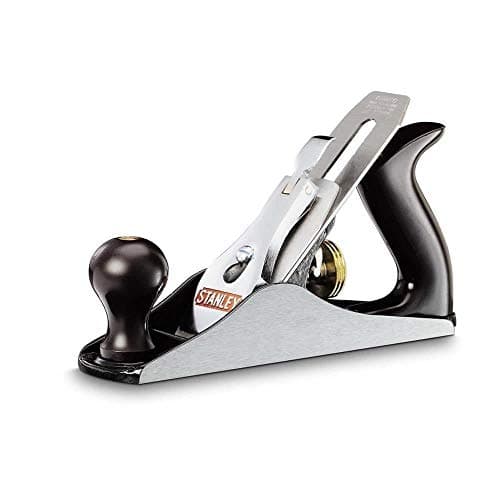
The current production Bailey is the same architecture as the plane your grandfather owned, at a price that leaves room in the budget for a stone. It needs more fettling than the Sweetheart and rewards it.
The pattern everything else copies, at half the Sweetheart price
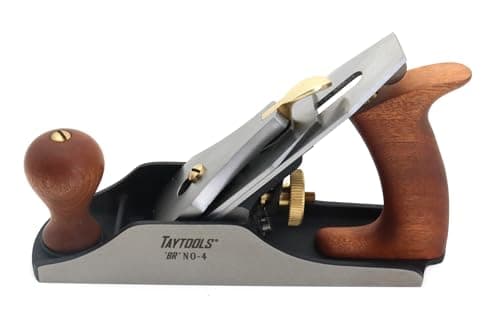
A Bedrock-pattern frog on a ductile cast body at roughly half the price of the premium options. The frog design is the meaningful part: it beds the iron along its full length, which is what kills chatter.
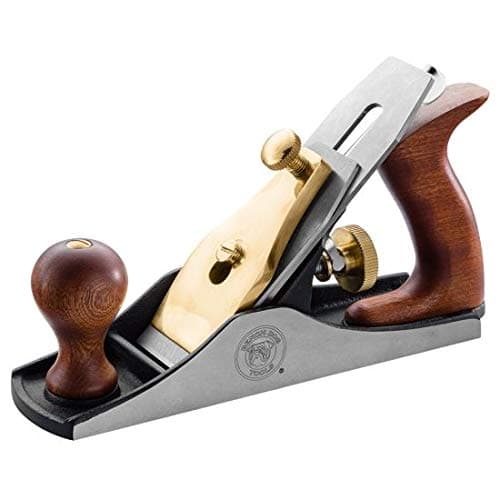
A ductile cast body, a solid brass cap iron and an adjustable frog at the middle of this price range, and the only plane on this page that ships with a Certificate of Inspection recording that individual plane's sole flatness and blade hardness. What it does not ship with is a warranty.
The only plane here that arrives with its own measurements
#ad· Live prices from the Amazon Product API, as of October 21, 2026. Where we have no verified live price we show none, and the cost-per-decade figure is suppressed with it — we would rather leave a gap than print a number that has rotted.
This is the decision that most affects what a beginner spends, and it is usually presented as a matter of taste. It is not; it is an arithmetic problem with one soft variable, and the soft variable is whether you enjoy the work.
What the vintage route actually costs
A restorable Stanley Bailey No. 4 from a flea market, an auction site or a boot sale typically runs a fraction of a new plane's price, and prices vary far too much by region and venue for a number here to be honest. To that, add:
Restoration supplies— around $80 for a kit that will do several planes, so a fraction of that per plane. See the restoration kit.
A replacement iron, optionally— $40 to $80, and the single biggest improvement you can make to a vintage plane.
Your time— three to six hours for a first restoration, two for a later one.
All in, a restored vintage Bailey with a good modern iron lands well under what a mid-price new plane costs, and it is a better plane than most of them: the casting is thicker, the machining is often better, and the pattern has a century of documented service behind it.
Where vintage wins outright
Casting quality per dollar. Nothing new at the mid-price point matches a good pre-war casting for mass and stability, and mass is what damps vibration.
Documented longevity. These planes have already lasted a century. That is not a projection.
Parts. Bailey-pattern parts interchange across decades of production and are sold on the used market in quantity. A plane assembled from three donors is a normal thing to own.
The learning. Restoring a plane teaches you what a plane is: how the frog beds, what the chipbreaker does, why sole flatness matters. That knowledge makes every subsequent plane easier to set up, and it is the strongest argument for doing it at least once.
Where new wins outright
Time. A new plane needs the iron honed and it works. A vintage plane needs an evening. If your hours are worth more than the savings, buy new; this is not a moral question.
Certainty. A new plane is not going to have a hairline crack you did not spot. Vintage buying carries real risk, especially online where you cannot handle the tool.
Specific tools. Low-angle bevel-up planes, modern adjustable-mouth block planes and anything with a Bedrock-style frog are either scarce or expensive on the vintage market. If you want a No. 62, buy new.
Warranty.A vintage plane has none. Stanley's published limited lifetime warranty on current hand tools covers the original purchaser of a new tool; it does nothing for a plane bought at a flea market in 2026. Worth knowing before you assume the brand covers you.
The honest recommendation
Buy vintage if you enjoy the restoration process, you have more time than money, or you want to understand how planes work. Start with a Stanley Bailey No. 4 or No. 5; they are the most common, the best documented and the cheapest to make mistakes on.
Buy new if you want to be planing this weekend, you have limited time, or you specifically want a modern design like a low-angle jack. There is no shame in it and the plane will be good. Ranked options are on the bench plane roundup.
Do both, eventually. Most people who work seriously with hand tools end up with a mix, and the vintage ones are usually the ones they reach for.
What we would not do
Buy a vintage plane sight-unseen from a photograph as a first purchase. The two failure modes that make a plane scrap — a cracked casting and a deeply pitted iron near the edge — are exactly the two things a listing photograph will not show you. Buy your first one where you can pick it up. See buying used hand tools.
Every pick, in full
The write-ups
01The pattern everything else copies, at half the Sweetheart price
Size
No. 4 smoother, 9 in sole
Pattern
Bailey, bevel down
Bed angle
45 deg
Warranty
Limited lifetime, blades excluded
Stanley Bailey No. 4 Smoothing Plane
Stanley
7.5/10
The current production Bailey is the same architecture as the plane your grandfather owned, at a price that leaves room in the budget for a stone. It needs more fettling than the Sweetheart and rewards it.
Cost per decade
$32.24
Horizon · tier A
30 years — Lifetime warranty, cited
Stanley publishes a limited lifetime warranty on hand tools against material and workmanship defects. Note it excludes consumables including 'any blade' — the casting is covered, the iron is not. Bailey-pattern irons are a standard size and replacements are widely sold.
Rebuy risk
Low
lifetime warranty, parts listed, resharpenable
Sole & body
7.0
Iron & edge
6.5
Adjustment
8.0
Out of box
6.0
Parts & repair
9.0
Value
8.5
What it gets right
+Same warranty position as the Sweetheart at a much lower price
+Standard Bailey iron size, so a $40 aftermarket iron transforms it
+Every setup guide, video and parts diagram ever written applies to it
What it costs you
−Sole flatness out of the box is inconsistent and may need lapping
−Factory iron is thinner and softer than the Sweetheart's A2
−Tote and knob finish is functional rather than pleasant
Skip this if…
…you want to open the box and take a shaving. This is a plane you set up first; budget an evening.
A Bedrock-pattern frog on a ductile cast body at roughly half the price of the premium options. The frog design is the meaningful part: it beds the iron along its full length, which is what kills chatter.
Cost per decade
$59.99
Horizon · tier C
20 years — No lifetime warranty; parts purchasable and resharpenable
No lifetime warranty published at the date checked. The iron is a standard Bailey-pattern size, so aftermarket replacements from third-party makers are purchasable, and the body is a casting with no consumable part.
Rebuy risk
Medium
parts listed, resharpenable
Sole & body
8.5
Iron & edge
7.5
Adjustment
8.5
Out of box
7.5
Parts & repair
7.0
Value
9.0
What it gets right
+Bedrock frog geometry is the feature people pay a premium for elsewhere
+Sides lapped square, so it works on a shooting board out of the box
+Ductile iron body is less brittle than gray cast if it gets dropped
What it costs you
−No published warranty terms we could find, so it rates tier C not tier A
−Iron benefits from immediate honing; the factory grind is a shape, not an edge
−Brand has far less parts history behind it than Stanley
Skip this if…
…you want a documented lifetime warranty to point at. The tool is good; the paperwork behind it is not.
03The only plane here that arrives with its own measurements
Size
No. 4 smoother, 10 in sole
Iron
Carbon steel, approx 1/8 in, 55-60 HRC
Frog
Adjustable, bedded at 45 deg
Warranty
None published; 90-day retailer guarantee
Bench Dog No. 4 Smoothing Plane
Rockler
8.0/10
A ductile cast body, a solid brass cap iron and an adjustable frog at the middle of this price range, and the only plane on this page that ships with a Certificate of Inspection recording that individual plane's sole flatness and blade hardness. What it does not ship with is a warranty.
Cost per decade
$75.00
Horizon · tier C
20 years — No lifetime warranty; parts purchasable and resharpenable
No lifetime warranty published at the date checked. The iron is a standard Bailey-pattern size, so aftermarket replacements from third-party makers are purchasable, and the body is a casting with no consumable part.
Rebuy risk
Medium
parts listed, resharpenable
Sole & body
9.0
Iron & edge
7.0
Adjustment
8.5
Out of box
8.0
Parts & repair
7.5
Value
8.0
What it gets right
+Ships with a Certificate of Inspection giving the measured sole flatness and blade hardness for that plane
+Rockler publishes the sole flatness tolerance as 0.002 to 0.004 in, which almost nobody in this category does
+Adjustable frog closes the mouth for fine shavings without shimming
+Rockler lists a spare blade for it, so the wear part is purchasable
What it costs you
−Rockler publishes a 90-day satisfaction guarantee, not a lifetime warranty on the casting
−Blade is plain carbon steel at 55-60 HRC, softer than the A2 irons at this money
−Sold through one retailer, so availability depends on their stock
Skip this if…
…you are buying on warranty terms. This is the plane with the best published measurements on the page and the weakest published guarantee behind them.
We earn nothing on this one
The best No. 4 you can buy in North America is a Lie-Nielsen, and it is not sold on Amazon, so we earn nothing on it. Their product pages guarantee materials and workmanship for the life of the tool, and they maintain a full replacement-blade and parts catalog behind it, which for a lifetime tool is arguably the better signal of the two. Those terms and that parts catalog are published by Lie-Nielsen Toolworks.
Better value, usually. Better tool, sometimes — a good pre-war casting with a modern iron beats most new planes under $120. It costs you an evening of restoration and carries real buying risk.
How much does it cost to restore a hand plane?+
Around $80 of supplies that will do several planes, plus optionally $40 to $80 for a replacement iron, plus three to six hours the first time. All in, comfortably less than a mid-price new plane.
Which vintage plane should I buy first?+
A Stanley Bailey No. 4 or No. 5. They are the most common, the best documented and the cheapest to make mistakes on, and every setup guide ever written applies to them.
Is a vintage plane covered by any warranty?+
No. Stanley's limited lifetime warranty applies to the original purchaser of a current tool, not to a plane bought secondhand decades later. The argument for vintage is the century of demonstrated service, not the paperwork.
Should I buy a vintage plane online?+
Not as your first one. The two faults that make a plane scrap — a cracked casting and a deeply pitted iron — are the two things a photograph will not show. Buy the first one where you can pick it up.
We have not handled these tools. Nobody here has tested one, owned one, or taken one apart. Specifications come from the manufacturer or the retailer listing; warranty terms come from the maker's own warranty page; the cost-per-decade arithmetic is ours and reproducible. Where we could not verify a figure we say so on the page rather than quietly leaving it out. Read the full method.