Hand Planes
Jack Plane vs Jointer Plane
Both flatten and both joint, but a jointer's long sole makes an edge straight in a way a jack cannot.
We earn a commission when you buy through our Amazon links, at no extra cost to you. It never decides a ranking, and where the best tool in a class is one we earn nothing on, we say so and link it anyway. How this works.
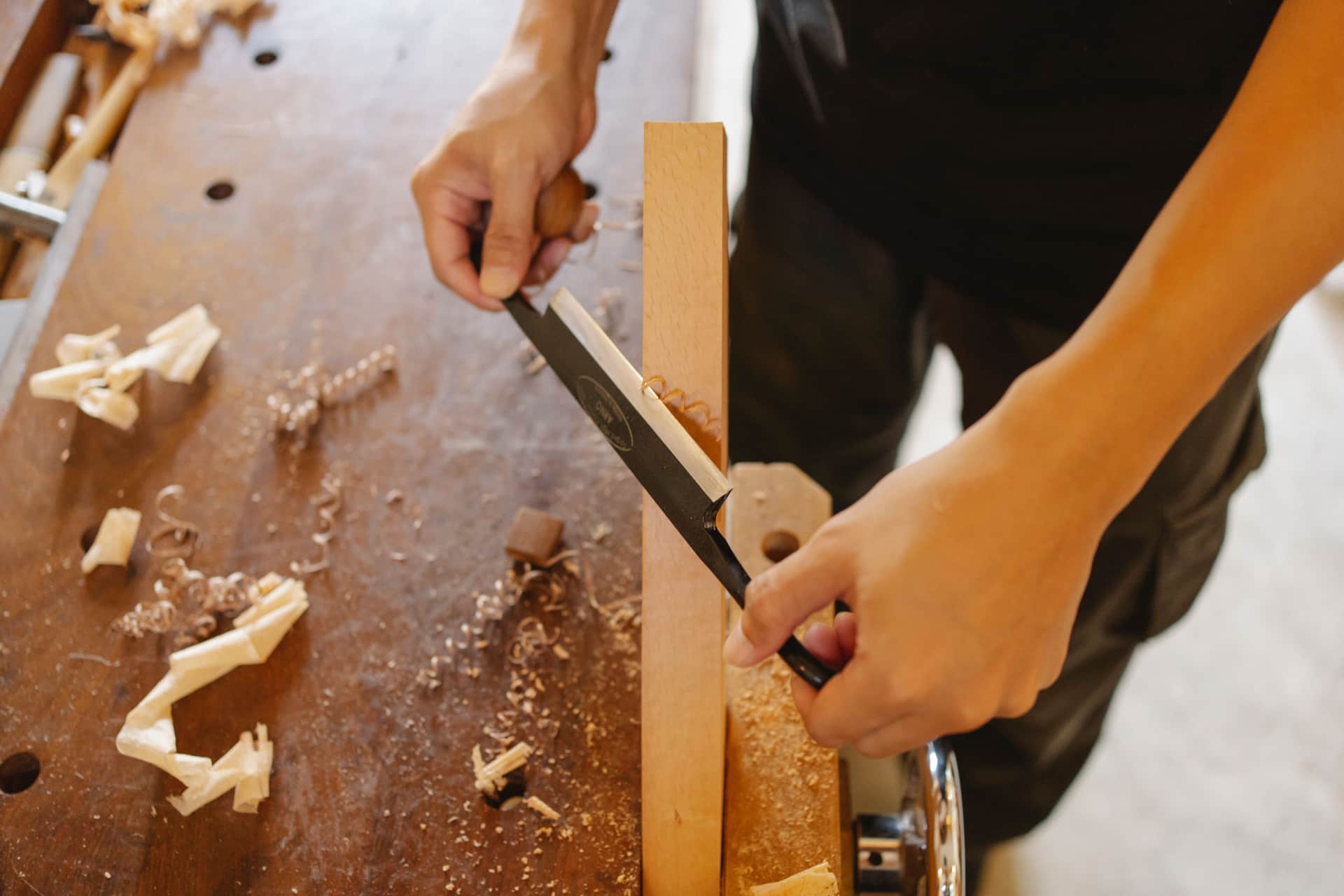
The jack (No. 5, about 14 inches, or the No. 6 fore plane at about 18) and the jointer (No. 7 at about 22 inches, or the No. 8 at about 24) sit next to each other in the numbering, and the difference between them is sole length doing the same thing more of. A jack is the general-purpose flattener; a jointer is a specialist for making long edges genuinely straight. Both can flatten and both can joint — but they are not equally good at either, and the reason is registration.
The lengths, and what each is for
| Plane | Rough length | Primary job |
|---|---|---|
| No. 5 jack | 14 in | General flattening, roughing, all-round work |
| No. 6 fore | 18 in | Long-ish flattening; a jack/jointer hybrid |
| No. 7 jointer | 22 in | Straightening long edges for glue-ups; truing wide panels |
| No. 8 jointer | 24 in | The same, for people who joint a great deal |
Registration: the reason length wins on an edge
A plane sole is a straightedge, and it can only make a surface as straight as itself is long. Push a long jointer down the edge of a board and it spans the whole length, ignores a shallow dip in the middle, and shears down the humps either side until the edge is straight from end to end. Push a short jack down the same edge and it registers on a smaller span, so it tends to follow the gentle curve already there — it flattens locally but does not straighten globally. That is the entire case for a jointer, and it is why an edge jointed with a long plane closes tight along its whole length against its mate while an edge jointed with a short one gaps in the middle or at the ends. The same length logic scales through the whole range in jack vs smoother vs jointer.
Flattening a face versus jointing an edge
These are two jobs and the length matters differently for each. Flattening a board face is forgiving of a shorter plane because you are working across and along the surface and can check with winding sticks as you go; a jack does it well, which is why it is the general flattener. Jointing an edge for a glue line is far less forgiving, because any curve you leave shows as a gap when the two boards meet, and the eye reads a glue line mercilessly. Edge-jointing is the job where the jointer earns its length and the jack starts to struggle.
When a jack substitutes for a jointer
Often enough that many woodworkers never buy a jointer. A No. 5 will joint edges on stock up to something like twice its own sole length with care, a little technique, and a check with a straightedge. A No. 6 fore plane splits the difference and covers most of what a home shop glues up. You reach the limit when the boards get long — joint a six-foot tabletop edge with a jack and the accumulated error becomes a visible gap. If you rarely glue up long panels, a jack plus care is a rational stopping point; if you glue up long edges routinely, the jointer stops being optional. Which sizes are worth owning at all is the whole subject of the best hand planes, and the step down from the jack to the smoother is set out in No. 4 vs No. 5 plane.
How you actually joint an edge
The technique matters as much as the plane, and it is worth spelling out because it is where the jointer earns its length. You set the board in a vise with the edge up, take full-length passes, and let the long sole find its own reference: as the plane rides the high spots it removes them, and with each pass the edge gets closer to a straight line the sole is happy to sit on. A useful refinement is the “spring joint” — deliberately taking a whisker more from the middle of a long edge than the ends, so the two boards touch first at the ends and pull tight in the clamps. You check as you go with a straightedge and by sighting, and you test the fit by standing the two boards together and looking for light. The plane does the flattening; your reading of the edge does the straightening.
Checking the edge as you go
A jointer only helps if you can tell whether the edge is actually straight, so the checking tools matter as much as the plane. A reliable straightedge laid along the edge shows a gap under its middle or its ends; sighting down the edge toward a light does the same by eye once you have the knack. The real test is the mating edge itself: stand the two boards together as they will be glued and look for light between them, then feel whether the joint rocks. For flattening a face rather than an edge, a pair of winding sticks — two straight battens laid across the board at each end — exaggerates any twist so you can see it. The plane removes the wood; these tools tell it where. None of them is expensive, and a good straightedge is one of the highest-value purchases a hand-tool woodworker makes, because you cannot correct an error you cannot see.
The No. 6 fore plane: the honest compromise
The plane both camps forget is the No. 6 fore plane, at around eighteen inches. It is long enough to joint most edges a home shop actually glues up and short enough to double as a heavy flattening plane, which makes it a genuine one-plane answer for someone who does not want to own both a jack and a jointer. It is heavier than a jack and less specialized than a jointer, so it is nobody's first plane, but as a single long plane to sit next to a smoother it is underrated and often cheap on the used market. Where it falls in the sequence is set out in plane numbers explained.
Bench length and the setup you need
One practical point is rarely mentioned: a long plane needs a long bench. To joint a board you need clear runout in front of the work for the plane to travel onto and off, so a two-foot jointer on a four-foot bench with a board clamped in the middle leaves you nowhere to go. The jack is far more forgiving of a small bench and a cramped shop, which is another quiet reason many home woodworkers stop at a jack and a straightedge rather than buying the jointer. If space is tight, that constraint may settle the question before technique does.
Which one, if you buy only one long plane
For most home shops the answer is the jack, backed by a straightedge and a little patience, because it covers general flattening and joints short-to-medium edges well enough. Buy the jointer when you have felt the jack fall short on a long glue line — that disappointment is a better guide than any rule, because it tells you exactly which length you were missing. If you want a single plane that leans longer without committing to a full jointer, the No. 6 is the compromise, as above.
The costs of the longer plane
A jointer is heavier, more tiring over a session, more expensive, and it takes real bench length to use — you need runout in front of and behind the work. It is also the least frequently used plane of the set: it comes out for glue-ups and goes back on the shelf. None of that is an argument against owning one if you joint long edges; it is an argument for buying it third, after the jack and the smoother, when a failed glue-up tells you exactly why you need it.
What actually decides it
Buying guide
Buy the jack first, always
The jack is the more versatile plane and the one you will use every session; the jointer is a specialist you add when the work asks for it. A common and sensible order is jack, then smoother, then jointer — the jointer being the purchase you make the day a long glue line disappoints you.
No. 7 or No. 8?
The No. 7 for almost everyone. The No. 8 is longer and heavier for marginally straighter results, and that extra mass is genuinely tiring. Unless you joint long edges all day, the No. 7 is the jointer to own and the No. 8 is a want, not a need.
Vintage is the value play here
Long planes are expensive new and heavy to ship, which is exactly why the second-hand market is kind to them: a vintage No. 7 in usable shape often costs a fraction of a new premium one and is a better casting. Budget an evening to true the sole and fit a good iron — the longer the sole, the more it matters that it is flat, so read how to flatten a plane sole before you commit.
Questions
Frequently asked
What is the difference between a jack plane and a jointer plane?
Sole length and job. A jack (No. 5, about 14 in) is the general-purpose flattener; a jointer (No. 7, about 22 in) is longer so it can make an edge straight from end to end for a glue-up. Both flatten, but only the jointer reliably straightens a long edge.
Can a jack plane be used as a jointer?
Up to a point. A jack will joint edges on shorter stock with care and a straightedge to check against, and many woodworkers never own a dedicated jointer. It falls short on long boards, where its shorter sole leaves a curve that shows as a gap in the glue line.
Do I need a jointer plane?
Only if you edge-joint long boards for glue-ups. If you buy stock wide enough for your work, or your glue-ups are short, a jack or a No. 6 fore plane covers it. Buy the jointer when a long glue line disappoints you.
Why does a longer plane make a straighter edge?
Because the sole is a straightedge that can only true a surface as long as itself. A long jointer spans a whole edge and cuts down the high spots, ignoring shallow dips; a short plane registers on a smaller span and follows the existing curve.
Is a No. 6 a jack or a jointer?
Neither exactly — the No. 6 is a fore plane, sitting between the two at about 18 inches. It flattens like a long jack and joints medium-length edges like a short jointer, which makes it a useful single compromise if you want one plane to do both.
Keep reading
Related
- Best jack planesThe jack side of this comparison, ranked and priced.
- Best jointer planesThe jointer side of this comparison, ranked and priced.
- Plane numbers explainedWhere the No. 5, 6, 7 and 8 sit, and what each length is for.
- Jack vs smoother vs jointerAll three bench sizes and why two of them is usually enough.
- The best hand planesWhich sizes are worth buying, ranked on cost per decade.
- No. 4 vs No. 5 planeThe step below the jack, and which plane to own first.
- What is a scrub plane?A scrub plane is built to remove wood fast and roughly, and everything about it is shaped to that one purpose.
Back to Hand Planes · how we pick · editorial policy