Finished stock is unforgiving: one torn fiber shows under paint forever. Five fine-cutting saws ranked for baseboard, casing, shoe molding and the flush cuts a power saw cannot make.
We earn a commission when you buy through our Amazon links, at no extra cost to you. It never decides a ranking, and where the best tool in a class is one we earn nothing on, we say so and link it anyway. How this works.
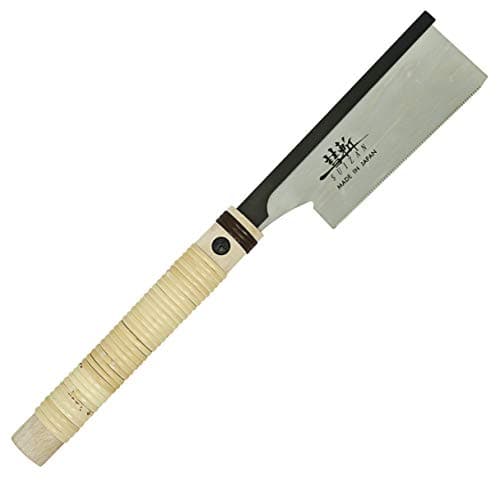
Japanese-pattern teeth from a company with a US distribution and parts presence, which solves the single most annoying thing about buying a pull saw: finding a blade for it later.
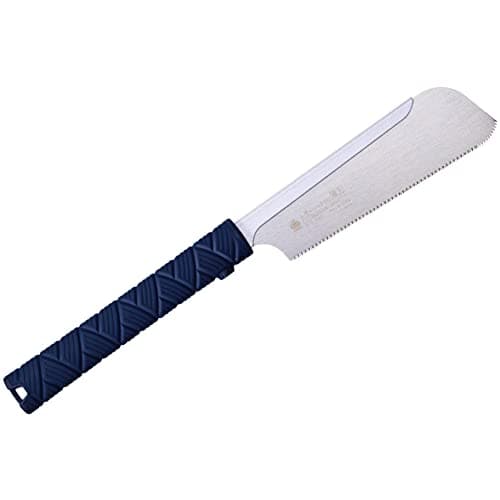
A stiffened back over a very thin crosscut plate. The kerf is narrow enough that the saw goes exactly where the knife line is, which is the whole job of a dovetail saw.
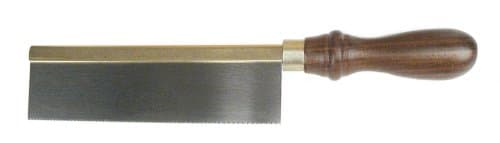
A traditional filed gents saw from Sheffield. It does not cut as cleanly out of the box as a dozuki, and unlike a dozuki you can put the teeth back for the rest of your life.
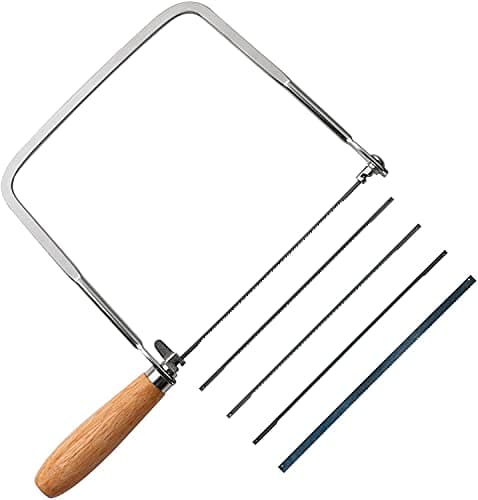
A Japanese frame that ships with five blades covering wood, board, plastic and metal, which is a more useful thing to own than one frame and one unspecified blade. KAKURI publishes almost nothing about the frame itself, and we are not going to pretend otherwise.
#ad· Live prices from the Amazon Product API, as of October 15, 2026. Where we have no verified live price we show none, and the cost-per-decade figure is suppressed with it — we would rather leave a gap than print a number that has rotted.
For trim work, buy the Shark Corp 10-2440 fine cut saw — a Japanese-pattern pull saw sold and supported in the US, which is the pick for anyone who wants one saw for casing, baseboard and shoe molding. If the work is finer than that — mitered returns, small moldings, anything where the cut face is the finished face — the SUIZAN 6 in dozuki cuts a narrower kerf and lands exactly on a knife line. And if you cope inside corners instead of mitering them, you need a coping saw in addition to either, not instead of them: the KAKURI set is the cheapest honest way to own one with blades.
Trim is its own buying problem because the tolerance is visual rather than dimensional. A 2x4 that is a millimeter short disappears inside a wall. A piece of casing that is a millimeter short is a gap at eye level that caulk will not hide, and a torn fiber at the end of a cut is a shadow under gloss paint for the life of the house. So the saw is chosen for three things that barely matter in framing: how fine the teeth are, how narrow the kerf is, and whether the saw can be held tight against a finished surface without marking it.
What decides it
We have not cut trim with any of these. We opened each maker's and retailer's own listing, recorded only what they publish, cited it below, and ranked on that. The method is on the methodology page.
Fine crosscut teeth, which is the whole category. Trim cuts are almost always across the grain in softwood, MDF or a finger-jointed pine profile, and the finer the tooth the less it tears on exit. Everything on this page is a fine crosscut pattern; what varies is how much support the plate has behind it.
Backed or unbacked. A dozuki and a gents saw have a stiffened spine, which keeps the cut dead straight and limits how deep it can go. For trim that limit is rarely a problem — a piece of casing is under an inch thick — and the accuracy is worth a great deal. An unbacked pull saw like the Shark gives up some of that straightness and gains the ability to cut anything of any depth, including flush against a wall or a floor where no backsaw will fit. What is a backsaw covers the mechanism and what is a flush cut saw covers the one pattern that is specifically designed to cut against a surface without scratching it.
Can you get a blade for it later? Every impulse-hardened pull saw on this page has teeth no file will touch, so the question is whether the blade is a catalog item. SUIZAN sells replacement blades directly for its saws, which is why the dozuki rates as a long-horizon tool. Gyokucho's entry dozuki is the opposite case — its own cons note that US replacement-blade availability for that specific model is patchy. Shark's argument is distribution: a US parts presence is the thing that makes a pull saw a tool rather than a disposable.
Or can the teeth be refiled forever? Exactly one saw here says yes. The Crown 187 gents saw is a traditionally filed Sheffield backsaw: out of the box it does not cut as cleanly as a dozuki, and unlike a dozuki you can put its teeth back for the rest of your life. That is the buy-it-for-life trade in this category stated in one sentence.
What the makers publish
Saw
Pattern
Teeth
Renewable?
Shark Corp 10-2440
Unbacked pull saw, fine cut
Fine Japanese pattern
Replaceable blade, US supply
SUIZAN dozuki, 6 in
Backed pull saw
Fine crosscut
Replacement blades sold direct
Gyokucho dozuki 770-3500
Backed pull saw
Fine crosscut, impulse hardened
Blade supply patchy in the US
Crown 187 gents saw
Backed push saw, 8 in
Filed, resharpenable
Yes — refile indefinitely
KAKURI coping saw set
Frame saw
5 blades included; TPI not published
Yes — universal blades
The KAKURI row is the one to read carefully, because it is the thinnest published spec sheet on the page: no throat depth, no frame dimensions, no blade TPI. We have it here on the strength of the five included blades and the brand, and we would rather say that out loud than dress it up. If you want a frame saw chosen on published numbers, the coping saw roundup ranks the class properly.
Coping an inside corner, and why it needs its own saw
Inside corners in baseboard and crown are the part of trim carpentry that separates tidy work from the kind that opens up in February. A mitered inside corner relies on the wall being exactly 90 degrees and on nothing moving afterward; neither is true. A coped joint — one piece run into the corner square, the second cut to the reverse profile of the first — closes as the wood moves, and it is cut with a coping saw following the profile line left by a 45 degree cut. That is a job no miter saw can do and no backsaw can follow, which is why the coping saw is on a trim list rather than a joinery one. Coping saw vs fret saw covers the difference between the two frames people confuse here.
What is not on this page
Miter boxes and miter saws. A power miter saw is the right tool for repetitive angled crosscuts in trim and we are not going to pretend otherwise. What it cannot do is cut flush to a wall, follow a coped profile, or make one careful shaving-thin adjustment to a piece already fitted — which is why a trim carpenter carries hand saws as well.
Dovetail saws, as such. Several of these saws are the same tools that appear in the dovetail saw roundup, because a fine backed crosscut saw is a fine backed crosscut saw. The ranking differs because the job does: depth of cut and flush access matter here, and absolute kerf width matters less.
Hardpoint toolbox saws. Too coarse. They are the right answer for framing lumber and the wrong one for anything that will be painted.
Sheet goods, which are a different problem. Plywood, MDF and melamine fail by tearing a thin face veneer rather than by splitting along a grain direction, so the tooth counts that suit solid trim are near the coarse limit of what a veneered face tolerates, and tooth set starts to matter as much as TPI. The best hand saws for plywood ranks for that material, and two of the saws here appear on it for the same reasons they appear here.
Every pick, in full
The write-ups
01A pull saw sold and supported in the US
Type
Fine cut, Japanese pattern
Model
10-2440
Blade
Replaceable
Action
Pull stroke
Shark Corp 10-2440 Fine Cut Saw
Shark Corp
8.1/10
Japanese-pattern teeth from a company with a US distribution and parts presence, which solves the single most annoying thing about buying a pull saw: finding a blade for it later.
Cost per decade
$15.93
Horizon · tier C
20 years — No lifetime warranty; parts purchasable and resharpenable
The teeth are impulse-hardened and cannot be filed, so the blade is a consumable — but the maker sells replacement blades directly for this model. The handle and spine are the durable part; the blade is a scheduled purchase, not a failure.
Rebuy risk
High
parts listed
Cut quality
8.0
Blade life
8.0
Control
7.5
Renewability
8.5
Value
8.5
What it gets right
+Replacement blades are easy to find in the US
+Cuts cleanly for trim, flush cuts and general fine work
+Long-established model with a stable blade format
What it costs you
−Not as refined a cut as a Gyokucho or SUIZAN
−Handle is utilitarian
−Unsharpenable teeth
Skip this if…
…you want the finest cut available. Buy the dozuki; this is the practical choice, not the best one.
A stiffened back over a very thin crosscut plate. The kerf is narrow enough that the saw goes exactly where the knife line is, which is the whole job of a dovetail saw.
Cost per decade
$19.40
Horizon · tier C
20 years — No lifetime warranty; parts purchasable and resharpenable
The teeth are impulse-hardened and cannot be filed, so the blade is a consumable — but the maker sells replacement blades directly for this model. The handle and spine are the durable part; the blade is a scheduled purchase, not a failure.
Rebuy risk
High
parts listed
Cut quality
9.5
Blade life
8.0
Control
9.5
Renewability
8.0
Value
9.0
What it gets right
+Kerf narrow enough to split a knife line reliably
+Replacement blades sold by the maker
+6 inch is the right length for drawer-scale dovetails
What it costs you
−The back limits depth of cut absolutely
−Impulse-hardened teeth cannot be filed
−The thin plate is unforgiving of a forced stroke
Skip this if…
…you cut deep tenons. The spine will bottom out and there is no way around it.
03The cheapest saw here that cuts a clean dovetail
Type
Dozuki, backed
Teeth
Fine crosscut, impulse hardened
Model
770-3500
Action
Pull stroke
Gyokucho Razor Dozuki Saw with Blade
Gyokucho
7.5/10
Under twenty dollars for a saw that will cut joinery accurately. There is no comparable western backsaw at this price, and it is not close.
Cost per decade
$18.15
Horizon · tier D
10 years — No warranty and no parts availability found
Impulse-hardened teeth cannot be resharpened, and we could not find a replacement blade listing for this model at the date checked. When the teeth go, the saw goes — which is what the rating below is telling you.
Rebuy risk
High
none of the three met
Cut quality
8.5
Blade life
7.0
Control
8.5
Renewability
4.0
Value
9.5
What it gets right
+Extraordinary value; nothing western competes at this price
+Genuinely accurate for joinery straight out of the packet
+Cheap enough that a kinked plate is annoying rather than expensive
What it costs you
−Handle is basic
−Replacement blade availability for this specific model is patchy in the US
−Not a saw anyone hands down
Skip this if…
…you are buying for life. Buy this to learn on and a better one when you know what you want.
A traditional filed gents saw from Sheffield. It does not cut as cleanly out of the box as a dozuki, and unlike a dozuki you can put the teeth back for the rest of your life.
Cost per decade
$20.18
Horizon · tier C
20 years — No lifetime warranty; parts purchasable and resharpenable
No lifetime warranty published at the date checked. The teeth are filed rather than impulse-hardened, so they can be resharpened and reset by hand indefinitely — the reason nineteenth-century saw plates are still in working use.
Rebuy risk
Medium
parts listed, resharpenable
Cut quality
7.5
Blade life
9.5
Control
8.0
Renewability
9.5
Value
8.0
What it gets right
+Filed teeth can be sharpened and set indefinitely by hand
+Genuinely a lifetime tool rather than a lifetime handle
+Straight turned handle suits a light, controlled grip
What it costs you
−Out of the box it needs the teeth dressed to cut at its best
−Cuts a wider kerf than any dozuki
−The straight handle is a preference; some people hate it
Skip this if…
…you have no intention of learning to sharpen a saw. Unsharpened, this is worse than a fifteen-dollar dozuki forever.
A Japanese frame that ships with five blades covering wood, board, plastic and metal, which is a more useful thing to own than one frame and one unspecified blade. KAKURI publishes almost nothing about the frame itself, and we are not going to pretend otherwise.
Cost per decade
$9.40
Horizon · tier C
20 years — No lifetime warranty; parts purchasable and resharpenable
No lifetime warranty published for this frame at the date checked. What sets the horizon instead is that the consumable is a 6-1/2 in pin-end blade — an industry-standard size carried by Bahco, Olson, Stanley and a dozen generic sellers at a few dollars per pack — so the part that wears out can always be bought, from somebody, at a price that does not matter. There is nothing else on the tool to consume: a frame, a tension screw and a handle.
Rebuy risk
High
parts listed
Cut quality
7.0
Blade life
7.5
Control
7.0
Renewability
8.5
Value
8.5
What it gets right
+Ships with five blades for different materials, so the first job does not need a second purchase
+From a named Japanese tool maker with a long catalog rather than an anonymous seller
+Priced below the Bahco while including the blade pack the Bahco does not
What it costs you
−KAKURI publishes no throat depth, no frame material detail and no blade TPI for this set — the thinnest published spec sheet on the page
−No warranty terms published anywhere we looked
−Blade changes are by the handle-turn method, with the same repeatability problem as the Stanley
−The included blades are a mixed assortment, which means some of them are not for woodworking at all
Skip this if…
…you want to know what you are buying before it arrives. This is the one frame here we are recommending partly on the brand's reputation, which is weaker evidence than a spec sheet.
One saw for general trim and finish carpentry: the Shark Corp 10-2440. Fine teeth, no back to limit depth, replaceable blade, and a US distribution presence that solves the most annoying thing about owning a pull saw.
Small moldings, returns and anything cut to a knife line: the SUIZAN 6 in dozuki. The narrowest kerf here and the best control, with replacement blades sold directly by the maker. The back limits depth absolutely, which on trim almost never matters — what is a dozuki saw explains the trade.
The cheapest saw here that still cuts accurately: the Gyokucho 770-3500 dozuki. Under twenty dollars for a saw that will cut a clean joint. Buy it knowing the blade supply for this model is uncertain, which is in its cons and is the reason it is not higher.
You want a saw your grandchildren could use: the Crown 187 gents saw. Filed teeth you can renew forever, Sheffield-made, and a straight handle that people either love or cannot get on with. It needs its teeth dressed to cut at its best, and if you will not do that, buy a dozuki instead — unsharpened, this is worse than a cheap pull saw.
Coped inside corners: the KAKURI coping saw with five blades. Not a substitute for one of the saws above — an addition to it.
Getting a clean cut in finished stock
Score the line first. A knife line severs the surface fibers before the teeth get to them, which is the single biggest difference between a cut that needs sanding and one that does not. On primed or painted trim it also stops the finish chipping at the edge of the kerf.
Mind which face tears. Teeth tear on exit. A push saw tears the underside; a pull saw tears the top. Orient the piece so the face that will be seen is the face the teeth enter.
Back the cut up. A scrap of the same material clamped behind the cut gives the exit fibers something to push against. For a mitered return this is the difference between a crisp point and a crumbled one.
Cut long, then fit. Trim is fitted, not measured — cut a hair long, offer it up, and take the last fraction off with a block plane rather than the saw. A plane removes 0.1 mm on command; no saw does.
Keep the plate clean. Paint, caulk and construction adhesive build up on a saw plate and make it drag in the cut, which feels exactly like a dull saw and is not. Wipe it; a dry plate cuts straighter.
Cost per decade in a category built on consumables
Three of these five saws are a handle plus a blade subscription, one is a filed tool you can maintain forever, and one is a frame that takes universal blades. That is the whole per-decade picture, and it does not track price. SUIZAN's replacement blades make its dozuki a long-horizon purchase at a modest price; Gyokucho's entry dozuki is cheaper and is honestly a learn-on-it tool, with a one-month warranty on blades being the only published cover anywhere in this class. The Crown is the only saw here with no scheduled repurchase at all — a file, a saw set and twenty minutes a year, forever — which is the argument what makes a tool buy-it-for-life makes in general and this page makes in miniature.
One more practical note on horizons: a coping saw frame outlives everything on this page, because the only part that wears is a blade that costs almost nothing and fits every frame ever made. If you want the cheapest tool here that will still be working in forty years, it is the frame saw.
Questions
Frequently asked
What hand saw is best for cutting trim?+
A fine crosscut pull saw for general work — the Shark 10-2440 here — and a backed dozuki for small moldings and mitered returns where the cut face is the finished face. Anything coarser than about 15 teeth per inch will tear the exit fibers on painted or primed stock.
Do I need a coping saw for baseboard?+
For inside corners, yes, if you want to cope them rather than miter them — and coping is the joint that stays closed when the house moves. For outside corners and scarf joints you do not: those are straight angled cuts a backsaw or a miter saw makes better.
Why does my trim splinter at the end of the cut?+
Because the last fibers have nothing supporting them and the teeth lever them off instead of cutting them. Three fixes, all cheap: score the line with a knife first, orient the piece so the teeth enter the show face, and clamp a scrap behind the cut. The saw is rarely the problem.
Can I use a dovetail saw for trim?+
Yes — a dozuki or a gents saw is a fine backed crosscut saw regardless of what the packaging calls it, and several of the saws on this page also appear in our dovetail roundup. The only limitation is depth: the stiffening back stops the cut at an inch or so, which is fine for casing and shoe and not enough for a thick stair tread.
Push saw or pull saw for finish work?+
Pull, for most people, most of the time: the thinner plate cuts a narrower kerf with less force and is easier to steer along a line. Push saws keep two advantages — you can refile a traditionally filed one forever, and a stiff western plate is less easily kinked. Our Japanese vs western saws page works through the whole trade.
We have not handled these tools. Nobody here has tested one, owned one, or taken one apart. Specifications come from the manufacturer or the retailer listing; warranty terms come from the maker's own warranty page; the cost-per-decade arithmetic is ours and reproducible. Where we could not verify a figure we say so on the page rather than quietly leaving it out. Read the full method.