Hand Saws
What Is A Backsaw?
One design decision defines the whole family: a folded spine over a thin plate. It buys precision, and it costs you depth of cut.
We earn a commission when you buy through our Amazon links, at no extra cost to you. It never decides a ranking, and where the best tool in a class is one we earn nothing on, we say so and link it anyway. How this works.
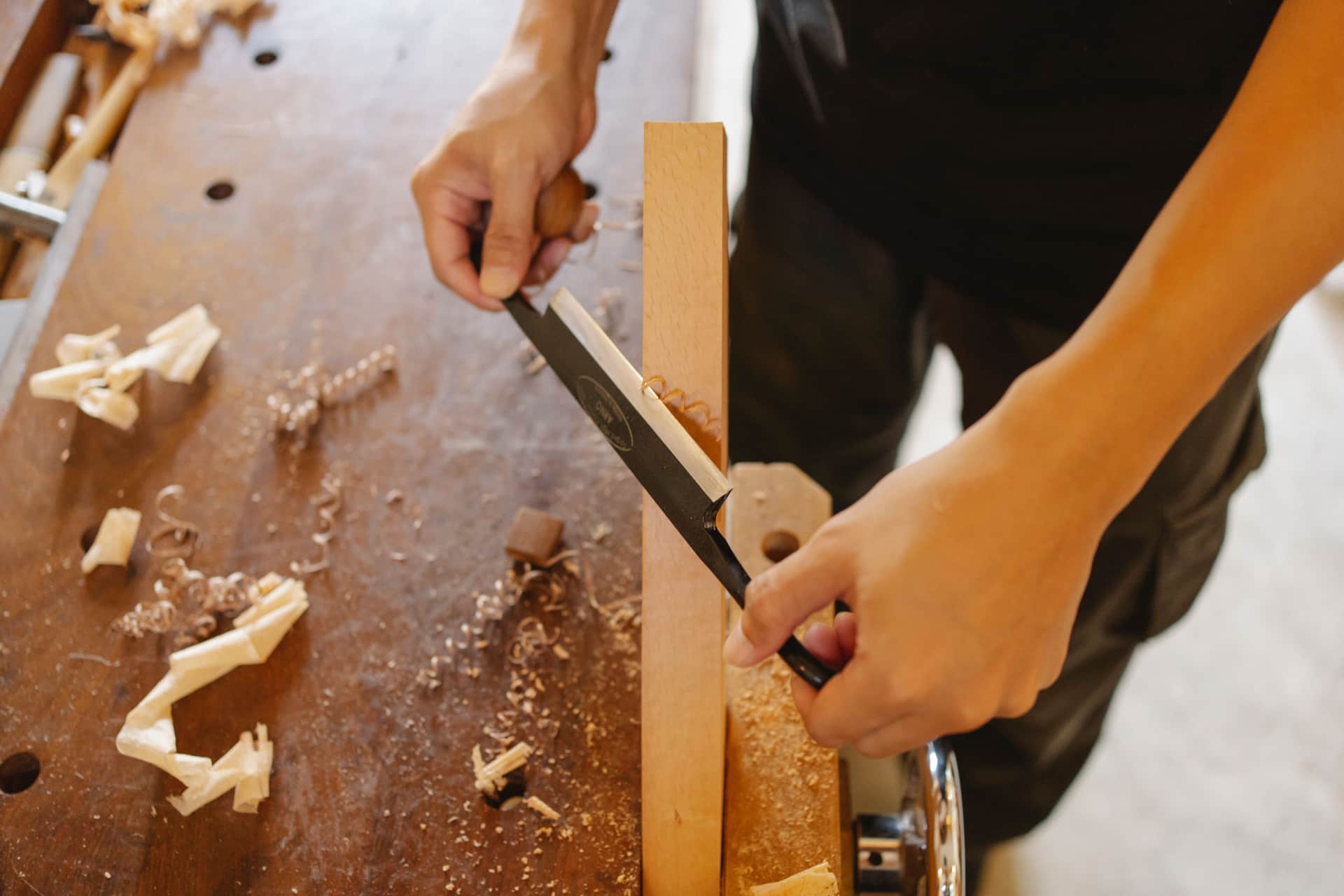
A backsaw is any saw with a folded strip of brass or steel running along the top edge of the blade. That spine is the entire defining feature, and every backsaw — dovetail, carcass, tenon, sash, gents — is a variation on it. Understand what the back does and you understand the whole family, including its one unavoidable limitation.
What the back is for
A thin saw plate cuts a narrow kerf, removes less wood, and takes less effort. Those are all good things and they are exactly why you would want a thin plate for joinery. The problem is that a thin plate on its own is floppy: it flexes, wanders, and cannot be steered to a line.
The back solves that. A rigid spine folded over the top of the plate holds it dead straight and stiff, which lets you use a plate far thinner than an unbacked saw could, and steer it precisely. In short, the back is what makes a thin, narrow-kerf, accurate saw possible. It is the reason backsaws are the joinery saws of the western tradition.
The spine also adds weight right over the cut, which helps the saw settle into the kerf and track under its own mass rather than needing you to press — and pressing, as always, is what makes a thin plate wander. A backed saw wants an even lighter hand than a panel saw.
Why the back limits depth
Here is the catch, and it is not a flaw so much as a direct consequence of the design. Because the spine sits on top of the plate, you can only saw until the spine reaches the surface of the wood. The maximum depth of cut is the distance from the teeth to the underside of the back, and no technique gets you past it — the spine simply bottoms out against the workpiece and the saw stops.
On the joints backsaws are built for, this never matters: dovetails and tenon shoulders are shallow. It matters enormously if you try to use one for the wrong job. This is the single trade at the heart of the whole saw world — rigidity and accuracy versus unlimited depth — and it is why unbacked panel saws and Japanese unbacked saws exist alongside backsaws. The full map is on saw types compared.
Set, and why joinery saws have so little
The teeth of any saw are bent slightly outward in alternating directions — the set— so the kerf they cut is a little wider than the plate and the saw does not bind in its own cut. On a backsaw the set is deliberately tiny, because a joinery saw wants the narrowest possible kerf and the stiff back keeps the plate tracking straight even so. That near-zero set is part of why a fine backsaw cuts such a clean, thin line, and it is also why forcing one sideways to steer a cut is a mistake: there is very little clearance, so the plate binds and flexes the moment you push it off its own track.
Where the design comes from
The backsaw is an old idea and a settled one. Once woodworkers wanted to cut joints to a line rather than just cut boards to length, they needed a saw thin enough to be accurate and stiff enough to steer, and folding a strip of metal over the top of the plate solved both at once. The Sheffield saw industry refined the form through the nineteenth century into the dovetail, carcass, sash and tenon sizes still used today, and the Japanese arrived at the same solution independently in the dozuki. That two traditions on opposite sides of the world both put a stiffening back on their finest joinery saws is a good sign the idea is sound rather than fashionable.
The family
All of these are backsaws. They differ only in length, plate depth, tooth count and handle.
- Dovetail saw. The smallest and finest. Shallow plate, very high tooth count, for cutting small joints to a line.
- Gents saw. A dovetail saw with a straight turned handle in line with the blade, rather than a pistol grip. A grip preference, not a different tool.
- Carcass saw. A step up in size, usually crosscut-filed, for joinery-scale crosscuts and small shoulders.
- Tenon saw. Larger and deeper again, for the shoulders and cheeks of mortise-and-tenon joints.
- Sash saw. A traditional name for a mid-size backsaw between carcass and tenon, originally for window-sash joinery.
- Dozuki.The Japanese backsaw — a stiffening spine over an exceptionally thin pull-saw plate. Same idea, taken further, because the pull stroke lets the plate be thinner still.
The distinction that trips people up is dovetail versus tenon, because they overlap in the middle sizes; that specific choice is worked through on tenon saw vs dovetail saw.
Brass versus steel backs
You will see both, and the practical difference is smaller than the marketing suggests. Brass is denser than steel, so a brass back of the same size adds a little more weight over the cut, which some people prefer for the way it settles the saw. Brass also does not rust and looks the part, which is a real reason it endures on premium saws.
Steel backs are lighter, cheaper, and perfectly functional. The back's job is to be stiff and hold the plate straight, and steel does that as well as brass does. If a saw has a brass back, treat it as a mild preference and a durability nicety, not a performance feature. What matters far more is that the back is tightly fitted to the plate and the plate is straight; a loose or kinked back is a real fault, and the material of the spine is not.
How to use a backsaw well
The same rules as any saw, only more so, because the plate is thin and the cut is meant to be precise. Start the kerf with a couple of light draw strokes, guiding the plate against your thumb, and keep almost no downward pressure — the weight of the plate and the back is enough. Get your eye directly over the cut so you can see the plate leaning, and let the saw find its own line rather than steering it. If the cut drifts, ease off and correct gently over several strokes, or back out and restart; twisting a backed plate to haul it back is how you kink it. Use the full length of the blade in long, unhurried strokes rather than short scrubbing ones. The starting technique carries over from using any hand saw, but a backsaw punishes a heavy hand faster than a panel saw does.
Buying a backsaw: new or used
New backsaws span a huge range, from a few dollars to premium hand-made saws, and price mostly tracks the plate, the fit of the back, and the handle. A budget saw with filed teeth usually cuts well once its teeth are dressed; a hardpoint budget saw cuts adequately out of the box but cannot be sharpened. At the top end you are paying for a precisely ground plate, a snug back and a comfortable handle — real things, but not things a beginner needs before learning to saw.
Used is often the value play. A vintage backsaw with a straight plate and a well-seated back is frequently a better tool than a new budget one for the same money, and filed teeth can be re-cut to as-new. Check two things before buying: sight down the plate for kinks, and make sure a backed saw's spine has not slid along the plate. Both are dealbreakers; rust and a dull edge are not.
Looking after a backsaw
A backsaw asks for little. Keep the plate lightly oiled or waxed so it does not rust, and store it hanging or sheathed rather than loose in a drawer where the fine teeth chip against other steel. If it is a filed saw, learn to sharpen it — see how to sharpen a hand saw— a routine touch-up is a short job that returns the saw to cutting like new, and it is the entire reason a filed backsaw is a lifetime tool. Keep the handle screws snug; a loose handle feeds play into the cut. Treated this way, a good backsaw genuinely outlives its owner.
Common problems, and what they mean
- It binds in the cut. Usually too little set for the wood, or you are steering the plate off its track. Let it run straight; a persistently binding saw may need setting.
- A kinked plate.From forcing or twisting. A slight kink can sometimes be worked out, but a bad one means the saw will never cut straight — the reason never to steer a thin plate.
- A loose or slipped back. The plate wobbles or the line wanders. The back has to grip the plate tightly along its whole length; a slipped back can be reseated but is the mark of a hard life.
- It cuts on a slant.Almost always technique — your eye is off to one side, or the set is uneven from a poor sharpening. Check your stance before blaming the saw.
When to reach for a backsaw
Any time accuracy matters more than depth: cutting joints, trimming to a knife line, small crosscuts where the face will show. The narrow kerf and the stiffness are what let you cut to a line, and no unbacked saw matches a backsaw for controlled, shallow, accurate work.
Reach for something else when you need to cut deeper than the spine allows — breaking down boards, deep rip cuts, big tenons on thick stock — where an unbacked panel saw or a Japanese pull saw is the right tool. Most hand-tool woodworkers end up owning at least one backsaw for joinery and one unbacked saw for everything deeper, and the ranked backed options are on the best dovetail saws.
Questions
Frequently asked
What is a backsaw used for?
Accurate, shallow cuts where you are cutting to a line — joinery like dovetails and tenon shoulders, small crosscuts, and trimming. The stiffening spine lets the plate be thin and steerable, which is what makes cutting to a knife line possible.
Why does a backsaw have a limited depth of cut?
Because the spine sits on top of the plate, you can only saw until the spine reaches the surface of the wood. The maximum depth is the distance from the teeth to the underside of the back, and no technique gets you past it. For deeper cuts you need an unbacked saw.
Is a brass back better than a steel back?
Only marginally, and mostly for feel. Brass is denser so it adds a little weight over the cut and it does not rust, but the back's job is just to hold the plate stiff and straight, which steel does equally well. A tight, straight fit matters far more than the material.
What is the difference between a backsaw and a panel saw?
A backsaw has a stiffening spine and cuts shallow, accurate joinery. A panel saw is longer, unbacked and coarser, for breaking boards down to size. The spine buys accuracy and costs depth; a panel saw trades accuracy for unlimited reach.
Is a dovetail saw a backsaw?
Yes. A dovetail saw is the smallest and finest member of the backsaw family — a shallow plate with a high tooth count and a spine over the top. So are carcass, tenon, sash and gents saws, and the Japanese dozuki.
Keep reading
Related
- Tenon saw vs dovetail sawThe two family members people confuse, sorted by size.
- Saw types comparedWhere the backsaw sits among every other saw.
- The best dovetail sawsThe finest backsaws, ranked on kerf and control.
- The best tenon sawsThe bigger brass-backed saws, ranked on the back, the handle fixing and the teeth.
- Saw TPI explainedThe tooth counts that separate one backsaw from the next.
Back to Hand Saws · how we pick · editorial policy