Skip to content
PLANE & PATINA
Menu

Hand Planes

Jorgensen Block Plane, Reviewed

An adjustable mouth and a heavy O1 iron at a price where neither normally exists. The interesting part is the paperwork, and it cuts both ways.

By Stephen V.Last reviewed How we pick
#ad

We earn a commission when you buy through our Amazon links, at no extra cost to you. It never decides a ranking, and where the best tool in a class is one we earn nothing on, we say so and link it anyway. How this works.

The short answer

Quick picks

#ToolBest forPer decadeScorePrice
01
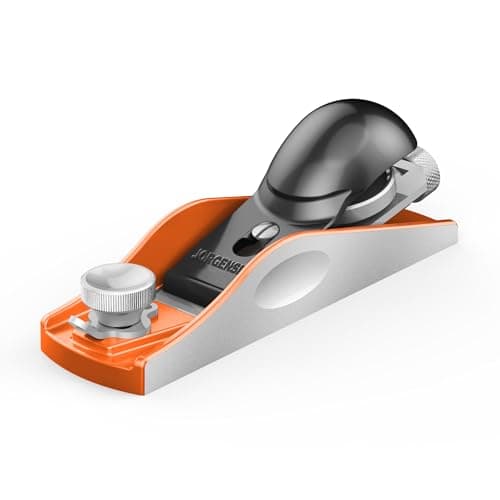
Jorgensen Jorgensen No. 60-1/2 Low Angle Block Plane
Jorgensen No. 60-1/2 Low Angle Block Plane

A ductile-iron 60-1/2 with an adjustable mouth and a 3 mm O1 iron, at a fraction of what that combination costs anywhere else on this page. The mouth adjustment is the feature this list is ranked on, and this is the cheapest honest way to get it.

The adjustable mouth at the lowest price it exists for$21.49tier C$42.98Amazon
02
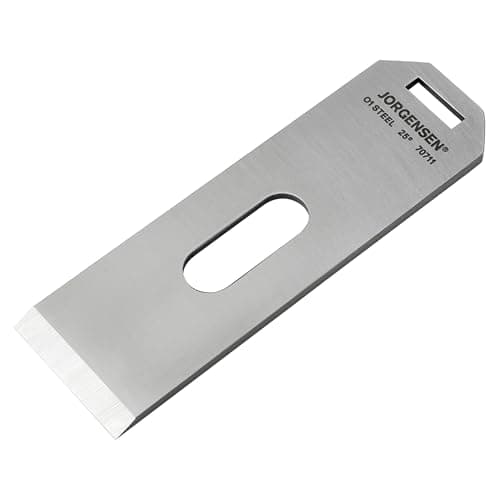
Jorgensen Jorgensen Replacement Block Plane Blade, O1, No. 60-1/2
Jorgensen Replacement Block Plane Blade, O1, No. 60-1/2

The same published specification as the bench blade above, in block plane width: O1 at Rockwell 60-64, 3 mm thick, 35 mm wide, ground at 25 degrees. A stock block plane iron is usually the thinnest, softest part of a cheap block plane, which makes this the highest-leverage few dollars in the category.

The only block plane iron here whose maker publishes a hardness$6.49tier C$12.98Amazon
03
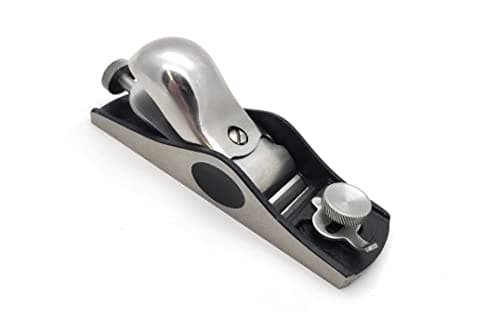
Taytools Taytools #9-1/2 Low Angle Block Plane
Taytools #9-1/2 Low Angle Block Plane

Adjustable mouth, stainless knuckle cap and adjustment screws, and a bed low enough to handle end grain properly. The stainless hardware is the detail that matters in a tool that lives in a pocket.

Best block plane overall$46.49tier C$92.99Amazon
04
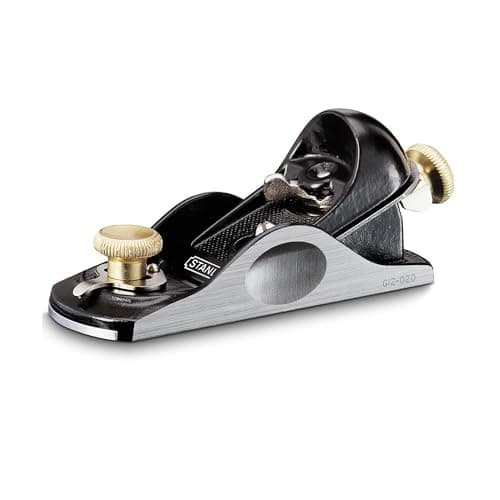
Stanley Stanley No. 9 Block Plane (1-12-020)
Stanley No. 9 Block Plane (1-12-020)

Compact, unfussy, and covered by the same warranty as the rest of the range. Not a joinery tool, and does not pretend to be.

A pocket plane that survives a job site$19.33tier A$57.98Amazon

#ad· Live prices from the Amazon Product API, as of October 16, 2026. Where we have no verified live price we show none, and the cost-per-decade figure is suppressed with it — we would rather leave a gap than print a number that has rotted.

A note on what this is first. We have not planed anything with this tool. This is a review of what Pony Jorgensen publishes about it, what Pony Jorgensen publishes about its warranty and its spare parts, and how both compare against the other block planes the site has researched — plus the live price, which is the only number here we did not have to go looking for. The full method is on the methodology page, and it says in those words that we have no lab and no shop.

The No. 60-1/2 is the pattern number for a low-angle block plane with an adjustable mouth. It is one of the most useful tools in a hand-tool kit and the one most people buy first, for a reason block plane vs bench plane covers properly: it fits one hand, it lives in an apron pocket, and it does the hundred small jobs — easing an edge, trimming a plug, fitting a drawer, cleaning end grain on a tenon shoulder — that make up most of a working day. Jorgensen's version costs roughly half what the better-finished planes in the class do, and the question this page answers is what that halving actually costs you.

What Jorgensen publishes, and what it does not

Four things are on the product page, and all four are unusual at this money.

The body is ductile iron, and stress relieved. Jorgensen states that “ductile iron is far stronger and more resilient” and that “stress relieving metal ensures the machined casting will stay flat over time.” Both claims matter more than they sound. Grey cast iron is brittle: a block plane dropped onto a concrete floor from bench height is a realistic way to crack one, and ductile iron is markedly less likely to break doing it. Stress relieving is the step that stops a casting from slowly moving after it has been machined, which is the mechanism behind a plane whose sole was flat when it shipped and is not two years later.

The iron is O1 at 3 mm. Jorgensen publishes “heavy gauge (3.0mm) O1 blade,” 112 mm long by 35 mm wide, ground at 25 degrees. Three millimeters is a genuinely thick iron for a block plane, where the stock item is often half that, and thickness is what stops the chatter you feel as a vibration when planing end grain. O1 is plain tool steel: it takes a keener edge more easily than A2 and loses it sooner, which for most people is the better trade on a plane used in short bursts. A2 vs O1 steel works through why.

The mouth adjusts. This is the feature the block-plane class is really ranked on, because closing the mouth down to a few thousandths is how you stop tear-out on figured wood and difficult grain. Below a certain price, planes simply do not have it. This one does.

The replacement iron is a numbered part. Part #70711: O1, Rockwell 60-64, 3 mm thick, 35 mm wide, 112 mm long, ground at 25 degrees, with published fitment to the #70710 plane. Jorgensen publishes the hardness of the replacement iron and not of the iron in the plane, which is a small oddity worth noting — and which, since they are the same part, tells you the hardness of both.

What is not published is also worth listing, because the gaps are the honest part of any review. There is no sole flatness tolerance for this model — Jorgensen publishes one for the No. 5 jack plane (“precision machine ground flat and square sole to a tolerance of 0.003 in”) but not for the block plane. There is no bed angle, only the 60-1/2 designation, which conventionally means twelve degrees. There is no weight, no overall length and no cap material. And there is no warranty wording anywhere on the product page.

The paperwork finding, which cuts both ways

Pony Jorgensen publishes a company warranty page, and it is one of the strongest pieces of warranty wording we have found anywhere on this site: a limited lifetime warranty against “deficiencies in material and workmanship”, with no time limit on when the tool was bought, no receipt required, and the company paying shipping on the replacement. The exclusions are the normal ones — improper use, abuse, alteration, improper repair.

Compare that to what the rest of the category publishes: Stanley's limited lifetime warranty excludes consumables including “any blade”, which on a plane means the casting is covered and the cutting edge is not. Woodcraft and Rockler publish 90-day satisfaction guarantees, which are returns policies. Lee Valley publishes three months. Jorgensen's wording asks for less from the buyer than any of them.

Here is the honest complication. That warranty page describes Pony Jorgensen's products in general; it does not enumerate models, and the No. 60-1/2 product page itself publishes no warranty statement at all. So the strongest reading — that this twenty-dollar-ish block plane carries a no-receipt lifetime warranty — rests on a general company policy rather than on a line of text attached to this tool. We think that is a reasonable reading, because the same company applies the same policy page across a catalog that includes the No. 4 and No. 5 planes, and because it publishes numbered replacement irons for all three. We are also not going to overstate it: if the warranty is the reason you are buying, the thing you have is a company policy, not a product promise.

The more durable fact is the parts listing, and it is the one we would weight heavier. A warranty is a promise; a catalog part number is an ongoing commitment. The iron is the only consumable on a block plane, and Jorgensen sells it, specified, for a small fraction of the price of the plane. That single fact is what makes this tool a reasonable buy-it-for-life purchase rather than a cheap one, and it is why its cost per decade horizon rests on the iron rather than on the paperwork.

What it is like against the alternatives

Three comparisons are worth making, and all three products are on this page so you can see the live prices side by side.

Against the Taytools 777060 (#9-1/2): the Taytools is the better-finished tool and costs roughly double. It brings a stainless knuckle cap and stainless adjustment screws, which is a real difference on a plane that lives in a sweaty apron pocket, and the fit and finish is noticeably ahead. What it does not bring is a different feature set: both have an adjustable mouth, both are low angle, both are bevel-up. If you want the nicer object, buy it and you will not regret it. If you want the mechanism, the Jorgensen has all of it.

Against the Stanley No. 9 (1-12-020): the Stanley is a fixed-mouth plane. It is covered by Stanley's limited lifetime warranty on the casting, it is small enough to genuinely live in a pocket, and it is unbreakable in the sense that there is nothing on it to break. But a fixed mouth cannot be closed down, so on figured grain it will tear where the Jorgensen can be set not to. For the money, we would take the adjustable mouth.

Against a vintage Stanley 60-1/2: this is the real competition and it is worth being straight about it. A sound pre-war Stanley 60-1/2 off a flea-market table costs about the same as the Jorgensen, and the casting and the machining are better than anything made at this price today. What you are buying instead is an hour or three with a rust routine and a flattening session, plus the risk of a cracked casting you did not spot. Vintage vs new planes runs the full comparison. The honest summary: if you enjoy restoration, buy the vintage plane; if you want to be planing this weekend, buy this one.

The two things you will have to do to it

Sharpen it. Jorgensen publishes the iron as ground at 25 degrees, which is a grinding angle, not a sharpening. No plane in this price class arrives with an edge you would call sharp, and the single biggest determinant of whether you like this plane is whether you hone the iron before judging it. How to sharpen a plane iron is the process, and the sharpening starter kit is the minimum equipment. A 3 mm O1 iron rewards this more than a thin one does, because the mass behind the edge is already there.

Check and set the sole and the mouth. Jorgensen publishes a flatness tolerance for its bench planes and not for this one, so treat the sole as unknown until you put a straightedge on it. How to flatten a plane sole covers the job; on a block plane it is a short one because the sole is short. Then set the mouth: open for end grain and general work, closed to a hair for figured face grain. That adjustment is the whole reason to buy this plane over a fixed-mouth one, and most people never touch it.

A third job, optional: a 3 mm iron is thick, and if you ever fit this iron into a different 60-1/2-pattern plane with a tight fixed mouth, it may not seat without filing the mouth open. That is noted here because the replacement iron is cheap enough that people buy it as an upgrade for other planes, and the fitment Jorgensen publishes is for its own tool only.

Who should buy it, and who should not

Buy it if you want an adjustable-mouth low-angle block plane for the least money that feature exists for, you are willing to sharpen it before forming an opinion, and you value a maker that publishes its steel grade, its iron thickness, a numbered spare part and a no-receipt warranty policy over a maker that publishes a nicer photograph. On the published evidence it is the best-value entry in a class where most of the cheap options publish nothing at all.

Do not buy it if you want a tool that feels expensive in the hand — the money here went into the mouth and the iron, not the finish — or if you want a published sole-flatness figure before you commit, or if you are buying on warranty terms and need that warranty attached to the specific model rather than to the company. In the first case buy the Taytools; in the second, the block plane roundup ranks everything we have researched in the class, including the planes that do publish a tolerance.

One more honest note on this maker. The same arguments apply to Jorgensen's bench planes, and we have run them: the jack plane roundup goes through the No. 5 in detail, including the 0.003 in sole tolerance Jorgensen publishes there and not here, and the replacement iron roundup covers the bench-width version of the same O1 blade. If you like what this plane is doing, the pattern repeats across the range.
Every pick, in full

The write-ups

01The adjustable mouth at the lowest price it exists for
Jorgensen Jorgensen No. 60-1/2 Low Angle Block Plane
Pattern
No. 60-1/2 low angle, 6-1/4 in
Mouth
Adjustable
Iron
O1 steel, 3 mm thick, 1-3/8 in wide
Body
Ductile iron, stress relieved

Jorgensen No. 60-1/2 Low Angle Block Plane

Jorgensen

A ductile-iron 60-1/2 with an adjustable mouth and a 3 mm O1 iron, at a fraction of what that combination costs anywhere else on this page. The mouth adjustment is the feature this list is ranked on, and this is the cheapest honest way to get it.

Cost per decade

$21.49

Horizon · tier C

20 years — No lifetime warranty; parts purchasable and resharpenable

No lifetime warranty published at the date checked. The iron is a standard Bailey-pattern size, so aftermarket replacements from third-party makers are purchasable, and the body is a casting with no consumable part.

Rebuy risk

Medium

parts listed, resharpenable

Sole & body
7.5
Iron & edge
7.5
Adjustment
8.0
Out of box
7.0
Parts & repair
7.0
Value
9.0

What it gets right

  • Adjustable mouth at a price where nothing else here has one
  • Jorgensen publishes the iron as 3 mm O1, which is thicker than most block plane irons and thicker than most makers will state
  • Ductile iron rather than grey cast iron, so a drop onto a concrete floor is less likely to crack it

What it costs you

  • No warranty terms published by Jorgensen at all
  • Jorgensen publishes no bed angle for this model, only the 60-1/2 designation
  • Fit and finish is noticeably below the Taytools above it

Skip this if…

…you want a tool that feels expensive in the hand. The money here went into the mouth and the iron, not the finish.

$42.98See it on Amazon

Price as of October 16, 2026. Prices move; Amazon's is the one that counts.

#ad · we may earn a commission from this link to Jorgensen No. 60-1/2 Low Angle Block Plane

02The only block plane iron here whose maker publishes a hardness
Jorgensen Jorgensen Replacement Block Plane Blade, O1, No. 60-1/2
Steel
O1, Rockwell 60-64 (maker)
Thickness
3 mm (1/8 in)
Width
35 mm (1.38 in)
Ground at
25 degrees; honing still required
Fitment
Jorgensen No. 60-1/2 (part 70710), per the maker

Jorgensen Replacement Block Plane Blade, O1, No. 60-1/2

Jorgensen

The same published specification as the bench blade above, in block plane width: O1 at Rockwell 60-64, 3 mm thick, 35 mm wide, ground at 25 degrees. A stock block plane iron is usually the thinnest, softest part of a cheap block plane, which makes this the highest-leverage few dollars in the category.

Cost per decade

$6.49

Horizon · tier C

20 years — No lifetime warranty; parts purchasable and resharpenable

No lifetime warranty published by the manufacturer at the date checked. Monolithic edge tool: no separately consumable part, and the edge is renewable by sharpening for as long as there is steel left.

Rebuy risk

Medium

parts listed, resharpenable

Steel & edge
8.5
Thickness
8.5
Fitment
6.0
Published specs
9.0
Value
9.0

What it gets right

  • Grade, hardness, all three dimensions and the grind angle are published, which almost nothing else in this category manages
  • 3 mm is a genuinely heavy iron for a block plane, and mass is what stops chatter on end grain
  • 35 mm is the nominal width of the classic 60-1/2 pattern, so the odds of it fitting a 60-1/2-pattern plane from another maker are good
  • Nothing on it is consumable — it is renewable by sharpening until the steel runs out

What it costs you

  • Jorgensen publishes fitment for its own No. 60-1/2 only; any other plane is your measurement, not the maker's claim
  • A 3 mm iron may not seat in a block plane with a tight, non-adjustable mouth without opening the mouth first
  • O1 rusts, and a block plane lives in a pocket or an apron where it gets handled constantly
  • No warranty terms published for the blade

Skip this if…

…your block plane has a fixed mouth you are unwilling to file. A thicker iron in a tight mouth simply will not seat, and finding that out afterwards is a wasted purchase.

$12.98See it on Amazon

Price as of October 16, 2026. Prices move; Amazon's is the one that counts.

#ad · we may earn a commission from this link to Jorgensen Replacement Block Plane Blade, O1, No. 60-1/2

03Best block plane overall
Taytools Taytools #9-1/2 Low Angle Block Plane
Pattern
#9-1/2 low angle
Mouth
Adjustable
Hardware
Stainless knuckle cap and screws
Warranty
Not published

Taytools #9-1/2 Low Angle Block Plane

Taytools

Adjustable mouth, stainless knuckle cap and adjustment screws, and a bed low enough to handle end grain properly. The stainless hardware is the detail that matters in a tool that lives in a pocket.

Cost per decade

$46.49

Horizon · tier C

20 years — No lifetime warranty; parts purchasable and resharpenable

No lifetime warranty published at the date checked. The iron is a standard Bailey-pattern size, so aftermarket replacements from third-party makers are purchasable, and the body is a casting with no consumable part.

Rebuy risk

Medium

parts listed, resharpenable

Sole & body
8.5
Iron & edge
7.5
Adjustment
8.5
Out of box
8.0
Parts & repair
7.0
Value
8.5

What it gets right

  • Adjustable mouth is the single feature that separates a real block plane from a toy
  • Stainless fittings resist the sweat and pocket grit that pit a block plane first
  • Machining quality well above the price band

What it costs you

  • No published warranty terms
  • Iron wants honing before first use like everything else here
  • Knuckle cap is a preference; some people want a plain lever cap

Skip this if…

…your hands are large. A block plane is a one-handed tool and this is a compact one.

We earn nothing on this one

The Veritas low-angle block plane is the better tool and we earn nothing on it — it sells direct only. Worth knowing before you buy: Lee Valley publishes a three-month satisfaction guarantee rather than a defect warranty, which is not the lifetime cover the tool's reputation implies. That guarantee wording is published by Lee Valley / Veritas.

$92.99See it on Amazon

Price as of October 16, 2026. Prices move; Amazon's is the one that counts.

#ad · we may earn a commission from this link to Taytools #9-1/2 Low Angle Block Plane

04A pocket plane that survives a job site
Stanley Stanley No. 9 Block Plane (1-12-020)
Pattern
No. 9 block
Body
Cast iron
Mouth
Fixed
Warranty
Limited lifetime, blades excluded

Stanley No. 9 Block Plane (1-12-020)

Stanley

Compact, unfussy, and covered by the same warranty as the rest of the range. Not a joinery tool, and does not pretend to be.

Cost per decade

$19.33

Horizon · tier A

30 years — Lifetime warranty, cited

Stanley publishes a limited lifetime warranty on hand tools against material and workmanship defects. Note it excludes consumables including 'any blade' — the casting is covered, the iron is not. Bailey-pattern irons are a standard size and replacements are widely sold.

Rebuy risk

Low

lifetime warranty, parts listed, resharpenable

Sole & body
6.0
Iron & edge
5.5
Adjustment
5.5
Out of box
6.5
Parts & repair
9.0
Value
7.5

What it gets right

  • Small enough to actually live in a pocket or apron
  • Under the published limited lifetime warranty on the casting
  • Nothing on it to break or lose

What it costs you

  • Fixed mouth and standard bed angle
  • Too small for anything but light easing work
  • Iron quality is entry-level

Skip this if…

…this is going to be your only plane. It is a supplement, not a foundation.

$57.98See it on Amazon

Price as of October 16, 2026. Prices move; Amazon's is the one that counts.

#ad · we may earn a commission from this link to Stanley No. 9 Block Plane (1-12-020)

Questions

Frequently asked

Is the Jorgensen block plane any good?

On published evidence, yes, with one condition. It is a ductile iron body with an adjustable mouth and a 3 mm O1 iron at roughly half the price of the better-finished planes in the class, from a maker that publishes a numbered replacement iron and a no-receipt lifetime warranty policy. The condition is that you sharpen it before judging it: like every plane at this price it arrives ground rather than sharpened, and most complaints about cheap planes are complaints about a dull edge.

Does the Jorgensen No. 60-1/2 have a warranty?

Pony Jorgensen publishes a limited lifetime warranty against deficiencies in material and workmanship, with no time limit on when the tool was bought and no receipt required, and the company paying shipping on the replacement. That is a company policy page rather than a statement attached to this model: the No. 60-1/2 product page itself publishes no warranty wording. We think the policy reasonably applies, but if the warranty is your reason for buying, know that what exists is a general policy rather than a per-model promise.

What angle is the Jorgensen 60-1/2 bedded at?

Jorgensen does not publish a bed angle for it. The 60-1/2 designation conventionally means a twelve degree bed, which with the published 25 degree bevel gives a 37 degree cutting angle — low, which is what you want on end grain. But that is the pattern convention, not a figure from the maker, and we are not going to print it as a specification. Bevel up vs bevel down explains why the bed and the bevel add together on this kind of plane, and how to raise the effective angle later by honing a steeper microbevel.

Can you buy a replacement blade for it?

Yes, and it is the strongest single fact about the tool. Part #70711: O1 steel, Rockwell 60-64, 3 mm thick, 35 mm wide, 112 mm long, ground at 25 degrees, with published fitment to the #70710 plane. The iron is the only consumable on a block plane, so a maker that catalogs it is a maker that has committed to the tool existing in twenty years. It is also on Amazon separately, which is why it has its own row above.

Jorgensen or Taytools block plane?

Taytools if you want the better-finished object and are happy to pay roughly double: stainless knuckle cap, stainless adjustment screws, visibly tidier machining. Jorgensen if you want the same feature set — low angle, bevel up, adjustable mouth, heavy iron — for half the money and will spend the difference on stones. Neither maker publishes a sole flatness tolerance for its block plane, so on that question they are even and the straightedge is yours either way.

Is O1 the right steel for a block plane?

For most people, yes. O1 is plain carbon tool steel: it hones to a keener edge with less effort than A2 and gives that edge up sooner. A block plane is used in short bursts on small surfaces rather than for an hour of continuous smoothing, so edge keenness tends to matter more than edge retention, and a quick touch-up on a stone is part of using the tool anyway. The real objection to O1 is rust: it will spot in a damp shop, and on a plane that lives in a pocket and gets handled constantly, that is not theoretical.

Should I buy this or restore a vintage Stanley 60-1/2?

If you enjoy restoration, buy the vintage plane: a sound pre-war Stanley is better made than anything at this price today and costs about the same. If you want to be planing this weekend, buy this one. The hidden cost of the vintage route is not money, it is a rust routine, a flattening session, possibly a new iron, and the risk of a hairline crack in the casting you did not see on the table. Vintage vs new planes and buying used hand tools cover both sides.

Receipts

Sources

We have not handled these tools. Nobody here has tested one, owned one, or taken one apart. Specifications come from the manufacturer or the retailer listing; warranty terms come from the maker's own warranty page; the cost-per-decade arithmetic is ours and reproducible. Where we could not verify a figure we say so on the page rather than quietly leaving it out. Read the full method.

Keep reading